
If your banana bread comes out dense one week and light the next, using the best digital food scales for baking is usually the missing link. Measuring flour with measuring cups is notoriously unreliable—a single cup can vary from 120 to 165 grams depending on how tightly packed it is. When working with dough hydration, chocolate tempering, or sticky wet ingredients, you need a dedicated digital baking scale that delivers true precision every single time.
Standard scales might work for basic diet tracking, but finding the best kitchen scales for liquids and dry ingredients requires looking for features built specifically for the mess of a kitchen workspace. Whether you need a heavy-duty food scale for baking and cooking or simply the best kitchen scale for measuring liquids and grams, this guide covers five proven options that handle heavy ceramic mixing bowls, milk conversions, and flour dust without shutting off mid-recipe.
What Makes a Scale Good for Baking and Liquids?
Spill-Proof Interface: Fine flour, egg whites, and oil spills quickly ruin cheap electronics. Look for sealed rubberized buttons, smooth touch controls, or pull-out displays that wipe clean instantly.
Liquid Unit Toggling: You shouldn’t have to do manual conversions while pouring. A proper scale toggles seamlessly between grams, ounces, milliliters, and fluid ounces for water- and milk-based liquids.
Extended “Auto-Off” Timers: Few things are more frustrating than stepping away to grab milk or sugar only to watch your display shut down and lose your tare calculation. Look for a scale with a 2- to 3-minute auto-off timer—or one that lets you disable auto-shutoff entirely.
High-Weight Tare Functionality: Baking often involves heavy glass or ceramic mixing bowls. Your scale needs a solid sensor that can tare out a 4-pound bowl and still accurately measure 2 grams of yeast.
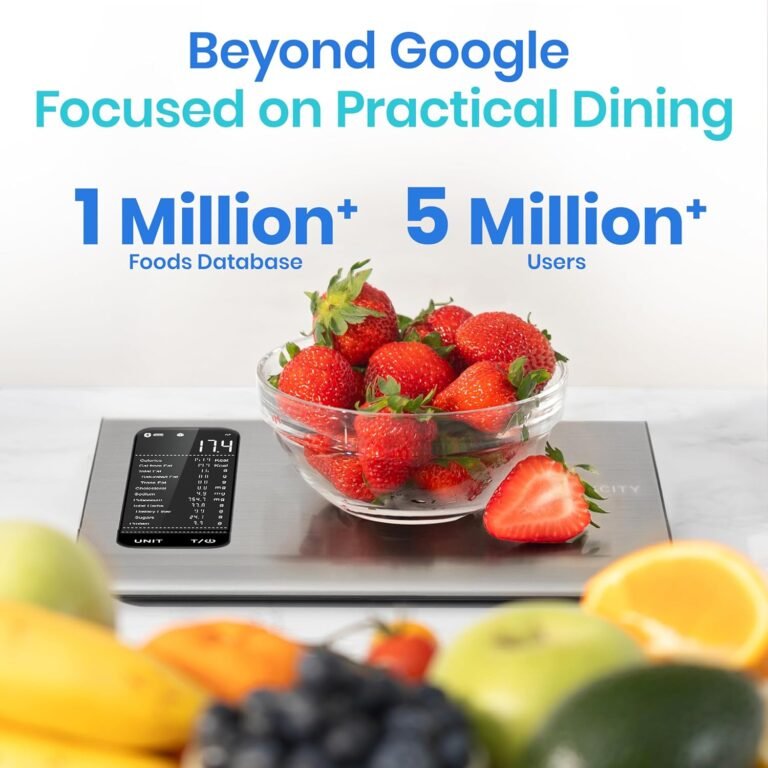
Etekcity Food Scale
0.1g accuracy — the perfect companion for exact portions.
What Makes a Scale Genuinely Good for Baking (and Liquids Specifically)
Most people shop for price and aesthetics, but neither tells you if a digital baking scale can survive a tare reset mid-recipe or hold a massive stand mixer bowl. Here is what actually matters when evaluating the best digital food scales for baking.
Precision vs. Capacity: You Need Both A standard food scale for baking and cooking reading in 1-gram increments is fine for bread flour, but it fails for yeast or salt where a single gram alters the chemistry. You need 0.1-gram precision. Because most high-precision scales max out at a useless 500 grams, look specifically for a dual-range system: 0.1g resolution for light ingredients that automatically shifts to 1g increments for heavy dough batches.
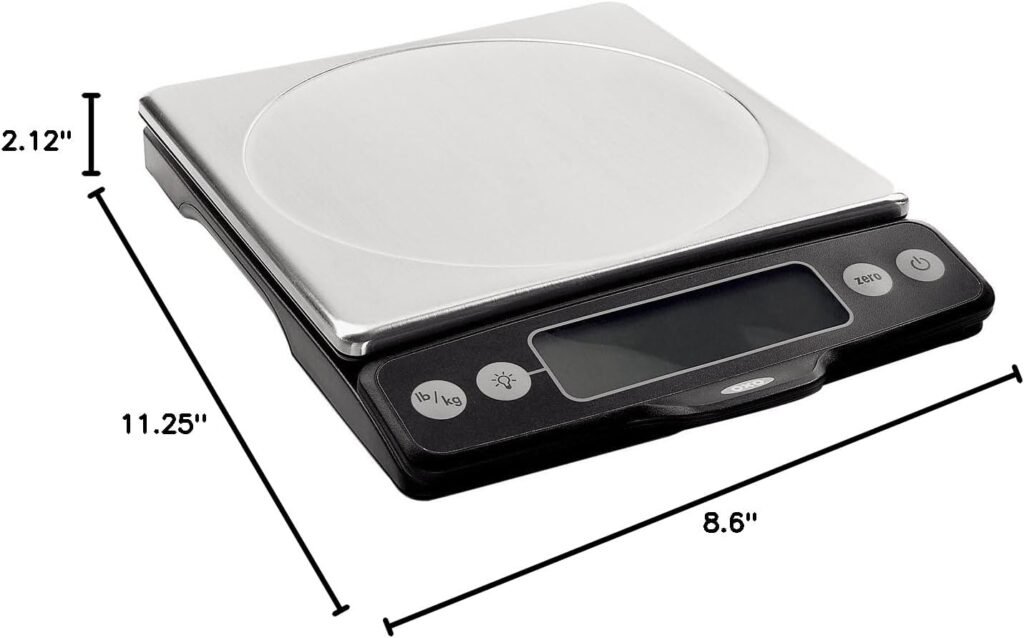
The Liquid Ingredient Problem Weighing liquids directly into your mixing bowl eliminates dirty measuring cups. However, finding the best kitchen scales for liquids means checking for waterproofing so an accidental milk spill doesn’t short-circuit the sensor housing. If you use oversized ceramic bowls, models like the OXO Good Grips 11-pound scale feature a physical pull-out display. This lets you utilize the best kitchen scale for measuring liquids and grams even when a giant bowl blocks your overhead view.
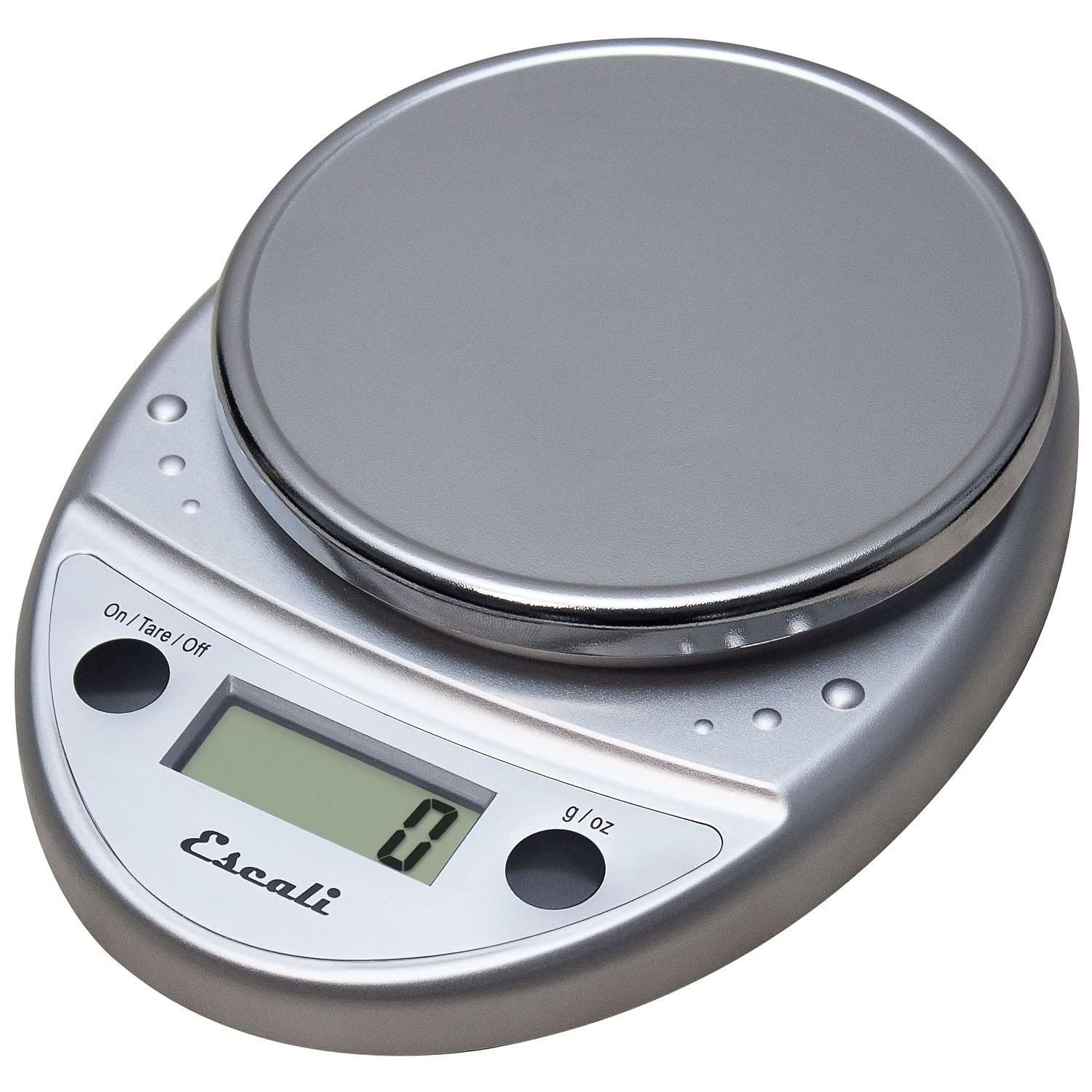
Response Time and Stability Pouring water or oil into a slow-responding scale is a nightmare. You add a little, wait for the screen to settle, add more, and suddenly overshoot your target. The best scales lock in their readings instantly. The Escali Primo is the industry standard here—it registers weight additions in under two seconds and delivers consistent results without frustrating fluctuations when the bowl shifts.
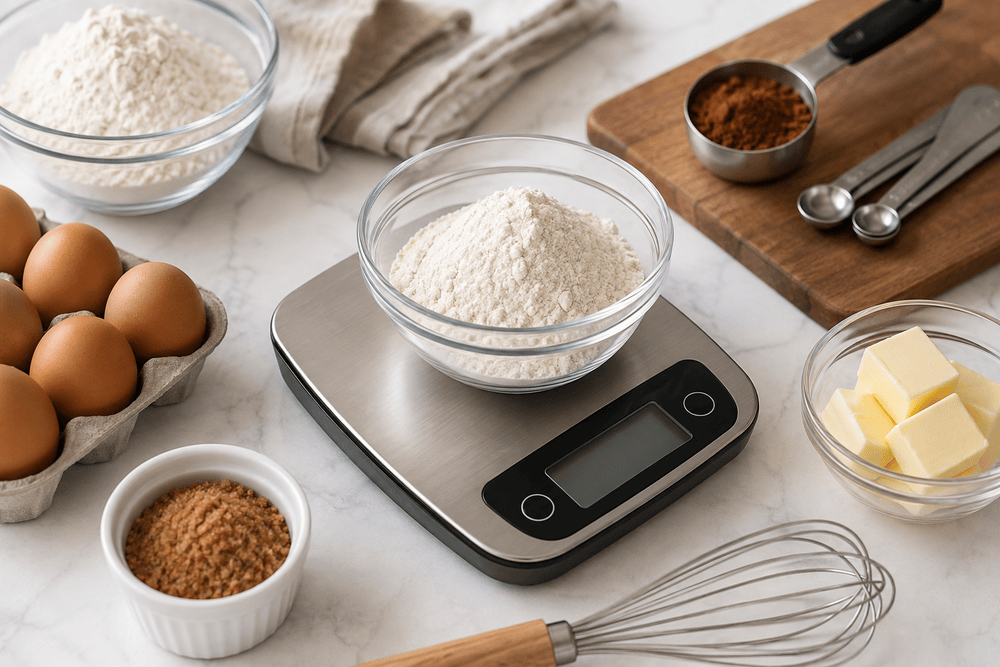
The 5 Best Digital Food Scales for Baking and Liquid Ingredients
These aren’t ranked by price or popularity. They are ranked by how well they handle the specific demands of a messy kitchen: low-weight precision, heavy-load stability, and usability when your hands are covered in butter. Here are the best digital food scales for baking.
OXO Good Grips 11-Pound Stainless Steel Scale (Best Overall for Home Bakers)
This is arguably the most intuitive digital baking scale on the market. The pull-out display is genuinely clever—you can place a massive stand mixer bowl on the stainless steel platform and simply pull the screen out so your view is never blocked. It holds up to 11 pounds, reads in 1-gram increments, and wipes clean easily. It is the perfect everyday food scale for baking and cooking.
Escali Primo Digital Food Scale (Best Budget-Friendly Workhorse)
If you want an affordable option that doesn’t feel cheap, the Escali Primo is an absolute kitchen staple. It delivers an incredibly fast response time, locking in 1-gram increments up to 11 pounds without any frustrating screen lag. The completely sealed interface makes it one of the best kitchen scales for liquids, surviving inevitable milk and oil spills with ease.
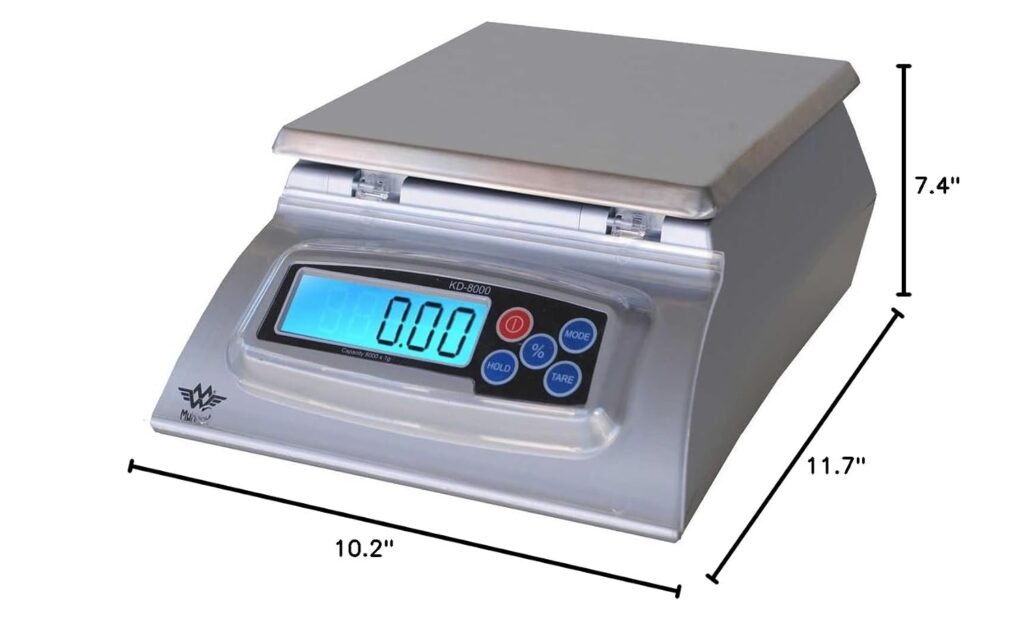
My Weigh KD-8000 Kitchen and Craft Scale (Best for Sourdough & Bread Bakers)
This scale is overkill for occasional cookie bakers, but indispensable if you regularly scale sourdough. It features a dedicated baker’s percentage mode that automatically calculates ingredient ratios relative to your total flour weight. With a massive 8-kilogram capacity, 1-gram precision, and an acrylic faceplate to block flour dust, it is the ultimate heavy-duty food scale for baking and cooking.
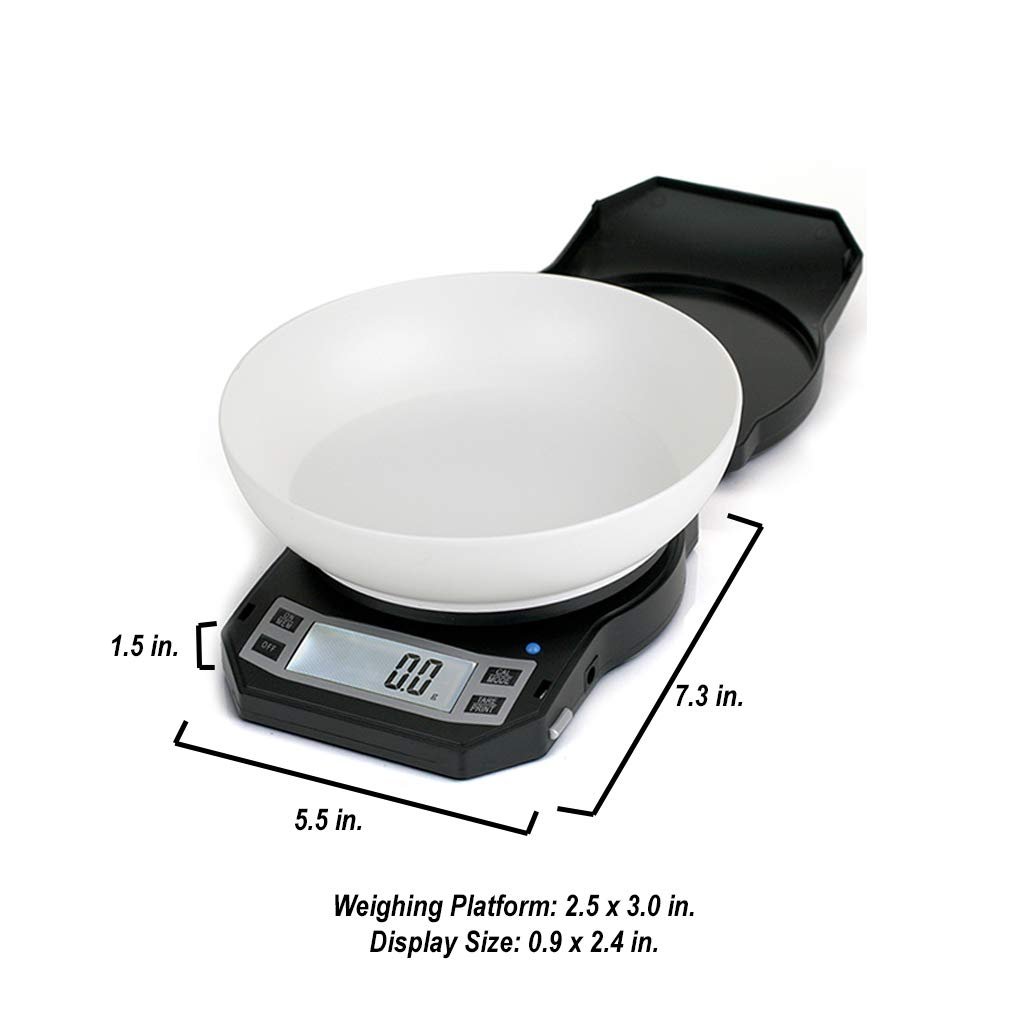
American Weigh Scales LB-3000 (Best for Micro-Precision)
When you need exact 0.1-gram precision for active dry yeast, salt, or citric acid, standard scales fail. The LB-3000 handles those micro-measurements flawlessly. The catch is that the capacity caps out at just 3 kilograms. You will likely need a second scale for heavy dough batches, but for yeast and tiny liquid volumes, it is the best kitchen scale for measuring liquids and grams at a molecular level.
Etekcity Nutritional Kitchen Scale (Best for Macro-Tracking Bakers)
If you are managing a strict calorie deficit but still want to bake from scratch, this scale removes a massive step from your daily routine. It connects directly to your phone via Bluetooth to automatically calculate nutritional data per ingredient as you weigh them out. It isn’t built for 0.1g micro-precision, but it seamlessly merges your baking prep and diet logging into a single step.
Etekcity Food Scale
0.1g accuracy — the perfect companion for exact portions.
A Common Misconception Worth Correcting
A lot of people assume that grabbing any cheap, no-name $8 device off the internet is accurate enough for kitchen work. This is one of those beliefs that sounds completely reasonable but is quietly ruining your recipes.
Extremely cheap hardware often suffers from “sensor drift.” The screen might read correctly the second you place an item on the platform, but the numbers will slowly creep up or down if the bowl sits there for 30 seconds. When you are using a food scale for baking and cooking, you are constantly taring the weight to zero and adding new ingredients gradually. If your sensor drifts while you turn around to grab the sugar, your entire chemical ratio is permanently thrown off.
You don’t need to spend a fortune, but you do need to spend something. A reliable digital baking scale like the $25 Escali Primo is the absolute floor for hardware you can actually trust not to drift mid-recipe.
Grams Are Not Just for Professionals
Another massive misconception is that measuring in grams or milliliters is only for “serious” or professional bakers. In reality, baking by weight is significantly easier for beginners.
Once you bake a single loaf of sourdough using the best digital food scales for baking, you will never go back to traditional measuring cups. When you pour liquids and scoop flour directly into a single bowl on the best kitchen scale for measuring liquids and grams, the recipe becomes perfectly repeatable every single time. More importantly, your cleanup time is cut in half, and you completely eliminate that mid-mix anxiety of wondering if you accidentally packed too much flour into the measuring cup.
How to Use Your Scale for Liquids Without Making a Mess
Weighing liquids requires a slight mental shift, but it is the ultimate kitchen hack for reducing dirty dishes. Instead of pouring milk iWeighing liquids requires a slight mental shift, but it is the ultimate kitchen hack for reducing dirty dishes. Instead of pouring milk into a separate measuring cup, you simply place your main mixing bowl on your food scale for baking and cooking and hit the “Tare” (zero) button. Then, pour the milk directly into the bowl until you hit your target weight. Done.
Before you start pouring, there is a fundamental rule to remember about the best kitchen scales for liquids: not all fluids weigh the same.
- Water and Milk: For water-based liquids, 1 gram equals exactly 1 milliliter. This is a bulletproof 1:1 conversion.
- Cooking Oils: Oil is lighter than water. One milliliter of vegetable or canola oil weighs roughly 0.92 grams. Never assume a 1:1 ratio if you are converting a volumetric recipe.
- Syrups and Honey: Sticky liquids are significantly heavier than water. A single tablespoon of honey weighs about 21 grams compared to water’s 15 grams.
Best Practices for Precision Measuring
- Manage the Auto-Off Delay: If your digital baking scale shuts down while you are slowly streaming in oil, you lose your tare measurement entirely. Look for models that let you adjust the idle timeout to 3 or 5 minutes so it stays awake during a slow pour.
- Tare After Placement: Always place your heavy ceramic bowl on the best kitchen scale for measuring liquids and grams before turning the power on, or hit tare immediately after placing it. Dropping a massive bowl onto an already live scale can sometimes temporarily throw off the calibration on cheaper sensors.
- Never Do Mental Math: The single best habit you can build is hitting the tare button between every single ingredient addition. It is vastly faster, completely eliminates mental math errors, and allows you to build an entire cake batter in a single bowl.
The Frictionless Tracking Alternative
If you are serious about nutrition tracking alongside your baking—like dialing in the exact macros for a homemade protein muffin—a physical scale is fantastic for the raw prep. But calculating the macros for a slice of the finished baked good is often a massive headache.
Instead of manually logging every individual gram of flour, oil, and egg into a database to find the total, try the Nutrients Calculator AI. Once your finished meal is plated, simply snap a quick photo. The vision AI instantly analyzes the volume and density of the food, delivering a highly accurate calorie and macro breakdown. It gives you the dietary precision of the best digital food scales for baking without forcing you to do a single equation or wash another piece of hardware.
