
An AI calorie counter is transforming the way people track what they eat, replacing guesswork with data-driven precision. For years, calorie tracking meant flipping through food labels, eyeballing portion sizes, and hoping your estimates were close enough. Today, artificial intelligence is changing that completely — and the results are measurable, meaningful, and backed by real nutrition science.
The Problem With Traditional Calorie Tracking
Manual calorie tracking has always had a fundamental flaw: humans are bad at estimating portions. Research published in the Journal of the Academy of Nutrition and Dietetics found that people underestimate their calorie intake by an average of 20 to 40 percent. That gap can easily stall weight loss progress or push someone managing diabetes off track.
Table of Contents
Common errors in traditional tracking include:
- Guessing portion weights by eye rather than weighing food
- Choosing generic database entries that do not match the actual food
- Forgetting to log cooking oils, sauces, and condiments
- Using outdated or inaccurate nutritional values
These small errors compound daily. Over a week, a 300-calorie daily underestimate adds up to over 2,000 calories — the equivalent of almost a full day of eating that simply goes untracked.
How an AI Calorie Counter Works Differently
Modern AI calorie counters use a combination of machine learning, image recognition, and large nutrition databases — including the USDA FoodData Central — to analyse meals with far greater accuracy than manual logging allows.
Apps like Lose It!, Cronometer, and MyFitnessPal’s AI-enhanced features now let users photograph a meal and receive an instant nutritional breakdown. The AI identifies individual ingredients, estimates portion sizes using visual depth analysis, and cross-references thousands of similar food images to return accurate macro and micronutrient data.
Key advantages AI brings to nutrient analysis:
- Image recognition that identifies mixed dishes, not just single ingredients
- Automatic portion estimation using spatial and scale data
- Real-time cross-referencing with verified nutrition databases
- Learning from your personal eating habits over time to improve suggestions
This means fewer manual entries, fewer errors, and a much clearer picture of what you are actually consuming each day.
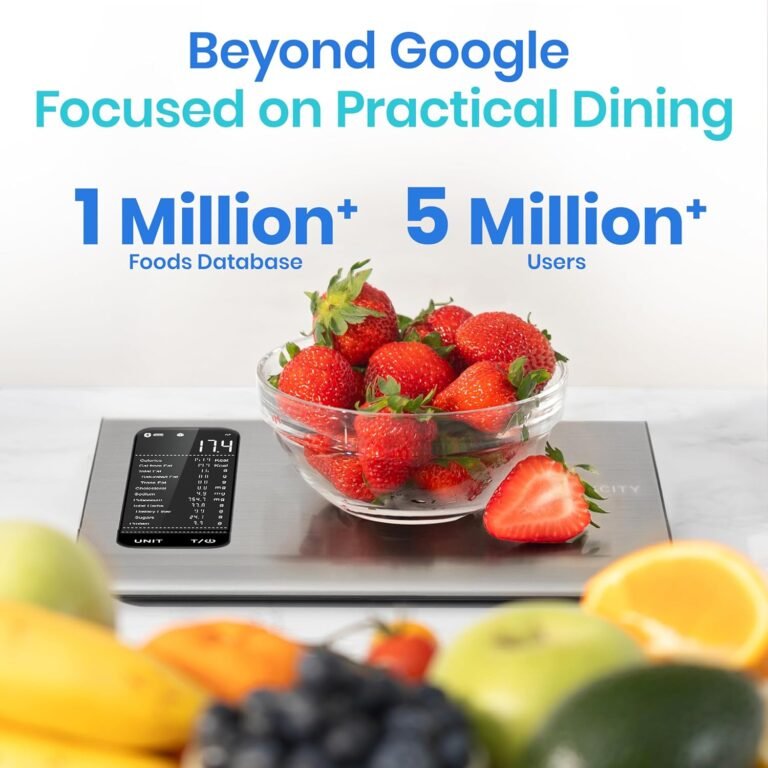
Etekcity Food Scale
0.1g accuracy — the perfect companion for exact portions.
Accuracy Improvements Backed by Research
The science supports the shift to AI-powered analysis. A 2021 study from the Nutrients journal found that AI-assisted dietary assessment tools were significantly more accurate than self-reported food diaries, particularly for mixed and restaurant meals where nutrient content varies widely.
Restaurant meals are notoriously difficult to track manually. A study from Tufts University showed that restaurant-prepared foods contained up to 18 percent more calories than menu listings suggested. AI tools that analyse photos or use restaurant-specific data entries can account for these real-world variations more reliably.
For people managing conditions like type 2 diabetes or following therapeutic diets such as keto, accuracy is not just convenient — it is clinically important. Tracking net carbs or glycaemic load correctly can directly influence blood sugar control and medication decisions.
What AI Nutrient Analysis Tracks Beyond Calories
A quality AI calorie counter does not stop at calories. Today’s tools analyse a full spectrum of nutritional data, which is especially valuable for people with specific health goals.
Nutrients commonly tracked by AI-powered apps include:
- Macronutrients: protein, carbohydrates, and fat broken down per meal
- Micronutrients: iron, calcium, magnesium, vitamin D, and B12
- Fibre content and net carbs for keto or low-carb dieters
- Sodium levels for people managing blood pressure or heart health
- Omega-3 and omega-6 fatty acid ratios for anti-inflammatory eating
Micronutrient deficiencies are common and often invisible — iron deficiency affects roughly 10 million Americans, according to the CDC. Tracking micronutrients alongside macros gives a genuinely complete picture of diet quality, not just calorie balance.
Conclusion: Smarter Tracking Leads to Better Results
Guessing your way through nutrition tracking is no longer necessary or advisable. An AI calorie counter brings a level of accuracy, speed, and insight that manual logging simply cannot match.
Whether your goal is weight loss, building muscle, managing blood sugar, or simply eating better, the precision that AI analysis provides makes a real difference. Tools powered by verified databases like the USDA and trained on millions of food images are now accessible on your smartphone — free or at low cost.
Using an AI calorie counter consistently means you stop relying on estimates and start making decisions based on real nutritional data. That shift alone can be the difference between a goal that stalls and one that succeeds. If you are serious about understanding what you eat, AI-powered nutrient analysis is no longer optional — it is the smartest place to start.
Visit our Best Food Scales section for more resources on Nutrients Calculator.
