
If you spend time in the fitness or precision baking communities, you already know that measuring ingredients by weight is an absolute must. For years, standard digital scales have been the unsung heroes of our countertops. They are simple, reliable, and get the job done.
But as kitchen technology evolves, a new contender has emerged. You might find yourself comparing a smart food scale vs regular kitchen scale, wondering which one is actually right for your daily meal prep.
Boasting Bluetooth connectivity, barcode scanners, and seamless integrations with fitness apps like Apple Health and MyFitnessPal, smart scales promise to take the manual math out of dieting. But with a higher price tag, is the upgrade really worth the money?
In this comprehensive guide, we are putting these two devices head-to-head. We will break down the pros, cons, and ideal use cases for both, and highlight some of the best options available on Amazon so you can make the right choice for your lifestyle.
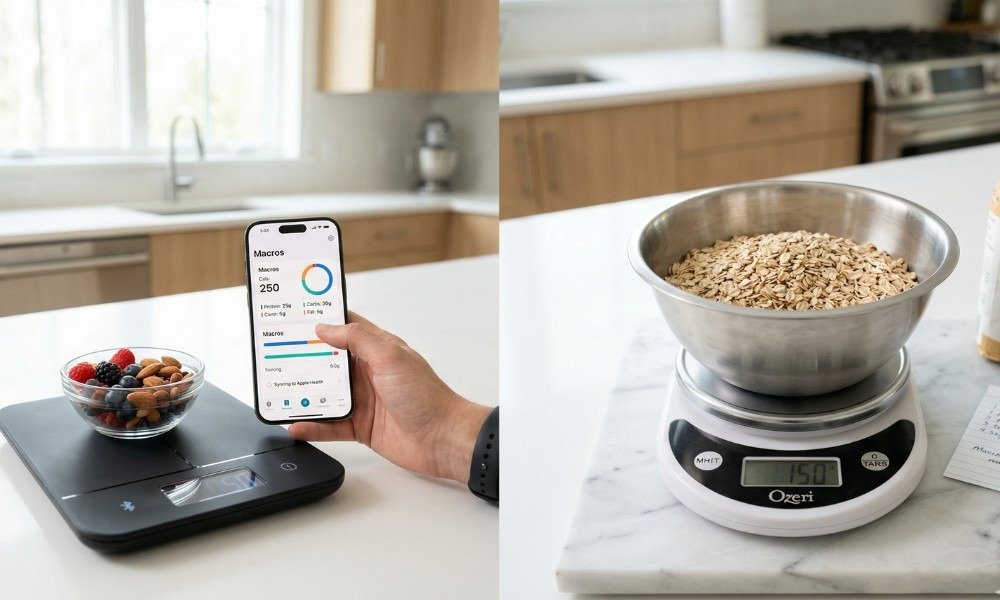
What is a Regular Kitchen Scale?
A regular kitchen scale (often referred to as a standard digital food scale) is a straightforward, single-purpose device. You turn it on, place your bowl on the platform, press the “Tare” (zero) button, and add your food.
The LCD screen displays the weight in your chosen unit—usually grams, ounces, or milliliters. These devices are powered by standard batteries and do not connect to the internet. You read the weight, open your macro tracking app, and do the nutritional math yourself.
The Pros of a Regular Digital Scale
- Total Simplicity: There is no learning curve, no app to download, and no Bluetooth pairing required.
- Affordability: You can pick up a highly accurate, durable scale for under $15 on Amazon.
- Long Battery Life: Because they aren’t powering Bluetooth transmitters, standard scales can run for a year or more on a single set of batteries.
- Less Screen Time: If you want to cook without staring at your phone, a regular scale keeps your kitchen distraction-free.
The Cons of a Regular Digital Scale
- Manual Data Entry: If you are tracking macros, you have to look at the weight, open your app, search for the ingredient, and type in the exact grams to see your calories.
- No Nutritional Context: The scale only tells you the weight; it cannot tell you how much protein or fat is actually in the bowl.
Top Regular Kitchen Scales on Amazon
If you want to keep things simple and budget-friendly, these are the industry standards:
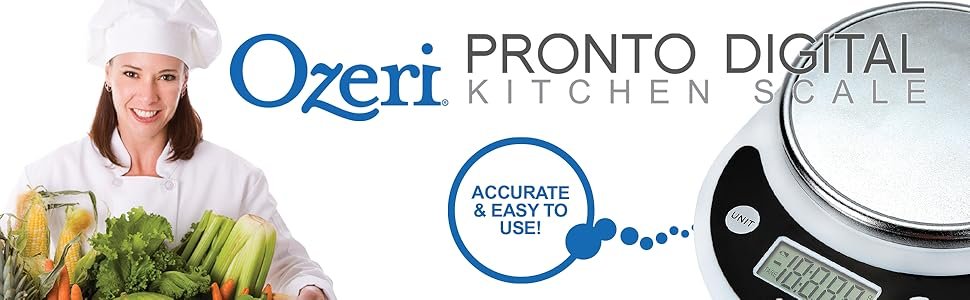
1. Ozeri Pronto Digital Multifunction Kitchen and Food Scale
- Overview: An absolute Amazon legend with hundreds of thousands of reviews. It is incredibly cheap, durable, and offers an enlarged weighing platform.
- Best For: The budget-conscious baker or beginner meal-prepper.
- 🛒 Buy now on Amazon
2. Escali Primo P115C Precision Kitchen Food Scale
- Overview: Widely considered the gold standard by professional test kitchens. It features a simple two-button design and a sealed control panel to protect against spills.
- Best For: Serious home cooks who prioritize durability and straightforward accuracy.
- 🛒 Buy now on Amazon
What is a Smart Food Scale?
A smart food scale takes the basic weighing mechanism of a regular scale and adds a digital brain. These modern devices feature built-in Bluetooth and pair directly to a proprietary app on your smartphone.
When you place food on a smart scale, the weight is instantly transmitted to your phone. You tell the app what the food is—often by scanning a barcode—and the app instantly calculates the calories, protein, carbs, and fats for that exact portion size.
The Pros of a Smart Nutrition Scale
- Automated Macro Tracking: This completely eliminates the need to do math. It logs the nutritional data straight to your daily diary.
- Barcode Scanning: Many smart scale apps allow you to scan the barcode of packaged foods for instant nutritional breakdowns.
- Health App Integration: The best smart food scales sync data directly with Apple Health, Google Fit, and apps like Cronometer.
The Cons of a Smart Nutrition Scale
- Reliance on a Smartphone: You must have your phone with you, screen unlocked, to get the most out of the scale.
- Higher Cost: Smart scales generally cost two to three times as much as a basic digital scale.
- App Quality Varies: A smart scale is only as good as its companion app. If the app has a limited food database, the “smart” features are useless.
Top Smart Food Scales on Amazon
If you are ready to automate your nutrition, these are the top performers:
1. Etekcity Smart Food Nutrition Scale
- Overview: Etekcity dominates the smart scale market. Their VeSync app is highly polished, features a massive food database, and integrates flawlessly with Apple Health.
- Best For: Anyone looking for a premium, reliable smart scale with a phenomenal app experience.
- 🛒 Buy now from Amazon

- Overview: The Renpho scale connects to the Gennec app, offering detailed macro and micro breakdowns. It is sleek, features a tempered glass surface, and is very competitively priced.
- Best For: Fitness enthusiasts who want detailed nutritional logging on a budget.
- 🛒 Buy now on Amazon
Smart Food Scale vs Regular Kitchen Scale: Head-to-Head Comparison
To make the decision easier, let’s look at a quick feature comparison of a smart food scale vs regular kitchen scale:
| Feature | Regular Kitchen Scale | Smart Food Scale |
| Price Range | $10 – $25 | $25 – $60+ |
| Primary Function | Displays weight only | Calculates weight + nutritional data |
| App Integration | None | Bluetooth sync to iOS/Android |
| Macro Tracking | Requires manual calculation | Automatic logging |
| Ease of Use | Extremely high (Press and weigh) | Moderate (Requires app pairing) |
| Battery Life | 12+ months | 3 to 6 months (Bluetooth drains faster) |
The Verdict: Which Scale Should You Buy?
So, in the battle of the smart food scale vs regular kitchen scale, which one wins? The answer depends entirely on your specific fitness goals.
Stick with a regular kitchen scale if: You are primarily baking, you are on a strict budget, or you find having your smartphone out while cooking to be distracting.
Upgrade to a smart food scale if: You are strictly tracking macros for bodybuilding or weight loss, you hate doing dietary math, and you want all your health data to sync automatically in one place.
For anyone serious about fitness tracking, the upgrade is absolutely worth it. The small price difference is quickly justified by the time you save by automating your food logging.
(Want to see more top-tier tech? Check out our complete guide to the Best Smart Food Scales of 2026 to see our deep-dive reviews!)
Conclusion: Elevating Your Nutrition Tracking
Ultimately, choosing between a smart food scale vs regular kitchen scale is about optimizing your kitchen workflow. If you are tracking macros to hit specific protein goals, investing in a smart scale is one of the highest-ROI decisions you can make.
However, even with the best smart scale on your countertop, there will be times you eat away from home. For those moments when you leave your kitchen tech behind, you can still keep your macros perfectly on track.
Head over to Nutrients Calculator—an innovative tool that lets you calculate the exact nutritional breakdown of your meal simply by snapping a photo. Whether you are weighing food at home or taking a picture on the go, hitting your health goals has never been easier!