
Cottage cheese has become a staple for fitness enthusiasts, people managing their weight, and anyone seeking a nutrient-dense protein source. It’s common in Scandinavian countries, Eastern Europe, and increasingly popular in gyms and meal-prep routines worldwide. Whether you’re building muscle, losing fat, or simply adding a versatile dairy product to your diet, understanding the calorie and nutrient content of cottage cheese is essential.
If you’re wondering “How many calories are in cottage cheese?” the answer depends on the type and serving size. This article breaks down the exact calorie counts, full nutrition facts, and practical tips for incorporating cottage cheese into your diet effectively.
Calories in Cottage Cheese (Quick Answer)
Here are the most common varieties and their calorie counts per serving:
- Full-fat cottage cheese (½ cup, 113g): 110 calories
- Low-fat cottage cheese (½ cup, 113g): 81 calories
- Non-fat cottage cheese (½ cup, 113g): 63 calories
Calorie counts vary based on fat content, curd size, and brand formulation. Always check the label for exact values.
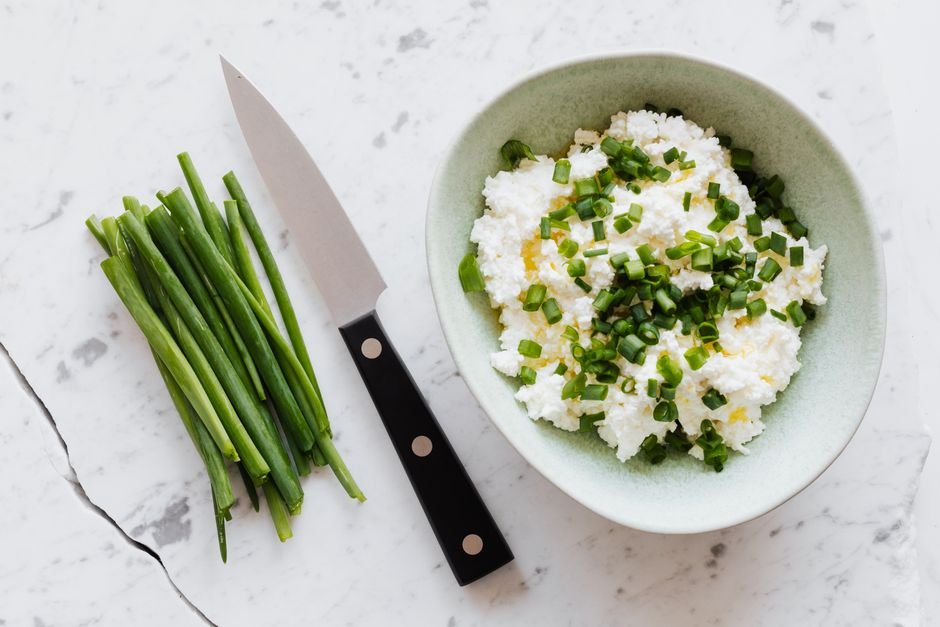
Full Nutrition Facts for ½ Cup (113g) of Full-Fat Cottage Cheese
Full-fat cottage cheese is the most nutrient-dense variety, offering superior absorption of fat-soluble vitamins and a more satisfying creaminess. Here’s the complete breakdown:
| Nutrient | Amount | % Daily Value |
|---|---|---|
| Calories | 110 | — |
| Total Fat | 5g | 6% |
| Saturated Fat | 3.2g | 16% |
| Cholesterol | 17mg | 6% |
| Sodium | 389mg | 17% |
| Total Carbohydrate | 4g | 1% |
| Dietary Fiber | 0g | 0% |
| Total Sugars | 3.5g | — |
| Protein | 14g | 28% |
| Calcium | 83mg | 6% |
| Phosphorus | 154mg | 12% |
| Selenium | 20.3mcg | 37% |
*Percent Daily Values are based on a 2,000-calorie diet. Source: USDA FoodData Central.
Key insight: Cottage cheese delivers 14g of complete protein in just 110 calories, making it one of the most protein-dense dairy foods available. The high selenium content (37% DV) supports thyroid function and antioxidant defense, while the moderate sodium level (389mg) is acceptable for most diets—though those on low-sodium plans should monitor intake.
Etekcity Food Scale
0.1g accuracy — the perfect companion for exact portions.
Full-Fat vs. Non-Fat Cottage Cheese: What’s the Difference?
Full-Fat Cottage Cheese (5g fat per ½ cup)
- Creamier texture with larger curds; more satisfying per serving
- Contains fat-soluble vitamins (A, D, K2) in better bioavailable forms
- Higher calorie density (110 per ½ cup), so portion control matters more
Non-Fat Cottage Cheese (0.4g fat per ½ cup)
- Leaner option with 63 calories per ½ cup; better for strict calorie-controlled diets
- Thinner, more liquid consistency; some find it less satisfying
- Nearly identical protein (13g per ½ cup) but lacks fat for nutrient absorption
Practical takeaway: Full-fat cottage cheese is superior nutritionally if calories aren’t a constraint, as the fat improves satiety and nutrient bioavailability. Non-fat is a reasonable choice for aggressive weight loss, but low-fat (81 calories, 2g fat) often offers the best balance—adequate fat for flavor and absorption without excess calories.
Is Cottage Cheese Good for Weight Loss?
Yes. Cottage cheese is exceptionally well-suited for weight loss because of its high protein content, low calorie density, and satiating effect. The protein triggers fullness signals and preserves muscle mass during calorie deficits, while the modest carb content (4g per ½ cup) won’t spike blood sugar. Multiple studies show that high-protein dairy products reduce overall calorie intake and support fat loss more effectively than lower-protein alternatives.
Tips to Eat Cottage Cheese Without Gaining Weight:
- Measure portions: Use a food scale or measuring cup—it’s easy to mindlessly consume larger servings, which adds up quickly with full-fat varieties.
- Pair with vegetables: Combine cottage cheese with cucumber, tomatoes, or bell peppers to increase volume and fiber without many extra calories.
- Choose low-fat or non-fat if eating frequently: If cottage cheese is a daily staple, non-fat (63 cal) is safer than full-fat (110 cal) for consistent weight loss.
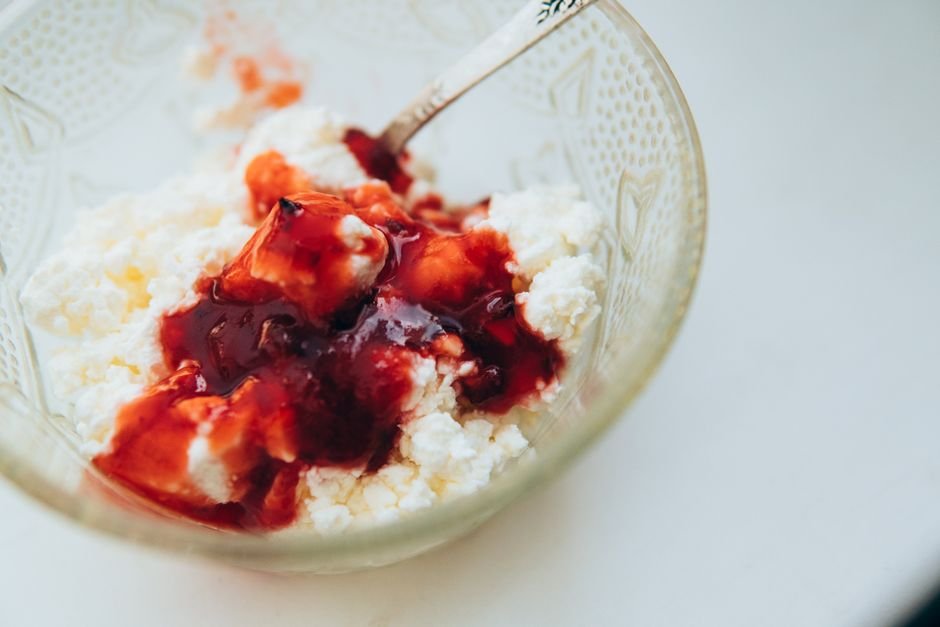
- Avoid sugary toppings: Skip granola, honey, and fruit jams; instead add berries in moderation or savory seasonings like salt, pepper, and herbs.
When used strategically, cottage cheese can accelerate fat loss while preserving lean muscle—a major advantage over simple carbohydrate-based snacks.
How Portion Size Affects Calories
Portion size has a dramatic effect on total calorie intake with cottage cheese. Because it’s nutrient-dense and easy to overeat when spooned directly from the container, tracking amounts matters significantly. A small oversight in portion size can add 50–80 extra calories per day, which compounds to 5–8 pounds of weight gain over a year.
Example:
- Small portion (½ cup / 113g full-fat): 110 calories, 14g protein
- Large portion (1 cup / 226g full-fat): 220 calories, 28g protein
Doubling the serving doubles the calories, so weigh or measure carefully if precise intake matters to your goals.
Best Way to Measure Cottage Cheese Accurately
Because cottage cheese has high water content and uneven curd distribution, volumetric measurement (using cups or spoons) is less accurate than weight-based measurement. A ½ cup of cottage cheese can vary by 30–50g depending on how densely it’s packed, leading to significant calorie underestimation. For fitness tracking and weight loss, a digital kitchen scale is essential.
Options:
- Digital kitchen scale (most accurate): Place a bowl on the scale, tare to zero, and add cottage cheese until you reach your target weight (e.g., 113g for ½ cup). This removes all guesswork.
- Measuring cup with level-off: Use a standard ½-cup measuring cup, fill it, and level off the top with a knife. Reasonably accurate if done consistently, though not as precise as a scale.
- Pre-portioned containers: Many brands sell single-serve cups (usually 100–150g) with nutrition labels already calculated—convenient for on-the-go eating.
Calculate Your Exact Calorie Intake
If you eat cottage cheese daily or incorporate it into multiple meals, tracking your exact intake becomes crucial for weight loss or muscle-building success. Generic nutrition labels don’t account for your specific portion sizes, brand variations, or how cottage cheese fits into your total daily calories.
The easiest way to track this is using a free nutrient calculator. Our AI nutrients calculator lets you input your exact portion size and instantly see calories, macros, and micronutrients—taking the guesswork out of your diet.
- Instantly calculates calories and macros for any portion size you specify
- Compares nutritional values across different brands and varieties
- Logs your intake over time to identify patterns and adjust your diet accordingly
Common Mistakes When Eating Cottage Cheese
Even though cottage cheese is a healthy choice, several common errors can derail your nutrition goals. Here are the most frequent slip-ups:
❌ Underestimating portions by eye—using a cup or spoon instead of a scale, leading to 30–50% more calories than you think you’re eating.
❌ Treating it as a “free food”—cottage cheese is nutritious but not calorie-free; eating 1–2 cups daily without tracking adds 200–400 calories that weren’t in your original plan.
❌ Pairing with high-calorie toppings—mixing cottage cheese with granola, honey, jam, or nuts can triple the calorie count while masking its inherent simplicity.
❌ Choosing full-fat varieties without realizing the calorie difference—not checking the label and defaulting to full-fat when non-fat would better serve a weight-loss goal.
Awareness of these mistakes can save you from plateaus and unexpected weight gain.
FAQ
How many calories are in 100g of cottage cheese?
Full-fat cottage cheese contains approximately 97 calories per 100g. Non-fat varieties have about 56 calories per 100g. The difference comes entirely from fat content.
Is cottage cheese fattening?
No—in appropriate portions, cottage cheese supports weight loss rather than weight gain due to its high protein and low carbohydrate content. It keeps you fuller longer, reducing overall calorie intake. The key is measuring portions and avoiding sugary mix-ins.
Does cottage cheese need to be refrigerated after opening, and does it expire?
Yes, always refrigerate opened cottage cheese and use it within 5–7 days. The high moisture and protein content make it perishable. Check the sell-by date and discard if it smells sour or shows mold.
Can I eat cottage cheese before bed?
Yes—cottage cheese is an excellent bedtime snack because it’s rich in casein protein, which digests slowly and provides steady amino acid release overnight. This supports muscle recovery and prevents midnight hunger without disrupting sleep.
Conclusion
Cottage cheese is a calorie-efficient, protein-packed food that deserves a regular place in any balanced diet. With 14g of protein in just 110 calories (full-fat variety), it outperforms most dairy options for muscle building and weight loss. The nutrient density—including selenium for thyroid health, phosphorus for bone strength, and complete amino acids—makes it far more than just a protein source. Whether you choose full-fat for superior nutrient absorption or non-fat for aggressive calorie restriction, cottage cheese delivers measurable nutritional value.
To maximize the benefits of cottage cheese while avoiding common mistakes, measure portions carefully with a kitchen scale, pair it with whole foods rather than sugary toppings, and track your intake consistently. Using a **reliable nutrients calculator** removes the guesswork and ensures your cottage cheese consumption aligns with your specific fitness and health goals.
