
Most people trying to lose weight assume nuts are off-limits—they’re calorie-dense, fatty, and easy to overeat mindlessly. But research consistently shows that nuts, eaten at the right portion, don’t derail weight loss and may actually support it. The question isn’t whether you can eat nuts and lose weight; it’s how much is safe to eat without your daily surplus turning into a surplus.
This article cuts through the confusion. You’ll learn exactly how much you can eat daily, why portion size is the deciding factor, and how to make nuts work with your calorie budget instead of against it. The verdict: a measured daily portion of nuts is compatible with weight loss, but “eating until you’re full” from a bag will undo your progress.
Quick Answer
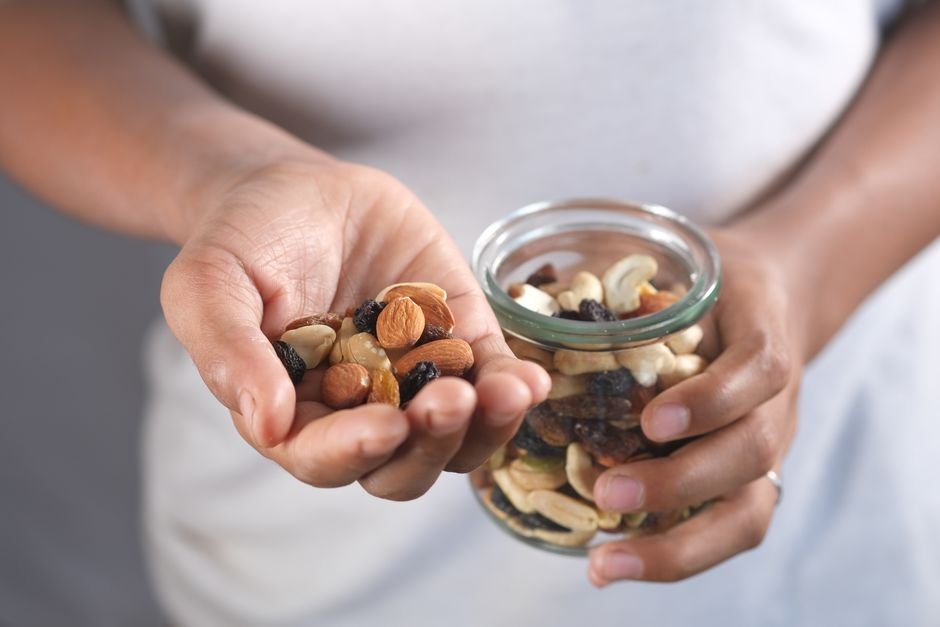
Yes, you can eat nuts and lose weight—aim for 1 ounce (23 almonds, 14 walnut halves, or 49 peanuts) to 1.5 ounces daily, roughly 160–240 calories depending on the nut type. This portion size fits into most weight-loss calorie budgets without crowding out whole foods, and the protein and fiber help you feel fuller longer. The caveat: unmetered consumption—eating straight from the bag or combining nuts with other high-calorie snacks—will sabotage your deficit.
Nuts for Weight Loss vs. Unrestricted Nut Consumption
Nuts in a Measured Portion (1–1.5 oz daily)
- Calories: 160–240 per ounce, depending on type (almonds ~164 cal/oz; walnuts ~185 cal/oz; peanuts ~161 cal/oz)
- Protein: 5–8 g per ounce, which increases satiety and supports muscle retention during weight loss
- Fiber: 2.5–3.5 g per ounce, slowing digestion and stabilizing blood sugar
- Fat profile: Mostly unsaturated fat (heart-healthy), with minimal saturated fat, supporting metabolic health
Unrestricted Nut Consumption (no tracking or portion control)
- Calories: 500–1000+ per sitting when consumed from a package without measuring, easily exceeding a 300–500 calorie daily allowance for a snack
- Protein: Same per ounce, but total intake can exceed satiety needs, adding excess calories without additional benefit
- Fiber: Same nutritional profile, but psychological reward often drives overeating beyond satiety signals
- Behavioral risk: Hand-to-mouth eating and lack of visual portion cues make it nearly impossible to stay aware of intake
| Metric | Measured Portion (1–1.5 oz) | Unrestricted Consumption |
|---|---|---|
| Calories | 160–240 | 500–1000+ |
| Protein (g) | 5–8 | 15–25 (usually excess) |
| Fiber (g) | 2.5–3.5 | 7–10 (usually excess) |
| Satiety Impact | Sustained, fits calorie budget | Initial fullness, then overconsumption |
| Weight-Loss Compatibility | ✓ Yes, when measured | ✗ No, typically exceeds deficit |

Etekcity Food Scale
0.1g accuracy — the perfect companion for exact portions.
Which Is Better for Weight Loss: Measured Nuts or Avoiding Them Altogether?
Measured nuts win decisively for sustainable weight loss. A 1–1.5 ounce daily portion is compatible with virtually any calorie deficit (whether aiming for 1500 or 2500 calories), and the protein-plus-fiber combination keeps you satisfied between meals—something that pure carbs or simple sugars don’t achieve as reliably. Studies consistently show that people who include nuts in their diet lose weight at the same rate as those who avoid them, but report better hunger control and diet adherence. The practical benefit: you’re not fighting constant cravings or white-knuckling through meals.
The exception: if you have a history of binge eating or truly cannot stop at one portion, nuts may be a better buy entirely. Some people’s hunger regulation simply doesn’t work around certain trigger foods. But for most people, avoidance is unnecessary and often backfires—the restriction mindset makes nuts feel forbidden, which increases desire and eventual overconsumption. A planned, measured portion is psychologically sustainable in a way that “never eating nuts” rarely is.
Why the Numbers Don’t Tell the Whole Story
A serving is only 23 almonds or 14 walnut halves—but if you’re buying a 5-pound bag and eyeballing “a small handful,” you’re probably eating 2–3 servings without knowing it. Brand and variety matter too: raw almonds are denser and more satiating than roasted-and-salted almonds, which have added oil and trigger more mindless eating. A handful of mixed nuts is harder to eyeball than a handful of single-type nuts because different shapes pack differently; mixed nuts often look smaller than they are calorie-wise.
Processing and additions change the equation completely. Honey-roasted peanuts, chocolate-covered almonds, or nuts mixed into trail mix or granola bars can double the calorie count per ounce. Even salt levels matter subtly—salted nuts enhance flavor perception and may reduce the psychological satisfaction of a smaller portion, making you more likely to reach for a second.
This is where a reliable tool becomes essential. The portion that works for nuts you buy raw might not work for a restaurant’s mixed nut snack or a prepackaged almond butter. Our free AI nutrients calculator at https://nutrientscalculator.com/ lets you enter the exact nut product in front of you—brand, processing method, serving size—and get the real calorie and macro count, not a generic average. With it, you’ll know whether that portion fits your day and whether to adjust elsewhere.
- Identifies brand-specific nutritional differences (raw vs. roasted, salted vs. unsalted, candied vs. plain)
- Helps you portion correctly for your calorie budget and weight-loss goal, not a one-size-fits-all guideline
- Tracks cumulative nut intake across the day (nuts in breakfast cereal + snack almonds + nuts in salad) so you don’t accidentally double-count
Common Mistakes
Here are the four ways people sabotage weight loss with nuts, even when they’re trying to do it right:
❌ Eating nuts straight from a bulk bag or container, assuming “a small handful” is controlled. A handful varies wildly by hand size and nut density; portion creep happens invisibly over weeks, derailing your deficit.
❌ Choosing roasted, salted, or candied nuts as their “snack” and then adding nuts to other meals (salads, granola, mixed salads, nut butters). They’re counting one serving per day but actually eating 2–3 servings across meals and losing sight of total intake.
❌ Assuming nut butters (almond, peanut, cashew) are a 1:1 replacement for whole nuts. Nut butters are calorie-concentrated, easy to under-portion (a tablespoon looks tiny but is often spread as thickly as 2 tablespoons), and don’t trigger the same satiety as chewing whole nuts.
❌ Eating nuts because they’re “healthy” rather than because they fit their calorie budget. Whole and unprocessed doesn’t mean calorie-free; a 300-calorie almond snack replacing a 100-calorie piece of fruit means slower weight loss, no matter how nutritious the almonds are.
FAQ
How many almonds can I eat daily and still lose weight?
Aim for 23 almonds (about 1 ounce, 164 calories) as a baseline daily serving. This fits into most weight-loss calorie budgets and delivers 6g of protein and 3.5g of fiber to keep you full. You can push to 35–40 almonds (1.5 oz) if your budget allows, but beyond that you’re crowding out other whole foods.
Are peanuts or tree nuts better for weight loss?
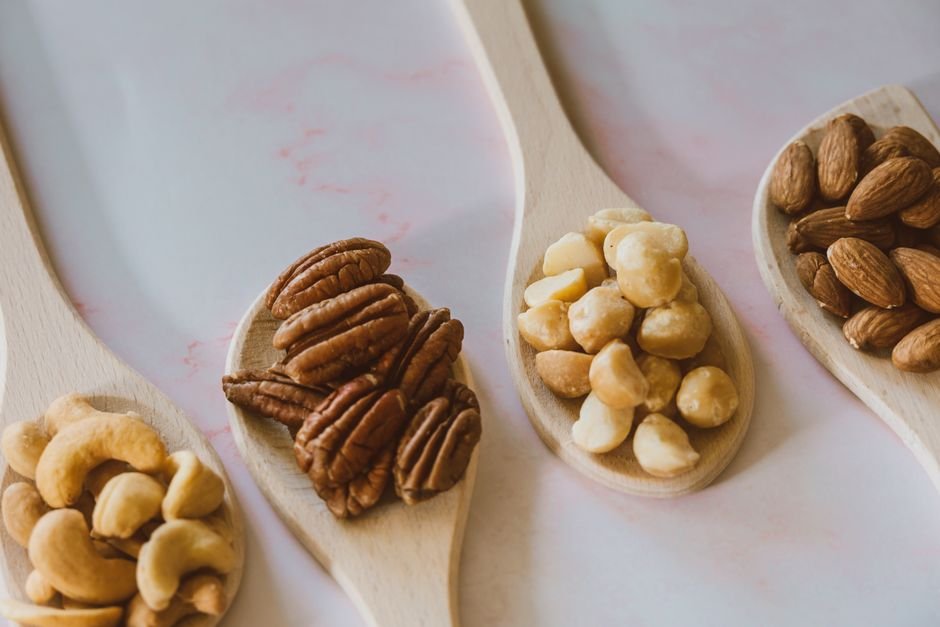
Nutritionally, peanuts and tree nuts (almonds, walnuts, cashews) are nearly identical in calories and macro balance—roughly 160–185 cal per ounce. Tree nuts like almonds and walnuts have slightly higher fiber, but peanuts are cheaper and equally effective. Choose whichever type you’ll actually stick to eating a measured portion of.
Should I eat nuts before or after my workout for weight loss?
Timing doesn’t affect weight loss; only total daily calories do. Pre-workout nuts can provide energy, and post-workout nuts contribute to protein intake for recovery. Eat them when they fit your hunger and schedule. The advantage is minimal compared to overall portion control.
Can I eat nuts every day and still lose weight?
Yes, daily nuts are fine and may even improve adherence to your diet because they’re satiating and flexible. The rule is the same: 1–1.5 ounces per day, measured, and factored into your total calorie budget. Many people find a daily nut snack easier to sustain than sporadic restriction.
Conclusion
You absolutely can eat nuts and lose weight—measured portions (1 to 1.5 ounces daily, 160–240 calories) fit into virtually any deficit and provide protein and fiber that reduce hunger between meals. The research is clear: people who include nuts in their weight-loss diet lose weight at the same rate as those who avoid them, and often report better diet satisfaction and adherence. The deciding factor is not the nut; it’s the portion.
Start by measuring one portion into a small bowl or container, eat it mindfully, and track it like any other snack in your daily budget. If you’re buying a new nut type or brand, use a reliable nutrients calculator to verify the exact calories and macros instead of guessing from a generic “almonds” entry. That single habit—knowing what’s actually in front of you—is the difference between nuts supporting your weight loss and derailing it.
