
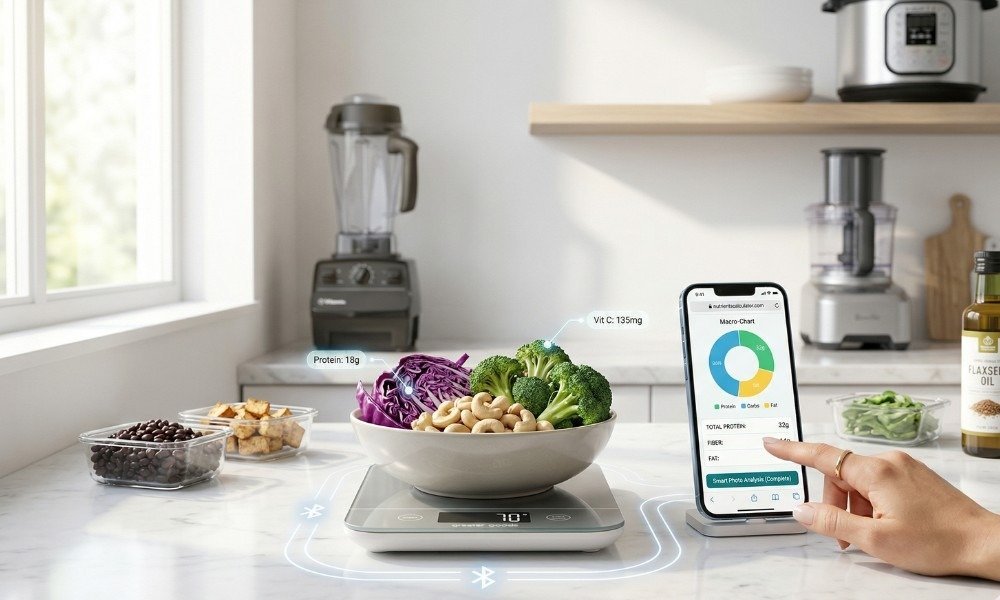
Whether you are fully vegan, a dedicated vegetarian, or simply trying to incorporate more whole foods into your lifestyle, having the best kitchen gadgets for a plant-based diet can make the difference between an exhausting chore and a culinary joy. Plant-based cooking demands specific techniques: blending tough fibrous greens, pulverizing soaked cashews into silky creams, and batch-cooking dry legumes.
Without the right vegan cooking tools, you might find yourself battling chunky smoothies or spending hours chopping root vegetables. In this comprehensive guide, we are diving deep into the tactile, real-world experience of the top-rated appliances on the market. From the countertop footprint to the ease of scrubbing blades after a messy recipe, we’ll help you build your ultimate arsenal of plant-based kitchen essentials.
Compare the Top Plant-Based Kitchen Gear
| Product Name | Price Tier | Key Material | Standout Feature | Best For |
| Vitamix 5200 Blender | Premium ($$$) | Laser-cut Stainless Steel / Tritan | Classic Tamper & Deep Vortex | Silky cashew creams & smoothies |
| Breville Sous Chef 12 | Premium ($$$) | Die-cast Metal / BPA-Free Plastic | Micro-serrated S-Blade | Heavy-duty chopping & hummus |
| Instant Pot Duo 7-in-1 | Budget ($) | Food-Grade 304 Stainless Steel | Pressure & Slow Cooking Modes | Batch cooking beans & grains |
| Ninja Air Fryer Max XL | Mid-Range ($$) | Ceramic-Coated Nonstick | Max Crisp Technology (450°F) | Oil-free crispy tofu & veggies |
| Greater Goods Smart Scale | Budget ($) | Tempered Glass | Bluetooth App Synchronization | Precision macro & recipe tracking |
Reviews: The Best Kitchen Gadgets for a Plant-Based Diet
1. Vitamix 5200 Blender
When it comes to plant-based prep, a high-speed blender for vegans is non-negotiable. The Vitamix 5200 makes this list because of its legendary, unmatched durability and its tall, narrow pitcher design. This specific shape forces ingredients down into the blades, creating a vortex that obliterates berry seeds, tough kale stems, and soaked nuts. In real-world use, the tactile experience of the variable speed dial is deeply satisfying—you can feel the mechanical power ramping up as the motor roars to life. Cleaning is a breeze: just add a drop of dish soap, fill halfway with warm water, and run it on high for 60 seconds. However, be warned that the pitcher is quite tall, meaning it might not fit under standard overhead kitchen cabinets.
- Pros:
- Creates perfectly smooth textures without straining.
- Self-cleaning design saves fingers from sharp blades.
- Included tamper allows you to push thick mixtures (like hummus or nice cream) into the blades without stopping.
- Cons:
- Very loud during operation.
- The tall profile makes countertop storage underneath cabinets difficult.
2. Breville Sous Chef 12 Food Processor
While a blender is for liquids and creams, a food processor is your workhorse for dry chopping, shredding, and slicing. The Breville Sous Chef 12 is a powerhouse that won’t “walk” across your counter when processing heavy loads of dates and walnuts for energy balls, thanks to its heavy die-cast metal base. The tactile feedback of snapping the bowl into place is secure and confidence-inspiring. The micro-serrated S-blade stays sharp through years of use. One minor annoyance we noticed during testing is that cleaning the feed chute can be tricky if you are shredding sticky ingredients like vegan cheeses or sweet potatoes, requiring a small bottle brush to get into the crevices.
- Pros:
- Incredibly powerful motor handles heavy doughs and dense nuts.
- Adjustable slicing disc gives you exact control over vegetable thickness.
- Heavy base eliminates vibration and movement on the counter.
- Cons:
- Components are technically dishwasher safe, but handwashing is highly recommended to prolong lifespan.
- Premium price tag compared to entry-level models.
3. Instant Pot Duo 7-in-1 Electric Pressure Cooker
If you eat a lot of beans, lentils, and whole grains, the Instant Pot Duo is arguably the most time-saving gadget you can buy. It made our list because it takes the hours-long process of cooking dried chickpeas or black beans and reduces it to under an hour—with zero soaking required. The tactile experience of the stainless steel inner pot is excellent; it feels virtually indestructible and you can aggressively scrub it with steel wool without fear of scratching a non-stick coating. However, a known real-world issue is the silicone sealing ring inside the lid. It has a tendency to absorb odors from strong spices like cumin or curry powder. We highly recommend buying a secondary ring strictly for sweet recipes (like coconut rice pudding) to avoid flavor transfer.
- Pros:
- Saves immense amounts of time on legumes and whole grains.
- Durable, uncoated stainless steel inner pot.
- True “set it and forget it” convenience.
- Cons:
- The silicone lid ring aggressively holds onto savory food odors.
- The steam release valve can be intimidating for first-time users.
4. Ninja Air Fryer Max XL
For achieving that perfect crunch on tofu, chickpeas, and broccoli florets without using heavy oils, an air fryer is essential. The Ninja Air Fryer Max XL excels because of its Max Crisp Technology, which blasts food with 450°F superheated air. The tactile feel of the basket handle is sturdy, and shaking the basket halfway through cooking feels secure—the basket slides back into the base with a satisfying click. The ceramic-coated interior is slick and much safer than traditional PTFE non-stick coatings, making cleanup as easy as wiping it with a soapy sponge. However, the circular footprint of the basket means you have slightly less surface area for spreading out veggies compared to oven-style air fryers.
- Pros:
- Reaches up to 450°F for ultimate crispiness on tofu and potatoes.
- Ceramic coating is easy to clean and free of traditional “forever chemicals”.
- Intuitive, easy-to-read digital display.
- Cons:
- The round basket limits flat surface area for single-layer cooking.
- The fan is noticeably noisy.
5. Greater Goods Nourish Smart Food Scale
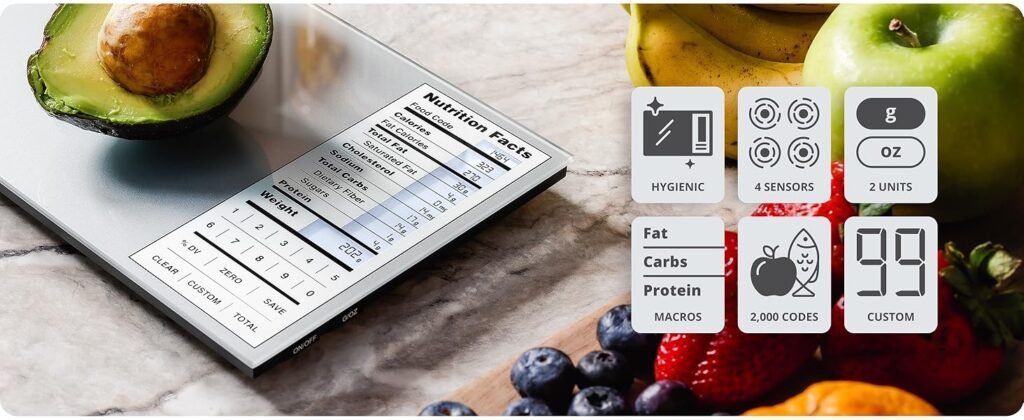
Baking vegan treats often requires exact precision (as you lack the binding properties of eggs), which is why a smart food scale is highly recommended. The Greater Goods Nourish Scale features a sleek, tempered glass top that feels premium to the touch and easily wipes clean from flour dust or sticky agave drips. It pairs via Bluetooth to a smartphone app to provide immediate macro breakdowns of whatever you weigh. In our testing, the Bluetooth connection is mostly stable, though occasionally requires an app restart to sync properly. The buttons are touch-capacitive rather than physical click-buttons, meaning you don’t have to worry about food gunk getting stuck in the crevices.
- Pros:
- Highly accurate to the gram for precise vegan baking.
- Smooth glass surface with capacitive buttons makes wiping it down effortless.
- App integration helps visualize macros for specific ingredients.
- Cons:
- App connectivity can occasionally be finicky.
- Glass top requires care to avoid chipping if heavy items are dropped on it.
Buying Guide: Choosing Your Plant-Based Kitchen Essentials
When shopping for tools to support a plant-based diet, standard appliances sometimes fall short. Here are the critical factors you need to evaluate before clicking “Add to Cart.”
1. Motor Power and Durability
Plant-based cooking is notoriously hard on motors. Blending frozen bananas for smoothie bowls, processing sticky dates, and grinding nuts into butter will quickly burn out a cheap, low-wattage motor. Look for blenders with at least 1000 watts of power, and food processors with heavy-duty induction motors.
2. Material Safety and Cleaning Friction
Because you will be dealing with a lot of colorful, highly pigmented foods (like turmeric, beets, and berries), plastic containers can stain permanently. Opt for Tritan plastic, tempered glass, or stainless steel components. Additionally, assess the “cleaning friction.” If a gadget is incredibly annoying to clean—featuring tight corners, sharp blades that can’t be removed, or unsealed buttons that trap flour—you simply won’t use it.
3. Tactile Usability and Footprint
Consider how the appliance feels to use. Do the lids lock tightly, preventing liquid from exploding onto your ceiling? Do the suction cups on the base actually keep the machine from vibrating off the counter? Furthermore, measure your vertical space. Many high-powered blenders and massive food processors will not clear standard 18-inch upper kitchen cabinets, meaning you have to store the base and the pitcher separately.
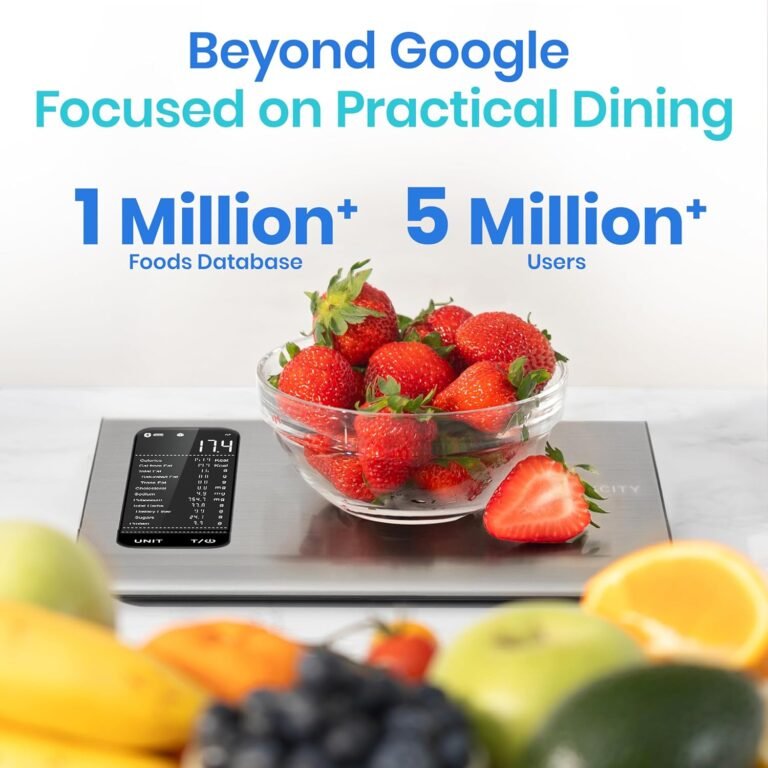
Etekcity Food Scale
0.1g accuracy — the perfect companion for exact portions.
Frequently Asked Questions (FAQ)
1. Do I really need a high-speed blender for a vegan diet?
While you can survive without one, a high-speed blender is highly recommended. Standard blenders leave a gritty texture when blending nuts, seeds, and fibrous greens. A high-speed model creates the perfectly silky dairy-free creams, cheeses, and soups that make plant-based eating enjoyable.
2. Are air fryers worth it for plant-based cooking?
Absolutely. One of the main challenges of cooking vegetables and tofu is achieving a satisfying, crispy texture without deep frying. An air fryer uses rapid air circulation to crisp up plant-based proteins and veggies in a fraction of the time it takes a conventional oven, using little to no oil.
3. How do I weigh and track vegan macros accurately?
Using a digital kitchen scale ensures you are measuring exact grams of nuts, seeds, and proteins, which are calorie-dense. While a smart scale helps during the actual prep phase by giving you exact weights, tracking those complex meals requires a more integrated solution (which we discuss below).
4. What is the most essential tool for cooking beans and legumes?
An electric pressure cooker (like the Instant Pot) is the holy grail for legumes. It completely eliminates the need to soak beans overnight and reduces cooking times by up to 70%, allowing you to make large, inexpensive batches of plant protein from scratch.
5. How can I ensure I am getting enough complete proteins with these meals?
By batch-cooking a variety of whole grains and legumes, you set yourself up for success. If you are unsure of the best pairings to maximize your amino acid intake, be sure to read our comprehensive guide on how to combine plant proteins for perfectly balanced meals.
Conclusion: The Ultimate Frictionless Companion
Upgrading your kitchen with these premium gadgets will drastically reduce the physical friction of preparing delicious vegan meals. However, whether your goal is weight loss, muscle gain, or simply ensuring you are hitting your protein and micronutrient targets on a plant-based diet, the mental friction of tracking your food can still be a massive hurdle.
While a smart food scale is excellent for precise baking or portioning out raw ingredients, entering every single recipe component into a traditional calorie counting app is exhausting.
That is where nutrientscalculator.com/ becomes the ultimate companion to your new kitchen setup. Instead of manually searching databases, typing in ingredient weights, and trying to calculate the macros of your homemade Vitamix smoothie or Instant Pot lentil stew, you simply snap a photo of your food.
Powered by advanced smart analysis, nutrientscalculator.com/ instantly provides accurate nutritional insights directly from the image. There is no manual logging, no endless typing, and no guesswork. You spent the time cooking a beautiful plant-based meal with your new tools—let nutrientscalculator.com/ do the heavy lifting of tracking it, so you can just sit down and enjoy.
