
Bell peppers are a staple vegetable in cuisines worldwide, from Mediterranean stir-fries to Mexican salsas and Asian curries. They’re popular among people managing their weight, building muscle, and controlling blood sugar because they’re low in calories but nutrient-dense. Whether you’re raw-chopping them into salads or roasting them as a side dish, bell peppers fit easily into most eating patterns.
But exactly how many calories are in a bell pepper, and what’s inside nutritionally? This guide breaks down the complete nutrition profile, compares colors and preparations, and shows you how to measure portions accurately—so you can include them confidently in any meal plan.
Calories in Bell Pepper (Quick Answer)
A medium raw bell pepper contains roughly 30 calories, making it one of the lowest-calorie vegetables you can eat.
- Medium raw bell pepper (about 120g): 30 calories
- Large raw bell pepper (about 188g): 37 calories
- Roasted bell pepper (1 cup, about 150g): 37 calories
Values vary slightly by color, ripeness, and variety, but all bell peppers are exceptionally low in calories regardless of preparation.
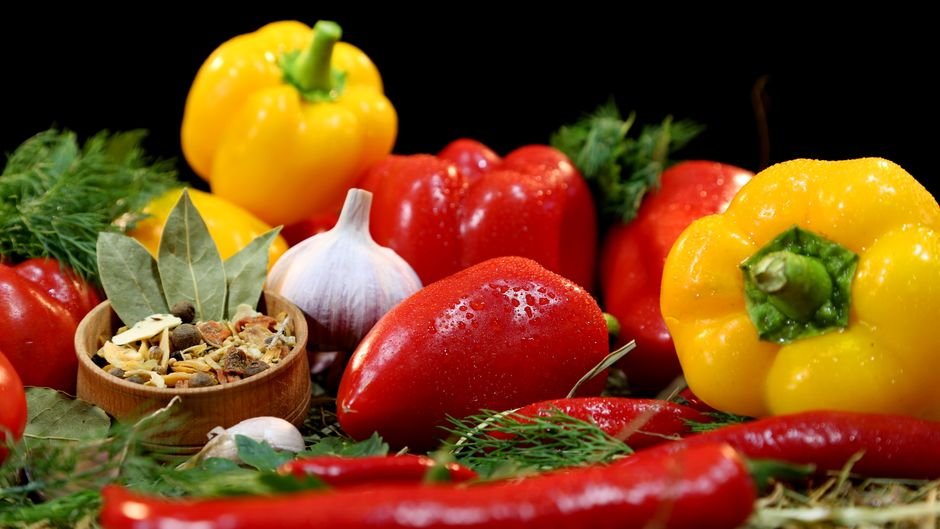
Full Nutrition Facts for 1 Medium Raw Bell Pepper (120g)
Here’s the complete nutritional breakdown of a medium raw bell pepper, using USDA data as the reference point for all macronutrients and micronutrients:
| Nutrient | Amount | % Daily Value |
|---|---|---|
| Calories | 30 | — |
| Total Fat | 0.3g | 0% |
| Saturated Fat | 0.05g | 0% |
| Cholesterol | 0mg | 0% |
| Sodium | 2mg | 0% |
| Total Carbohydrate | 7g | 2% |
| Dietary Fiber | 1.3g | 5% |
| Total Sugars | 4.2g | — |
| Protein | 1g | 2% |
| Vitamin C | 95mg | 158% |
| Vitamin A (RAE) | 117mcg | 13% |
| Potassium | 156mg | 4% |
*Percent Daily Values are based on a 2,000-calorie diet. Source: USDA FoodData Central.
Key insight: Bell peppers are exceptionally high in vitamin C—a single medium pepper delivers 158% of your daily need. This antioxidant supports immune function, collagen production, and iron absorption. The fiber content aids digestion despite the low calorie count, and the natural sugars (4.2g) come bundled with water and nutrients rather than empty calories.
Etekcity Food Scale
0.1g accuracy — the perfect companion for exact portions.
Red vs. Green Bell Peppers: What’s the Difference?
Red Bell Peppers
- Sweeter flavor due to higher natural sugar (about 5g per medium pepper vs. 3g in green)
- Higher in vitamin C and antioxidants like lycopene; more vibrant red color indicates ripeness and nutrient density
- Slightly higher calorie count: about 37 calories per medium pepper due to sugar content
Green Bell Peppers
- More bitter, grassy taste; harvested earlier in the ripening cycle
- Lower in sugar and slightly lower in calories (about 30 per medium pepper); still excellent vitamin C source
- Slightly higher in chlorophyll; often preferred raw in salads or used for their fresh, crisp texture
Which to choose? If you’re strictly limiting calories, green peppers are marginally lower. If you want maximum antioxidants and don’t mind the extra 7 calories, red peppers pack more nutrients. Both are excellent additions to any meal. The color difference is purely ripeness—green peppers are immature, red peppers are fully ripe.

Is Bell Pepper Good for Weight Loss?
Yes. Bell peppers are among the best vegetables for weight loss. At 30 calories per medium pepper with high water and fiber content, they fill your stomach without adding significant calories to your daily intake. The fiber slows digestion and keeps you satisfied longer, while the low glycemic load means they won’t spike blood sugar or trigger cravings. You can eat multiple peppers in a day without worrying about calorie overload.
Tips to Eat Bell Pepper Without Gaining Weight:
- Eat them raw — raw peppers are lowest in calories and retain all fiber and enzymes; roasting or grilling adds minimal calories but changes the texture
- Pair with protein, not just carbs — combine sliced peppers with hummus, cottage cheese, or grilled chicken to balance your meal and stay full longer
- Watch added oils and dressings — roasted peppers are healthy, but oil-heavy recipes can push calories past 100 per serving; use minimal oil or cooking spray
- Use them as a base, not a topping — fill half your plate with peppers rather than treating them as a minor garnish, so you naturally eat less calorie-dense foods
Bell peppers are nearly impossible to overeat from a calorie perspective. Even if you consumed an entire large pepper as a snack, you’d consume only 37 calories—equivalent to a few almonds.
How Portion Size Affects Calories
Because bell peppers are so low in calories, portion size has minimal impact on total intake. A small pepper and a large pepper differ by only about 10 calories. This makes peppers one of the few vegetables where you don’t need to strictly limit portions; the calories simply don’t add up. However, how you prepare them and what you pair them with matters far more than the pepper itself.
Example:
- Small raw bell pepper (about 75g): 18 calories
- Large raw bell pepper (about 188g): 37 calories—just 19 more calories
Even doubling your portion only doubles your calorie intake by a small amount, so peppers are inherently portion-friendly.
Best Way to Measure Bell Pepper Accurately
For nutrition tracking purposes, the most accurate way to measure bell peppers is by weight in grams using a kitchen scale. This removes guesswork and accounts for natural size variation. If a scale isn’t available, you can estimate by visual portion or use the USDA’s standard serving sizes. Note that calorie counts for raw peppers are nearly identical whether you’ve removed seeds and stem (which contain minimal calories) or not.
Options:
- Kitchen scale (most accurate): Weigh the whole pepper after removing stem and seeds—roughly 120g for a medium pepper
- Whole pepper (quick estimate): Medium = fist-sized, roughly 30 calories; large = both hands cupped, roughly 37 calories
- Chopped measurement: 1 cup of diced raw pepper (about 150g) = 30 calories, making it easy to portion into salads or meals
Calculate Your Exact Calorie Intake
If you’re tracking calories from bell peppers across an entire day—combined with proteins, grains, and oils—knowing the exact count of just the pepper isn’t enough. You need to see how it fits into your complete nutritional picture, including macros and micronutrients.
Our free AI nutrients calculator does exactly that. Input your meal and it instantly generates calories, protein, carbs, fat, fiber, and micronutrients—then suggests adjustments if needed. It’s faster and more accurate than manually looking up each food.
- Track multiple foods in one meal instantly
- See macro and micronutrient breakdowns at a glance
- Get personalized suggestions based on your goals
Use the free nutrients calculator to log your bell pepper intake alongside other ingredients and see your complete nutritional profile.
Common Mistakes When Eating Bell Pepper
While bell peppers are hard to misuse nutritionally, here are a few habits that can undermine your health or weight loss goals:
❌ Assuming all preparation methods are equal — roasting peppers in 2 tablespoons of olive oil adds 240 calories, completely changing the nutritional profile from a 30-calorie vegetable to a 270-calorie side dish
❌ Neglecting the skin and seeds — the skin holds most of the fiber and nutrients; peeling peppers removes nutritional value, so eat them whole or leave the skin on when cooking
❌ Treating peppers as “free food” and ignoring what they’re paired with — bell peppers alone are low-calorie, but stuffed peppers, pepper-based stews, or peppers drenched in cream sauce can become calorie bombs
❌ Buying pre-cut peppers without checking price and freshness — pre-cut peppers cost 3–4x more per ounce and often have reduced nutrient density after processing and storage
The simplest approach: buy whole peppers, eat them raw or lightly cooked, and pay attention to added fats rather than the pepper itself.
FAQ
How many calories are in 100g of bell pepper?
A 100g serving of raw bell pepper contains about 25 calories. This is the standard metric measurement used in nutrition databases and on European food labels.
Is bell pepper fattening?
No. Bell peppers are not fattening. At 30 calories per medium pepper with virtually no fat, they’re one of the least fattening vegetables available. The only way they could contribute to weight gain is if consumed in extremely large quantities (which is unlikely) or paired with high-calorie dressings or cooking oils.
Which color bell pepper has the most nutrients?
Red bell peppers have the highest nutrient density overall, especially for vitamin C, lycopene (a powerful antioxidant), and beta-carotene. Green peppers are younger and slightly lower in these compounds but still nutritionally excellent. Yellow and orange peppers fall in between.
Can I eat bell peppers raw every day?
Yes, absolutely. Raw bell peppers are safe to eat daily and are actually best consumed raw to maximize enzyme and vitamin C content. Many people include them in daily salads, snacks, or meal prep without any issues. Just wash them before eating to remove any surface residue.
Conclusion
Bell peppers are a nutritional powerhouse in a low-calorie package. At just 30 calories per medium pepper, they deliver exceptional amounts of vitamin C, fiber, antioxidants, and potassium—making them ideal for weight loss, disease prevention, and general wellness. Whether raw, roasted, or cooked into meals, they’re one of the few foods you can eat generously without calorie concerns.
The key is understanding how you prepare them and what you pair them with. A plain roasted or raw bell pepper remains a fantastic choice; the same pepper buried in oil or cream sauce is different story. Use a reliable nutrients calculator when combining peppers with other ingredients to see your complete nutritional picture and ensure your meals align with your goals.
