
Walnuts are one of the most nutrient-dense tree nuts and have been eaten for thousands of years across Europe, Asia, and North America. They’re a staple for people pursuing health goals like heart disease prevention, weight management, and brain health, and fit into nearly every diet pattern—vegan, paleo, keto, and Mediterranean alike.
If you’re adding walnuts to your diet or tracking your intake, the first question is always the same: How many calories are in walnuts? This article breaks down the exact calorie count, complete nutrition facts, and practical guidance on portion control so you can make informed choices.
Calories in Walnuts (Quick Answer)
A one-ounce serving of walnuts (about 14 halves) is the standard reference portion.
- 1 ounce (28g) of raw walnuts: 185 calories
- 1 cup of chopped raw walnuts (120g): 793 calories
- 1 walnut half: approximately 13 calories
Calorie content is consistent across raw and roasted walnuts without added oils, though salted or candied varieties may differ slightly due to added ingredients.
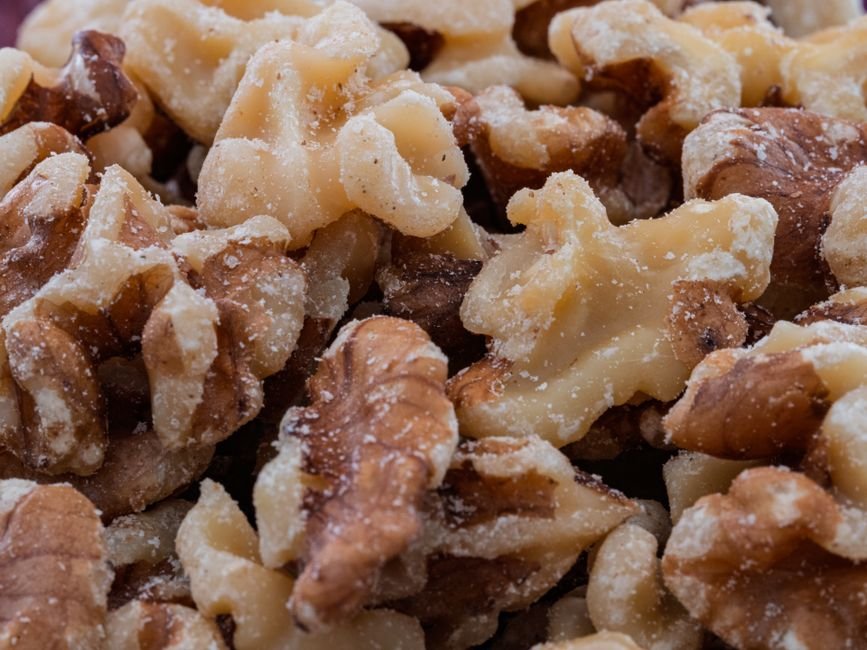
Full Nutrition Facts for 1 Ounce (28g) of Walnuts
Raw walnuts are exceptionally calorie-dense due to their high fat content, but the fat is predominantly heart-healthy polyunsaturated and monounsaturated fats. Here’s the complete breakdown per standard serving:
| Nutrient | Amount | % Daily Value |
|---|---|---|
| Calories | 185 | 9% |
| Total Fat | 18.5g | 24% |
| Saturated Fat | 1.7g | 8% |
| Cholesterol | 0mg | 0% |
| Sodium | 2mg | <1% |
| Total Carbohydrate | 3.9g | 1% |
| Dietary Fiber | 1.9g | 7% |
| Total Sugars | 0.4g | — |
| Protein | 4.3g | 9% |
| Omega-3 fatty acids (ALA) | 2.5g | — |
| Magnesium | 45mg | 11% |
| Copper | 0.4mg | 19% |
*Percent Daily Values are based on a 2,000-calorie diet. Source: USDA FoodData Central.
Key insight: Walnuts are the only major tree nut with significant omega-3 fatty acid content (alpha-linolenic acid). A single ounce delivers 2.5g of ALA, which your body can convert to other omega-3s and has been shown in research to support cardiovascular and brain health. Despite their high calorie density, the fiber and protein content helps slow digestion and promote satiety, making them less calorie-impactful than the numbers alone suggest.

Etekcity Food Scale
0.1g accuracy — the perfect companion for exact portions.
Raw Walnuts vs. Roasted Walnuts
The preparation method significantly affects taste, shelf life, and nutritional profile. Raw and roasted walnuts differ in subtle but meaningful ways:
Raw Walnuts
- Maximum retention of heat-sensitive nutrients like polyphenols and B vitamins
- Slightly bitter, earthy flavor that pairs well in salads and plant-based dishes
- Lower shelf stability; prone to rancidity if stored improperly or kept too long
Roasted Walnuts
- Enhanced nutty flavor and improved digestibility; some enzyme inhibitors are reduced by heat
- Better shelf life due to moisture removal, reducing risk of mold and oxidation
- Negligible calorie difference (185 vs. 187 per ounce); no meaningful nutrient loss unless roasted at very high temperatures
Practical takeaway: Choose raw walnuts if you prioritize maximum micronutrient content and consume them within 3–4 months of purchase. Choose roasted walnuts if you want superior flavor, longer storage, and ease of digestion—the nutritional difference is minimal, and roasting doesn’t degrade the heart-protective omega-3s significantly.
Is Walnut Good for Weight Loss?
Yes, walnuts can support weight loss despite their calorie density. Multiple clinical studies show that nut consumers—including walnut eaters—tend to weigh less over time than non-nut eaters, likely because the combination of protein, fiber, and fat triggers fullness hormones (satiety) and reduces overall calorie intake later in the day. The key is portion awareness: 1 ounce is a satisfying serving that won’t derail a calorie deficit if eaten intentionally.
Tips to Eat Walnuts Without Gaining Weight:
- Measure your portions: Use a small handful (about 14 halves = 1 oz = 185 calories) as your default serving, not a fistful from the bag.
- Add to meals, don’t snack mindlessly: Mix walnuts into oatmeal, salads, or plant-based proteins to boost satiety and prevent overeating later.
- Avoid candied or honey-roasted varieties: These add 30–50 extra calories per ounce from added sugar; stick to raw or dry-roasted.
- Pair with low-calorie foods: Combine walnuts with leafy greens, berries, or unsweetened yogurt to create nutrient-dense, low-calorie meals.
When eaten as part of a balanced diet, walnuts are a weight-loss ally, not an obstacle. The satiety they provide means you naturally eat fewer calories overall.
How Portion Size Affects Calories
Walnuts are so calorie-dense that portion size makes an enormous difference. A small increase in volume can quickly lead to 100+ extra calories. Mindless snacking directly from a bag is one of the easiest ways to exceed your daily calorie target, so measuring ahead of time prevents overeating.
Example:
- Small portion (0.5 oz / 7 halves): 92 calories — good for a snack or garnish
- Large portion (2 oz / 28 halves): 370 calories — roughly equivalent to a full lunch for some diets
Pre-portion walnuts into small containers or measure them on a kitchen scale to maintain consistent control.
Best Way to Measure Walnuts Accurately
Because walnuts vary in size and shape, eyeballing portions is unreliable. The gold standard for accuracy is a digital kitchen scale, which eliminates guesswork and lets you track your exact intake if you’re logging calories.
Options:
- Kitchen scale (most accurate): Measure 28g for one standard serving. Takes 10 seconds and eliminates estimation error.
- Counting method: One walnut half weighs roughly 2g, so 14 halves = 1 oz. Counting is fast once you learn your walnut size, but varies with freshness and variety.
- Volume measurement: 1 ounce of chopped walnuts ≈ ¼ cup. This works for recipes but is less precise for strict calorie tracking than weight.
Calculate Your Exact Calorie Intake
If walnuts are a regular part of your diet, tracking their exact contribution to your daily calories matters—especially if you’re managing your weight or have specific nutritional goals. A personalized calculation based on your precise portions and the other foods you eat gives you far more accuracy than generalized recommendations.
The site’s free AI nutrients calculator lets you enter your exact walnut portions (in grams or by count) alongside your other foods to see your real-time totals for calories, protein, carbs, fat, and micronutrients.
- Track walnuts by weight to the gram for perfect accuracy
- See how they fit into your daily calorie and macro targets in real time
- Adjust portions instantly to meet your nutritional goals without guessing
Common Mistakes When Eating Walnuts
Even health-conscious eaters often make missteps with walnuts. Here are the most common pitfalls:
❌ Eating walnuts from the bag without measuring: A handful can easily be 1.5–2 oz (280–370 calories) instead of the intended 1 oz, doubling your intake without realizing it.
❌ Choosing candied, chocolate-covered, or honey-roasted varieties: These add 40–80 calories per ounce from added sugars and oils, undermining the nut’s nutritional advantage.
❌ Storing walnuts at room temperature: Heat and light cause the polyunsaturated fats to oxidize and go rancid, reducing nutrient quality and creating a stale taste that signals spoilage.
❌ Assuming all nuts have identical nutrition: Walnuts are unique for omega-3 content; almonds, cashews, and pecans have very different macronutrient profiles, so swapping them won’t yield the same health benefits.
Small adjustments to how you buy, store, and portion walnuts will keep them a staple of healthy eating.
FAQ
How many calories are in 100g of walnuts?
100 grams of raw walnuts contains approximately 660 calories. Since 28g (1 oz) has 185 calories, 100g is roughly 3.6 times that amount. Most of the calories come from fat, but the fat is predominantly unsaturated.
Is walnut fattening?
Walnuts are calorie-dense and high in fat, so they can contribute to weight gain if eaten in unlimited quantities. However, research shows that regular moderate walnut consumption (1–2 oz daily) is associated with weight loss or maintenance, not gain, because their protein and fiber content triggers fullness and reduces total daily calorie intake. The key is portion control and intentional eating, not avoidance.
Do walnuts have cholesterol?
Walnuts contain zero dietary cholesterol because they are plant-based. They do contain fats (including saturated fat), but the saturated fat content is very low (1.7g per ounce). They may actually help lower LDL (“bad”) cholesterol when they replace less healthy foods in your diet.
Can I eat walnuts every day?
Yes. Eating 1 ounce (28g) of walnuts daily is widely recommended by cardiologists and nutritionists as part of a heart-healthy diet. This amount provides omega-3 fatty acids, polyphenols, and minerals without excess calories. Consistent daily intake (rather than sporadic larger portions) provides the most stable benefits for brain and cardiovascular health.
Conclusion
Walnuts are a calorie-dense but nutrient-rich food that deserves a place in most diets. At 185 calories per ounce, they’re high in fat—but that fat is predominantly heart-protective, and their omega-3 content is unmatched among nuts. The protein and fiber they provide trigger satiety, meaning they often lead to lower total calorie intake rather than weight gain. For weight loss, heart health, and cognitive function, the evidence strongly supports regular consumption of measured portions.
The practical path forward is straightforward: measure your walnuts consistently (a kitchen scale takes seconds), stick to 1 ounce as your standard serving, and integrate them intentionally into meals rather than eating mindlessly from the bag. If you’re logging your nutrition, use a **reliable calorie and nutrients calculator** to ensure walnuts fit your daily targets—this removes guesswork and keeps you accountable to your actual goals, not assumptions.
