
Apples are one of the most widely consumed fruits globally, eaten fresh, baked, or pressed into juice across nearly every culture and climate. They’re a staple for weight loss diets, diabetes management, and general wellness—partly because they’re accessible and affordable, but mainly because they’re nutrient-dense while remaining relatively low in calories. Whether you’re tracking macros, managing blood sugar, or simply trying to eat healthier, apples deliver fiber, antioxidants, and natural sugars in a convenient, portable package.
But how many calories are actually in an apple, and does serving size matter? The answer depends on the variety, size, and whether you’re eating the skin. In this article, we’ll break down the complete nutrition profile, show you how portion size affects your intake, and give you practical strategies to include apples in a weight-loss or diabetes-friendly diet.
Calories in Apple (Quick Answer)
A medium apple with skin is your reference point. Here’s what to expect across common sizes:
- Small apple (149g) – 77 calories
- Medium apple with skin (182g) – 95 calories
- Large apple (223g) – 116 calories
Calorie counts rise slightly if you peel the apple (you remove some fiber but keep most carbs) and vary a little by variety—Honeycrisp, Gala, and Fuji tend to be slightly sweeter and marginally higher in calories than Granny Smith.
Full Nutrition Facts for Medium Apple (182g) with Skin
A medium apple with skin represents the most common serving and baseline for apple nutrition data:
| Nutrient | Amount | % Daily Value |
|---|---|---|
| Calories | 95 | — |
| Total Fat | 0.3g | <1% |
| Saturated Fat | 0.1g | <1% |
| Cholesterol | 0mg | 0% |
| Sodium | 2mg | <1% |
| Total Carbohydrate | 25g | 9% |
| Dietary Fiber | 4.4g | 16% |
| Total Sugars | 19g | — |
| Protein | 0.5g | 1% |
| Vitamin C | 5.7mg | 10% |
| Potassium | 195mg | 6% |
| Vitamin K | 4.0mcg | 5% |
*Percent Daily Values are based on a 2,000-calorie diet. Source: USDA FoodData Central.
Key insight: Nearly half an apple’s carbohydrates come from fiber (4.4g per medium apple), which slows sugar absorption, keeps you fuller longer, and doesn’t spike blood glucose as aggressively as the same amount of refined carbs. The remaining 19g of natural sugars is glucose and fructose—real food sugars, not added—making apples far gentler on blood sugar than juice or sweetened products.

Etekcity Food Scale
0.1g accuracy — the perfect companion for exact portions.
Red Apple vs. Green Apple: Which Is Better?
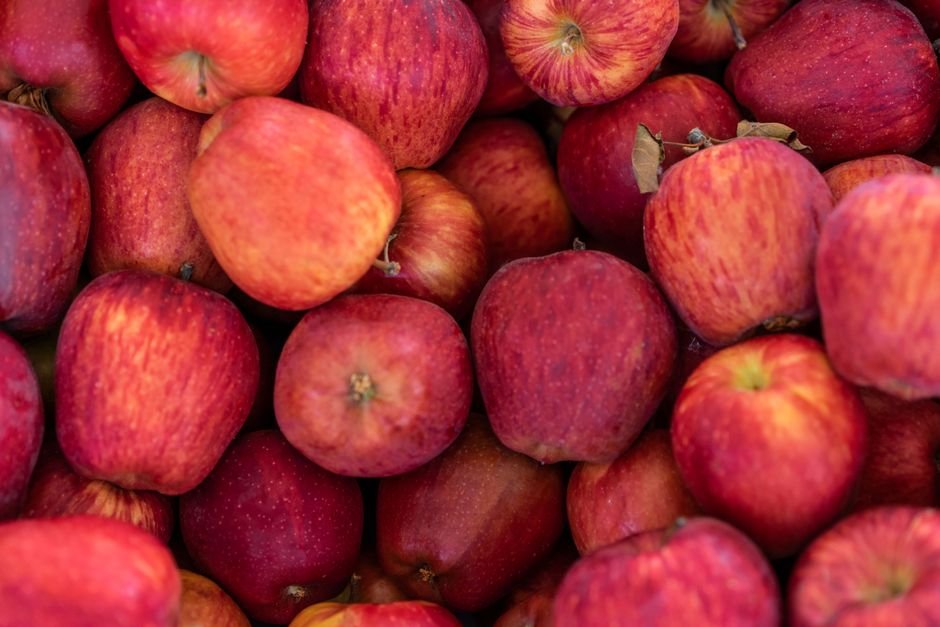
Red Apple (e.g., Gala, Fuji, Red Delicious)
- Slightly higher natural sugar content (19–21g per medium apple); sweeter taste and more appealing to those with a sweet tooth
- Contains more anthocyanins, a powerful antioxidant linked to heart health and inflammation reduction
- Typically 95–105 calories per medium apple; virtually negligible difference from green varieties
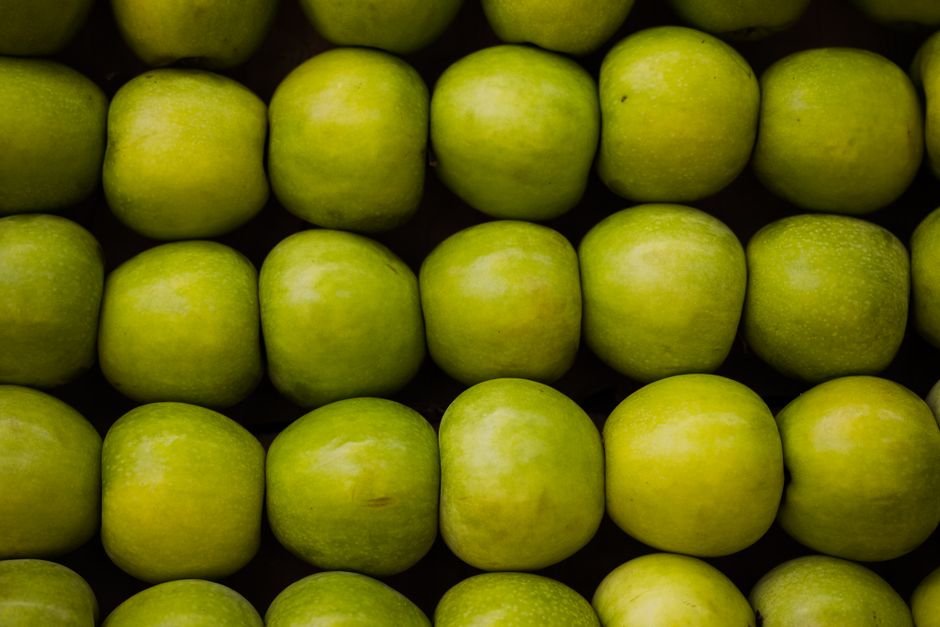
Green Apple (e.g., Granny Smith)
- Lower natural sugar (17–18g per medium apple); tangier taste makes them ideal for those managing blood sugar closely
- Slightly higher malic acid, which supports digestive health and may enhance nutrient absorption
- Marginally lower calorie count (90–95 calories per medium apple); the difference is minimal but green apples edge slightly ahead for strict calorie control
Practical takeaway: The calorie and macro differences between red and green apples are negligible. Choose based on taste and blood sugar goals: green apples for better glycemic control, red apples if you want antioxidant benefits and don’t mind slightly higher natural sugars. Both are excellent choices.
Is Apple Good for Weight Loss?
Yes, apples are excellent for weight loss. At 95 calories per medium apple and packed with 4.4g of fiber, they satisfy hunger without excess calories. The fiber fills your stomach, triggering satiety signals to your brain, which means you eat less at your next meal. Studies show that eating whole fruits—not juice—correlates with lower body weight and reduced appetite over time. One medium apple can replace a 200-calorie snack and deliver more nutrients, making it a swap that works in your favor.
Tips to Eat Apple Without Gaining Weight:
- Eat the whole fruit, not juice: A medium apple delivers 95 calories and 4.4g fiber; the same juice pours in 120 calories with almost zero fiber and spikes blood sugar faster.
- Pair it with protein: Eat your apple with a handful of almonds, Greek yogurt, or peanut butter. The protein and fat slow sugar absorption and extend satiety by 2–3 hours.
- Don’t add sugar or caramel: Candied apples, apple crisps, or baked apples with brown sugar can double or triple your calorie intake. Stick to fresh, or bake with cinnamon instead.
- Watch portion size: One medium apple is a standard serving. Eating three apples daily adds 285 calories, which can derail a calorie deficit if you don’t account for it.
The bottom line: apples fit naturally into a calorie deficit. Their fiber and water content create volume with minimal calories, making them one of the most weight-loss-friendly fruits available.
How Portion Size Affects Calories
Apple calories scale almost linearly with size. A small apple (149g) gives you 77 calories; a large one (223g) delivers 116. The difference is real: eating two large apples instead of two medium apples adds about 42 calories—small on its own, but over a week that’s 294 calories, or roughly 0.1 pounds of fat. For precision calorie counting, especially in a strict deficit, measuring apple weight matters.
Example:
- Small apple (149g): 77 calories, 20g carbs, 3.6g fiber
- Large apple (223g): 116 calories, 31g carbs, 5.3g fiber
If you’re snacking and your plan allows 100 calories, reach for a small apple. If you have 150 calories to spare, a large apple with a piece of cheese works perfectly.
Best Way to Measure Apple Accurately
The most practical approach is weighing. A kitchen scale gives you exact figures: 182g = 95 calories. If you don’t have a scale, visual estimation works reasonably well—a medium apple fits in your palm and weighs about as much as a tennis ball. For tracking apps, “1 medium apple” is standardized and accepted, though individual apples vary by 10–15%. Peeling makes almost no difference to calorie count (you’re removing mostly fiber and water, not calories), but it does reduce your fiber intake by about 1–2g.
Options:
- Kitchen scale: Most accurate; takes 5 seconds and removes all guesswork. Use this if you’re in a strict deficit or managing diabetes.
- Volume/visual estimate: A medium apple ≈ one closed fist or the size of a tennis ball. Good enough for general health tracking, less precise for calorie deficits.
- Nutrition app log: Search “apple” and select “1 medium apple with skin.” Apps use USDA data and are standardized, making them consistent across days and useful for trend tracking.
Calculate Your Exact Calorie Intake
If you’re eating apples daily as part of a broader diet, knowing your total calorie intake matters. One apple might fit easily, but adding snacks, drinks, and meals can blur the picture quickly. How do you know if you’re truly in a deficit or eating more than you think?
Our free AI nutrients calculator instantly reveals calories, macros, fiber, and micronutrients for any food or meal combination. Simply enter “apple” (or a full day’s meals), and get a complete breakdown—no manual lookup, no app switching. Use our free nutrients calculator to track your actual intake and adjust in real time.
- Get instant calorie and macro counts for apples and any other food
- Track fiber, sugar, and micronutrients—not just calories—for smarter choices
- Build daily meal plans and see totals instantly, no guesswork
Common Mistakes When Eating Apple
Even a healthy fruit can work against your goals if you make these four mistakes:
❌ Forgetting to count apple juice or dried apples: One cup of apple juice has 120 calories and zero fiber—twice as dense as a whole apple. One cup of dried apples (28g) packs 65 calories in a tiny serving, making it easy to overeat. Log them just like any other food.
❌ Eating apples with added sugars or sauces: A plain apple is 95 calories. Dip it in caramel (80–120 calories), whipped cream (50 calories per dollop), or brown sugar (15 calories per teaspoon), and you’ve easily doubled your intake. Cinnamon or lemon juice add flavor with zero calories.
❌ Eating while distracted and not stopping at one: Apples are easy to munch mindlessly. Two or three apples is 190–285 calories—more than a light meal for some diets. Eat deliberately, at a table, tracking as you go.
❌ Neglecting to pair apples with protein or fat: An apple alone creates a blood sugar spike that leaves you hungry 90 minutes later. Pair it with almonds, cheese, or peanut butter to stabilize digestion and stay satisfied longer.
Avoid these four, and apples become your reliable, filling, nutrient-dense snack.
FAQ
How many calories are in 100g of apple?
A 100g serving of raw apple with skin contains approximately 52 calories. That’s roughly 55% of a medium apple (182g), making it useful for precise portion control or international recipe conversions.
Is apple fattening?
No. Apples are low in calories, high in fiber, and promote satiety—all markers of weight-loss-friendly foods. The natural sugars are real, but balanced by fiber and water. Apples don’t cause fat gain unless eaten in excess or paired with high-calorie additions like caramel or sugar.
Are green apples better for blood sugar than red apples?
Slightly. Green apples like Granny Smith have marginally lower sugar (17–18g vs. 19–21g in red apples) and more malic acid, which may slow glucose absorption. The difference is small; both are suitable for diabetics when eaten whole with skin. Portion control matters far more than variety.
Can I eat apples every day for weight loss?
Yes, one apple daily is safe and beneficial for most people. It delivers 95 calories, 4.4g fiber, and vitamin C without excess sugar. If you eat two or three apples daily, count them in your total calories. Variety matters for micronutrient diversity, so rotate apples with berries, pears, and oranges throughout the week.
Conclusion
An apple is a nutritional powerhouse: 95 calories, substantial fiber, and no added sugar or sodium. The calorie-to-nutrient ratio is excellent for weight loss, blood sugar management, and general health. Red and green varieties are nearly equivalent in calories; choose based on taste and glycemic goals. Measure using a scale for precision, pair with protein to extend satiety, and avoid juice or sugary preparations to keep the benefit intact.
Apples fit seamlessly into any calorie-controlled diet. For complete transparency on your daily intake—tracking apples alongside all other foods—use a reliable nutrients calculator to ensure you’re hitting your targets. Consistent, accurate tracking combined with whole fruits like apples is your best formula for sustainable weight loss and better health.
