
Bok choy, a leafy green cruciferous vegetable from the cabbage family, has become increasingly popular in Western kitchens due to its mild flavor and nutritional density. Originally cultivated in China for over 1,500 years, it’s now a dietary staple in Asian cuisine and a favorite among health-conscious eaters pursuing weight loss, improved digestion, and disease prevention.
If you’re wondering “How many calories are in bok choy?” you’re likely interested in understanding whether it fits your nutrition goals. This article breaks down the complete calorie and nutrition facts for bok choy, explores how preparation affects its nutritional profile, and answers common questions about serving sizes and weight management.
Calories in Bok Choy (Quick Answer)
Here are the calorie counts for common bok choy servings:
- 1 cup raw chopped bok choy (about 70g) — 9 calories
- 1 whole head raw bok choy (about 500g) — 65 calories
- 1 cup steamed bok choy (about 170g) — 20 calories
Calorie content may vary slightly depending on the size of the plant, growing conditions, and water content at harvest.
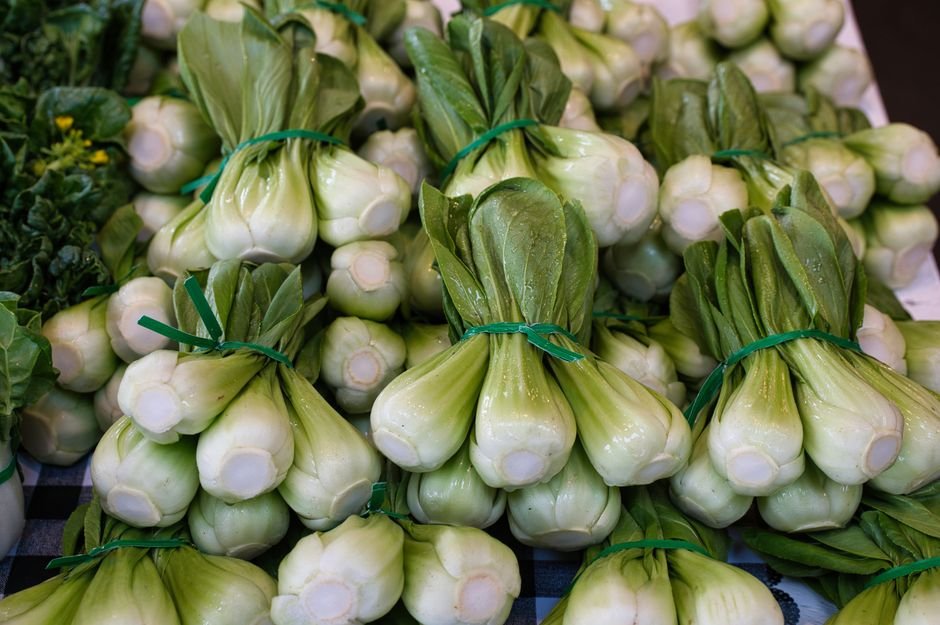
Full Nutrition Facts for 1 Cup Raw Bok Choy (About 70g)
Raw bok choy is over 95% water, making it an exceptionally low-calorie, nutrient-dense vegetable. Here’s the complete breakdown:
| Nutrient | Amount | % Daily Value |
|---|---|---|
| Calories | 9 | 0% |
| Total Fat | 0.1g | 0% |
| Saturated Fat | 0g | 0% |
| Cholesterol | 0mg | 0% |
| Sodium | 46mg | 2% |
| Total Carbohydrate | 1.5g | 1% |
| Dietary Fiber | 0.6g | 2% |
| Total Sugars | 0.3g | — |
| Protein | 1.1g | 2% |
| Vitamin A | 178 mcg RAE | 20% |
| Vitamin C | 22.4mg | 25% |
| Calcium | 79mg | 6% |
*Percent Daily Values are based on a 2,000-calorie diet. Source: USDA FoodData Central.
Key insight: Bok choy delivers exceptional micronutrient density despite being nearly calorie-free. The 178 mcg of Vitamin A supports eye health and immune function, while 22.4mg of Vitamin C (25% of daily value) aids collagen synthesis and antioxidant protection. For a vegetable with just 9 calories per cup, this nutrient-to-calorie ratio is remarkable and makes bok choy one of the most efficient foods for nutrient intake without caloric burden.

Etekcity Food Scale
0.1g accuracy — the perfect companion for exact portions.
Raw Bok Choy vs. Steamed Bok Choy: What Changes?
Raw Bok Choy
- Retains maximum fiber, enzymes, and heat-sensitive vitamins (especially Vitamin C)
- Delivers a mild, slightly sweet flavor with a crisp, crunchy texture ideal for salads
- Contains sulforaphane and other glucosinolates in their most bioactive form
Steamed Bok Choy
- Becomes softer and more tender, making it easier to digest and better for certain digestive conditions
- Increases bioavailability of carotenoids (like lutein) through gentle heat exposure
- Reduces goitrogens (compounds that can interfere with iodine absorption) through cooking
Practical takeaway: Both raw and steamed bok choy are nutritionally excellent. Raw bok choy preserves more Vitamin C and glucosinolates, while steaming enhances carotenoid absorption and reduces goitrogenic compounds. If digestive sensitivity is a concern, steaming is gentler; if you want maximum enzyme and phytonutrient preservation, eat it raw in salads.
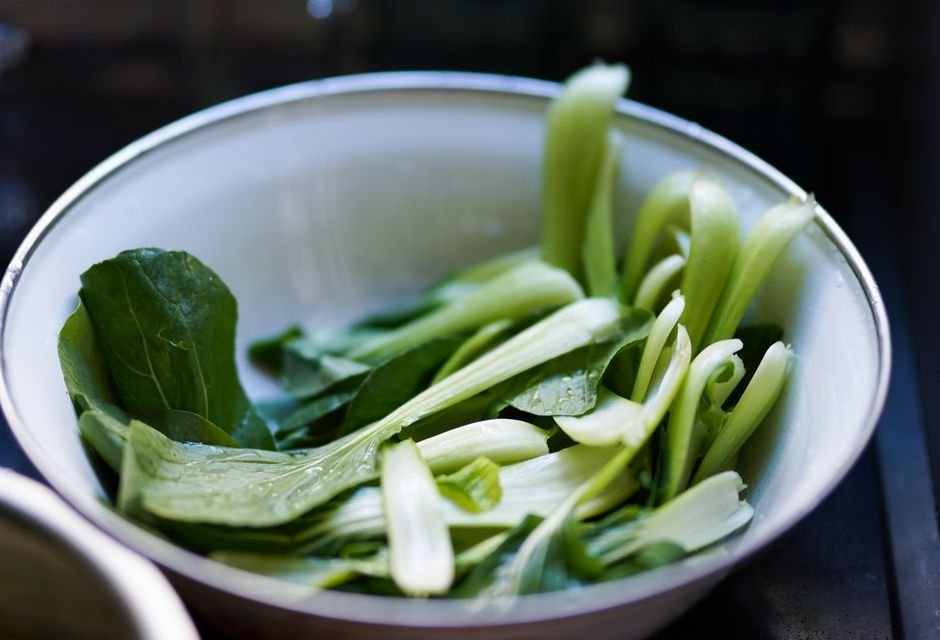
Is Bok Choy Good for Weight Loss?
Yes, bok choy is exceptional for weight loss. At just 9 calories per cup raw (or 20 calories steamed), it provides almost no caloric burden while delivering fiber, water, and satiating nutrients. Its low calorie density makes it ideal for building large, satisfying meals without excess energy intake. The protein content (1.1g per cup), though modest, along with fiber and water, promotes fullness and helps regulate blood sugar, reducing snacking urges.
Tips to Eat Bok Choy Without Gaining Weight:
- Watch the cooking method: Steaming, boiling, and stir-frying with minimal oil preserve the vegetable’s low-calorie profile; avoid smothering it in butter, cream-based sauces, or excessive oil.
- Pair it with lean protein: Combine bok choy with grilled chicken, tofu, or fish to create a complete, satiating meal that keeps you full for hours.
- Use it as a base: Make bok choy the foundation of Buddha bowls, stir-fries, and soups, filling half your plate with it to maximize volume and nutrients while minimizing calories from calorie-dense toppings.
- Control added fats: Limit oil in stir-fries to 1–2 teaspoons per serving; use broth, soy sauce, ginger, and garlic for flavor instead.
Bok choy’s versatility and minimal caloric impact make it one of the easiest vegetables to eat liberally during a weight loss program without derailing progress.
How Portion Size Affects Calories
Because bok choy is so low in calories, portion size has a surprisingly minimal impact on total energy intake. However, understanding serving sizes helps you accurately track nutrition and plan balanced meals. The water content and leafy structure mean volumes can look large while calories remain negligible.
Example:
- Small portion (1 cup raw, 70g): 9 calories, 1.1g protein, 1.5g carbs
- Large portion (4 cups raw, 280g): 36 calories, 4.4g protein, 6g carbs
Even doubling or tripling your portion adds minimal calories, making bok choy one of the few vegetables you can eat in very large amounts without caloric penalty.
Best Way to Measure Bok Choy Accurately
Accurate measurement is more important for tracking carbs and protein than calories (given how minimal they are), but consistency matters for meal planning. Bok choy’s leafy structure and variable water content make volume measurements approximate, so weight is more reliable for precise nutrition tracking.
Options:
- By weight (most accurate): Use a kitchen scale. 70g = 1 cup raw chopped; 170g = 1 cup steamed. This is the gold standard for nutrition tracking.
- By volume: 1 cup of raw, roughly chopped bok choy is a practical serving size for most meals, though it’s less precise than weighing.
- By whole head: A medium bok choy head weighs 300–500g raw. One half head is a reasonable single serving for cooked applications.
Calculate Your Exact Calorie Intake
Are you tracking your total daily calories and want to know your exact intake when you include bok choy and other foods? Manually calculating nutrition across multiple meals is tedious and error-prone.
Use a free AI nutrients calculator to log your meals instantly. Simply input the foods and portions you eat, and the calculator automatically sums your total calories, macronutrients, fiber, and key micronutrients. This removes guesswork and helps you stay accountable to your nutrition goals without the mental load of manual math. Try our free nutrients calculator today.
- Instantly see your total daily calories, protein, carbs, and fats across all meals
- Track micronutrients (fiber, Vitamin A, Vitamin C, calcium) to ensure you’re hitting health goals
- Adjust portions in real time to meet your targets without trial-and-error
Common Mistakes When Eating Bok Choy
Despite its simplicity, people often make choices that diminish bok choy’s nutritional benefits or underestimate its role in their diet:
❌ Overcooking until mushy: Prolonged boiling (over 5–7 minutes) leaches water-soluble vitamins (especially Vitamin C) and degrades the appealing texture. Steam for 3–4 minutes or stir-fry for 2–3 minutes instead.
❌ Drowning it in high-calorie sauces: A simple bok choy stir-fry can jump from 20 calories to 200+ calories with oyster sauce, sesame oil, and sugar. Use light soy sauce, rice vinegar, and minimal oil to keep calories in check.
❌ Forgetting to pair it with protein: Eating bok choy alone as a side creates an unbalanced meal lacking satiety. Include lean protein (chicken, tofu, fish) and a whole grain to create a complete, filling dish.
❌ Not washing thoroughly: Bok choy grows in clusters where soil hides between leaves. Rinse well under running water and separate leaves to remove dirt and potential pesticide residue.
Avoiding these pitfalls ensures bok choy remains a nutritional powerhouse in your diet.
FAQ
How many calories are in 100g of bok choy?
100g of raw bok choy contains approximately 13 calories. Steamed bok choy (100g) has about 12 calories, as cooking removes minimal energy but increases water loss slightly in the raw material.
Is bok choy fattening?
No, bok choy is not fattening. With only 9 calories per cup raw, it’s one of the lowest-calorie vegetables available. It’s actually an ideal food for weight loss and maintaining a lean body composition when prepared without added fats.
Does bok choy have any goitrogens, and is it safe for thyroid health?
Bok choy contains glucosinolates, compounds that can mildly interfere with iodine absorption when consumed in excessive raw quantities. However, normal consumption (a few cups per week) poses no thyroid risk, and cooking substantially reduces goitrogenic activity. If you have an existing thyroid condition, consult your doctor, but bok choy is generally safe for healthy individuals.
Can I eat bok choy raw, or should I always cook it?
You can safely eat bok choy raw. Raw bok choy is crisp, mild, and retains maximum Vitamin C and heat-sensitive phytonutrients. Cooking (steaming, boiling, stir-frying) is also excellent and can enhance certain nutrient bioavailability. Choose based on your preference and digestive comfort.
Conclusion
Bok choy is a nutritional superstar: nearly calorie-free, packed with Vitamin A, Vitamin C, and calcium, and loaded with fiber and phytonutrients. Its exceptional nutrient density relative to caloric burden makes it one of the smartest vegetable choices for anyone pursuing weight loss, improved health, or disease prevention. Whether you eat it raw in salads or steamed in stir-fries, bok choy delivers measurable nutritional value without the caloric penalty of many other foods.
To optimize your nutrition and track how bok choy fits into your overall calorie and macronutrient targets, rely on accurate food measurement and a reliable nutrients calculator. Knowing exactly what you’re eating—calories, protein, fiber, and micronutrients—removes guesswork and keeps you accountable to your goals. Start logging your meals today and watch how small, consistent choices like adding bok choy lead to lasting results.
