
Carrots are one of the world’s most widely eaten vegetables, prized for their natural sweetness, versatility, and year-round availability. Whether eaten raw as a snack, roasted as a side dish, or incorporated into soups and stews, carrots are a staple in countless diets—from weight loss plans to diabetes management protocols. They’re affordable, nutrient-dense, and accessible to virtually everyone, making them a practical choice for anyone trying to eat healthier.
If you’re tracking your nutrition or simply curious about what you’re eating, a natural question arises: how many calories are in carrots? This article breaks down the exact calorie content, complete nutrition facts, and practical guidance for incorporating carrots into your diet while meeting your health goals.
Calories in Carrots (Quick Answer)
Here’s what you need to know about carrot calories at a glance:
- 1 medium raw carrot (61g): 25 calories
- 1 cup raw carrot sticks (122g): 52 calories
- 1 cup boiled carrots (156g): 55 calories
These values assume standard orange carrots sold in most grocery stores. Calorie content can vary slightly depending on carrot variety (rainbow carrots, purple varieties), how ripe the carrot is, and the preparation method.
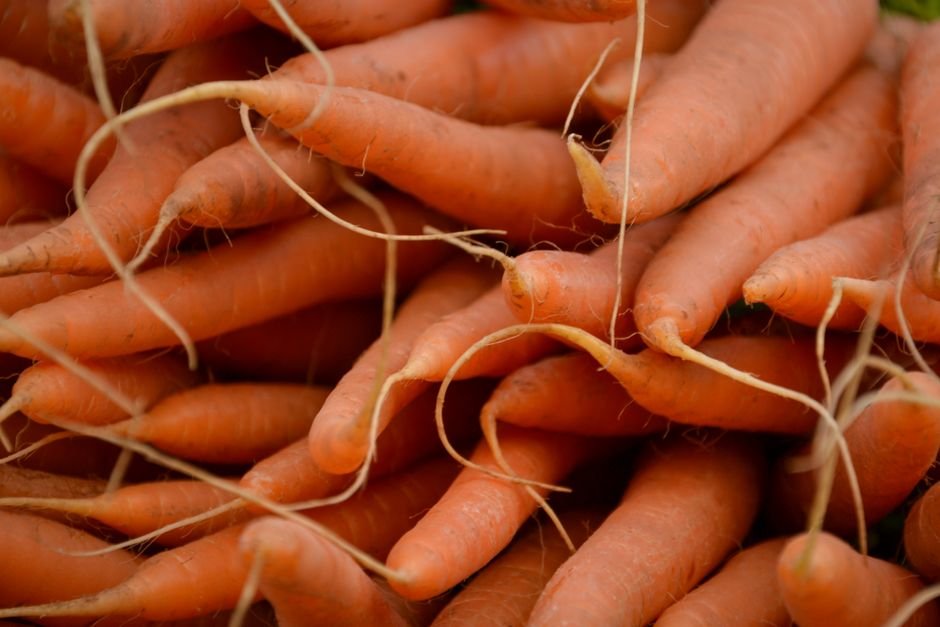
Full Nutrition Facts for 1 Medium Raw Carrot (61g)
A single medium raw carrot is one of the lowest-calorie whole foods you can eat, while delivering surprising micronutrient density. Here’s the complete breakdown:
| Nutrient | Amount | % Daily Value |
|---|---|---|
| Calories | 25 | 1% |
| Total Fat | 0.1g | <1% |
| Saturated Fat | 0.02g | <1% |
| Cholesterol | 0mg | 0% |
| Sodium | 42mg | 2% |
| Total Carbohydrate | 5.8g | 2% |
| Dietary Fiber | 1.7g | 6% |
| Total Sugars | 3.3g | – |
| Protein | 0.6g | 1% |
| Vitamin A (RAE) | 459mcg | 51% |
| Vitamin K | 8.1mcg | 7% |
| Potassium | 195mg | 4% |
*Percent Daily Values are based on a 2,000-calorie diet. Source: USDA FoodData Central.
Key insight: Carrots are exceptional for beta-carotene (the precursor to vitamin A), delivering over half your daily requirement in a single medium carrot—just 25 calories. This powerful antioxidant supports eye health, immune function, and skin health, making carrots one of the most nutrient-efficient vegetables available. The fiber and natural sugars are perfectly balanced for stable blood sugar.
Etekcity Food Scale
0.1g accuracy — the perfect companion for exact portions.
Raw Carrots vs. Cooked Carrots: Which Is Better?
Raw Carrots
- Crunchy texture, pleasant sweetness, and requires chewing—which signals satiety to your brain and takes longer to eat
- Retains maximum vitamin C and some heat-sensitive enzymes; beta-carotene is less bioavailable without heat or fat
- Lowest sodium and fastest to prepare; excellent for weight loss because they demand more chewing effort per calorie
Cooked Carrots
- Softer texture and sweeter taste (carrots’ natural sugars concentrate when cooked); easier to eat in larger quantities quickly
- Beta-carotene bioavailability increases significantly when heat breaks down cell walls; cook with a small amount of oil to absorb fat-soluble vitamins optimally
- Same calorie range (55 calories per cooked cup vs. 52 raw) but denser per volume, so portion awareness matters more
Takeaway: Raw carrots are better for weight loss because their crunch forces slower eating and higher satiety. Cooked carrots are better for nutrient absorption, especially beta-carotene. For best results, eat carrots both ways—raw as snacks, cooked in meals with a small amount of healthy fat (olive oil, butter, or avocado).
Is Carrots Good for Weight Loss?
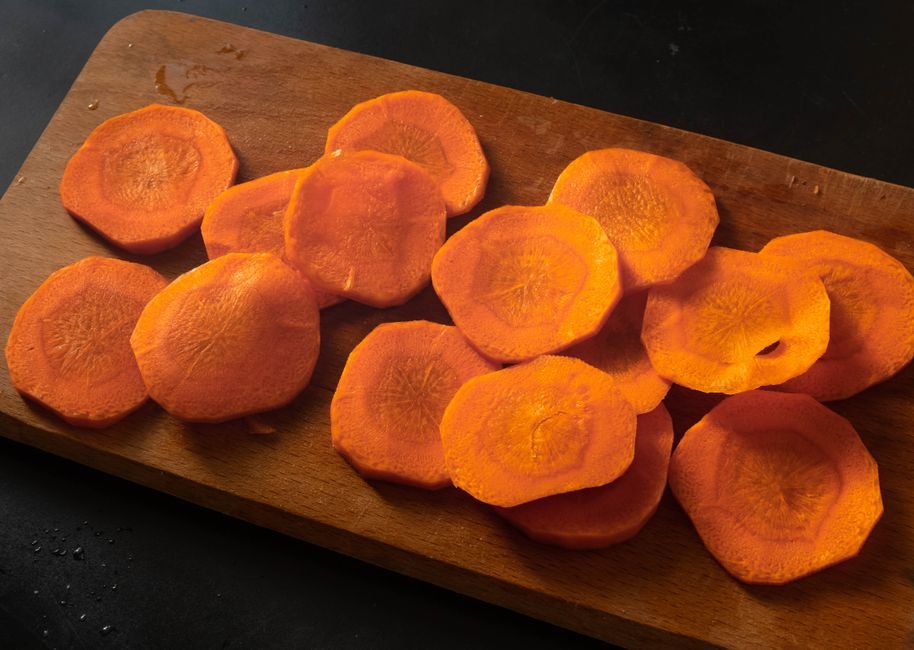
Yes, carrots are excellent for weight loss. At just 25 calories per medium carrot and loaded with fiber and water, they deliver exceptional satiety with minimal caloric impact. The natural sweetness satisfies sugar cravings without the empty calories of processed snacks, and the fiber helps regulate blood sugar and digestion. You could eat 10 medium carrots and still consume only 250 calories—roughly the same as a single chocolate bar. Carrots are also inexpensive, shelf-stable, and require zero preparation, removing common barriers to healthy snacking.
Tips to Eat Carrots Without Gaining Weight:
- Eat raw carrots whole or as sticks rather than shredded or “baby carrots,” which are easier to overeat unconsciously and have slightly higher sodium added
- Pair carrots with protein or healthy fat (hummus, nut butter, cheese) to boost satiety without guilt—the additions will still keep your meal under 200 calories
- Avoid candied, glazed, or roasted-with-excessive-oil preparations; instead, roast with just 1 teaspoon oil and minimal salt at 425°F for 25 minutes
- Use carrots as a “filler” vegetable in stews, curries, and stir-fries to add volume and satiety without adding significant calories
Because carrots are so low-calorie, you have freedom to eat them generously. The real weight-loss wins come from choosing carrots over higher-calorie alternatives and being mindful of what you pair them with—not from restricting carrot intake itself.
How Portion Size Affects Calories
Portion size matters far less for carrots than for most foods, but it’s worth understanding how quickly calories add up. A single medium carrot is 25 calories, but many people eat multiple carrots per sitting, especially when snacking mindlessly. Cooked carrots are denser than raw, so a cup of cooked carrots contains more actual carrot matter than a cup of raw sticks, affecting satiety differently. The key is awareness: one carrot feels trivial calorically, but five carrots (125 calories) is a meaningful snack.
Example:
- Small portion (1 medium raw carrot): 25 calories—ideal for a midday snack paired with water or herbal tea
- Large portion (1 cup raw carrot sticks, about 2 medium carrots): 52 calories—still negligible, but part of a balanced snack with hummus (98 extra calories)
For weight loss, there’s virtually no downside to eating carrots in quantity—but eating them mindfully (slowly, with purpose) maximizes satiety.
Best Way to Measure Carrots Accurately
The challenge with carrots is that sizing varies: a “medium” carrot from one store might differ from another, and inconsistent peeling adds variability. For true accuracy in tracking calories, weight is superior to visual estimation. A digital kitchen scale removes guesswork and takes seconds. If you don’t have a scale, consistent visual reference works—pick one medium carrot as your baseline and remember it takes roughly four of them to equal one cup, or about 100 calories.
Options:
- Digital kitchen scale (most accurate): Weigh raw carrot before preparation; 61g = 1 medium carrot = 25 calories. Scale costs $15–30 and is the gold standard for any serious nutrition tracking.
- USDA serving size reference: Memorize that 1 medium = 61g and 1 cup raw sticks = 122g. Take a photo of a medium carrot from your regular grocery store for future reference.
- Counting whole carrots: If portion size doesn’t need precision (e.g., you’re eating carrots for satiety, not competition prep), simply count: “I ate 2 medium carrots today” = 50 calories, and move on.
Calculate Your Exact Calorie Intake
If you’re eating carrots as part of a larger meal or tracking macronutrients for specific health goals (muscle building, diabetes management, or weight loss), calculating your total nutrition becomes essential. A single carrot’s numbers are simple, but combining carrots with other ingredients, oils, and proteins requires precision—and manual math is error-prone.
This site offers a free AI-powered nutrients calculator that lets you input foods, portions, and preparation methods to get instant, accurate calorie and macro breakdowns. Simply search “carrot” (or any food), select your preparation method and portion size, and the calculator does the rest. No signup required, and results are based on USDA data.
- Input multiple foods and see combined nutrition instantly—perfect for meal planning before you cook
- Track macronutrients (protein, carbs, fat) alongside calories to meet specific fitness or health goals
- Compare preparation methods side-by-side (raw vs. cooked, with oil vs. without) to make informed choices
Use the free calculator here to take the guesswork out of your carrot consumption and overall diet.
Common Mistakes When Eating Carrots
Despite carrots’ simplicity and low calorie count, people often undermine their nutritional value through preventable errors:
❌ Assuming “baby carrots” are more nutritious than full-size ones. Baby carrots are mechanically cut full-size carrots, sometimes treated with calcium chloride or chlorine (which is rinsed off). They’re convenient and still nutritious, but they’re no more nutrient-dense than regular carrots. Shredded baby carrots also oxidize faster, losing vitamin C.
❌ Ignoring preparation method and adding large amounts of oil or sugar. Roasting carrots with excessive butter, brown sugar, or marshmallows—as in holiday glazed carrots—can turn a 25-calorie vegetable into a 150+ calorie side dish. This defeats the weight-loss and blood-sugar benefits entirely.
❌ Drinking carrot juice instead of eating whole carrots. A glass of fresh-pressed carrot juice (8 oz) contains 80–100 calories and lacks the fiber of whole carrots, spiking blood sugar faster. You lose satiety without any caloric savings. Eat the whole carrot instead.
❌ Pairing carrots only with high-calorie dips. While carrots + hummus or carrots + ranch are tasty, people often misjudge dip portions. Two tablespoons of ranch dip (120 calories) can exceed the carrot itself. Measure your dip, or opt for yogurt-based dips, vinegar-based dressings, or simply enjoy carrots plain.
Most mistakes boil down to preparation and context—the carrot itself is nearly impossible to eat “wrong.”
FAQ
How many calories are in 100g of carrots?
100g of raw carrots contains approximately 41 calories. This is useful for international or precise tracking. A medium carrot is about 61g, so 100g equals roughly 1.5 medium carrots.
Is carrots fattening?
No. Carrots are among the least fattening vegetables available—just 25 calories per medium carrot, with zero fat and 1.7g fiber. Their natural sweetness satisfies cravings without promoting fat storage. Only when prepared with added oils, sugars, or served as juice do carrots approach “fattening” territory.
Do carrots raise blood sugar?
Carrots have a moderate glycemic load. One medium carrot (3.3g sugar) won’t spike blood sugar significantly, especially when eaten raw and with fiber intact. Cooked carrots and carrot juice spike blood sugar faster because cooking and juicing break down cell structure. If blood sugar management is critical, eat raw carrots with protein or fat.
Are cooked carrots less nutritious than raw carrots?
Cooking changes carrots’ nutrient profile rather than diminishing it overall. Heat destroys some vitamin C (about 20% loss) but dramatically increases beta-carotene bioavailability—your body absorbs 3–5 times more beta-carotene from cooked carrots, especially when paired with fat. For maximum nutrition, eat carrots both ways.
Conclusion
Carrots are a nutritional powerhouse wrapped in an incredibly low-calorie package. At 25 calories per medium carrot, with exceptional vitamin A density, fiber, and virtually no fat or sodium, they’re ideal for weight loss, blood sugar stability, and general wellness. Whether eaten raw for maximum satiety or cooked for enhanced nutrient absorption, carrots belong in any health-conscious diet. Their versatility, affordability, and year-round availability make them one of the easiest healthy foods to incorporate into daily eating.
The most important takeaway is simple: eat carrots freely, track your portions if you’re managing overall calorie intake, and pair them thoughtfully with proteins and healthy fats for balanced meals. For precise nutrition tracking across all your foods, use a **reliable nutrients calculator** to remove guesswork and stay accountable to your health goals.
