
Oranges are one of the world’s most popular citrus fruits, consumed fresh, juiced, or blended across nearly every continent. Whether you’re managing weight, tracking macros for muscle building, or looking to stabilize blood sugar, understanding the nutritional breakdown of an orange is essential. This fruit is a staple in Mediterranean and tropical diets and appeals to anyone seeking a nutrient-dense, low-calorie snack.
But how many calories are actually in an orange? The answer depends on size, variety, and whether you’re eating the whole fruit or just the juice. This guide covers the complete nutrition profile of oranges, practical portion tips, and how to fit them into your daily eating plan.
Calories in Orange (Quick Answer)
A medium orange (about 154g) contains roughly 62 calories, making it an excellent low-calorie, fiber-rich food.
- Small orange (96g): ~39 calories
- Medium orange (154g): ~62 calories
- Large orange (184g): ~73 calories
Calories vary slightly by variety (Valencia, Navel, Mandarin) and ripeness; a fully ripe orange tends to be slightly sweeter with marginally more natural sugars.
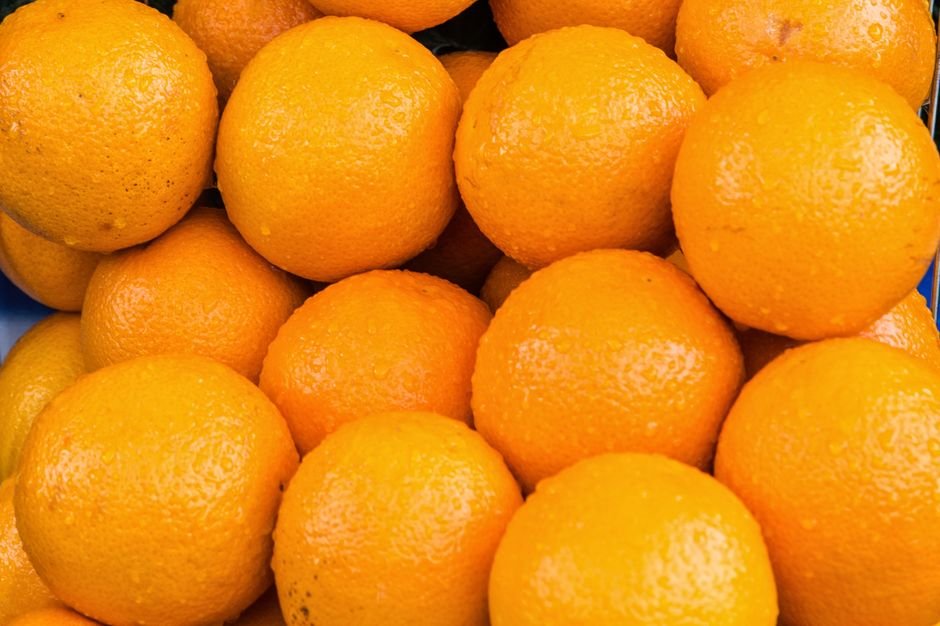
Full Nutrition Facts for One Medium Orange (154g)
A medium raw orange is mostly water and carbohydrates, with virtually no fat and minimal protein. Below is the complete nutritional breakdown based on USDA data:
| Nutrient | Amount | % Daily Value |
|---|---|---|
| Calories | 62 | — |
| Total Fat | 0.3g | 0% |
| Saturated Fat | 0.1g | 0% |
| Cholesterol | 0mg | 0% |
| Sodium | 2mg | 0% |
| Total Carbohydrate | 15.4g | 5% |
| Dietary Fiber | 3.1g | 11% |
| Total Sugars | 12.2g | — |
| Protein | 1.2g | 2% |
| Vitamin C | 53.2mg | 89% |
| Folate (B9) | 30.8mcg | 8% |
| Potassium | 237mg | 7% |
*Percent Daily Values are based on a 2,000-calorie diet. Source: USDA FoodData Central.
Key insight: Oranges deliver a remarkable 89% of the daily vitamin C requirement in just one medium fruit, which supports immune function and collagen synthesis. The 3.1g of dietary fiber—combined with the fruit’s water content—creates a sustained-release carbohydrate that won’t spike blood sugar dramatically, making oranges a genuinely satiating choice for weight management.

Etekcity Food Scale
0.1g accuracy — the perfect companion for exact portions.
Whole Orange With Peel vs. Peeled Orange Segments
Whole Orange (With Peel)
- Contains inedible peel, reducing net edible weight to ~65% of the whole fruit
- Peel is high in fiber and polyphenols (antioxidants) but not typically consumed raw
- Slightly better calorie control if skin discourages overeating smaller pieces
Peeled Orange Segments
- Easier to eat and portion accurately; segments can be counted and measured
- Pith (white stringy layer) remains, adding fiber and bitter compounds that reduce insulin response
- More convenient for snacking, juicing, or adding to salads and breakfast bowls
Practical takeaway: Peeling and eating segments takes slightly more time, which naturally slows consumption and increases satiety. If you’re trying to avoid overeating, keeping the pith on the segments is worth it—that white layer contains pectin, a soluble fiber that stabilizes blood sugar and helps you feel full longer.

Is Orange Good for Weight Loss?
Yes, oranges are an excellent weight-loss food. At 62 calories per medium fruit with 3.1g of fiber and 87% water content, they provide volume and satiety without excess calories. The natural sugars are wrapped in fiber, which slows digestion and prevents rapid blood-sugar spikes that typically trigger cravings. Oranges also require chewing, which engages your satiety mechanisms faster than juice would.
Tips to Eat Orange Without Gaining Weight:
- Eat whole, not juice: A glass of orange juice (240ml) contains ~110 calories and virtually no fiber, while the whole fruit is more satiating for fewer calories.
- Pair with protein: Combine an orange with a hard-boiled egg, handful of almonds, or Greek yogurt to extend fullness and stabilize blood sugar.
- Measure your serving: Stick to one medium orange per snack; eating three at once adds 186 calories and excess natural sugar.
- Eat the pith: Don’t peel away the white stringy layer—it contains beneficial fiber that aids satiety and digestive health.
Oranges fit naturally into a calorie-controlled diet because their volume and fiber density make it hard to overeat them. A medium orange is a “free” snack in most structured eating plans, including low-carb approaches if you track its 15.4g carbs mindfully.
How Portion Size Affects Calories
Orange size varies widely by variety and harvest conditions, so knowing your portion is critical for tracking. A small orange might be only 39 calories, while an extra-large one reaches 90+. For consistent tracking, use a kitchen scale to weigh your orange, or measure by count (one medium = baseline) rather than guessing by sight alone.
Example:
- One small orange (96g): 39 calories—appropriate for a quick, light snack before a run.
- Two large oranges (368g total): 146 calories—a more substantial snack that requires 10-15 minutes to eat and delivers 6g fiber.
Doubling your portion nearly doubles your calorie and sugar intake. If you’re in a strict deficit, two mediums (124 calories) can add up quickly across a week.
Best Way to Measure Orange Accurately
Since oranges vary in weight by 50-100 calories depending on size, consistent measurement is important for accurate nutrition tracking. The most reliable method is weighing your orange on a digital kitchen scale after removing the peel but before eating, then logging the weight against USDA data. If you don’t have a scale, counting oranges by size category (small/medium/large) is your next-best option.
Options:
- Digital kitchen scale: Weigh the peeled orange in grams (typical range: 96–184g). Most accurate for tracking apps and meal prep.
- USDA serving size reference: Memorize that a medium orange is about 154g (roughly the size of a tennis ball). Use this as your mental baseline and estimate larger or smaller relative to it.
- Count segments: A medium orange yields ~10–12 segments; count and consume a set number. One segment ≈ 5–6 calories, so 10 segments = 50–60 calories.
Calculate Your Exact Calorie Intake
If you eat oranges regularly—or any whole foods—manually tracking each piece gets tedious and error-prone. How can you know for certain whether your fruit intake is supporting or hindering your goals?
Our free AI nutrients calculator analyzes your whole diet and shows you the real calorie and macro breakdown of everything you eat, including oranges. Simply photograph your meals or enter foods, and get instant precision on protein, carbs, fats, and micronutrients.
- Real-time nutrition tracking without manual logging
- Personalized macro targets based on your fitness goal
- Identifies nutritional gaps (like vitamin C, folate, or potassium) in your diet
Start calculating your intake free here: https://nutrientscalculator.com/
Common Mistakes When Eating Orange
Many people unintentionally sabotage their nutrition goals with oranges. Here are the most common pitfalls:
❌ Drinking orange juice instead of eating whole fruit—juice delivers 3x the sugar in half the time without fiber satiety.
❌ Adding honey or sugar to orange slices—the fruit already contains 12g natural sugar; extra sweeteners push it into dessert territory (80–100 calories per serving).
❌ Eating 3–4 oranges as a “healthy snack”—while nutritious, this adds 186+ calories and 48g carbs in one sitting, easily exceeding a mid-afternoon snack quota.
❌ Peeling away the white pith to reduce bitterness—you’re throwing away 30% of the fiber and most of the flavonoids (plant compounds with anti-inflammatory effects).
The goal isn’t to avoid oranges; it’s to eat them mindfully as part of a balanced meal or snack, not as unlimited “free” food.
FAQ
How many calories are in 100g of orange?
A 100g portion of raw orange contains approximately 40 calories. Since a medium orange is 154g with 62 calories, a 100g serving is slightly smaller—useful for precise portion measurement or comparing oranges to other fruits.
Is orange fattening?
No. Oranges contain only 0.3g total fat and zero cholesterol, making them one of the least fattening fruits. Their high water and fiber content actually supports satiety and weight control. The natural sugars are a concern only if you eat multiple oranges daily or drink the juice instead of eating whole fruit.
Can I eat oranges on a low-carb diet?
Oranges are not ideal for strict low-carb (under 20g net carbs daily) since one medium orange has 15.4g total carbs and 12.2g natural sugars. However, they fit moderate low-carb plans (50–100g carbs daily) if you count them and pair them with protein and fat to slow digestion.
Are mandarin oranges higher in calories than navel oranges?
Mandarin oranges (like clementines) are slightly smaller and contain around 47 calories per medium fruit, while navel oranges average 62 calories. Both are comparable in nutrition, but mandarins are sweeter, easier to peel, and lower in calories due to smaller size.
Conclusion
Oranges are a nutrient-dense, low-calorie fruit that delivers exceptional vitamin C, fiber, and potassium in just 62 calories per medium serving. Their combination of water, fiber, and natural sugars creates genuine satiety without excess calories, making them a legitimate choice for weight loss and everyday health. The whole fruit is vastly superior to juice for nutrition tracking and sustained energy.
Whether you’re building a meal plan, tracking macros, or simply looking for a filling snack, oranges fit naturally into most eating styles. For consistent results and clarity on how your total diet supports your goals, measure your portions with a scale and use a **reliable nutrients calculator** to see the full picture of your daily intake. One orange is an easy win; knowing how it fits into your complete nutrition plan is where real progress happens.
