
Parmesan is one of the world’s most beloved hard cheeses, prized for its sharp, umami-rich flavor and versatility across Italian cuisine, pasta dishes, salads, and countless other meals. Whether you’re sprinkling it over risotto, using it in a Cacio e Pepe, or baking it into a cheese crisp, parmesan appears regularly in home kitchens and restaurant kitchens alike. People often turn to parmesan for the protein and rich taste it brings to meals, but because it’s a concentrated, aged dairy product, its calorie and fat content deserve careful attention.
If you’re tracking your nutrition or simply curious about what you’re consuming, the question “How many calories are in parmesan?” matters. This guide breaks down parmesan’s full calorie profile, compares key variants, explores its role in weight loss, and shows you how to measure it accurately so you know exactly what you’re eating.
Calories in Parmesan (Quick Answer)
A standard 1-ounce (28g) serving of aged parmesan cheese contains approximately 110 calories, along with substantial protein and fat.
- 1 ounce (28g) of parmesan: 110 calories
- 1 tablespoon (5g) of grated parmesan: 20 calories
- 1 cup (100g) of grated parmesan: 430 calories
Calorie values vary slightly depending on the specific brand, aging process, and moisture content; drum parmesan (Parmigiano-Reggiano) from the protected region tends to be more consistent than generic “parmesan” blends.
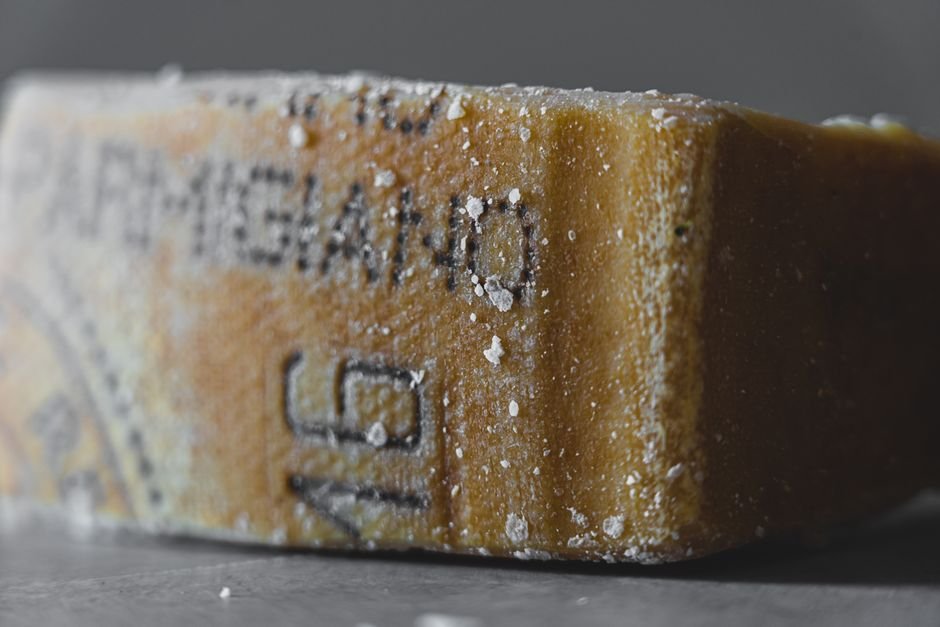
Full Nutrition Facts for 1 Ounce (28g) of Parmesan
Here’s the complete nutritional breakdown for a standard serving of aged parmesan cheese, based on USDA data:
| Nutrient | Amount | % Daily Value |
|---|---|---|
| Calories | 110 | — |
| Total Fat | 7.3g | 9% |
| Saturated Fat | 4.7g | 24% |
| Cholesterol | 19mg | 6% |
| Sodium | 450mg | 20% |
| Total Carbohydrate | 1.0g | <1% |
| Dietary Fiber | 0g | 0% |
| Total Sugars | 0g | 0% |
| Protein | 10g | 20% |
| Calcium | 336mg | 26% |
| Phosphorus | 228mg | 18% |
| Vitamin A | 160 IU | 3% |
*Percent Daily Values are based on a 2,000-calorie diet. Source: USDA FoodData Central.
Key insight: Despite being calorie-dense, parmesan delivers an exceptional protein-to-calorie ratio—10 grams of protein per 110 calories makes it one of the most efficient sources of dairy protein. The sodium content (20% of your daily limit per ounce) reflects the salt used in aging and preservation, so portion control is important for those managing sodium intake.
Etekcity Food Scale
0.1g accuracy — the perfect companion for exact portions.
Freshly Grated vs. Pre-Grated Parmesan
Freshly Grated Parmesan (Block)
- Denser texture; more concentrated flavor, so you use smaller portions
- Higher moisture loss during grating means slightly more calories per cup by weight
- No anti-caking agents; pure cheese with no additives
Pre-Grated Parmesan (Shaker Bottle)
- Lighter, fluffier texture due to cellulose anti-caking agents (cellullose is not digestible but doesn’t add calories)
- Easier to measure and dispense, but often leads to over-pouring
- Same calorie count per gram, but the airy structure means you consume more volume with the same weight
Practical takeaway: If you’re watching calories, buy a block of genuine Parmigiano-Reggiano and grate it yourself. You’ll use less overall because the concentrated flavor satisfies faster, and you’ll avoid the accidental over-serving that comes with shaker bottles. A microplane grater gives you the finest texture and best flavor control.
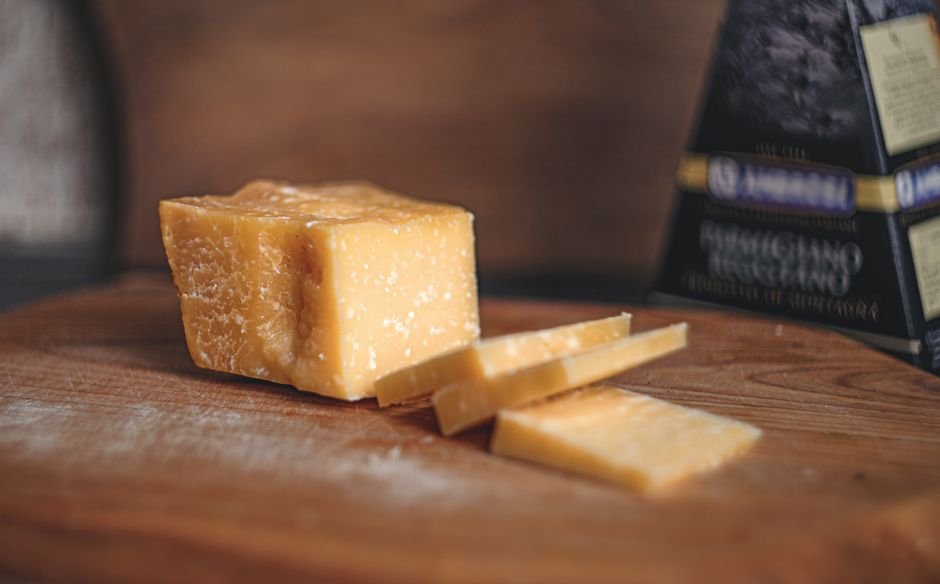
Is Parmesan Good for Weight Loss?
Parmesan can support weight loss when used intentionally. Its high protein content (10g per ounce) promotes satiety, meaning a small amount can help you feel fuller longer. The issue is portion control: because it’s calorie-dense and delicious, it’s easy to overeat. Limiting yourself to 1–2 tablespoons (5–10 grams) per meal keeps you in a reasonable calorie window while maximizing flavor.
Tips to Eat Parmesan Without Gaining Weight:
- Use the block-and-grater method. A microplane over a bowl forces conscious, smaller portions; shaker bottles encourage mindless pouring.
- Measure by weight, not volume. Use a kitchen scale to dispense exactly 5–10g per serving. This removes guesswork and prevents creep.
- Pair it with vegetables. Sprinkle parmesan over roasted broccoli, salads, or zucchini noodles rather than pasta or bread to lower the overall calorie density of your meal.
- Save it for high-satisfaction moments. Reserve parmesan for dishes where it truly shines—cacio e pepe, minestrone, risotto—rather than using it as a default topping everywhere.
When eaten mindfully, parmesan’s protein and satisfaction factor make it a valuable ingredient for weight management, not an obstacle to it.
How Portion Size Affects Calories
Parmesan’s calorie density means that small changes in portion size create big differences in total intake. A 1-ounce serving (about the size of a die) contains 110 calories, but it’s easy to exceed this without realizing it, especially with pre-grated versions. Understanding the relationship between weight and volume helps you stay on track.
Example:
- Small portion (5g, 1 tablespoon grated): 20 calories — enough to flavor a bowl of soup or salad
- Large portion (30g, roughly 1 ounce): 110 calories — suitable for a full pasta course or risotto
The difference between a tablespoon and an ounce is 90 calories—roughly the equivalent of an apple. Weighing parmesan on a kitchen scale removes ambiguity and keeps your daily intake aligned with your goals.
Best Way to Measure Parmesan Accurately
Because parmesan is sold in different forms—blocks, shreds, finely grated—measuring by volume is unreliable. A cup of fluffy pre-grated parmesan weighs far less than a cup of tightly packed shreds. Weight is the only consistent measurement method. A cheap digital kitchen scale (under $15) is the best investment for nutrition tracking.
Options:
- Kitchen scale (most accurate): Place a small bowl on the scale, tare to zero, and add parmesan until you reach your target weight (5g, 10g, 28g, etc.). This works for all forms and eliminates guesswork.
- Visual reference (quick but less precise): One ounce of parmesan is roughly the size of a dice cube. Two tablespoons of grated parmesan is approximately the size of a golf ball. Use this for rough estimates when a scale isn’t available.
- Pre-portioned packets (convenient): Some brands sell single-serving packets (usually 5–7g). Slightly more expensive per ounce, but eliminates the need to measure and helps prevent overportion.
Calculate Your Exact Calorie Intake
If parmesan is a staple in your diet—whether you’re sprinkling it daily on pasta, salads, or soups—accurately tracking its contribution to your total calorie intake matters. A seemingly small handful of 5 grams here and 10 grams there can add up to 100+ calories per day if you’re not paying attention.
The fastest way to ensure you’re accounting for every ingredient is to use a dedicated nutrients and calorie calculator. Our free AI-powered calculator lets you log parmesan by weight (or any other ingredient) and instantly see its calorie, macronutrient, and micronutrient breakdown. Use the calculator here to personalize your tracking and stay accountable to your nutrition goals.
- Automatically calculates calories based on exact weight, not guesses
- Tracks protein, fat, sodium, and other key nutrients across all meals
- Helps identify where hidden calories are accumulating in your diet
Common Mistakes When Eating Parmesan
Even health-conscious eaters often underestimate parmesan’s calorie impact. Here are the most common errors that quietly add hundreds of calories to your daily intake:
❌ Using pre-grated parmesan without measuring. A casual handful from a shaker bottle can easily be 15–20 grams instead of the intended 5 grams, instantly tripling your calorie intake for that meal.
❌ Forgetting that aged parmesan still counts as dairy. Many people count parmesan as a “free” topping and don’t log it at all, even though 1 ounce contains 7.3 grams of fat and 450mg of sodium.
❌ Confusing portion sizes across recipes. A “sprinkle” on a salad (5g) is very different from a layer on lasagna (30g+). Without weighing, you’ll have no idea which you’re actually consuming.
❌ Not accounting for added sodium. Parmesan is salty by design. If you’re adding it to an already-salted dish (like canned soup or store-bought pasta sauce), you can easily exceed your daily sodium target in a single meal.
Awareness of these pitfalls is the first step toward using parmesan intentionally rather than letting it sabotage your nutrition goals.
FAQ
How many calories are in 100g of parmesan?
One hundred grams of parmesan contains approximately 430 calories. This is a useful reference point if you’re weighing larger portions or using parmesan in recipes; 100g is about 3.5 ounces or roughly the size of a large matchbox.
Is parmesan fattening?
Parmesan is calorie-dense and fat-rich, so it can contribute to weight gain if eaten in large portions without accounting for it in your daily calories. However, when measured and used in small amounts (1–2 tablespoons), its high protein and strong flavor make it a satisfying ingredient that can actually support weight loss by improving satiety and meal enjoyment.
Does parmesan have lactose?
Aged parmesan contains very little lactose—typically less than 0.1 grams per ounce—because the aging process breaks down milk sugars. People with mild lactose intolerance often tolerate parmesan well, though those with severe sensitivity should test it first.
Can I eat parmesan every day?
Yes, parmesan can be part of a daily diet, but portion size matters. One tablespoon (5g) of grated parmesan daily contributes 20 calories, 10% of daily saturated fat, and 90mg of sodium—all reasonable. Larger daily portions can quickly exceed recommended limits for saturated fat and sodium, especially if you’re managing blood pressure or cholesterol.
Conclusion
Parmesan is a nutrient-rich cheese that delivers exceptional protein (10g per ounce), calcium (26% DV), and complex flavor in a small package. Its concentrated nature means you can satisfy cravings and enhance meals with relatively small amounts. The challenge isn’t the food itself—it’s the ease of over-portioning when measuring by eye or using convenience forms like shaker bottles.
The key to making parmesan work for your health goals is intentionality: buy a block, grate it yourself, measure by weight with a kitchen scale, and log it in a reliable nutrients calculator. When you know exactly how many calories and grams of fat and sodium you’re consuming, parmesan becomes a tool for building satisfying, flavorful meals rather than a source of hidden calories. Use a food and nutrients calculator to stay accountable and keep parmesan in its rightful place—a small but mighty flavor enhancer, not an unlimited staple.
