
Pecans are one of North America’s most popular tree nuts, native to the southern United States and widely enjoyed by health-conscious eaters, bakers, and snackers alike. Whether eaten raw, roasted, salted, or incorporated into desserts and salads, pecans deliver a rich, buttery flavor along with a dense nutritional profile—but one that’s calorie-dense and requires careful portioning for anyone monitoring energy intake or managing weight loss goals.
Many people wonder exactly how many calories are in pecans and whether they can fit into a balanced diet. This article breaks down the complete nutrition facts for pecans, explores how preparation methods affect their calorie content, and provides practical guidance on eating them without derailing your health goals.
Calories in Pecans (Quick Answer)
A standard 1-ounce (28g) serving of raw pecans contains about 196 calories, making them one of the higher-calorie nuts per ounce.
- 1 ounce (28g) raw pecans: 196 calories
- 1 cup raw pecans (about 109g): 758 calories
- 1 ounce (28g) roasted, salted pecans: 201 calories
Calorie content can vary slightly depending on whether pecans are raw, roasted, or salted, and individual nuts may differ in size and fat content.
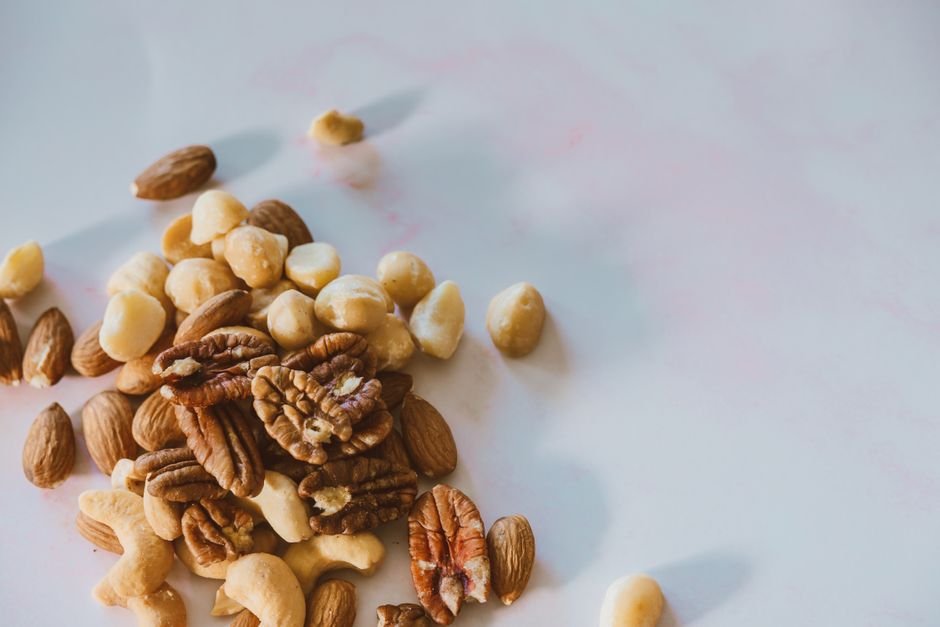
Full Nutrition Facts for 1 Ounce (28g) of Raw Pecans
Pecans are nutrient-dense, delivering significant amounts of healthy fats, fiber, and minerals in a single ounce. Below is the complete nutrition breakdown for a standard serving:
| Nutrient | Amount | % Daily Value |
|---|---|---|
| Calories | 196 | — |
| Total Fat | 20.3g | 31% |
| Saturated Fat | 1.8g | 9% |
| Cholesterol | 0 mg | 0% |
| Sodium | 0 mg | 0% |
| Total Carbohydrate | 3.9g | 1% |
| Dietary Fiber | 2.7g | 11% |
| Total Sugars | 1.1g | — |
| Protein | 2.6g | 5% |
| Magnesium | 34 mg | 8% |
| Manganese | 1.3 mg | 57% |
| Copper | 0.4 mg | 45% |
*Percent Daily Values are based on a 2,000-calorie diet. Source: USDA FoodData Central.
Key insight: Pecans derive 93% of their calories from fat, but most of this is unsaturated fat—particularly oleic acid, the same heart-healthy fat found in olive oil. Despite their high calorie density, pecans offer genuine nutritional value including manganese (which supports bone health and metabolism), copper (important for iron absorption), and 2.7g of fiber per ounce. This fiber content makes pecans more satiating than some other calorie sources, meaning a small serving can help you feel fuller longer.

Etekcity Food Scale
0.1g accuracy — the perfect companion for exact portions.
Raw Pecans vs. Roasted Pecans
Raw Pecans
- Slightly lower calorie count (196 per ounce) with all original nutrients intact
- Mild, delicate flavor; softer texture that’s easier to chew
- Higher moisture content; shorter shelf life unless refrigerated
Roasted Pecans
- Nearly identical calorie content (201 per ounce); minor water loss does not significantly reduce calories
- More concentrated, deeper nutty flavor; crunchier texture
- Longer shelf life; some people find roasted nuts more digestible due to reduced enzyme inhibitors
Practical takeaway: From a calorie standpoint, raw and roasted pecans are nearly equivalent—choose based on taste preference and storage needs. If you’re buying roasted pecans, avoid heavily salted varieties, which can add 100–200mg of sodium per ounce and may increase cravings for larger servings. Lightly roasted or raw pecans are your best bet for controlled eating.
Is Pecans Good for Weight Loss?
Yes, pecans can fit into a weight loss plan, but portion control is critical. At 196 calories per ounce, pecans are calorie-dense, but their high fiber and fat content promotes satiety—meaning you’re less likely to overeat afterward. Studies suggest that nuts, including pecans, do not cause weight gain when eaten in measured amounts, and may even support modest weight loss when they replace less nutritious foods. The key is treating them as a portion-controlled snack, not a free-for-all food.
Tips to Eat Pecans Without Gaining Weight:
- Pre-portion your snacks: Measure out 1 ounce (about 14–16 pecan halves) into small containers or bags rather than eating straight from the bag.
- Pair with protein and water: Combine a small handful of pecans with a boiled egg, Greek yogurt, or cheese to increase satiety and slow digestion.
- Avoid salted and candied varieties: Added salt and sugar increase calorie intake and cravings; stick to raw or lightly roasted unsalted pecans.
- Use pecans as a flavor component, not the main event: Add 0.5 ounces to a salad, oatmeal, or yogurt rather than eating a full ounce as a standalone snack.
When consumed mindfully, pecans can be a satisfying part of a calorie-controlled diet. Their nutrient density means you’re getting good nutritional return on your calorie “investment.”
How Portion Size Affects Calories
Portion size is everything with pecans. Because they’re so calorie-dense, even small increases in serving size add up quickly. A single extra handful can mean 100+ extra calories, which is why measuring by weight or using a standard ounce measure is far more reliable than eyeballing a handful.
Example:
- Small handful (0.5 ounce, about 7 halves): ~98 calories
- Standard handful (1 ounce, about 14 halves): ~196 calories
Doubling your portion only takes a few extra seconds of eating, but it doubles your calorie intake—an easy mistake to make when snacking mindlessly in front of a screen.
Best Way to Measure Pecans Accurately
The most reliable way to measure pecans is by weight using a kitchen scale, which eliminates guesswork and accounts for variations in nut size. Visual estimation based on a “handful” is notoriously inaccurate—different people’s hands are different sizes, and your hand’s idea of “full” changes throughout the day. If you don’t have a scale, use volume measures or count individual nut halves as a secondary option.
Options:
- Kitchen scale (most accurate): Weigh out exactly 28g (1 ounce) for 196 calories. This takes 30 seconds and removes all ambiguity.
- Measuring cup: 1 ounce equals roughly 1/4 cup of pecan halves, though this varies with how densely the nuts pack.
- Count by piece: One ounce is approximately 14–16 pecan halves; count them out and you’ll know your portion.
Calculate Your Exact Calorie Intake
If you eat pecans regularly, you may wonder whether they’re helping or hindering your overall calorie goals. Tracking them manually is tedious, but knowing your complete nutritional picture—including how pecans fit into your total daily intake—is the most reliable path to success.
Our site offers a free AI-powered nutrients calculator that lets you log pecans (and all your other foods) and instantly see your total calories, protein, fat, carbs, fiber, and micronutrient intake for the day. This removes guesswork and helps you make data-driven adjustments to your diet.
- Log pecans and hundreds of other foods in seconds
- See your complete daily nutrition summary (calories, protein, carbs, fat, fiber, and key vitamins)
- Adjust portions in real time and watch your totals update instantly
Common Mistakes When Eating Pecans
Even health-conscious eaters make errors with pecans. Here are the most common pitfalls to avoid:
❌ Eating straight from the bag without measuring. It’s nearly impossible to stick to one ounce when you’re snacking mindlessly; you’ll typically eat 2–3 ounces without realizing it, adding 400–600 calories.
❌ Assuming “raw” pecans are calorie-free or nearly so. Raw nuts still contain nearly as many calories as roasted ones—the cooking process removes minimal calories, mainly just water weight.
❌ Buying salted or candied pecans and treating them like unsalted ones. Salted varieties often contain 150–200mg added sodium per ounce, and candied versions add 4–6g of sugar per serving, turning a healthy snack into a high-calorie sweet treat.
❌ Using pecans as a filler for large salads without counting the portion. Many salads look innocent but contain 2–3 ounces of nuts plus dressing, easily adding 400–500 calories—more than many full meals.
Awareness of these mistakes is the first step toward eating pecans in a way that supports, rather than undermines, your goals.
FAQ
How many calories are in 100g of pecans?
100g of raw pecans contains approximately 691 calories. Since most people eat pecans by the ounce (28g), it’s helpful to know that 100g equals roughly 3.5 ounces—a large handful or small bowl.
Is pecans fattening?
Pecans are calorie-dense and high in fat, so yes, they can cause weight gain if eaten in unlimited quantities. However, when portioned carefully (1 ounce at a time), they do not promote weight gain and may actually support weight loss better than many other snacks because their fat and fiber content keeps you satisfied longer.
Can I eat pecans daily?
Yes, you can eat pecans daily if you keep portions controlled and account for them in your calorie goals. One ounce (196 calories) daily fits easily into most diets and provides valuable minerals and healthy fats. Simply track them like any other food and adjust other meals accordingly.
Do pecans have more calories than other nuts?
Pecans (196 calories per ounce) are among the higher-calorie nuts. Almonds contain 164 calories per ounce, macadamia nuts contain 204 calories, and walnuts contain 185 calories. The differences are modest, so choose based on taste preference rather than minor calorie variations.
Conclusion
Pecans are a nutrient-rich, calorie-dense food that deserves a place in a balanced diet—as long as portions are measured carefully. At 196 calories per ounce, they’re not a food to eat mindlessly, but their high fiber, healthy fats, and micronutrient profile (especially manganese and copper) make them a smart choice for snacking when eaten in controlled amounts. The fat they contain is mostly unsaturated and heart-healthy, and the satiating nature of nuts means that a measured serving often leaves you more satisfied than a larger portion of crackers or candy would.
The best approach is to decide in advance how much you’ll eat—ideally by weighing your portion on a kitchen scale—and then enjoy it without guilt. Whether you’re managing weight loss or simply trying to eat better, using a reliable nutrients calculator to track your pecan intake makes it easy to see exactly how they fit into your daily nutrition goals and empowers you to make adjustments as needed.
