
Pork is one of the most widely consumed meats globally, valued for its versatility, flavor, and affordability. From lean cuts like pork loin to fattier options like pork belly and bacon, it appears in cuisines across every continent. Whether you’re building muscle, managing weight, or simply eating a balanced diet, understanding pork’s nutritional profile is essential.
The calorie and nutrient content of pork varies significantly depending on the cut, cooking method, and fat content. This guide provides accurate calorie counts, full nutrition facts, and practical strategies to help you make informed choices about pork consumption.
Calories in Pork (Quick Answer)
Calorie content depends on the specific cut and preparation:
- Pork loin (lean, cooked, 3 oz / 85g): 132 calories
- Pork shoulder (medium-fat, cooked, 3 oz / 85g): 252 calories
- Pork belly (fatty, cooked, 3 oz / 85g): 399 calories
Values vary based on the cooking method, visible fat removal, and marbling within the meat.
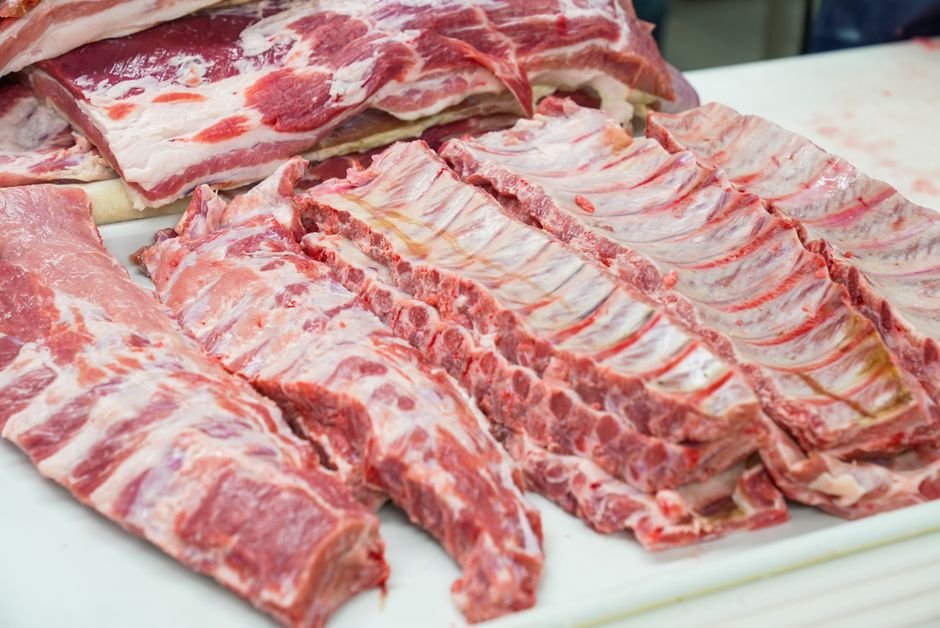
Full Nutrition Facts for 3 oz (85g) of Cooked Pork Loin
Pork loin is among the leaner cuts available and serves as a solid benchmark for comparing pork nutrition across different preparations.
| Nutrient | Amount | % Daily Value |
|---|---|---|
| Calories | 132 | — |
| Total Fat | 5.2g | 7% |
| Saturated Fat | 1.8g | 9% |
| Cholesterol | 62mg | 21% |
| Sodium | 45mg | 2% |
| Total Carbohydrate | 0g | 0% |
| Dietary Fiber | 0g | 0% |
| Total Sugars | 0g | — |
| Protein | 25.5g | 51% |
| Thiamine (B1) | 0.56mg | 47% |
| Niacin (B3) | 6.3mg | 39% |
| Selenium | 28.7mcg | 52% |
*Percent Daily Values are based on a 2,000-calorie diet. Source: USDA FoodData Central.
Key insight: Pork loin delivers exceptional protein density—over half your daily protein in a single 3 oz serving—with minimal carbohydrates and relatively low saturated fat. This makes it an excellent choice for muscle building and weight management when prepared without added oils. The high B-vitamin and selenium content also supports metabolism and immune function.

Etekcity Food Scale
0.1g accuracy — the perfect companion for exact portions.
Lean Pork vs. Fatty Pork: Which Should You Choose?
Lean Pork Loin
- Lower in total and saturated fat, reducing calorie density
- Higher protein-to-calorie ratio, ideal for muscle building on a calorie deficit
- Better for weight loss and heart-health-conscious eating
Fatty Pork (Belly, Shoulder)
- Richer flavor and better moisture retention when cooked slowly
- More satisfying due to fat content, though significantly higher in calories
- Contains more fat-soluble vitamins but also more saturated fat and cholesterol
Practical takeaway: If your priority is weight loss or maximizing protein intake, choose pork loin, tenderloin, or sirloin. If you’re eating for satiety or making dishes like braised pork where tenderness matters, fattier cuts deliver superior texture and flavor—just account for the extra 150–250 calories per serving.
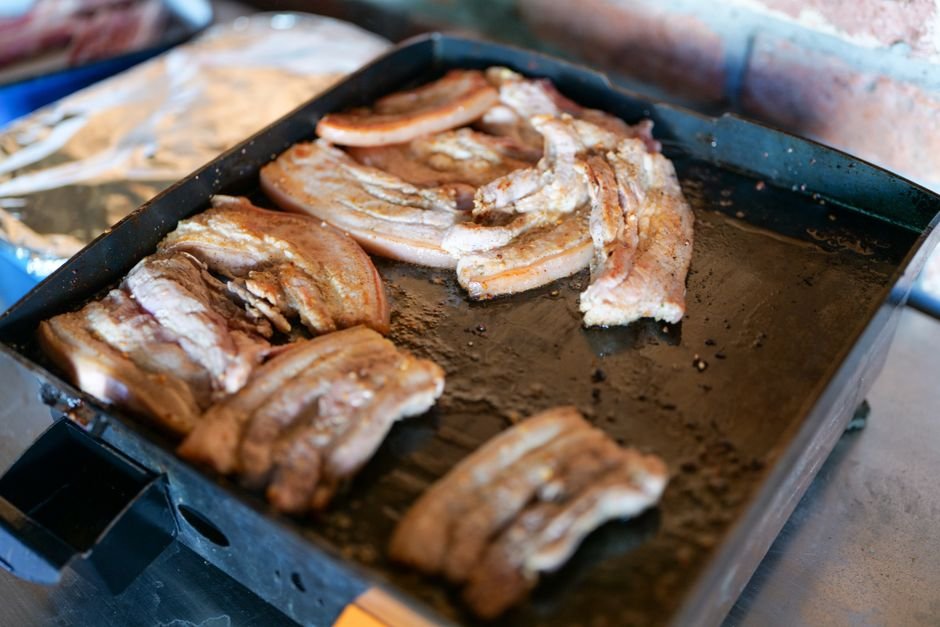
Is Pork Good for Weight Loss?
Yes—but only the right cuts. Lean pork (loin, tenderloin, center-cut chops) is excellent for weight loss because it delivers high protein, low calories, and zero carbs, supporting satiety and muscle preservation during a calorie deficit. Fattier cuts (belly, shoulder, ribs) are calorie-dense and should be eaten in smaller portions or less frequently if weight loss is your goal.
Tips to Eat Pork Without Gaining Weight:
- Choose lean cuts (loin, tenderloin, sirloin) and trim visible fat before cooking
- Grill, bake, or broil instead of frying; avoid cooking in oil when possible
- Measure portions using a kitchen scale—aim for 3–4 oz (85–113g) per serving
- Pair pork with vegetables and whole grains to increase fiber and volume without excessive calories
Pork fits comfortably into a weight-loss diet when prepared simply and portioned correctly. The key is selecting leaner cuts and avoiding high-fat cooking methods.
How Portion Size Affects Calories
Portion size has a massive impact on pork’s calorie contribution. A 3 oz serving of pork loin contains 132 calories, but restaurant portions and home servings often run 6–8 oz or larger, doubling or tripling the calorie count. Even with lean cuts, doubling your portion adds 130+ calories; with fattier cuts, a single 6 oz serving can easily exceed 500 calories.
Example:
- Small portion (3 oz pork loin): 132 calories
- Large portion (8 oz pork loin): 352 calories
Use a kitchen scale to stay consistent and honest about how much you’re eating.
Best Way to Measure Pork Accurately
The most reliable way to measure pork is by weight using a kitchen scale. Raw and cooked weights differ—pork loses roughly 25% of its weight during cooking due to water loss—so measure cooked portions for accurate calorie tracking. If you don’t have a scale, use visual comparisons, but expect a 10–15% margin of error.
Options:
- Digital kitchen scale: Weigh pork in grams (3 oz = ~85g) immediately after cooking for maximum accuracy
- Hand-size reference: 3 oz of cooked pork is roughly the size of your palm (about ½ inch thick)
- USDA My FoodData or similar apps: Log by weight or standard serving size for real-time tracking
Calculate Your Exact Calorie Intake
Pork’s calorie and nutrient density varies by cut, cooking method, and fat removal. If you eat pork regularly and want to track your exact intake for weight loss, muscle gain, or health management, knowing your specific portions and preparation methods is essential.
Our site offers a free AI nutrients calculator that lets you log pork (by cut and weight) alongside other foods to calculate your daily macros and micronutrients instantly. Simply visit the calculator and enter your meals for personalized nutritional data.
- Get real-time calorie, protein, fat, and carb counts for any portion size
- Track multiple meals throughout the day and see weekly totals
- Compare different cuts of pork side-by-side to make informed choices
Common Mistakes When Eating Pork
Even nutrient-dense lean pork can sabotage your goals if eaten carelessly. Here are the most common pitfalls:
❌ Underestimating portion size—most people eat 6–8 oz of pork instead of the recommended 3–4 oz, unknowingly adding 200–300+ extra calories per meal.
❌ Choosing fatty cuts without accounting for the extra calories—pork belly and shoulder contain 250–400 calories per 3 oz, three times more than lean loin.
❌ Using high-fat cooking methods like pan-frying in oil or basting with butter, adding 50–100 calories per serving from cooking fat alone.
❌ Ignoring processed pork products (bacon, sausage, deli ham) which are high in sodium, nitrates, and often contain added sugar—a single slice of bacon adds 40–50 calories, but most people eat 2–4 slices.
Being aware of these habits makes a significant difference in whether pork supports or undermines your nutrition goals.
FAQ
How many calories are in 100g of pork?
One hundred grams of cooked pork loin contains approximately 155 calories. Fattier cuts (pork shoulder, belly) range from 250–470 calories per 100g depending on fat content.
Is pork fattening?
Lean pork is not inherently fattening—it’s high in protein and low in calories when prepared simply. However, fattier cuts (belly, shoulder) and processed pork products (bacon, sausage) are calorie-dense and can contribute to weight gain if eaten in large quantities.
What’s the best pork cut for muscle building?
Pork loin, tenderloin, and center-cut chops offer the highest protein-to-calorie ratio, making them ideal for muscle building. They deliver 25–26g of protein per 3 oz serving with minimal fat.
Does cooking method affect pork’s calories?
The meat itself contains the same calories regardless of cooking method, but added oils, butter, or sugar-based glazes increase total calories. Grilling, baking, and broiling keep calories low; frying and braising in cream or oil significantly increase calorie density.
Conclusion
Pork is a nutrient-dense protein that deserves a place in most diets. Lean cuts like pork loin deliver high protein, low calories, and essential B vitamins and selenium at minimal saturated fat. Fattier cuts offer superior flavor and satisfaction but come with triple the calories, so they require careful portioning and less frequent consumption if weight loss is your goal. The nutritional difference between cuts is dramatic—understanding which cut you’re eating is as important as knowing how much.
Whether you’re tracking calories for weight loss, building muscle, or simply eating well, the key is choosing the right cut, measuring portions accurately, and using reliable tools to monitor your intake. A kitchen scale and nutrition calculator remove the guesswork from pork consumption and ensure you’re eating in alignment with your goals.
