
Spinach is one of the world’s most nutrient-dense leafy greens, consumed fresh in salads, blended into smoothies, and cooked in countless cuisines from Mediterranean to South Asian cooking. It’s a staple for people pursuing weight loss, muscle gain, and overall wellness due to its exceptional micronutrient profile and low calorie density.
But how many calories are actually in spinach, and how does it fit into a balanced diet? This article breaks down the complete nutrition facts, compares raw versus cooked preparations, and shows you how to measure and maximize spinach’s benefits without derailing your goals.
Calories in Spinach (Quick Answer)
A typical serving of spinach contains very few calories depending on how it’s prepared:
- Raw spinach (1 cup, ~30g): 7 calories
- Cooked spinach (½ cup, ~90g): 21 calories
- Frozen spinach (½ cup, ~90g): 19 calories
Calorie counts stay consistent across varieties—the main variable is whether spinach is raw or cooked, with cooked spinach being calorie-denser because the water content reduces when heated.
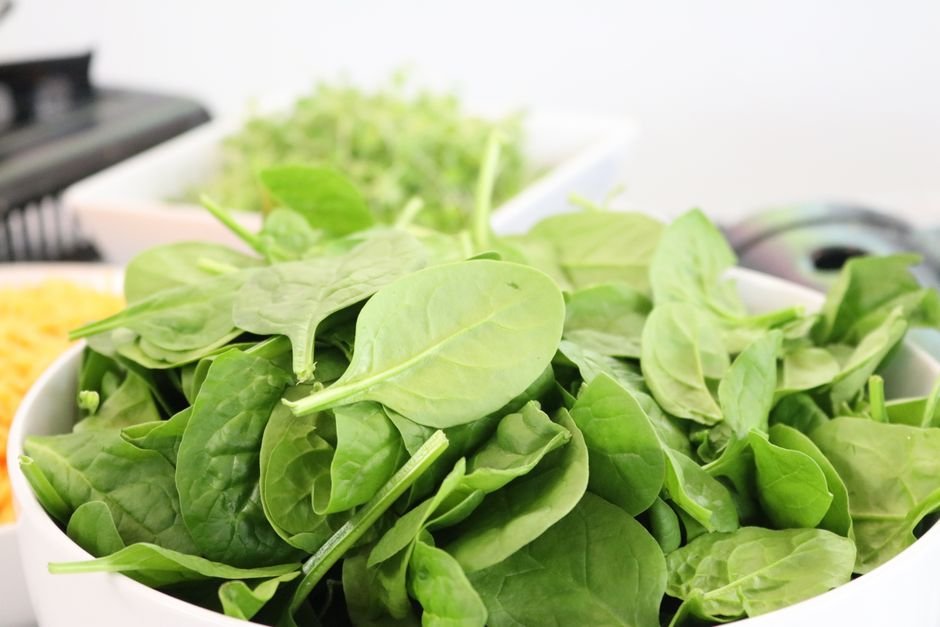
Full Nutrition Facts for 1 Cup Raw Spinach
Here’s the complete nutritional breakdown of 1 cup (30g) of raw spinach, one of the lowest-calorie foods you can eat:
| Nutrient | Amount | % Daily Value |
|---|---|---|
| Calories | 7 | 0% |
| Total Fat | 0.1g | 0% |
| Saturated Fat | 0g | 0% |
| Cholesterol | 0mg | 0% |
| Sodium | 24mg | 1% |
| Total Carbohydrate | 1.1g | 0% |
| Dietary Fiber | 0.7g | 3% |
| Total Sugars | 0.1g | — |
| Protein | 0.9g | 2% |
| Vitamin K | 145mcg | 121% |
| Vitamin A | 141mcg RAE | 16% |
| Iron | 0.8mg | 4% |
*Percent Daily Values are based on a 2,000-calorie diet. Source: USDA FoodData Central.
Key insight: One cup of raw spinach contains 121% of your daily Vitamin K requirement—far more than most foods at nearly zero calories. This exceptional nutrient density is why spinach remains the gold standard for calorie-conscious eaters seeking micronutrient density. The very low sugar content (0.1g per cup) also makes spinach ideal for low-carb and keto diets.

Etekcity Food Scale
0.1g accuracy — the perfect companion for exact portions.
Raw Spinach vs. Cooked Spinach
Raw Spinach
- Lighter, more voluminous: Raw spinach takes up significantly more space in your mouth and stomach, creating fullness with minimal calories.
- Preserves heat-sensitive vitamins: Raw spinach retains more vitamin C and folate than cooked versions, though bioavailability of other nutrients like iron is lower.
- Contains oxalic acid: Raw spinach’s oxalates can bind calcium and iron, slightly reducing their absorption—cooking reduces oxalate content by 25–40%.
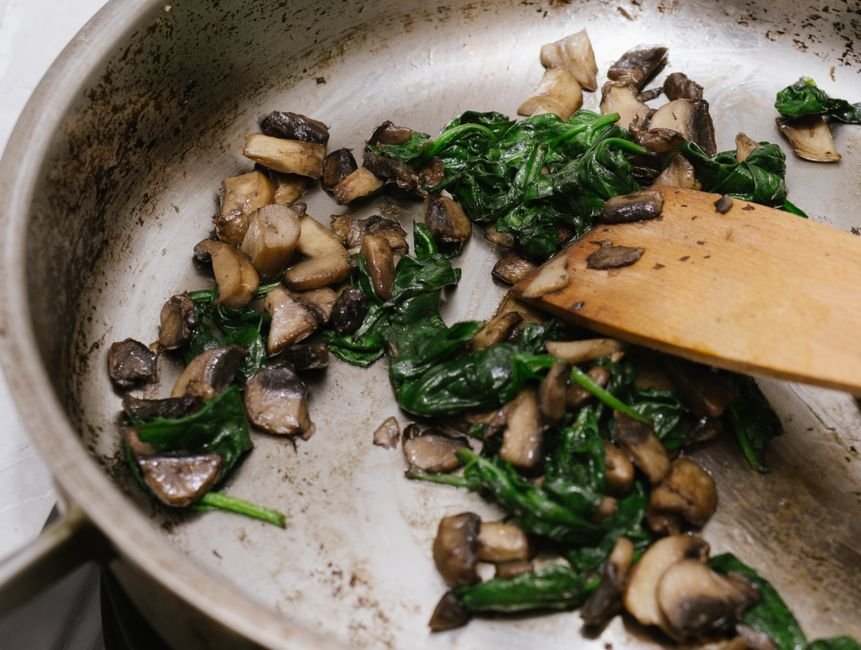
Cooked Spinach
- Denser, more concentrated nutrients: Cooking removes water, concentrating vitamins like Vitamin K and beta-carotene in a smaller volume.
- Improved mineral absorption: Heat breaks down cell walls and reduces oxalates, allowing better absorption of iron, calcium, and magnesium.
- Slightly higher calories per cup: Because cooked spinach is more condensed (½ cup cooked ≈ 2 cups raw), you consume more mass and therefore more calories by weight.
Practical takeaway: If your goal is weight loss and satiety, eat raw spinach in salads and smoothies to maximize volume and fullness. If you prioritize nutrient absorption and don’t mind a smaller portion, cook it gently via steaming or sautéing. Neither preparation is “wrong”—they serve different nutritional purposes.
Is Spinach Good for Weight Loss?
Yes—spinach is one of the best foods for weight loss. At 7 calories per raw cup, you can eat large quantities without affecting your calorie balance. Its high fiber content (0.7g per cup) and water volume create satiety, helping you feel fuller longer while consuming minimal energy. Raw spinach in particular acts as a “free food” in most diet systems because the calories are negligible. The key is not adding calorie-dense toppings like dressing, cheese, or oil.
Tips to Eat Spinach Without Gaining Weight
- Dress with vinegar or lemon: Instead of creamy dressings (200–300 calories per serving), use vinegar, lemon juice, or mustard to flavor salads and keep total calories minimal.
- Bulk your meals with raw spinach: Add raw spinach to eggs, pasta, soups, and stir-fries after cooking to increase volume without significant calorie addition.
- Avoid spinach-based dishes with cream: Spinach dips, creamed spinach, and spinach quiches are calorie traps—a single serving can contain 150–300 calories from added cream and cheese.
- Pair with protein: Combine spinach with lean protein (chicken, fish, tofu, legumes) to maximize satiety and nutrient absorption without extra calories.
When eaten plainly or with minimal added fat, spinach actively supports calorie deficit diets. The mistake most people make is drowning spinach in high-calorie accompaniments that negate its nutritional advantage.
How Portion Size Affects Calories
Spinach portions vary dramatically depending on whether you’re measuring raw or cooked. A single cup of raw spinach is extremely low in calories, but cooked spinach compacts significantly, changing the calorie math. Understanding the difference prevents portion miscalculation, especially in recipes where cooked spinach volume can deceive you into thinking you’re eating less.
Example
- Small serving (1 cup raw, ~30g): 7 calories, high volume, ideal for salads and smoothies.
- Large serving (2 cups cooked, ~180g): 42 calories, but the concentrated nutrients and reduced volume make it feel more substantial.
For weight loss tracking, always weigh spinach or use cup measurements consistently to avoid under-reporting calories—though even generous portions of spinach will barely move your daily total.
Best Way to Measure Spinach Accurately
Spinach’s loose, irregular shape makes volumetric measurement (cups) less precise than weight. However, cups are practical for home cooking. The best approach depends on your context: strict calorie tracking benefits from a kitchen scale, while casual meal planning works fine with cups. Raw spinach is less compressible than cooked, so be especially careful with cooked measurements.
Options
- Kitchen scale (most accurate): Weigh raw spinach to the gram for precise calorie tracking; 30g = roughly 1 cup loosely packed raw spinach.
- Measuring cups (practical): Use a standard 250ml measuring cup, lightly pack raw spinach without crushing it, and assume 1 cup ≈ 30g; for cooked, 1 cup ≈ 180g.
- Hand portion (quick estimate): One closed handful of raw spinach ≈ ½ cup ≈ 15g ≈ 3 calories—useful for eyeballing salad portions without tools.
Calculate Your Exact Calorie Intake
If you’re tracking spinach as part of a broader nutrition goal—weight loss, muscle building, or nutrient optimization—knowing the exact calories and macros in your meals is critical. Spinach alone contributes negligibly to your daily total, but combined with dressings, oils, and other ingredients, a “healthy spinach salad” can quickly exceed 500 calories.
Our site offers a free AI nutrients calculator that analyzes any food combination and breaks down total calories, macros, and micronutrients. Simply enter your meal, and the tool instantly shows you how spinach and all its accompaniments fit into your daily targets.
- See hidden calories: Discover how much your dressing, cheese, nuts, and oils are actually contributing to your meal.
- Track micronutrients: Monitor vitamin K, folate, iron, and other spinach-specific nutrients across your day.
- Plan meals confidently: Adjust portions and pairings in real time to hit your goals without guessing.
Use the free calculator here to analyze your spinach-based meals instantly.
Common Mistakes When Eating Spinach
Despite spinach’s nutritional powerhouse status, people still manage to negate its benefits through poor preparation and pairing choices. Here are the four most common mistakes:
❌ Drowning spinach in heavy dressing or oil: A nutritious spinach salad becomes a 500+ calorie meal when you add 3–4 tablespoons of ranch dressing, olive oil-based vinaigrette, or creamy sauce. Use 1–2 tablespoons of dressing maximum.
❌ Assuming cooked spinach = equivalent calories to raw: A cup of cooked spinach (≈180g, 42 calories) looks small but actually contains 6 times the mass of 1 cup raw spinach (≈30g, 7 calories). Miscalculating this inverts your portion control.
❌ Ignoring high-calorie spinach dishes: Spinach appears in creamed spinach (150 cal/½ cup), spinach dips (80–100 cal/2 tablespoons), and spinach-stuffed pasta (200+ cal per serving)—these aren’t “spinach meals,” they’re cheese and cream with spinach as a footnote.
❌ Cooking spinach with too much oil or butter: Sautéing spinach in 1–2 tablespoons of oil adds 100–200 calories to an otherwise 40-calorie vegetable. Use cooking spray or broth to sauté without the calorie spike.
Spinach is only “free” if you eat it plainly or with minimal added fat. The moment you add condiments and fats, treat it like any other food and measure accordingly.
FAQ
How many calories are in 100g of spinach?
Raw spinach contains approximately 23 calories per 100g. Cooked spinach contains approximately 23 calories per 100g as well, though the water content changes—what weighs 100g cooked is much more compact than 100g raw.
Is spinach fattening?
No. Plain spinach is not fattening—it’s one of the lowest-calorie foods available. Spinach becomes fattening only when prepared with high-calorie accompaniments like creamy dressings, oils, butter, cheese, or cream sauces. Eaten plainly or with minimal added fat, spinach supports rather than hinders weight loss.
Does cooked spinach have less nutrients than raw spinach?
Cooked spinach has more bioavailable minerals (iron, calcium, magnesium) because heat breaks down cell walls and reduces oxalates, but loses some heat-sensitive vitamins like vitamin C. For overall nutrient absorption, both preparations have merit—ideally eat spinach both ways.
Can I eat unlimited spinach on a diet?
Practically yes, for raw spinach eaten plainly. However, oxalates in high quantities (eating multiple cups daily for weeks) can interfere with calcium absorption, so rotate spinach with other leafy greens like kale, lettuce, and arugula for balanced micronutrient intake.
Conclusion
Spinach is a nutritional powerhouse delivering exceptional micronutrient density—especially vitamin K, vitamin A, and iron—for almost negligible calories. At just 7 calories per raw cup, it’s one of the few foods that genuinely qualifies as “free” for calorie-conscious eating. Whether you eat it raw in salads or cooked in dishes, spinach supports weight loss, nutrient intake, and overall wellness.
The key is avoiding calorie-dense preparation methods and pair spinach thoughtfully with protein and whole grains rather than heavy creams and oils. For precise control of spinach portions in the context of your overall nutrition goals, use a reliable nutrients calculator to track not just the spinach itself, but the dressings and oils you’re combining it with—that’s where most people’s spinach-based meals diverge from their intentions.
