
Turnips are a humble root vegetable often overlooked in modern diets, yet they’re nutrient-dense, affordable, and widely eaten across Europe, Asia, and North America. Whether roasted as a side dish, added to soups, or mashed as a low-carb potato substitute, turnips fit naturally into weight-loss plans, diabetes management, and everyday healthy eating. Their mild, slightly sweet flavor and low calorie density make them ideal for anyone looking to add volume to meals without excess energy intake.
But how many calories are actually in a turnip? This guide covers the complete nutritional profile of this versatile vegetable, including portion sizes, preparation methods, and practical ways to use it in your diet. By the end, you’ll understand exactly how turnips fit into your nutrition goals.
Calories in Turnip (Quick Answer)
A medium raw turnip contains roughly 36 calories per 100 grams, making it one of the lowest-calorie vegetables you can eat.
- Raw turnip (100g): 36 calories
- Cooked turnip, boiled (100g): 23 calories
- Whole medium raw turnip (~150g): 54 calories
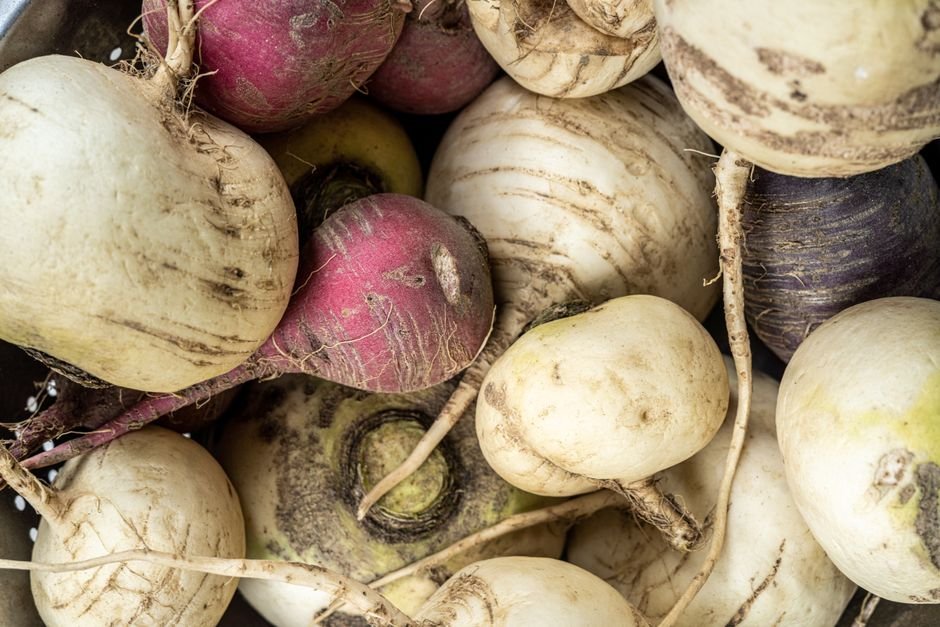
Calorie content varies slightly depending on ripeness, variety (white, yellow, purple-top), and growing conditions, but all turnips are exceptionally low in calories.
Full Nutrition Facts for 100g of Raw Turnip
Here’s the complete nutritional breakdown for raw turnip, based on USDA FoodData Central data:
| Nutrient | Amount | % Daily Value* |
|---|---|---|
| Calories | 36 kcal | 2% |
| Total Fat | 0.1g | <1% |
| Saturated Fat | 0g | 0% |
| Cholesterol | 0mg | 0% |
| Sodium | 71mg | 3% |
| Total Carbohydrate | 8.1g | 3% |
| Dietary Fiber | 1.5g | 5% |
| Total Sugars | 4.6g | |
| Protein | 0.9g | 2% |
| Vitamin C | 21mg | 35% |
| Potassium | 191mg | 4% |
| Folate | 21μg | 5% |
*Percent Daily Values are based on a 2,000-calorie diet. Source: USDA FoodData Central.
Key insight: Turnips are exceptional for weight loss because 92% of their calories come from carbohydrates (mostly fiber and natural sugars), with virtually no fat. A whole medium turnip delivers only 54 calories but provides 2.3g of fiber, helping you feel full longer. The high water content (91% of the vegetable) means you get substantial volume for minimal caloric impact—perfect for filling your plate without inflating your calorie count.

Etekcity Food Scale
0.1g accuracy — the perfect companion for exact portions.
Raw Turnip vs. Cooked Turnip
Raw Turnip
- 36 calories per 100g; more crunchy, slightly peppery flavor
- Retains all water-soluble vitamins (vitamin C intact, roughly 21mg per 100g)
- Best for salads, slaws, or crisp snacks; requires minimal prep
Cooked Turnip (Boiled)
- 23 calories per 100g; softer texture, milder, slightly sweeter taste
- Some vitamin C leaches into cooking water; folate content remains stable
- Better for soups, stews, and purées; easier to digest for sensitive stomachs
Practical takeaway: Boiling turnips reduces their calorie density further and makes them more palatable for people who find raw turnip’s slight bitterness off-putting. However, if vitamin C preservation is important to you, enjoy them raw or roasted at high heat for short periods. Both methods are excellent; choose based on your recipe and taste preference rather than calorie concerns—the difference is minimal.
Is Turnip Good for Weight Loss?
Yes, turnips are an exceptional weight-loss food. With only 36 calories per 100g and 1.5g of fiber per serving, they’re nutrient-dense and filling without contributing significantly to daily calorie intake. You can eat a large bowl of turnip salad or a full serving of roasted turnips without worrying about derailing your deficit. Their natural sweetness also helps satisfy sugar cravings without refined carbs.
Tips to Eat Turnip Without Gaining Weight:
- Roast turnips with minimal oil (1 teaspoon per serving) and salt instead of sautéing in butter or cream
- Pair turnips with protein (grilled chicken, fish, or legumes) to increase satiety and stabilize blood sugar
- Use turnip as a potato substitute in mashed potato dishes, replacing up to 50% of potatoes to cut calories by 30–40%
- Eat turnips raw in salads for maximum fiber intake and crunch that prolongs satiety
Turnips are naturally low in calories and fat, so weight gain is primarily a risk only if they’re cooked in excessive oil or cream or served in very large portions with calorie-dense toppings. Focus on the vegetable itself and simple seasonings.
How Portion Size Affects Calories
Turnips’ low calorie density means portion sizes are forgiving, but they still follow basic math: more turnip equals more calories. A typical serving is 100–150g (raw weight), which covers most people’s appetite. Going larger still results in negligible calorie increases, but tracking is important if you’re in a strict deficit.
Example:
- Small portion (100g raw turnip): 36 calories, 1.5g fiber
- Large portion (300g raw turnip): 108 calories, 4.5g fiber
Even at triple the portion, you’re consuming fewer calories than a single medium apple. Turnips scale gracefully.
Best Way to Measure Turnip Accurately
Because turnips vary in size and density, weight-based measurement is far more accurate than visual estimation. A scale removes guesswork and ensures you’re tracking correctly, especially in a calorie deficit.
Options:
- Kitchen scale (best): Measure raw or cooked turnip by weight in grams. Place a bowl on the scale, tare to zero, add turnip, and read the weight.
- Standard serving size: One medium raw turnip (about 150g) equals roughly 54 calories; use this as a quick reference if you don’t have a scale.
- Visual comparison: A medium turnip is roughly the size of a tennis ball; a large one approaches a baseball. This is approximate and less reliable than weighing.
Calculate Your Exact Calorie Intake
If you’re eating turnips as part of a broader nutrition plan, knowing the exact calories in every component of your meal matters. Weighing turnips is a start, but what about the oil, seasonings, and other vegetables you’re pairing with them?
Our free AI nutrients calculator takes the guesswork out of meal tracking. Enter a description of your meal—”roasted turnip with olive oil and garlic” or “turnip and carrot soup”—and get instant nutritional breakdowns including calories, macros, and micronutrients. No manual database lookups required.
- Analyze entire meals in seconds, not minutes
- See exactly how cooking methods (roasting vs. boiling) change nutrition
- Track micronutrients like potassium and folate, not just calories
Start using the calculator: Free AI Nutrients Calculator
Common Mistakes When Eating Turnip
Even with a low-calorie vegetable, small habits can add unexpected calories or reduce nutritional benefit. Here are the most common slip-ups:
❌ Overcooking turnips in salty water: Boiling turnips for 20+ minutes leaches vitamin C and folate. Simmer for 10–12 minutes maximum, or roast at high heat for 25–30 minutes to retain more nutrients.
❌ Drowning roasted turnips in oil: “Roast with a drizzle of oil” often means 2–3 tablespoons per serving (180–270 extra calories). Measure your oil: 1 teaspoon per serving is enough for flavor and browning.
❌ Skipping the skin when raw: Turnip skin is edible and contains most of the fiber. Peeling removes 10–15% of the vegetable’s fiber content. Scrub and leave skin intact unless the turnip is very large or tough.
❌ Mixing raw and cooked without adjusting portions: Raw turnip (36 cal/100g) and boiled turnip (23 cal/100g) look similar but have different calorie densities. If you usually eat 150g raw and switch to boiled, you can eat 200g for the same calories—easy to mistake and overeat.
Watch these four pitfalls and turnips remain one of your most effective weight-loss allies.
FAQ
How many calories are in 100g of turnip?
Raw turnip contains 36 calories per 100g. Boiled turnip drops to 23 calories per 100g due to water loss during cooking.
Is turnip fattening?
No. Turnips are one of the least fattening vegetables available. They contain almost no fat, are very low in calories, and high in fiber—all factors that support weight loss rather than weight gain.
Can I eat turnip if I have diabetes?
Yes. Turnips have a low glycemic index and contain only 8.1g of carbohydrates per 100g, with 1.5g being fiber (net carbs: 6.6g). The fiber slows sugar absorption, making turnips suitable for blood sugar management. Always pair them with protein to further stabilize blood glucose.
Are turnip greens edible?
Yes, and they’re highly nutritious. Turnip greens contain more vitamins and minerals than the root itself, including calcium, iron, and vitamins A and K. They’re slightly more caloric (32 calories per 100g cooked) but still very low and excellent for nutrient density.
Conclusion
Turnips are a nutritional powerhouse disguised as an ordinary root vegetable. At 36 calories per 100g raw or 23 calories boiled, they’re among the lowest-calorie vegetables available. With nearly 2g of fiber per 100g and substantial vitamin C content, they deliver real nutrition without calorie inflation. Whether you’re managing weight, controlling blood sugar, or simply looking to increase vegetable intake, turnips scale beautifully across all dietary approaches.
The key to maximizing turnips’ benefits is simple preparation: roast with minimal oil, boil briefly to retain vitamins, or eat raw for maximum fiber. Pair them with protein, measure your oil carefully, and use a reliable nutrients calculator to track complete meals rather than individual ingredients. Turnips aren’t trendy, but they’re enduringly effective—and that’s exactly what nutrition should be.
