
Tofu is one of the world’s most versatile plant-based proteins, consumed across Asia for over 2,000 years and increasingly popular in Western vegetarian, vegan, and health-conscious diets. Whether you’re looking to build muscle, manage weight, or simply replace animal protein, tofu offers a complete amino acid profile with minimal saturated fat—making it a dietary staple for millions.
But how many calories are actually in tofu? And how does its nutritional profile compare across different varieties? This guide breaks down the exact calorie counts, macronutrients, and practical tips for eating tofu confidently.
Calories in Tofu (Quick Answer)
A standard 3.5-ounce (100g) serving of firm tofu contains approximately 70–80 calories, though this varies by type and preparation:
- Silken tofu (soft): ~55 calories per 3.5 oz (100g)
- Firm tofu: ~70–80 calories per 3.5 oz (100g)
- Extra-firm tofu: ~95–100 calories per 3.5 oz (100g)
Calorie counts vary based on moisture content, brand, and pressing method. Firm and extra-firm varieties are denser and contain slightly more calories per serving than silken tofu.
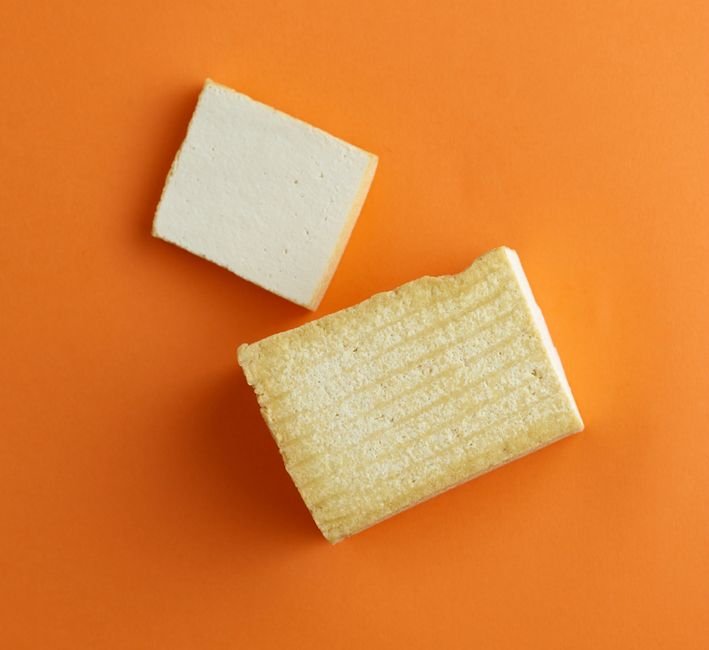
Full Nutrition Facts for 3.5 oz (100g) of Firm Tofu
Here’s the complete breakdown of nutrients in a standard 100g serving of firm tofu, which is the most common variety used in cooking:
| Nutrient | Amount | % Daily Value |
|---|---|---|
| Calories | 76 | — |
| Total Fat | 4.8g | 6% |
| Saturated Fat | 0.7g | 4% |
| Cholesterol | 0mg | 0% |
| Sodium | 121mg | 5% |
| Total Carbohydrate | 1.9g | 1% |
| Dietary Fiber | 1.2g | 5% |
| Total Sugars | 0.3g | — |
| Protein | 8.1g | 16% |
| Iron | 5.4mg | 30% |
| Calcium | 350mg | 27% |
| Magnesium | 27mg | 6% |
*Percent Daily Values are based on a 2,000-calorie diet. Source: USDA FoodData Central.
Key insight: Tofu is remarkably nutrient-dense for its calorie count. A single 100g serving delivers over 8g of complete protein (containing all nine essential amino acids), nearly 30% of your daily iron requirement, and excellent calcium content—especially important if you’re avoiding dairy. The fat content is predominantly unsaturated, and cholesterol is zero, making it heart-friendly.

Etekcity Food Scale
0.1g accuracy — the perfect companion for exact portions.
Silken Tofu vs. Firm Tofu: Differences in Calories and Nutrition
The two most popular tofu varieties have distinct nutritional profiles due to their moisture and density. Understanding these differences helps you choose the right type for your goals.
Silken Tofu
- Softer, creamier texture with higher water content
- Approximately 55 calories per 100g serving
- Lower protein (around 5–6g per 100g) due to lower density
Firm Tofu
- Denser, spongier texture that absorbs marinades and sauces well
- Approximately 70–80 calories per 100g serving
- Higher protein content (8–9g per 100g) and better for grilling, stir-frying, or baking
Practical takeaway: Choose silken tofu for smoothies, soups, and desserts where you want a creamy texture with fewer calories. Pick firm tofu when cooking stir-fries, curries, or grilled dishes where you want structure and maximum protein intake. If you’re watching calories closely, silken is your lighter choice; if you’re building muscle or want maximum satiety, firm tofu delivers more protein per serving.
Is Tofu Good for Weight Loss?
Yes, tofu is an excellent choice for weight loss. At just 70–80 calories and 8g of protein per 100g serving, it provides significant satiety without excessive calories. Protein content helps preserve muscle mass while in a calorie deficit, and tofu’s complete amino acid profile supports metabolic function. The minimal carbohydrates and negligible sugar make it compatible with most weight-loss diets, from keto-adapted approaches to traditional calorie restriction.
Tips to Eat Tofu Without Gaining Weight:
- Avoid deep-frying: Fried tofu can triple the calorie count. Instead, bake at 400°F, air-fry, or pan-sear with minimal oil.
- Watch oil quantity: Use measured amounts of cooking oil (1–2 teaspoons) rather than pouring freely. Tofu absorbs oil easily.
- Pair with vegetables: Combine tofu with high-volume, low-calorie vegetables (broccoli, peppers, mushrooms, greens) to increase fullness without adding calories.
- Avoid heavy sauces: Choose light broths, tamari, or homemade sauces instead of store-bought versions that often contain added sugar and oil.
When prepared simply—steamed, baked, or lightly sautéed—tofu remains one of the lowest-calorie protein sources available, rivaling chicken breast on a per-calorie-per-gram-protein basis while being entirely plant-based.
How Portion Size Affects Calories
Tofu’s calorie density is low and consistent, so portion size directly scales the calorie count. A larger serving of tofu will always contain proportionally more calories, but the density remains predictable, making it easy to portion control. Unlike foods where preparation method dramatically changes calorie content, plain tofu’s nutrition is straightforward to calculate once you know the weight.
Example:
- Small portion (3.5 oz / 100g): 76 calories, 8.1g protein
- Medium portion (7 oz / 200g): 152 calories, 16.2g protein
For accurate portion control, weigh your tofu on a kitchen scale rather than eyeballing, as blocks vary in density and size across brands.
Best Way to Measure Tofu Accurately
Tofu blocks vary in water content and pressed density, so visual estimation is unreliable. Weight is the most accurate measurement method. A standard block is typically 14–16 ounces (400 grams), but this varies by brand and type. Removing excess water before measuring (by pressing) can affect the final weight and calorie count slightly.
Options:
- Kitchen scale (most accurate): Place tofu on a digital scale and measure in grams. This is the gold standard for nutrition tracking.
- Packaging information: Most tofu packages list serving size and calories per serving. Divide the block by the stated number of servings.
- Standard block measurement: One quarter of a standard 14-16 oz block ≈ 100g. A half block ≈ 200g.
Calculate Your Exact Calorie Intake
If you’re eating tofu regularly as part of a weight-loss or muscle-building plan, knowing the precise calorie and macro intake makes a measurable difference. A free nutrition calculator can instantly show you the complete breakdown of calories, protein, carbs, and fat in any serving size you input.
Our site’s free AI nutrients calculator calculates your complete macronutrient profile based on weight, helping you track tofu consumption accurately without guesswork. Simply enter your portion size in grams and get instant calorie, protein, and micronutrient data.
- Instantly adjust portion sizes and see calorie changes in real time
- Track complete macronutrient profiles (protein, carbs, fat) for meal planning
- Compare nutrition across tofu varieties (silken vs. firm vs. extra-firm)
Common Mistakes When Eating Tofu
Many people inadvertently undermine their nutrition goals by making preventable errors with tofu preparation and consumption. Here are the four most common mistakes:
❌ Deep-frying tofu, which adds 200+ calories from oil absorption—turning a 76-calorie serving into 300+ calories.
❌ Using tofu as an excuse to eat unlimited quantities, forgetting that protein still has calories that count toward your daily total.
❌ Cooking tofu in heavy cream sauces or swimming in oil without considering the added fat calories from preparation method, not the tofu itself.
❌ Assuming all tofu blocks are identical in calories—silken varieties have 30% fewer calories than extra-firm, but many people don’t account for this when tracking.
By understanding these pitfalls and choosing simple cooking methods with measured oil, you’ll maximize tofu’s nutritional benefits without sabotaging your goals.
FAQ
How many calories are in 100g of tofu?
A 100g (3.5 oz) serving of firm tofu contains approximately 76 calories. Silken tofu is slightly lower at ~55 calories per 100g, while extra-firm is slightly higher at ~95–100 calories per 100g due to density differences.
Is tofu fattening?
No. Tofu is one of the least calorie-dense protein sources available, and fat content is mostly unsaturated with zero cholesterol. It’s only “fattening” if prepared with excessive oil or deep-fried, which is a preparation choice, not an inherent tofu property.
Does tofu have complete protein?
Yes. Tofu contains all nine essential amino acids in meaningful amounts, making it a complete protein source equivalent to animal proteins—a major advantage for vegetarians and vegans.
How much protein does tofu have?
A 100g serving of firm tofu provides 8.1g of protein, making it comparable to chicken breast on a per-calorie basis. A full block (400g) delivers over 32g of protein.
Conclusion
Tofu is a calorie-efficient, protein-rich food that deserves a place in any balanced diet, whether your goal is weight loss, muscle gain, or simply expanding your protein sources. At 70–80 calories per 100g serving with complete amino acids, minimal saturated fat, and zero cholesterol, it outperforms most other protein options on nutritional efficiency. Iron and calcium content make it particularly valuable for those avoiding animal products.
Success with tofu comes down to preparation and portion awareness. Choose simple cooking methods, measure your portions accurately with a kitchen scale, and use a reliable nutrients calculator to track your intake. By treating tofu as a precise nutritional tool rather than a free-pass food, you’ll maximize its benefits for your specific health goals.
