
Evaporated milk is a shelf-stable dairy product that’s been concentrated by removing about 60% of its water content, making it thicker and more nutrient-dense than regular milk. It’s a pantry staple in many kitchens, especially in Latin American, Caribbean, and Asian cooking, where it’s used in desserts, coffee, savory sauces, and custards. Whether you’re watching calories for weight loss or trying to boost your protein intake for muscle building, understanding the nutritional profile of evaporated milk helps you use it intentionally in your diet.
But how many calories are actually in evaporated milk—and how does it compare to regular milk? This guide breaks down the complete nutrition facts for different varieties, shows you how portion size affects your calorie intake, and answers the practical questions you need to make informed choices at the table.
Calories in Evaporated Milk (Quick Answer)
A standard 2-tablespoon (32g) serving of whole evaporated milk contains about 40 calories. Here are common servings:
- 2 tablespoons (32g) whole evaporated milk: 40 calories
- 1/4 cup (64g) whole evaporated milk: 80 calories
- 1/2 cup (121g) skim evaporated milk: 99 calories
Calorie content varies based on fat content (whole vs. skim) and brand, so check the label on your can for the most accurate figures.

Full Nutrition Facts for 2 Tablespoons (32g) of Whole Evaporated Milk
Here’s the complete nutritional breakdown of a standard serving of whole evaporated milk, the most common variety found in stores:
| Nutrient | Amount | % Daily Value |
|---|---|---|
| Calories | 40 | — |
| Total Fat | 2.2g | 3% |
| Saturated Fat | 1.4g | 7% |
| Cholesterol | 9mg | 3% |
| Sodium | 32mg | 1% |
| Total Carbohydrate | 3g | 1% |
| Dietary Fiber | 0g | 0% |
| Total Sugars | 3g | — |
| Protein | 2.1g | 4% |
| Calcium | 83mg | 6% |
| Vitamin D | 0.8 mcg | 4% |
| Iron | 0.05mg | 0% |
*Percent Daily Values are based on a 2,000-calorie diet. Source: USDA FoodData Central.
Key insight: Because evaporated milk is concentrated, it delivers more protein and calcium per tablespoon than regular milk, making it a nutrient-dense option for small-volume uses like coffee or desserts. The sugar content (3g per 2 tablespoons) is naturally from lactose and matches the carbohydrate level, with no added sugars in unsweetened varieties.

Etekcity Food Scale
0.1g accuracy — the perfect companion for exact portions.
Whole Evaporated Milk vs. Skim Evaporated Milk
Whole Evaporated Milk (per 2 tablespoons, 32g)
- 40 calories with 2.2g fat
- 1.4g saturated fat, contributing 7% of daily value
- 2.1g protein for muscle support and satiety
Skim Evaporated Milk (per 2 tablespoons, 31g)
- 25 calories with only 0.1g fat
- 0.06g saturated fat, contributing less than 1% of daily value
- 2.4g protein, slightly higher than whole due to concentration of non-fat solids
Practical takeaway: Skim evaporated milk saves you 15 calories and nearly eliminates saturated fat per serving, making it the better choice if you’re limiting calories or managing cholesterol. However, whole evaporated milk provides more fat-soluble vitamins and a creamier mouthfeel in recipes. For coffee, desserts, or cooking, the difference is subtle in flavor, but nutritionally skim wins for calorie-conscious eating.
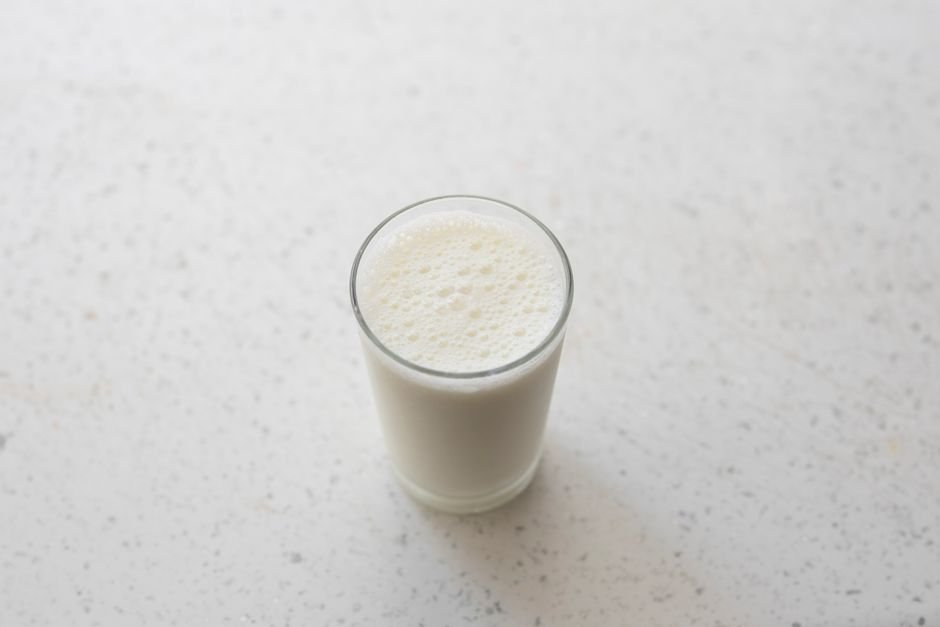
Is Evaporated Milk Good for Weight Loss?
Evaporated milk can support weight loss because small serving sizes deliver meaningful nutrition without excessive calories. A 2-tablespoon serving is unlikely to derail your goals, and the protein content supports satiety. The key is portion control—it’s easy to pour more than you intend, which quickly adds up. Using measured amounts in coffee, sauces, or desserts keeps you on track.
Tips to Eat Evaporated Milk Without Gaining Weight:
- Measure with a tablespoon or kitchen scale instead of pouring straight from the can to prevent over-consumption.
- Choose skim evaporated milk to cut 40% of the calories while keeping protein levels high.
- Use it as a cream substitute in sauces and soups—it thickens with far fewer calories than heavy cream (which has 100+ calories per 2 tablespoons).
- Avoid sweetened condensed milk, which is different and contains 122 calories and 27g sugar per 2 tablespoons—use evaporated milk for savory applications and unsweetened recipes instead.
By treating evaporated milk as a measured ingredient rather than a beverage you drink freely, it becomes a strategic ally in weight management.
How Portion Size Affects Calories
Evaporated milk is calorie-dense due to water removal, so portion size dramatically changes your intake. A tablespoon feels like a small amount but carries meaningful calories and nutrients. Doubling your serving doubles your intake, which matters when you’re counting calories for the day. Understanding your typical serving helps you plan meals accurately.
Example:
- Small portion (1 tablespoon, 16g): 20 calories, 1g protein—ideal for a splash in coffee.
- Large portion (1/2 cup, 121g): 169 calories, 8.4g protein—comparable to a small glass of whole milk, suitable for recipes or a creamy soup base.
A half-cup serving is roughly equivalent to one cup of regular whole milk in terms of calories, so use this as your mental anchor when cooking.
Best Way to Measure Evaporated Milk Accurately
Precise measurement is essential because evaporated milk is concentrated and easy to over-pour. Guessing by eye typically leads to consuming 20–50% more than intended. Using a kitchen scale or measuring spoons removes guesswork and keeps your nutrition tracking honest, especially if you’re managing weight or macros.
Options:
- Kitchen scale: The most accurate method—pour into a small bowl on the scale and stop at your target gram weight (32g for 2 tablespoons).
- Measuring tablespoon: Fill to the brim and level with a knife; each tablespoon is 16g and 20 calories for whole evaporated milk.
- Marked measuring cup: Use the 1/4-cup line for 64g (80 calories) or 1/2-cup line for 121g (169 calories).
Calculate Your Exact Calorie Intake
If you use evaporated milk regularly—whether in your morning coffee, baking, or cooking—calculating your daily calorie contribution ensures you’re hitting your nutrition goals. Most people underestimate liquid calories, and evaporated milk’s concentration makes it easy to slip past your intended intake without tracking.
Use the site’s free AI nutrients calculator to determine your exact calorie and macro breakdown based on your specific serving sizes and any recipes you’re preparing with evaporated milk. It takes the guesswork out of nutrition tracking.
- Calculate macros for recipes using evaporated milk as an ingredient.
- Track daily totals across multiple servings (coffee, dessert, cooking).
- Compare calories between whole and skim varieties to optimize for your goals.
Common Mistakes When Eating Evaporated Milk
Many people misuse evaporated milk, either overestimating or misunderstanding its nutritional role. Here are the most common pitfalls:
❌ Confusing evaporated milk with sweetened condensed milk—they look similar but sweetened condensed has 4× the sugar and almost 3× the calories per serving.
❌ Pouring directly into coffee or recipes without measuring, which easily doubles your intended portion and calorie intake.
❌ Assuming small servings don’t contribute to daily totals—using 1/4 cup in your morning coffee, 2 tablespoons in an afternoon dessert, and 1/4 cup in dinner sauce adds up to 240+ calories.
❌ Not checking the label for added ingredients; some brands add thickeners or stabilizers, though nutrition is generally consistent across quality brands.
Check your cans, measure before use, and distinguish evaporated milk from sweetened condensed milk to use it wisely.
FAQ
How many calories are in 100g of evaporated milk?
100g of whole evaporated milk contains approximately 125 calories. This is useful for precise recipe scaling or comparing to other dairy products on a weight basis.
Is evaporated milk fattening?
Evaporated milk is not inherently fattening when used in measured amounts—2 tablespoons (a typical serving) contains only 40 calories. The issue arises when portions are poured freely without measuring, turning a small ingredient into a significant calorie source.
Can I use evaporated milk as a regular milk substitute?
Technically yes, but it’s not practical. Evaporated milk is much thicker and more concentrated, so you’d need to dilute it 1:1 with water to approximate the texture and nutrition of regular milk. Most people use it as a culinary ingredient rather than a drinking milk.
Does evaporated milk have lactose?
Yes, evaporated milk contains lactose, the natural milk sugar that gives it 3g of carbohydrates per 2-tablespoon serving. Those with lactose intolerance should choose lactose-free evaporated milk if available, or use plant-based alternatives.
Conclusion
Evaporated milk is a nutrient-dense, low-calorie ingredient that delivers protein and calcium in concentrated form. A 2-tablespoon serving has only 40 calories yet provides 2.1g of protein and meaningful micronutrients, making it a smart choice for weight loss, muscle building, or simply adding richness to food without excess calories. The difference between whole and skim varieties is significant enough to matter if calories are your primary concern, but whole milk offers better taste and fat-soluble vitamins in small amounts.
The key to using evaporated milk successfully is measuring portions carefully and understanding that it’s a cooking ingredient, not a beverage. Whether you’re adding a splash to coffee, creating creamy sauces, or baking traditional desserts, knowing the exact calorie and nutrition content helps you stay aligned with your goals. Use a reliable nutrients calculator to track your intake accurately across all your meals and recipes.
