
Coleslaw is a versatile cabbage salad enjoyed at barbecues, picnics, and alongside pulled pork, fish, and sandwiches across North America and beyond. Whether served creamy or tangy, it’s a dietary staple for people managing weight, supporting digestive health, and adding vegetables to their meals. The challenge is that calorie content can swing dramatically depending on the dressing—from a light side dish to a calorie-dense indulgence.
But how many calories are actually in coleslaw? The answer depends entirely on preparation: creamy dressings add far more calories than vinegar-based versions. This guide breaks down the exact nutrition facts, portion sizes, and strategies to enjoy coleslaw without derailing your goals.
Calories in Coleslaw (Quick Answer)
Calorie count varies significantly by preparation method:
- Creamy coleslaw (1 cup / 150g): 180–200 calories
- Vinegar-based coleslaw (1 cup / 150g): 40–60 calories
- KFC coleslaw, individual serving (142g): 170 calories
Values vary by brand, mayo-to-vinegar ratio, added sugars, and oil content. Homemade versions allow full control over dressing amounts.
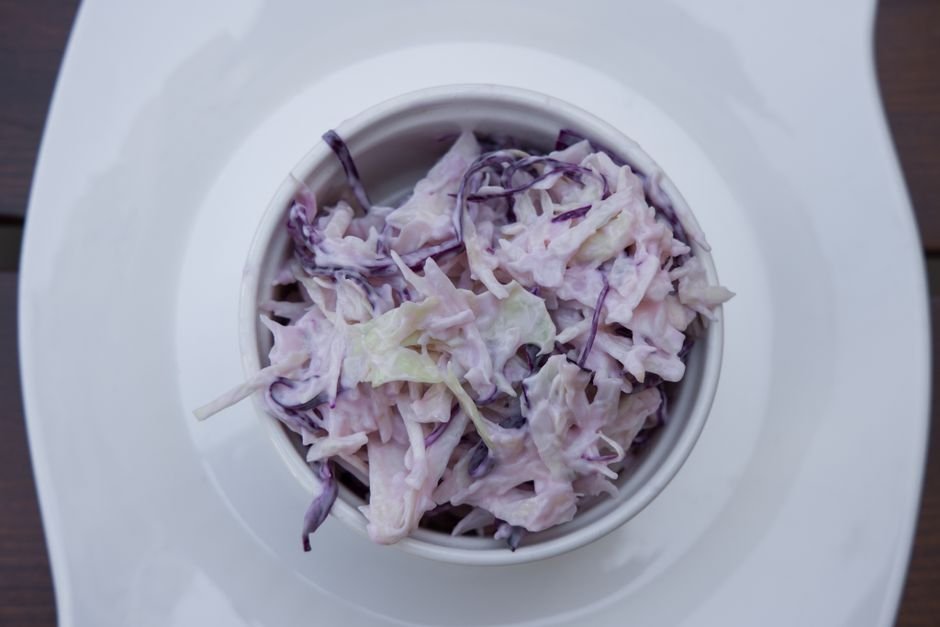
Full Nutrition Facts for 1 Cup (150g) of Creamy Coleslaw
Creamy coleslaw is the most commonly purchased variety at restaurants and delis. Here’s the complete nutritional breakdown per 150g serving:
| Nutrient | Amount | % Daily Value |
|---|---|---|
| Calories | 190 | 9.5% |
| Total Fat | 14g | 18% |
| Saturated Fat | 2.2g | 11% |
| Cholesterol | 11mg | 4% |
| Sodium | 280mg | 12% |
| Total Carbohydrate | 15g | 5% |
| Dietary Fiber | 2.2g | 8% |
| Total Sugars | 8g | 16% |
| Protein | 1.5g | 3% |
| Vitamin K | 56mcg | 47% |
| Vitamin C | 12mg | 20% |
| Folate | 38mcg | 9.5% |
*Percent Daily Values are based on a 2,000-calorie diet. Source: USDA FoodData Central.
Key insight: The fat content in creamy coleslaw comes almost entirely from the mayonnaise dressing, not the cabbage itself. Raw cabbage contains virtually zero fat. This means swapping mayo for vinegar can reduce calories by 70% while keeping the same volume of food—a critical tool for weight management.
Etekcity Food Scale
0.1g accuracy — the perfect companion for exact portions.
Creamy Coleslaw vs. Vinegar-Based Coleslaw
Creamy Coleslaw (Mayo-Based)
- 190 calories per cup; 14g fat from mayonnaise
- Higher sugar content (8g) from sweetened mayo dressing
- Rich, smooth texture; popular at chain restaurants and delis
Vinegar-Based Coleslaw
- 50 calories per cup; less than 1g fat
- Lower sugar (2–3g) unless sweetener is added separately
- Tangy, crisp texture; common at barbecue joints and seafood restaurants
Practical takeaway: If you’re ordering coleslaw without knowing the dressing type, always ask. Requesting vinegar-based saves 130–150 calories per serving compared to mayo-based—equivalent to 30 minutes of moderate cardio. At home, making your own vinegar slaw takes 10 minutes and costs a fraction of store-bought creamy versions.
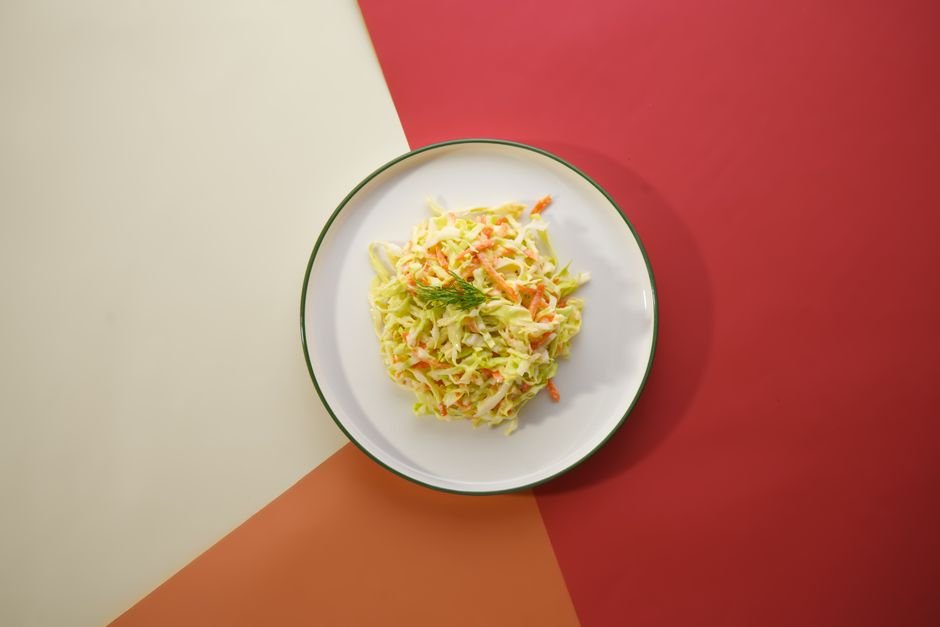
Is Coleslaw Good for Weight Loss?
Coleslaw itself—raw cabbage—is excellent for weight loss: it’s low-calorie, high in fiber, and takes time to chew, promoting satiety. The problem is the dressing. Creamy coleslaw can sabotage a calorie deficit, but vinegar-based versions fit easily into most weight-loss diets. The key is preparation and portion control.
Tips to Eat Coleslaw Without Gaining Weight:
- Choose vinegar-based or ask for dressing on the side at restaurants; control how much you add yourself
- Make homemade coleslaw with 2 tablespoons of vinaigrette per 2 cups of shredded cabbage (vs. 4+ tablespoons mayo in store versions)
- Pair coleslaw with protein: eat it alongside grilled chicken or fish to improve satiety and nutrient balance
- Portion your coleslaw: a satisfying serving is 1 cup; eating directly from a bowl leads to untracked overeating
Coleslaw is most beneficial for weight loss when it replaces higher-calorie sides (fries, potato salad, buttered corn). Used this way, it’s a smart strategic choice.
How Portion Size Affects Calories
Coleslaw is easy to overeat because it’s served in large bowls and feels light. A half-cup seems modest, but restaurant portions often reach 1.5–2 cups without notice. This distinction matters: serving size directly determines whether coleslaw supports or undermines your nutrition goals.
Example:
- ½ cup (75g) creamy coleslaw: 95 calories, 7g fat
- 2 cups (300g) creamy coleslaw: 380 calories, 28g fat (similar to a fast-food cheeseburger)
Always measure your coleslaw with a kitchen scale or standard measuring cup at home to stay aware of intake.
Best Way to Measure Coleslaw Accurately
Coleslaw’s chunky, airy texture makes eyeballing portions unreliable. The same visual amount can vary by 50–100 calories depending on how tightly it’s packed and how wet the dressing is. Accurate measurement requires simple tools and consistency.
Options:
- Kitchen scale (most accurate): Weigh your serving in grams. Use 150g as your reference for one standard cup-sized portion of creamy coleslaw.
- Measuring cup: Use a standard 1-cup or ½-cup measuring cup, leveling the surface. Less precise than a scale but more practical for daily use.
- Visual reference: A tennis-ball-sized serving (about ½ cup) of creamy coleslaw ≈ 95 calories. Use this only as a rough guide when scales aren’t available.
Calculate Your Exact Calorie Intake
If you eat coleslaw regularly—at family dinners, barbecues, or as a sandwich side—small tracking gaps add up over weeks. One unreported cup per week can mean a pound of weight gain per year. Knowing your exact intake is the first step to maintaining control.
Our free AI nutrient calculator analyzes your meals in real time, calculating calories, macronutrients, and micronutrients from any food, including custom coleslaw recipes. Simply input your ingredients or portion size and get instant nutritional data without manual lookup.
- Instantly compare creamy vs. vinegar coleslaw nutrition side-by-side
- Log homemade recipes and track changes if you adjust mayo or sugar amounts
- Sync with your daily goals to see exactly how coleslaw fits into your diet
Try the free nutrients calculator now to take the guesswork out of coleslaw portions.
Common Mistakes When Eating Coleslaw
Even health-conscious eaters trip up with coleslaw. These four habits are the biggest sources of accidental overeating:
❌ Assuming all coleslaw is low-calorie: Cabbage itself is nutritious and low-calorie, but restaurants and delis routinely serve mayo-heavy versions with 180+ calories per cup—equivalent to a slice of bread or a full serving of pasta in terms of energy density.
❌ Not accounting for dressing separately: When coleslaw arrives pre-mixed, you can’t adjust dressing ratio. Restaurant chefs often use 1 part mayo to 3 parts cabbage by weight, which is higher than homemade standards. Always ask if dressing is on the side.
❌ Eating directly from serving bowls: Shared coleslaw at barbecues invites mindless snacking. Transfer your portion to a plate first; you’ll eat 20–30% less and stay aware of intake.
❌ Pairing coleslaw with fried foods: Coleslaw’s light nature makes it feel “compensatory” next to fried chicken or fish. In reality, you’re adding 190 creamy coleslaw calories on top of 500+ fried calories, not offsetting them. Use coleslaw as a side to grilled proteins instead.
Awareness of these pitfalls takes the decision-making burden off willpower and puts it on strategy.
FAQ
How many calories are in 100g of coleslaw?
Creamy coleslaw contains approximately 127 calories per 100g. Vinegar-based coleslaw contains roughly 33 calories per 100g. The difference reflects dressing composition, not the cabbage itself.
Is coleslaw fattening?
Coleslaw is only fattening if it’s creamy and eaten in large portions. Vinegar-based coleslaw is not fattening—it’s lower in calories than most vegetables due to its high water and fiber content. The fattening factor is 100% dependent on dressing choice and portion size.
Can I eat coleslaw every day?
Yes, vinegar-based coleslaw can be eaten daily without caloric concerns. Creamy coleslaw should be limited to 2–3 times per week in standard portions (1 cup) if you’re managing weight. Cabbage also contains compounds that promote digestive health, making frequent consumption beneficial—as long as dressing calories are controlled.
Does coleslaw have more calories than regular salad?
Vinegar-based coleslaw has similar calories to a light green salad (40–60 cal/cup). Creamy coleslaw has more calories than most vegetable salads unless those salads also use creamy dressings. A Caesar salad with dressing, for example, can exceed creamy coleslaw in calories per serving.
Conclusion
Coleslaw’s nutritional profile is almost entirely determined by dressing. Raw cabbage is nutrient-dense, low-calorie, and fiber-rich—a genuine health food. Creamy mayo-based dressing adds 140+ calories per serving while contributing minimal nutritional value beyond fat and sodium. Vinegar-based coleslaw combines cabbage’s benefits with a negligible calorie load, making it an ideal weight-loss side dish.
The takeaway is simple: coleslaw itself isn’t the enemy—dressing ratios are. At restaurants, request vinegar-based slaw or ask for dressing on the side. At home, make your own in 10 minutes with raw cabbage, vinegar, and minimal oil. Track portion sizes using a kitchen scale to stay within your goals. For ongoing oversight of your coleslaw intake and how it fits into your daily nutrition, use a reliable nutrients calculator to remove ambiguity and maintain consistent progress.
