
Bacon is a cornerstone protein in diets ranging from keto and low-carb approaches to simple breakfast plates across North America and Europe. Whether you’re tracking macros for muscle building, managing weight, or simply enjoy bacon as a flavour staple, understanding its caloric and nutritional profile is essential. Bacon’s saturated fat content and sodium levels make portion control especially relevant for anyone watching their fat intake or managing blood pressure.
The immediate question most people ask is straightforward: How many calories are in bacon? The answer depends on whether you’re eating it raw or cooked, and the specific cut or thickness. This guide breaks down the exact nutrition facts, portion strategies, and practical tips for including bacon in a balanced diet.
Calories in Bacon (Quick Answer)
Here are typical calorie counts for common bacon preparations:
- One slice cooked (8g): 42 calories
- Two slices cooked (16g): 84 calories
- 100g cooked bacon: 541 calories
Calorie content varies by cooking method (pan-fried absorbs more fat than baked), thickness of the slice, and the specific bacon brand or cut. Thicker-cut bacon and those with more visible fat will be higher in calories.
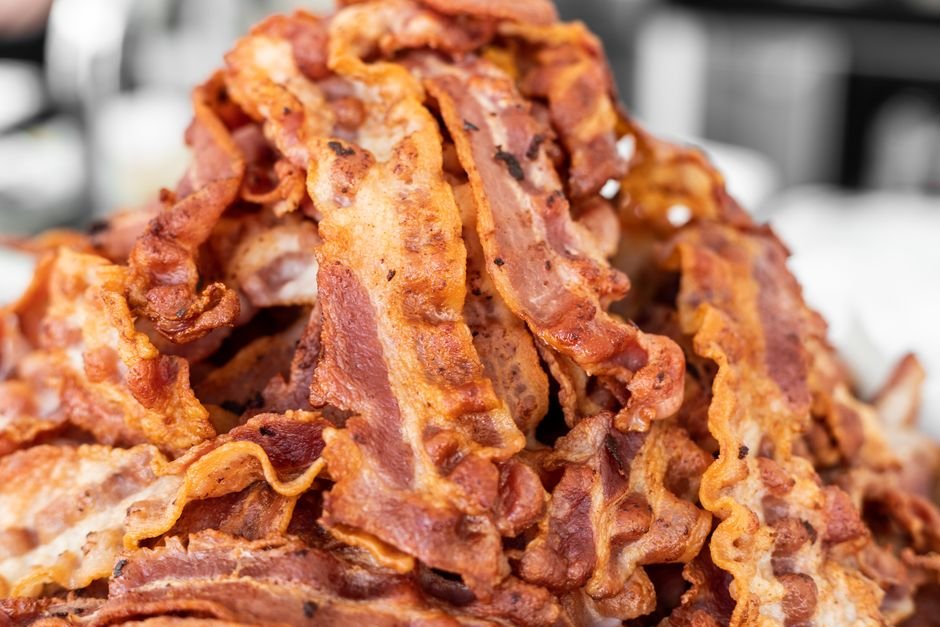
Full Nutrition Facts for 2 Slices (16g) of Cooked Bacon
Two slices of cooked bacon provide a concentrated source of protein and fat, with virtually no carbohydrates. This serving size represents a typical breakfast portion.
| Nutrient | Amount | % Daily Value |
|---|---|---|
| Calories | 84 cal | 4% |
| Total Fat | 6.8g | 9% |
| Saturated Fat | 2.4g | 12% |
| Cholesterol | 16mg | 5% |
| Sodium | 310mg | 13% |
| Total Carbohydrate | 0.1g | <1% |
| Dietary Fiber | 0g | 0% |
| Total Sugars | 0g | 0% |
| Protein | 5.9g | 12% |
| Selenium | 8.6mcg | 16% |
| Phosphorus | 74mg | 6% |
| Zinc | 0.8mg | 7% |
*Percent Daily Values are based on a 2,000-calorie diet. Source: USDA FoodData Central.
Key insight: Bacon is 81% fat and nearly 19% protein by calories, making it an excellent source of selenium (important for thyroid function) and a quick protein addition. However, a single 2-slice serving delivers 13% of your daily sodium limit, so portion awareness is critical if you eat bacon regularly or have hypertension.

Etekcity Food Scale
0.1g accuracy — the perfect companion for exact portions.
Raw Bacon vs. Cooked Bacon
Raw Bacon
- Higher water content; one raw slice (9g) contains approximately 45 calories
- Fat and protein are not yet concentrated; texture is softer and more pliable
- Raw pork carries foodborne pathogen risk; never consume without cooking
Cooked Bacon
- Water evaporates during cooking, concentrating fat and protein; one cooked slice (8g) contains 42 calories despite being smaller in weight
- Fat renders out, making it crispier and more flavorful; some fat drains away depending on cooking method
- Fully safe to eat; cooking kills harmful bacteria and parasites in pork
Takeaway: Cooking bacon reduces the total weight (from water loss) but the calorie density per gram actually increases slightly. Baking on a rack allows more fat to drain than pan-frying, so method matters if you’re trying to minimize fat intake. Always cook bacon thoroughly to at least 160°F (71°C) internal temperature.
Is Bacon Good for Weight Loss?
Bacon can fit into a weight-loss plan, but portion size is the key variable. Two to three slices (84–126 calories) are protein-rich and satiating without derailing a calorie deficit. The high fat content keeps you fuller longer, which can help reduce overall calorie intake throughout the day. However, the sodium content is high; eating bacon regularly may increase water retention and bloating, which can mask fat loss on the scale. Pairing bacon with whole vegetables and avoiding high-calorie additions (mayo-based condiments, cheese, white bread) maximizes the weight-loss benefit.
Tips to Eat Bacon Without Gaining Weight:
- Stick to 2–3 slices per serving and measure weight if possible to avoid portion creep.
- Cook via baking on a rack or in an air fryer to allow more fat to drain than pan-frying in oil or butter.
- Pair bacon with fiber-rich vegetables or eggs rather than refined carbs (white toast, pastries) to keep calories in check and improve satiety.
- Limit bacon to 3–4 times per week to control cumulative sodium intake and saturated fat, unless your doctor approves higher intake for a specific diet like keto.
Treated as a flavoring or protein accent rather than the main component of a meal, bacon works well for sustainable weight loss. A single slice crumbled over a salad or mixed into eggs adds taste and protein without excess calories.
How Portion Size Affects Calories
Bacon is calorie-dense, so small portions add up quickly. A single slice is modest (42 calories), but typical servings of 3–4 slices can exceed 150 calories. If you’re pan-frying bacon, additional calories come from cooking fat absorbed during the process, so the cooking method directly affects your final calorie intake. Awareness of whether you’re eating 1 slice, a small breakfast portion (3 slices), or a full restaurant serving (5–6 slices) is necessary to track accurately.
Example:
- Small portion (2 slices): 84 calories, 6g fat, 6g protein
- Large portion (6 slices): 252 calories, 20g fat, 18g protein
Tripling your bacon portion only adds 3x the calories—there’s no savings in eating less, so consistency with your chosen portion is the simplest approach.
Best Way to Measure Bacon Accurately
The most reliable way to track bacon calories is by weight, not by counting slices, because slice thickness varies dramatically between brands and cuts. A kitchen scale removes guesswork and is especially important if you’re tracking macros for bodybuilding or a strict diet protocol. If you don’t have a scale, understanding the rough weight of a single slice from your specific bacon package helps you estimate.
Options:
- Kitchen scale: Weigh cooked bacon immediately after cooking while still on a plate. This is the most accurate method and takes 10 seconds per serving.
- Slice count from one reference weigh: Weigh a typical slice from your bacon package once, note the weight, then count slices going forward. This works if you always buy the same brand and cut.
- Volume approximation: If using neither, estimate 1 ounce (28g) of cooked bacon as roughly 3 medium slices, which is approximately 150 calories. Use this only as a rough backup.
Calculate Your Exact Calorie Intake
Bacon is simple in its nutrition profile—high fat, decent protein, no carbs—but if bacon is a staple in your diet, small portion miscalculations compound over weeks. Many people underestimate how much bacon they actually eat because it’s easy to add “just one more slice” at breakfast.
Our free AI-powered nutrients calculator helps you log bacon (and all your meals) with precision, accounting for your cooking method and exact weight. Track a week of meals to see where bacon fits into your daily totals for calories, saturated fat, and sodium.
- Log portions by weight and automatically sync calorie and macro totals
- See cumulative sodium intake across all meals to stay under daily limits
- Identify patterns in when you tend to eat bacon and whether it correlates with exceeding your calorie or fat targets
Use the free calculator to track your bacon and other foods with full nutrition transparency.
Common Mistakes When Eating Bacon
Even when cooked properly, people often make avoidable mistakes with bacon that inflate calories or compromise other health goals:
❌ Cooking bacon in additional oil or butter — Pan-frying bacon in fat beyond what renders from the meat itself adds 50–100 extra calories per serving. Bacon has enough fat to cook without added oil; use a non-stick pan, rack in the oven, or air fryer instead.
❌ Not draining cooked bacon — Leaving bacon on a plate without blotting it on paper towels retains all rendered fat, increasing final calories by 10–20%. A few seconds of blotting removes surplus fat that adds calories without adding nutrition.
❌ Pairing bacon with high-calorie sauces and spreads — A bacon sandwich with mayonnaise, ketchup, or hollandaise sauce adds 200–300 calories. The bacon itself is under 150 calories for a typical breakfast portion, so condiments often exceed the main ingredient.
❌ Eating bacon without a protein plan for the rest of the day — Because bacon is high in fat and sodium, eating a large portion without adjusting other meals often leads to exceeding daily fat or sodium caps. Account for bacon’s contribution to your daily macros before deciding on other protein sources.
FAQ
How many calories are in 100g of bacon?
100g of cooked bacon contains approximately 541 calories. This is roughly 13 medium slices or a full package of typical grocery-store bacon.
Is bacon fattening?
Bacon is not inherently fattening if portion-controlled within a balanced diet. Two to three slices fit comfortably into most calorie targets, and the protein and satiety can actually help with weight management. However, eating bacon without measuring portions or limiting frequency can easily lead to overconsumption of calories, saturated fat, and sodium.
Does cooking method change the calories in bacon?
Cooking method affects how much fat drains away. Baking on a rack or air-frying removes more fat than pan-frying, reducing the final calorie count by 5–10%. Microwave cooking falls in between. The protein content remains constant regardless of method.
How much sodium is in bacon?
Two slices of cooked bacon contain 310mg of sodium, which is 13% of the 2,400mg daily limit recommended by health authorities. Regular bacon eaters can easily exceed sodium targets if not careful, so balancing with low-sodium meals is advisable.
Conclusion
Bacon is a protein-rich, nutrient-dense food with a straightforward calorie profile: roughly 42 calories per slice when cooked, plus 6g fat and 6g protein per slice. It’s high in saturated fat and sodium, requiring portion awareness, especially for people with hypertension or those tracking fat intake. The selenium and phosphorus content offer micronutrient value, and the satiety from fat makes bacon a practical addition to many eating styles, from keto to Mediterranean diets with moderation.
The key to including bacon in a healthy diet is measuring your portions, choosing a cooking method that allows fat to drain, and pairing it with whole foods rather than refined carbs. Whether you’re tracking calories for weight loss or muscle building, consistency with portion size is more important than perfection. Use a **kitchen scale and a reliable nutrients calculator** to stay accountable and see exactly where bacon fits into your daily macro and calorie targets.
