
If you’ve been trying to hit your macros with nothing but a pen, a food scale from 2015, and sheer willpower, you already know how fast that system falls apart. Smart kitchen gadgets macros tracking has genuinely changed the game over the last few years, and not in a gimmicky way. The difference between guessing and knowing your protein intake can be 20 to 30 grams off per meal, which over a week of training turns into a real gap between your plan and your results.
Here’s the thing a lot of nutrition content won’t say out loud: the hardest part of tracking isn’t understanding macros. It’s the friction. The more steps between eating and logging, the more likely you are to skip it. These gadgets exist to cut that friction down to almost nothing.
This roundup covers five of the best smart kitchen gadgets for macros in 2026, chosen for different types of users, different budgets, and different levels of obsession with data. Before we get there, let’s talk about what actually matters when you’re buying this stuff.
What to Look for in Best Smart Kitchen Gadgets for Macros Tracking
Most buying guides give you a list of vague specs. Here are three things that actually matter, named for what they really mean in day-to-day use.
The One-Step Sync. If a device requires you to open an app, manually search for a food, and then drag a slider to match the weight, it’s not smart, it’s just wireless. The best smart kitchen gadgets for macros sync directly to a nutrition app like MyFitnessPal, Cronometer, or their own native app, and they auto-populate the nutritional data with minimal taps. Check whether Bluetooth sync is passive (always on) or requires you to manually trigger it. That detail matters more than the weight capacity.
The Database Depth Test. A food scale that connects to a database of 300,000 foods sounds impressive until you scan a jar of Rao’s marinara and it comes up blank. Before committing to any ecosystem, look up three or four of the specific foods you eat most, including branded packaged items, and check whether they appear in that scale’s associated app. Some scales use the USDA database. Others use their own proprietary one. The size and accuracy of that database is what determines whether the device is actually useful for you.
The Screen-Off Reality. For kitchen gadgets specifically, the display matters more than people admit. If the screen dims or turns off while you’re mid-recipe, with flour on your hands, and you have to tap the unit again to see the weight, that’s a design failure. Check whether the scale has an adjustable backlight timeout, or better yet, whether it stays on while weight is actively detected.
The 5 Best Smart Kitchen Gadgets for Macros in 2026
1. Withings Body Smart Scale (with Food Pairing App)
The Verdict: A body composition scale that’s built for people who track everything, not just weight.
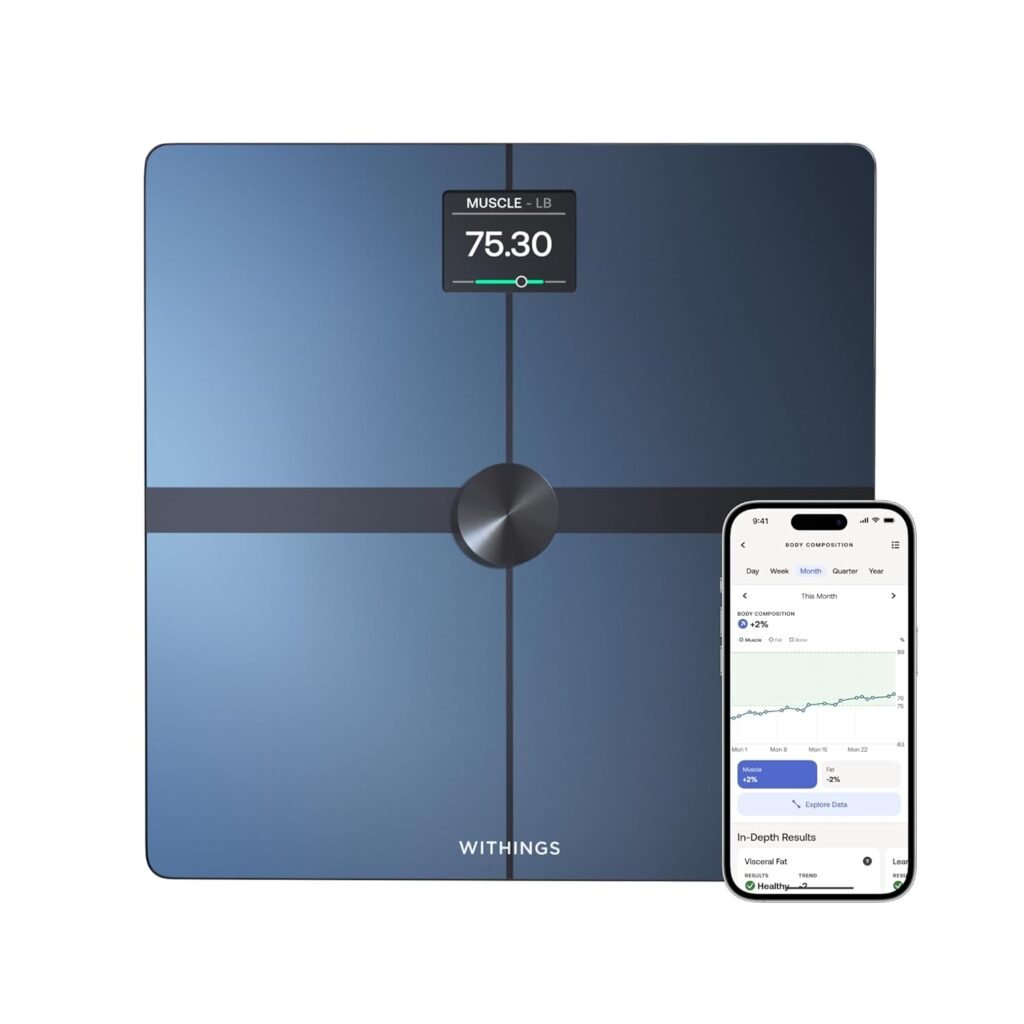
Withings has been making connected health hardware since before most fitness apps existed. Their Body Smart scale measures weight, body fat percentage, muscle mass, visceral fat, bone density, and water percentage, then syncs all of it to the Withings Health Mate app. The reason it earns a spot on a macros-focused list is that the Health Mate app allows you to log food and nutrition alongside your body composition trends, so you can actually see what happens to your muscle mass percentage when your protein intake drops for two weeks. That feedback loop is genuinely useful.
The honest limitation here is that the scale itself isn’t a food scale. You’re not weighing chicken breast on it. It’s a body composition device that pairs well with a separate food scale, and the native food logging inside Health Mate is decent but not as deep as Cronometer or MyFitnessPal. If you already use one of those apps, you’ll want to connect them rather than switch.
Best for: Serious body recomposition trackers who want to correlate nutrition data with body composition changes over time, not just count calories in isolation.
2. RENPHO Elis Smart Nutrition Scale
The Verdict: The most practical food scale for daily macro tracking, and the one I’d actually recommend to a beginner.
The RENPHO Elis is what happens when a food scale is designed specifically around macros tracking rather than as an afterthought. You place food on the platform, open the RENPHO Health app, search for the item, and the app calculates protein, fat, carbohydrates, and calories in real time as you adjust the weight. The database is large, Bluetooth sync is fast, and the display is clear. For most people tracking macros for the first time, this covers 90 percent of what they actually need.
The real criticism is the app’s barcode scanner. It works well for major brands, but for smaller or regional products it sometimes pulls inaccurate data, and there’s no easy way to flag or correct an entry. If you eat a lot of specialty or international foods, you’ll hit this wall within the first week. The workaround is to manually enter the nutritional info from the label, which works fine but adds steps back into the process you were trying to simplify.
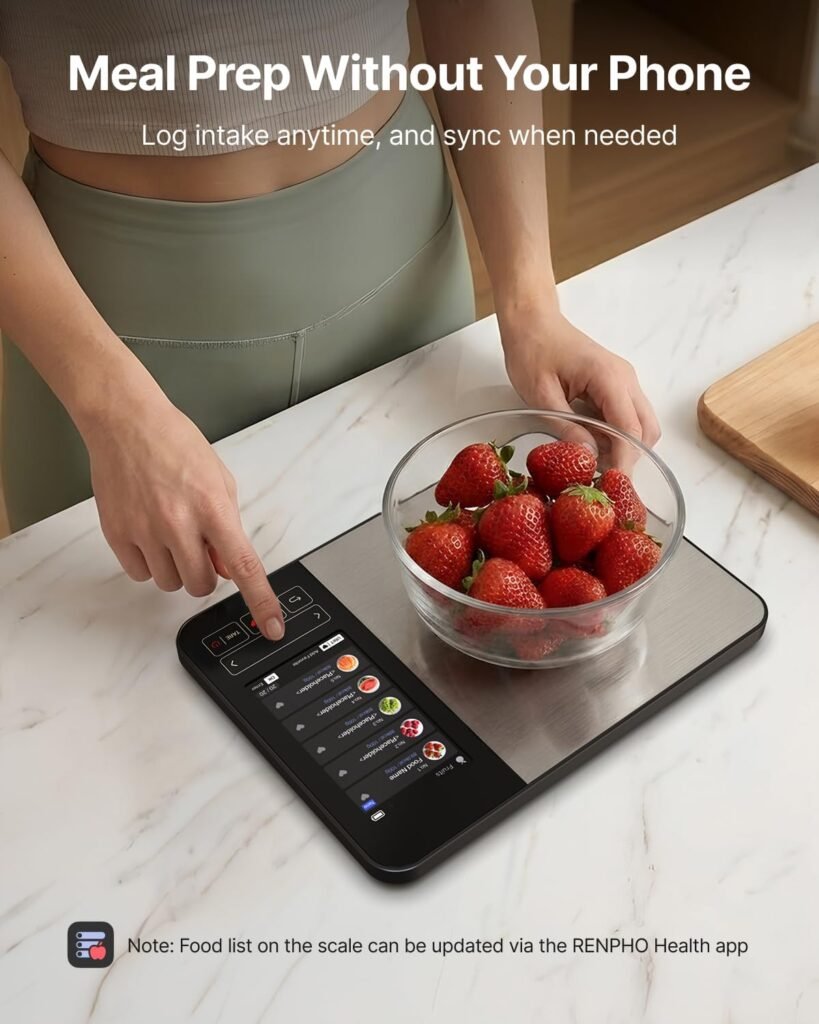
The scale itself is well-built, weighs up to 10kg with 1g precision, and has a screen that stays on while weight is detected. The price is also genuinely reasonable for what you get, usually sitting in the $30 to $50 range depending on the retailer.
Best for: Beginners and intermediate trackers who want a simple, reliable food scale with built-in macro breakdowns and aren’t eating obscure branded foods every day.
Etekcity Food Scale
0.1g accuracy — the perfect companion for exact portions.
3. Nicewell Food Scale with Nutritional Calculator
The Verdict: No app, no Bluetooth, no nonsense, just macro calculations right on the screen.
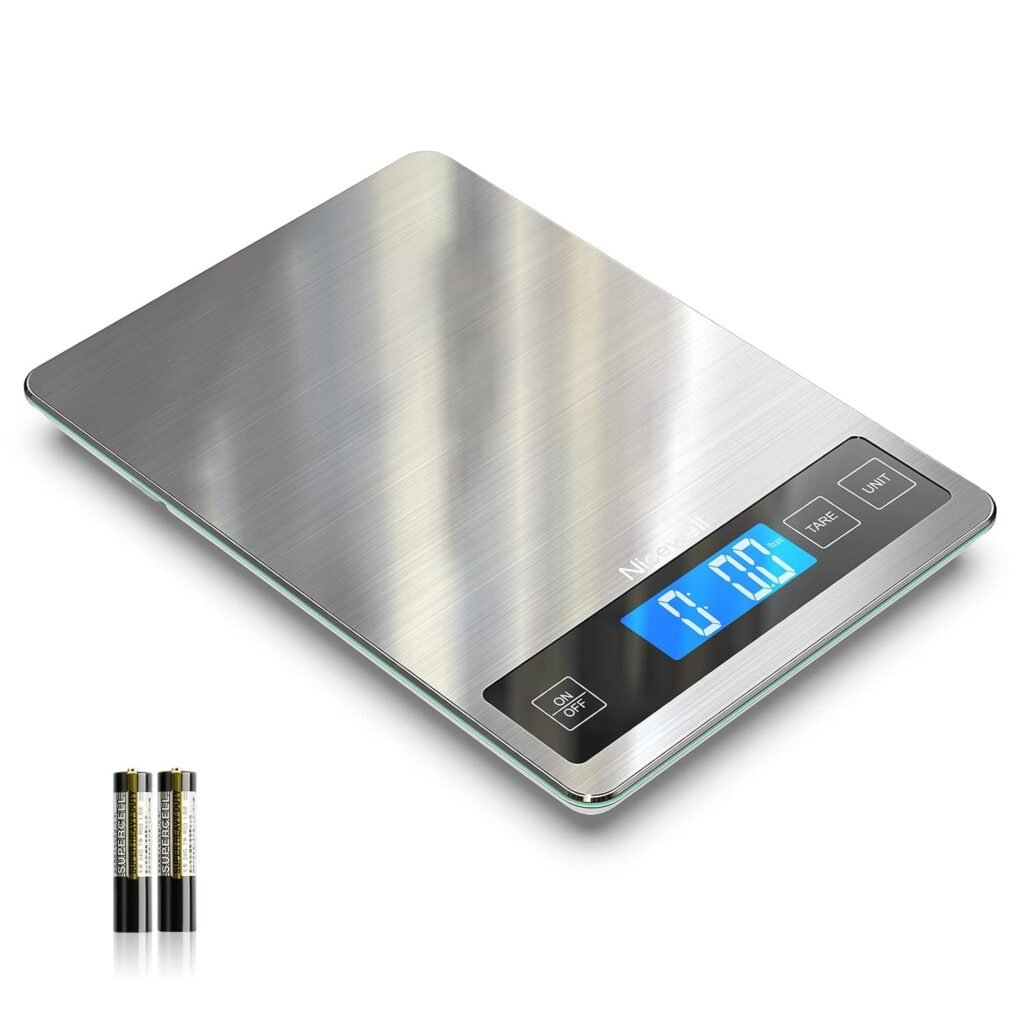
You’ve probably heard the argument that you need a connected app to get real nutrition data from a food scale. This scale politely disagrees. The Nicewell nutrition scale has an onboard database of around 999 food codes, and it calculates calories, protein, fat, and carbohydrates directly on the built-in LCD screen without ever connecting to your phone. You select a food code, place the food on the platform, and the macros appear instantly.
Honestly, this is my pick for anyone who is suspicious of apps, has privacy concerns about health data, or simply doesn’t want yet another subscription or account. The trade-off is obvious: 999 food codes covers the basics, like chicken breast, oats, eggs, and rice, but it doesn’t cover every Trader Joe’s product or your favourite protein bar. You’ll also need to manually log the numbers into whatever tracking system you use, since there’s no automatic sync. For people following a simple whole-foods diet, that’s rarely a problem.
The build quality is solid, the platform is wide enough for a dinner plate, and the display is easy to read. No app, no Bluetooth dropouts, no firmware updates at inconvenient times.
Best for: Whole-foods eaters and people who want macro data without app dependency or connectivity requirements.
4. Drop Kitchen Smart Scale and Recipe App
The Verdict: Built for cooks who want to track macros without sacrificing the joy of actual cooking.
Most food scales treat cooking like a clinical process. Drop takes a different approach. The Drop smart scale connects to the Drop Kitchen app, which combines guided recipes with real-time scaling and nutritional tracking. You follow a recipe step by step, weigh each ingredient directly into the bowl as prompted, and the app tracks the cumulative macros of the dish as you build it. When the recipe is done, you have a full nutritional breakdown of the meal you just cooked, portioned per serving.
This is particularly useful for people who meal prep complex dishes, because calculating macros for a chicken stir-fry with eight ingredients manually is where most people give up and just guess. Drop makes it actually enjoyable, and the recipe library is substantial and well-tested. The app integrates with MyFitnessPal, so logging the final meal takes one tap.
The limitation worth knowing: the Drop ecosystem is built around its own recipe library, and if you want to use it with your own recipes, the manual entry process is more involved than it should be. It’s not designed for free-form cooking. It’s designed to guide you through a structured process, which is either a feature or a flaw depending on how you cook.
Best for: Home cooks who want to build macro-tracked meals from real recipes rather than weighing individual items in isolation.
Etekcity Food Scale
0.1g accuracy — the perfect companion for exact portions.
5. Etekcity Nutrition Food Scale with MyFitnessPal Integration
The Verdict: The cleanest direct integration with MyFitnessPal available on a food scale right now.
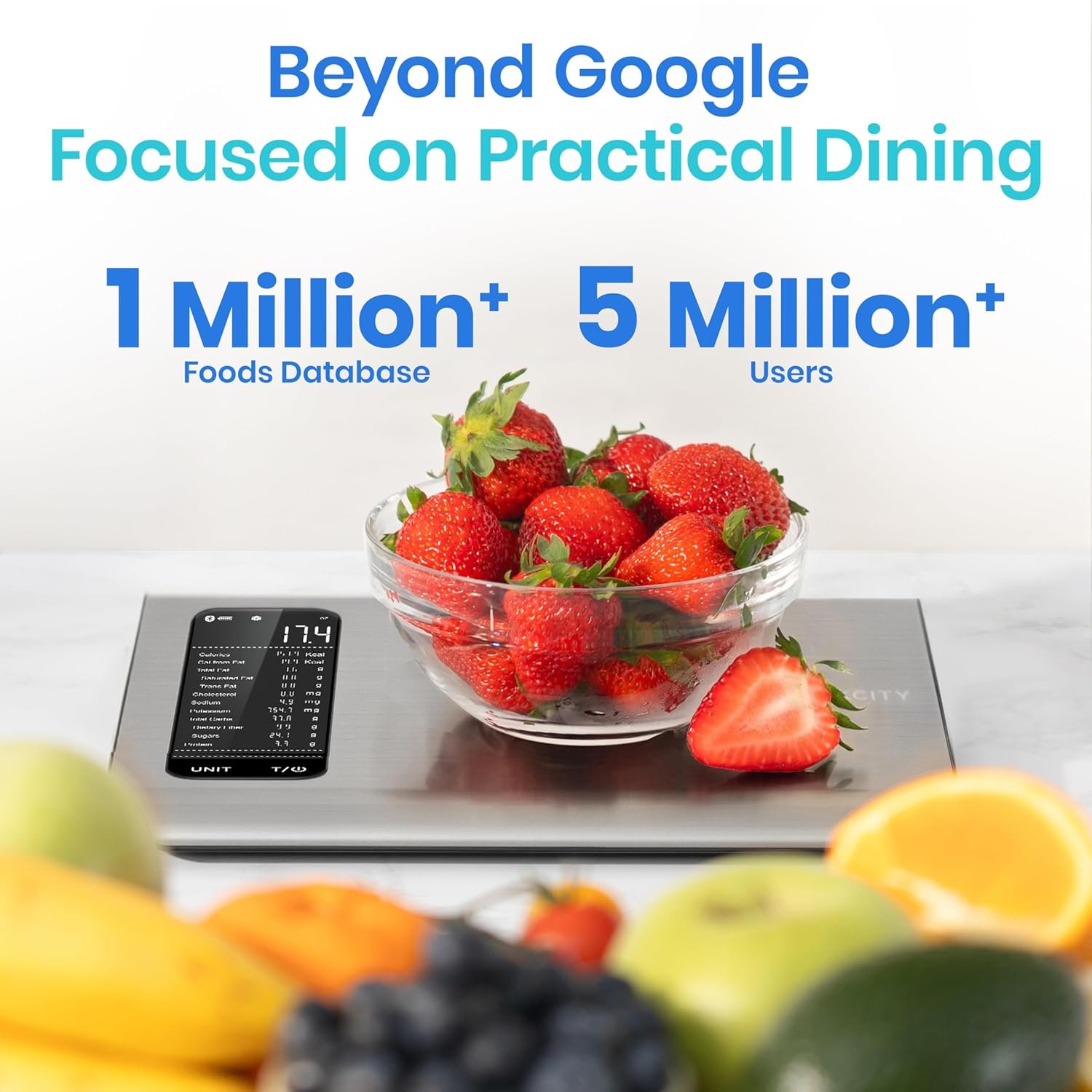
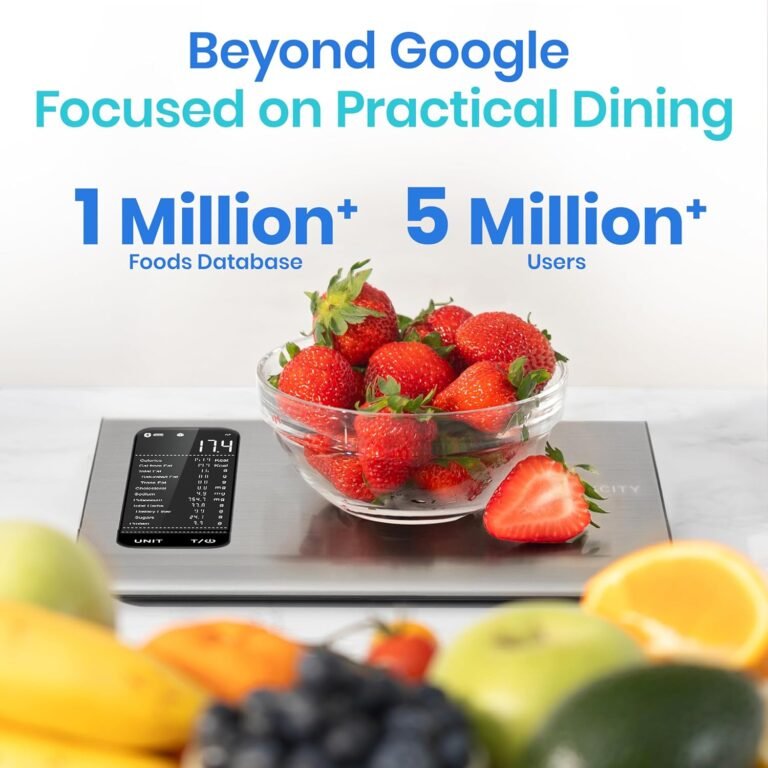
If your entire nutrition tracking life lives inside MyFitnessPal, this scale is built specifically for you. Etekcity’s smart nutrition scale connects directly to the MFP app via Bluetooth, and when you weigh a food item, it auto-populates your log using MFP’s database of over 14 million foods. That database depth is the real advantage here. You’re not relying on a proprietary list of 300,000 items. You’re pulling from one of the largest user-contributed food databases in the world, which means even niche products, restaurant items, and regional brands are usually findable.
The scale itself is accurate to 1 gram, supports multiple units, and has a clean stainless steel platform that wipes down easily. The screen display is backlit and readable, and the Bluetooth connection is stable, which sounds like a low bar but it isn’t: several competing scales have frustrating dropout issues mid-weigh.
The honest downside is that MFP’s user-contributed database is only as accurate as the people who submitted the entries. Occasionally you’ll scan a product and find three conflicting entries with different calorie counts. That’s not Etekcity’s fault, but it’s a real limitation of the ecosystem. If you want verified USDA-sourced data above all else, Cronometer’s integration is more accurate, though fewer scales support it.
Here’s a practical note: if you’re on the MFP free tier, some sync features may be limited. Check before you buy.
Best for: Dedicated MyFitnessPal users who want seamless, one-tap food logging without switching apps or re-entering data manually.
Etekcity Food Scale
0.1g accuracy — the perfect companion for exact portions.
A Few Things Worth Knowing Before You Buy
One common misconception about the smart kitchen gadgets and macros is that a more expensive gadget means more accurate nutrition data. That’s not really how it works. The scale’s hardware precision, usually 1 gram for most quality scales, is similar across brands in the $30 to $80 range. What varies is the database and the app experience. A $35 scale connected to a great database will give you more useful macro data than an $80 scale connected to a limited one.
Also worth noting:
Visit our Best Food Scales section for more resources on Nutrients Calculator.
- All food scales introduce some error because food composition varies. A chicken breast listed as 31g protein per 100g in the USDA database might vary by 10 to 15 percent depending on the bird, cooking method, and water retention. Precision weighing is more about consistency than absolute accuracy.
- Cooking reduces water weight. Weighing raw and cooked chicken gives you different numbers. Decide on one method and stick with it, most databases have both raw and cooked entries.
- If you’re tracking for medical reasons, such as diabetes or kidney disease, stick to databases that use verified USDA or NHS data rather than user-contributed entries.
- Battery life matters more in the kitchen than people expect. Scales that eat through AAA batteries every two weeks become annoying fast. Check for USB-C rechargeable options if you track heavily.
So Which One Should You Actually Get?
The RENPHO Elis is the right starting point for most people who are new to using smart kitchen gadgets macros tracking in their daily routine. It’s affordable, the app is intuitive, and the macro breakdown is clear. If you’re already deep in the MyFitnessPal ecosystem, the Etekcity scale removes more friction than anything else on this list. If you hate apps entirely, the Nicewell handles macros without ever touching your phone. And if cooking is something you genu
