Part of our guide: How to Estimate Calories Without a Food Scale: 5 Methods That Work
Key takeaways
- The foods with more calories than you think are usually dense: lots of calories in a small volume, mostly from fat or sugar.
- Many are genuinely healthy (avocado, nuts, olive oil, granola). The fix is portion awareness, not avoidance.
- Drinks and sauces are the most forgotten calories of all.
- Every number below is from USDA FoodData Central for a realistic serving, not the tiny “official” one.
Ask ten people how many calories are in a blueberry muffin and you’ll hear guesses around 200–250. A typical 4-ounce bakery muffin has about 424, according to USDA data. That gap of 200 calories, repeated across a few foods a day, explains why many people feel they “eat well but don’t lose weight”.
Here are twelve everyday foods that carry more calories than most people guess, with real numbers and an easy way to keep each one in your diet. Knowing a handful of these “anchor” foods is one of the five methods in our pillar guide, how to estimate calories without a food scale.

1. Bakery blueberry muffin: about 424 calories
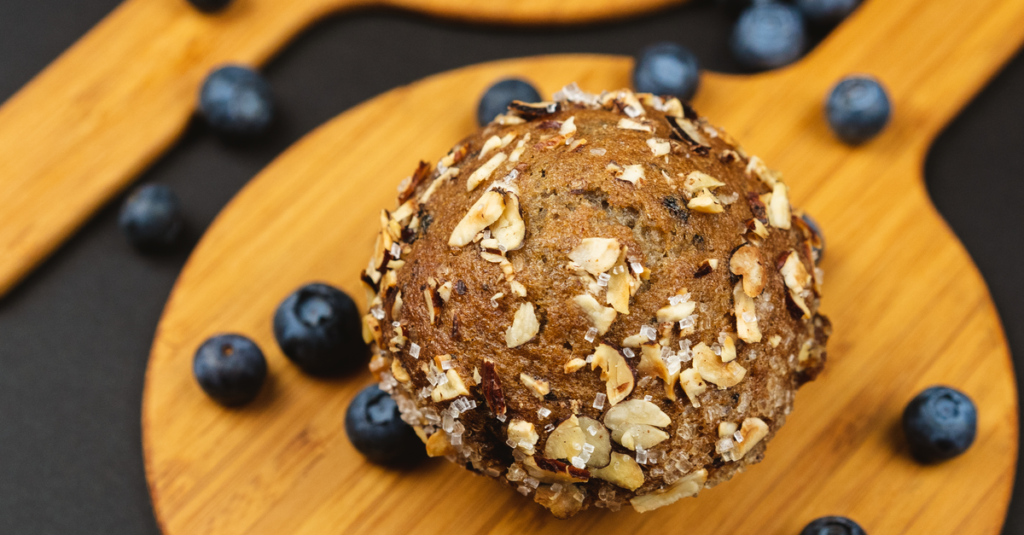
A 4-ounce (113 g) commercial blueberry muffin has about 424 calories and 36 g of sugar. “Blueberry” makes it sound like fruit; nutritionally it’s closer to cake.
Easier swap: half a muffin with a Greek yogurt, or a homemade mini muffin (about 1 oz).
Etekcity Food Scale
0.1g accuracy — the perfect companion for exact portions.
2. Trail mix: about 347 calories per ½ cup
Nuts, seeds, raisins and chocolate pieces make a great hiking snack because they pack energy into a small space. That’s exactly why a handful at your desk becomes 350 calories quickly.
Easier swap: portion ¼ cup into a small container instead of eating from the bag.
3. Pizza: about 348 calories per quarter of a 12-inch pepperoni pizza
A quarter of a 12-inch frozen pepperoni pizza is about 348 calories. Restaurant slices from larger pies, with more cheese and oil, often run higher.
Easier swap: one slice plus a big side salad instead of two slices.
4. A whole avocado: about 322 calories
Avocados are rich in fiber, potassium and healthy fats. A whole avocado is about 322 calories, a little more than a medium bagel.
Easier swap: use a third to a half per serving (about 110–160 calories). It still gives you creaminess and fiber.
5. Granola: about 298 calories per ½ cup
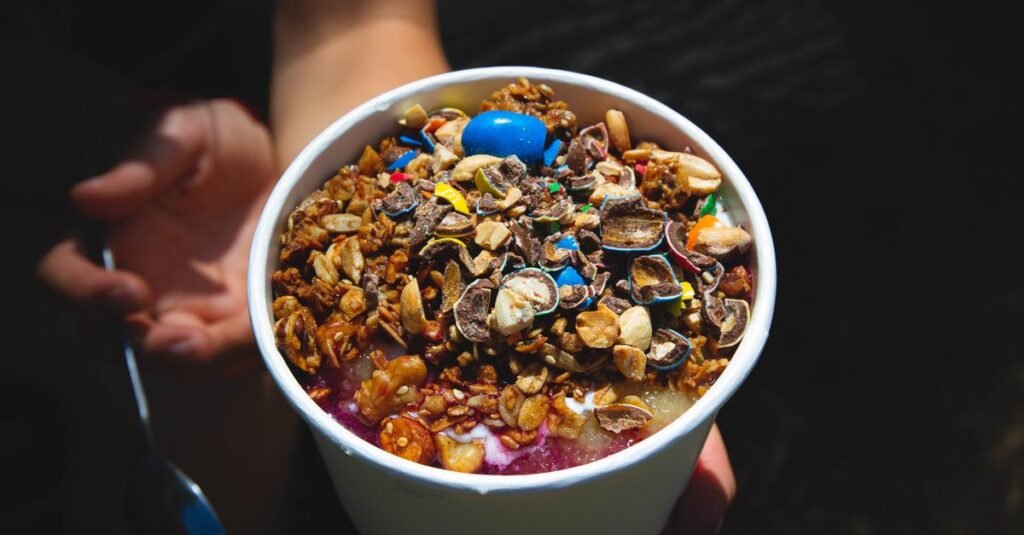
Homemade-style granola is about 298 calories per half cup, with nearly 15 g of fat from nuts and oil. A full cereal bowl can easily be a full cup: almost 600 calories before milk.
Easier swap: use granola as a crunchy topping (2–3 tablespoons) on yogurt or oatmeal.
6. Bottled fruit smoothie: about 284 calories per 15 oz bottle
A typical bottled fruit smoothie has about 284 calories and 56 g of sugar per 15.2-ounce bottle, mostly from fruit juice. Drinks don’t fill you up the way the same calories in food do.
Easier swap: make your own with whole fruit, Greek yogurt and water or milk, or eat the fruit and drink water.
7. A medium bagel: about 277 calories
A medium plain bagel is about 277 calories, roughly three and a half slices of white sandwich bread. Add 2 tablespoons of cream cheese and you’re near 380.
Easier swap: a “thin” bagel, half a bagel, or one slice of whole-grain toast with an egg for more protein.
8. Glazed doughnut: about 269 calories
A medium glazed doughnut is about 269 calories. It’s one of our favorite rounds in the daily calorie game because almost everyone guesses low.
9. Croissant: about 231 calories
The airy texture of a croissant comes from layers of butter. A medium croissant is about 231 calories; a large bakery croissant can be 300–400.
10. Latte with whole milk: about 223 calories (16 oz)

A 16-ounce latte with about 12 ounces of whole milk is roughly 223 calories before any syrup. Each pump of flavored syrup adds about 20–25 more.
Easier swap: a smaller size, 2% or skim milk, or a cappuccino (more foam, less milk).
11. Peanut butter: about 191 calories per 2 tablespoons
Two level tablespoons of peanut butter are 191 calories. Most people’s “spoonful” is a heaping tablespoon or more, so a real-life serving is often 250+.
Easier swap: measure with a tablespoon once a week to recalibrate your eye, or use powdered peanut butter mixed with water for sauces.
12. Caesar dressing: about 163 calories per 2 tablespoons
Creamy dressings are one of the most underestimated parts of a “healthy” salad. Two tablespoons of Caesar dressing add about 163 calories; ranch about 129. Restaurant salads often come with ¼ cup or more.
Easier swap: ask for dressing on the side and dip your fork, or use a vinaigrette.
Honorable mentions
- Olive oil: 119 calories per tablespoon, and pans often get two or three.
- Macadamia nuts: 204 calories per ounce (10–12 nuts), the most calorie-dense common nut.
- Cheddar cheese: 114 calories per ounce, about the size of two dice.
- Raisins: a small 1.5 oz box has about 129 calories.
Why foods with more calories than you think fool us
- Density. Our eyes judge volume, not energy. Fat has 9 calories per gram versus 4 for protein and carbs, so fatty foods look small for their calories.
- The health halo. Words like “granola”, “smoothie”, “avocado” and “blueberry” make people guess lower.
- Liquid calories. Drinks don’t register as “eating”, so they’re forgotten when logging.
- Portion drift. Bakery and café portions have grown over the years, while our sense of “one muffin” hasn’t.
If label serving sizes have ever confused you, our explainer on whether calorie labels are accurate covers how serving sizes and label rules work.
Practice makes the numbers stick
Reading a list helps, but guessing and getting instant feedback trains your intuition faster. Our free daily game shows five foods with a serving size; you guess the calories and see the USDA value straight away. Many of the foods in this article appear in it.
The bottom line
None of these foods are “bad”. Several are among the healthiest things you can eat. They’re just denser than they look. Learn the numbers for the ones you eat often, measure them once in a while to recalibrate, and be especially alert to drinks, dressings and anything baked.
Frequently asked questions
Which healthy foods are highest in calories?
Nuts, nut butters, seeds, avocado, olive oil, granola, dried fruit and cheese are nutritious but calorie-dense. They're worth eating; just measure portions now and then, because small differences add a lot of calories.
Why do people underestimate calories?
Calorie-dense foods look small, 'healthy' labels lower our guesses, and drinks and sauces don't feel like food. People also tend to underestimate large portions more than small ones.
Is granola healthier than cereal?
Granola often has more fiber and healthy fats than many cereals, but also more calories and sometimes more sugar per cup. Use it as a topping (2–3 tablespoons) rather than a full bowl if you're watching calories.
How many calories are in a bagel compared with bread?
A medium plain bagel has about 277 calories, roughly the same as three and a half slices of white sandwich bread at about 77 calories each.
Sources
This article is for general information and isn’t medical advice. Talk to your doctor or a registered dietitian about your own needs, especially if you have a health condition, are pregnant or take medication.