Part of our guide: How to Estimate Calories Without a Food Scale: 5 Methods That Work
Key takeaways
- To estimate calories when eating out, assume more fat and bigger portions than home cooking.
- Break the plate into parts, estimate each with your hand, then add one to two tablespoons of cooking fat.
- Posted calories at chain restaurants are a good starting point, but individual items can run 100+ calories high.
- A rough log is always better than no log. Missing entries hurt your weekly average more than imprecise ones.
Eating out is where many people’s tracking falls apart. There’s no label, no measuring cup and no idea how much butter went into the sauce. But restaurant meals follow patterns, and once you know them, you can make a reasonable estimate in under a minute. This is part of our pillar guide on estimating calories without a scale.
Start with posted calories when they exist
In the US, restaurant chains with 20 or more locations must post calories on menus and menu boards (FDA). These numbers are a good starting point. In a study of 269 restaurant foods, stated calories were accurate on average, but about one in five items had at least 100 calories more than listed (Urban et al., 2011).
Rule of thumb: use the posted number and add 10% for dishes that are fried, sauced or cheesy.
Etekcity Food Scale
0.1g accuracy — the perfect companion for exact portions.
No numbers? Break the plate down
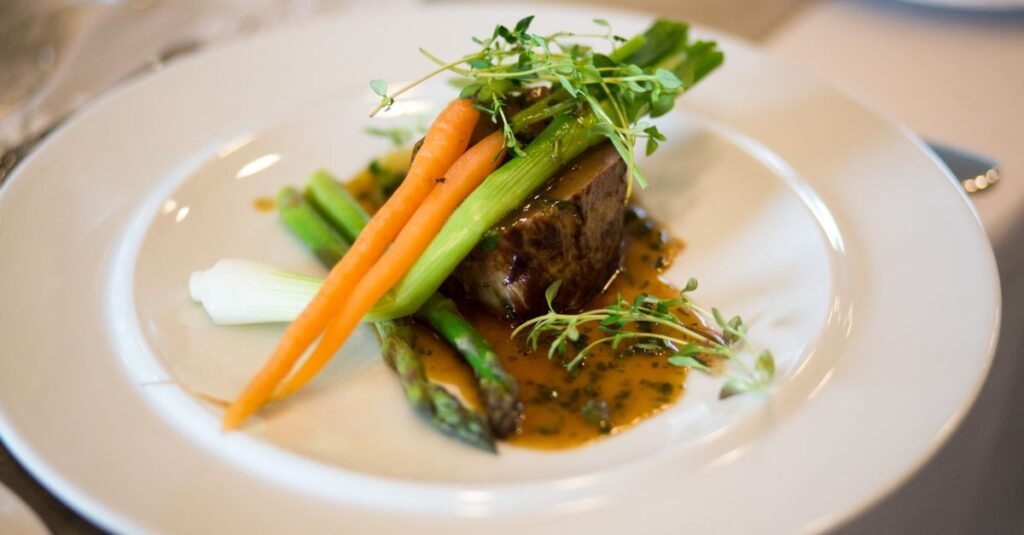
For independent restaurants and family meals, use the same divide-the-plate method you’d use at home:
- Protein: compare to your palm. Restaurant portions are often 6–8 oz, two palms.
- Starch: compare to your fist. Restaurant pasta is often 2–3 cups.
- Vegetables: usually low, unless sautéed in butter or oil.
- Sauces and dressings: estimate with your thumb (about a tablespoon each).
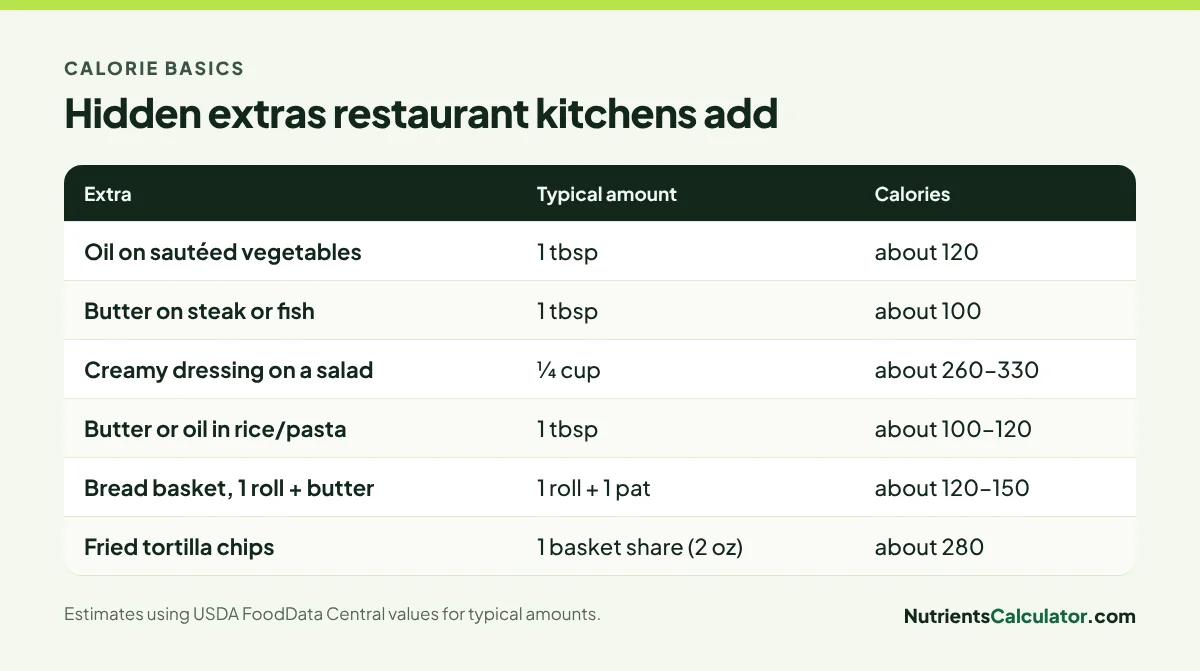
- Cooking fat: add one tablespoon (about 120 calories) for anything sautéed, grilled with butter, or roasted, and two for dishes that look glossy.
Our hand portion guide has the conversions for each part.
How to estimate calories when eating out, by cuisine
Italian
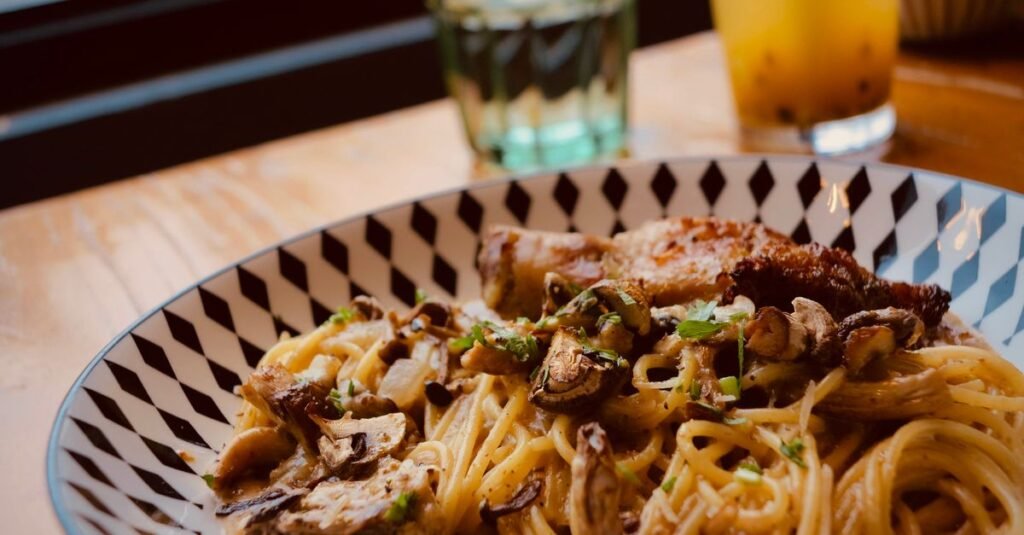
- Pasta: restaurant servings are often 2–3 cups cooked (about 400–600 calories before sauce).
- Cream sauces (Alfredo, vodka) add far more than tomato-based ones.
- Smarter order: tomato-based pasta, half portion, or a protein with vegetables.
Mexican
- Tortilla chips: a 2 oz share is about 280 calories, and baskets get refilled.
- Cheese, sour cream and guacamole each add 50–150 calories per serving.
- Smarter order: fajitas or a burrito bowl with beans, salsa and half the cheese.
Chinese and Thai
- Stir-fries are cooked with plenty of oil: assume 2 tablespoons per dish.
- Fried rice and noodle dishes are often 800–1,200 calories per plate.
- Smarter order: steamed or stir-fried protein with vegetables and plain rice, sauce on the side.
Japanese
- Sashimi and simple nigiri are among the leanest restaurant choices.
- Tempura, spicy mayo and cream cheese rolls add up quickly.
- Smarter order: sashimi, simple rolls, miso soup, edamame.
American and burgers
- A restaurant burger with cheese is often 700–1,000 calories before fries.
- Medium fries are around 380 calories, by USDA figures for fast-food fries.
- Smarter order: a single patty, side salad or fruit instead of fries.
Salads
- Salads can be the highest-calorie item on the menu. Creamy dressing (often ¼ cup), cheese, croutons, candied nuts and crispy toppings add 400+ calories.
- Smarter order: dressing on the side, grilled protein, one “topping” you really want.
Questions worth asking

- “Can I get the sauce or dressing on the side?”
- “Is the fish grilled with butter or oil?”
- “Can I swap fries for vegetables or a side salad?”
- “Is a half portion available?”
Most restaurants are happy to accommodate these, and each one can save 100–300 calories.
Snap it, then adjust
The fastest way to log a restaurant meal is to take a photo before you start. A photo analyzer identifies the foods and estimates portions; then you adjust for what the camera can’t see: add a tablespoon of oil for sautéed dishes, the dressing that’s already mixed in, or the bread you had before the plate arrived. We explain where photo estimates tend to slip in counting calories from a photo.
Don’t forget the extras
- Drinks: a margarita can be 250–500 calories; a glass of wine about 125 per 5 oz; a regular soda about 155 per 12 oz.
- Bread basket: about 120–150 calories per roll with butter.
- Shared appetizers and desserts: estimate your share, not the whole plate.
How to fit eating out into your week
- Look at the menu ahead of time and decide before you’re hungry.
- Eat a normal lunch instead of “saving up”. Arriving starving leads to bigger orders.
- Prioritize protein and vegetables, then choose one indulgence you really want.
- Log it, even roughly, and move on. One restaurant meal won’t change your weekly trend; skipping logs might.
Better picks at fast-food and fast-casual places
When the choice is a drive-through or nothing, these swaps usually save the most:
- Grilled chicken sandwich instead of crispy: often 150–250 calories less.
- Single patty, no extra sauce instead of a double with special sauce.
- Burrito bowl instead of a burrito: skipping the large tortilla saves around 300 calories.
- Small or kids’ fries, or a side salad or fruit cup instead.
- Water, sparkling water, unsweetened iced tea or diet soda instead of regular soda or a shake.
- Eggs or oatmeal at breakfast instead of pastries and sweet coffee drinks.
Most large chains publish full nutrition information online, so checking your usual order once and saving it in your log makes future visits a one-tap entry.
The bottom line
Restaurant meals are higher in fat and portion size than home cooking, but they’re predictable. Use posted calories where they exist, break the plate down by hand where they don’t, add a tablespoon or two of cooking fat, ask for sauces on the side, and log a rough estimate rather than nothing.
Frequently asked questions
How accurate are restaurant calorie counts?
Chain restaurants with 20 or more locations must post calories, and studies find them fairly accurate on average. But individual items vary: in one study, about one in five items had at least 100 more calories than listed.
How do I estimate calories at a restaurant with no nutrition info?
Break the plate into protein, starch, vegetables and sauces. Estimate each with hand portions, then add one to two tablespoons of oil or butter for cooking fat, and log sauces and dressings separately.
Should I skip logging when I eat out?
No. A rough estimate is far better than a blank. Missing entries are a bigger problem for your weekly average than imprecise ones.
What are the lowest-calorie restaurant choices?
Grilled or roasted proteins, broth-based soups, salads with dressing on the side, vegetable sides without butter, and sushi or sashimi without tempura or creamy sauces are usually lower in calories.
Sources
- FDA: Calorie Labeling on Restaurant Menus and Menu Boards
- Urban LE et al. Accuracy of stated energy contents of restaurant foods. JAMA, 2011
- USDA FoodData Central
This article is for general information and isn’t medical advice. Talk to your doctor or a registered dietitian about your own needs, especially if you have a health condition, are pregnant or take medication.