
Balsamic vinegar is a staple in kitchens worldwide, prized for its rich, complex flavor and glossy appearance. Whether you’re drizzling it over a salad, using it as a marinade, or finishing a dish with a few drops, balsamic vinegar has become essential to modern cooking, especially in Mediterranean and Italian cuisine. People use it for flavor enhancement, salad dressings, and even as a glaze for meats and vegetables, often without thinking much about its nutritional impact.
Despite its concentrated taste, many home cooks and dieting individuals wonder about the calorie content of balsamic vinegar. Are the calories significant enough to track? Does it fit into weight-loss meal plans? This article answers these questions with precise nutrition data and practical guidance on how to use balsamic vinegar without compromising your health goals.
Calories in Balsamic Vinegar (Quick Answer)
Balsamic vinegar is remarkably low in calories due to its small serving sizes—most people use just a tablespoon or two at a time.
- 1 tablespoon (15 ml): 14 calories
- 1 teaspoon (5 ml): 5 calories
- 100 ml (about 6.5 tablespoons): 88 calories
Calorie counts can vary slightly by brand and age of vinegar; premium aged balsamic may have marginally different values due to concentration levels.
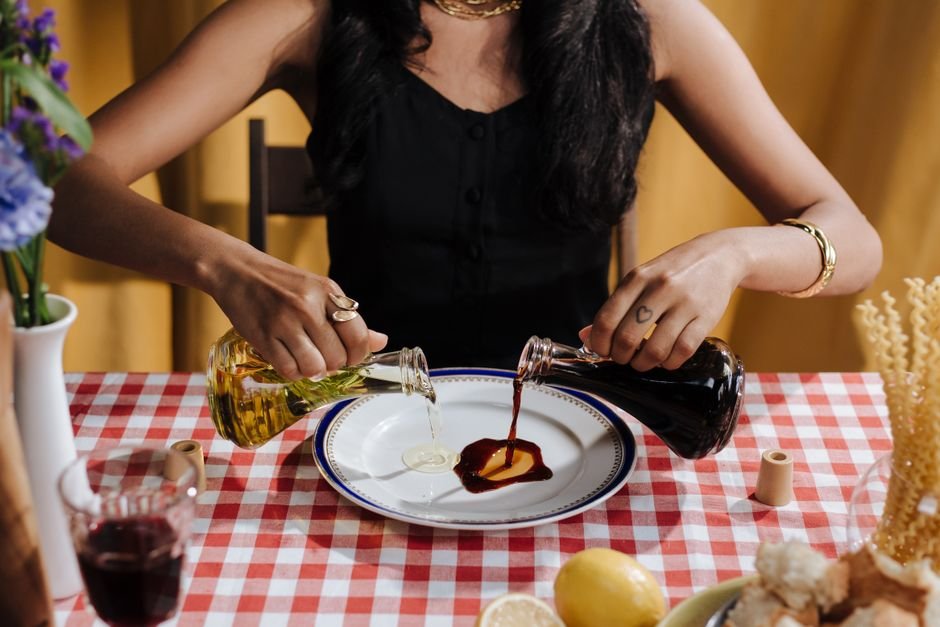
Full Nutrition Facts for 1 Tablespoon (15 ml) of Balsamic Vinegar
Here’s the complete breakdown of the nutrients in a standard 15 ml serving of balsamic vinegar, which is the typical amount used per serving in cooking or dressing.
| Nutrient | Amount | % Daily Value |
|---|---|---|
| Calories | 14 | 1% |
| Total Fat | 0 g | 0% |
| Saturated Fat | 0 g | 0% |
| Cholesterol | 0 mg | 0% |
| Sodium | 73 mg | 3% |
| Total Carbohydrate | 3 g | 1% |
| Dietary Fiber | 0 g | 0% |
| Total Sugars | 2.6 g | — |
| Protein | 0 g | 0% |
| Potassium | 88 mg | 2% |
| Iron | 0.1 mg | 1% |
| Acetic Acid | ~0.6 g | — |
*Percent Daily Values are based on a 2,000-calorie diet. Source: USDA FoodData Central.
Key insight: The most notable aspect of balsamic vinegar’s nutrition profile is the sugar content—2.6g of sugar per tablespoon comes from the grape must concentrate used in production. While this is higher than distilled white vinegar (which has almost no sugar), the practical impact is minimal because a tablespoon delivers only 14 calories and is rarely consumed in large quantities. The acetic acid in balsamic vinegar may support digestion and blood sugar management when used as a salad dressing base.
Etekcity Food Scale
0.1g accuracy — the perfect companion for exact portions.
Regular Balsamic Vinegar vs. Balsamic Vinegar Glaze
Regular Balsamic Vinegar (15 ml)
- Low calorie density at 14 calories per tablespoon
- Thinner consistency; best for dressings, marinades, and drizzles
- Contains 2.6g sugar per tablespoon; tangy, complex acidic flavor
Balsamic Vinegar Glaze (15 ml)
- Approximately 50–70 calories per tablespoon due to added sugar or reduction
- Thick, syrup-like consistency; designed for finishing dishes
- Contains 10–14g sugar per tablespoon; sweeter, more concentrated taste
The takeaway: If you’re tracking calories and sugar intake, use regular balsamic vinegar in salad dressings and marinades. Reserve balsamic glaze for occasional garnishes on finished dishes—a small drizzle (1 teaspoon) adds rich flavor with only 16–23 calories. Reading the label is essential: some brands add caramel coloring, thickeners, or extra sugar, which will push the glaze calories higher.
Is Balsamic Vinegar Good for Weight Loss?
Yes, balsamic vinegar is excellent for weight loss because it’s nearly calorie-free when used appropriately. A tablespoon adds rich, complex flavor to salads and vegetables without meaningfully impacting your daily calorie intake. The acetic acid in vinegar may also enhance satiety and reduce hunger, helping you eat less overall. The main caution is to avoid balsamic glaze and sweetened varieties, which can quickly add calories and sugar.
Tips to Eat Balsamic Vinegar Without Gaining Weight
- Stick to plain balsamic vinegar, not glazes or sweetened versions—read labels carefully.
- Measure your portions: use a tablespoon to control how much you’re adding to dressings.
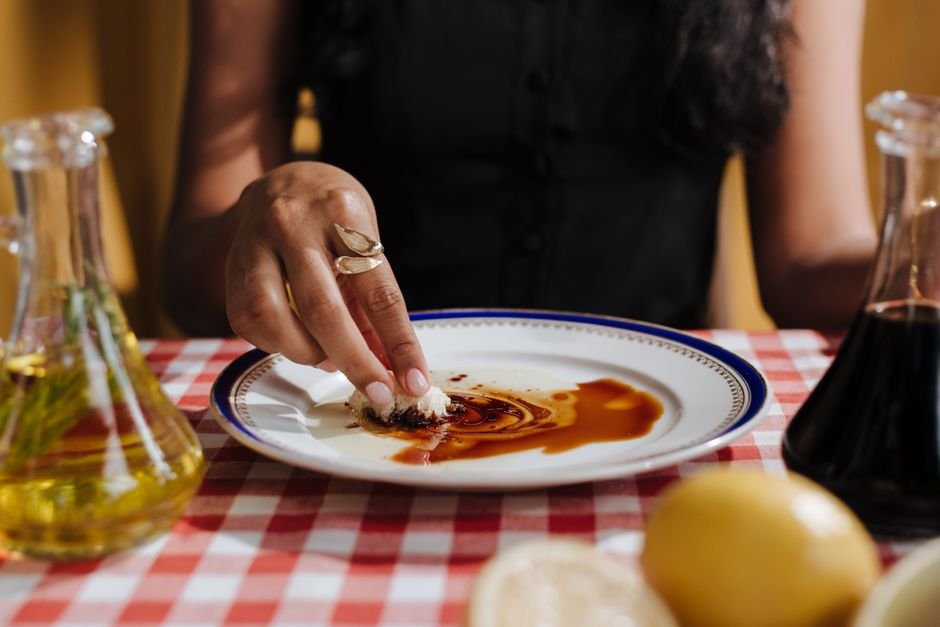
- Combine it with olive oil in a 1:3 or 1:4 ratio to create a balanced vinaigrette with good flavor.
- Use it to flavor vegetables, lean proteins, and whole grains instead of higher-calorie sauces.
Because balsamic vinegar is so low in calories, you can use it freely without worrying about derailing a diet. The real advantage comes from replacing heavier, creamy dressings with vinegar-based ones.
How Portion Size Affects Calories
Portion size is crucial with balsamic vinegar because most recipes call for just a small amount. A drizzle vs. a pour makes a significant difference in total calorie intake. Understanding standard serving sizes helps you track accurately without overestimating your consumption.
Example:
- Small drizzle (1 teaspoon, 5 ml): 5 calories—perfect for finishing a plate or bowl.
- Standard serving (1 tablespoon, 15 ml): 14 calories—typical for salad dressing base or marinade ingredient.
If you’re using a full quarter cup (60 ml) in a large batch vinaigrette to serve 4 people, that’s 88 calories total, or 22 calories per serving—still negligible.
Best Way to Measure Balsamic Vinegar Accurately
Because balsamic vinegar is liquid and calorie-dense compared to water, using a proper measuring tool is important for accuracy. Unlike dry ingredients, you can’t eyeball vinegar without significant error. A kitchen scale with liquid measurement or standard measuring spoons will give you the precise amount needed for recipes and calorie tracking.
Options:
- Measuring spoons: Most accurate for small amounts (teaspoons and tablespoons); measure by volume.
- Kitchen scale in ml mode: Ideal for larger quantities or batch cooking; place a small bowl on the scale and pour until you reach the target milliliters.
- Squeeze bottle with marked graduations: Convenient for everyday drizzling if your balsamic vinegar comes in one; allows you to see approximate amounts as you pour.
Calculate Your Exact Calorie Intake
If you use balsamic vinegar regularly in your cooking, tracking its contribution to your daily calories becomes important for weight management. While a tablespoon alone is minimal, it’s part of the bigger picture of your overall nutrition.
Our free AI nutrients calculator makes it easy to log not just balsamic vinegar, but all your meals and ingredients in one place, giving you a complete picture of your daily calorie, carb, protein, and micronutrient intake. Use the calculator here to track your nutrition with precision.
- Log all ingredients in your recipes and see combined nutrition facts instantly.
- Track macros and micros over time to optimize your diet for your health goals.
- Adjust portion sizes and see how calories and nutrients change in real time.
Common Mistakes When Eating Balsamic Vinegar
Many people use balsamic vinegar mindlessly, not realizing small mistakes can undermine their nutrition goals. Here are the most common pitfalls:
❌ Using balsamic vinegar glaze instead of regular vinegar and assuming it’s the same calorie count—glazes often contain 3–5 times the calories.
❌ Pouring balsamic vinegar without measuring, leading to 2–3 tablespoons in a single salad (28–42 calories plus extra sugar).
❌ Buying “balsamic vinegar” that’s actually a blend or imitation product with added caramel coloring and thickening agents instead of pure vinegar.
❌ Mixing balsamic vinegar with olive oil in a 1:1 ratio, which results in an unbalanced dressing where vinegar’s contribution is masked by the oil’s 120 calories per tablespoon.
Reading ingredient labels and using measuring tools will help you avoid these mistakes.
FAQ
How many calories are in 100g of balsamic vinegar?
There are approximately 88 calories in 100 ml (about 3.4 ounces) of balsamic vinegar. Since vinegar is mostly water, 100g is roughly equivalent to 100 ml by volume.
Is balsamic vinegar fattening?
No, regular balsamic vinegar is not fattening—it contains virtually no fat and only 14 calories per tablespoon. Balsamic vinegar glaze, however, can be fattening due to added sugar and syrup-like concentration. Stick to plain balsamic vinegar if you’re concerned about weight.
Does balsamic vinegar have any health benefits?
Balsamic vinegar contains acetic acid, which may help regulate blood sugar levels and support digestion. Some research suggests vinegar can enhance satiety, helping you feel fuller longer. However, it’s not a miracle ingredient—its benefits are modest and work best as part of a balanced diet.
Can I drink balsamic vinegar directly?
You can drink diluted balsamic vinegar in water, but it’s not recommended in large quantities due to acidity and sugar content. A small splash in a glass of water is safe, but vinegar is best used as a food ingredient rather than a beverage.
Conclusion
Balsamic vinegar is an incredibly lean ingredient with negligible calorie impact when used in typical amounts. At just 14 calories per tablespoon and zero fat, it’s an ideal choice for anyone watching their weight or counting calories. The sugar content is higher than white vinegar due to grape must, but the small serving sizes mean practical sugar intake is minimal. Understanding the difference between regular balsamic vinegar and sweetened glaze versions is key to using this ingredient without surprise calories.
For anyone incorporating balsamic vinegar into their diet, measuring portions with spoons or a scale, choosing regular over glaze, and combining it with other healthy ingredients like olive oil and vegetables makes it a smart nutritional choice. To get a complete picture of how balsamic vinegar and all your other foods fit into your daily nutrition, use a reliable nutrients calculator to track your intake with confidence.
