
Cauliflower has become a dietary staple for millions of people worldwide, from those managing their weight to individuals following low-carb and keto diets. As a cruciferous vegetable rich in vitamins and fiber, it offers genuine nutritional benefits while remaining extremely affordable and accessible. Whether you’re eating it roasted, riced, or raw, understanding its caloric and nutritional content is essential for meal planning and health goals.
If you’re tracking calories or macronutrients, a fundamental question emerges: how many calories are in cauliflower? This article breaks down the exact calorie counts for different serving sizes and preparations, provides complete nutrition facts, and addresses common questions about its role in weight loss, cooking methods, and portion control.
Calories in Cauliflower (Quick Answer)
Raw cauliflower is one of the lowest-calorie vegetables available, making it ideal for weight management and volume eating.
- Raw cauliflower (1 cup / 100g): 25 calories
- Cooked cauliflower (1 cup / 156g boiled): 28 calories
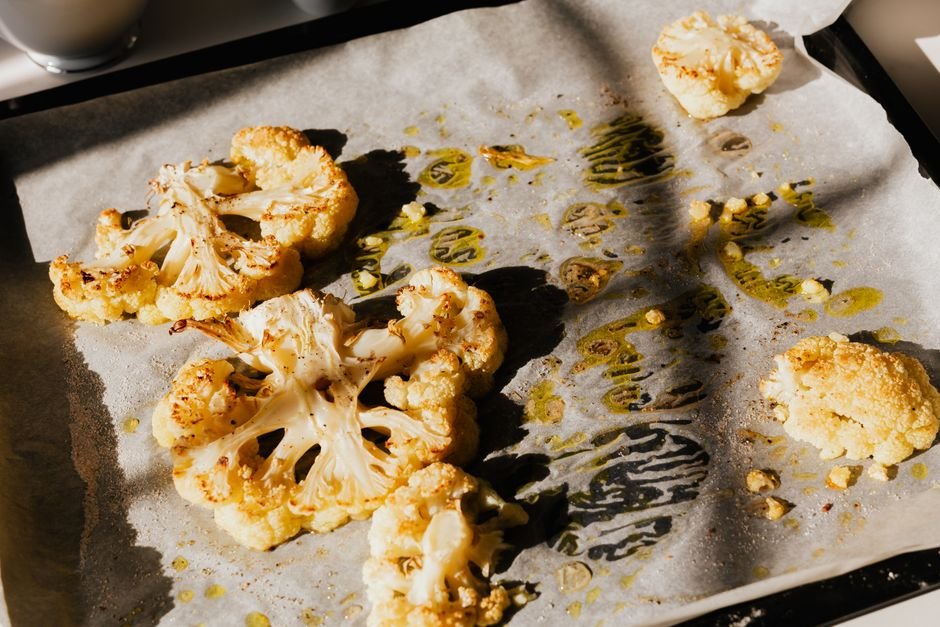
- Roasted cauliflower (1 cup / 124g with 1 tsp oil): 75 calories
Calorie counts vary based on preparation method and any added fats (oil, butter, cheese sauce). Raw and boiled versions remain nearly identical in calories, while roasting with oil significantly increases the total.
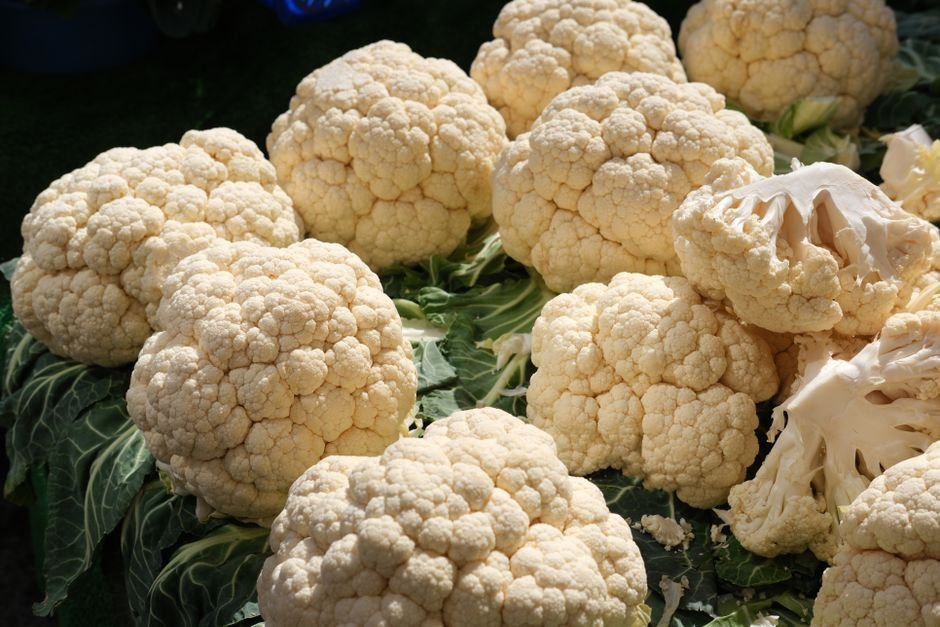
Full Nutrition Facts for 1 Cup Raw Cauliflower (100g)
Here’s the complete nutritional breakdown for a standard cup of raw cauliflower florets, based on USDA data:
| Nutrient | Amount | % Daily Value |
|---|---|---|
| Calories | 25 | — |
| Total Fat | 0.3g | <1% |
| Saturated Fat | 0.1g | <1% |
| Cholesterol | 0mg | 0% |
| Sodium | 52mg | 2% |
| Total Carbohydrate | 5g | 2% |
| Dietary Fiber | 2.2g | 8% |
| Total Sugars | 1.9g | — |
| Protein | 1.9g | 4% |
| Vitamin C | 46mg | 51% |
| Vitamin K | 20μg | 17% |
| Folate | 57μg | 14% |
*Percent Daily Values are based on a 2,000-calorie diet. Source: USDA FoodData Central.
Key insight: Cauliflower is exceptionally low in calories and carbohydrates while delivering over half your daily Vitamin C in a single cup. Its high fiber-to-calorie ratio (2.2g fiber in just 25 calories) makes it a powerhouse for satiety and digestive health, which is why it’s so effective in weight loss diets. The net carbs—calculated as total carbs minus fiber—are only about 2.8g per cup, explaining its popularity in keto and low-carb eating plans.

Etekcity Food Scale
0.1g accuracy — the perfect companion for exact portions.
Raw vs. Cooked Cauliflower: Which Has More Calories?
Raw Cauliflower
- 25 calories per cup (100g)
- Retains all fiber and micronutrients intact
- Crunchy texture; requires more chewing, which aids satiety
Cooked Cauliflower
- 28 calories per cup (156g boiled)—marginally higher due to water loss concentration
- Softer texture and slightly sweeter flavor; some nutrients leach into cooking water
- Easier to digest; some compounds like sulforaphane may be reduced by heat
Practical takeaway: From a calorie perspective, raw and boiled cauliflower are nearly identical, so choose based on taste and digestive comfort. If you roast it with oil, your calories jump significantly—one tablespoon of oil adds ~120 calories. For weight loss, stick with raw, steamed, or boiled preparations, or use minimal oil when roasting. The preparation method matters far more than raw versus cooked.
Is Cauliflower Good for Weight Loss?
Yes—cauliflower is genuinely one of the best vegetables for weight loss. At just 25 calories per cup with 2.2g of fiber, it allows you to eat large volumes of food while maintaining a calorie deficit. The high water and fiber content creates fullness signals that help suppress appetite, and its low glycemic index prevents blood sugar spikes that could trigger hunger or cravings. Whether eaten raw, roasted, or as a rice substitute, cauliflower delivers nutritional value without calorie density.
Tips to Eat Cauliflower Without Gaining Weight:
- Watch cooking fats: Raw, steamed, or boiled cauliflower are nearly calorie-free additions. If roasting, use spray oil or measure carefully—1 tablespoon of oil adds 120 calories and should count toward your daily total.
- Skip heavy sauces: Cheese sauces, creamy dips, and butter-heavy preparations can add 100–200+ calories per serving. Use mustard, vinegar, herbs, or light Greek yogurt-based dips instead.
- Use as a volume food: Fill half your plate with cauliflower to reduce portion sizes of calorie-denser foods like pasta, rice, or grains without feeling deprived.
- Make cauliflower rice: A 1:1 swap for regular rice saves ~200 calories per cup while maintaining carbs at manageable levels for keto or low-carb diets.
When prepared plainly, cauliflower actually supports weight loss. The challenge arises only when high-calorie toppings or cooking methods transform it into a calorie bomb.
How Portion Size Affects Calories
Portion size matters less with cauliflower than with most foods because even large portions remain remarkably low-calorie. A single floret is negligible in calories, while multiple cups can be eaten for fewer calories than a small chicken breast. This makes cauliflower ideal for people who feel satisfied by eating larger volumes of food rather than focusing on calorie-dense items.
Example:
- Small portion (1 cup raw): 25 calories, 2.2g fiber
- Large portion (4 cups raw): 100 calories, 8.8g fiber
You could eat four cups of raw cauliflower for the same calories as a single medium apple, making it virtually impossible to overeat cauliflower in its plain form.
Best Way to Measure Cauliflower Accurately
Measuring raw vegetables by volume (cups) is reasonably accurate but weight-based measurements are most precise for nutrition tracking. One cup of raw cauliflower florets weighs approximately 100g, so investing in a food scale removes guesswork. If you’re using a scale, aim for the chopped, floret form rather than chunks, as the density can vary slightly.
Options:
- Kitchen scale (most accurate): Weigh in grams (100g = 1 standard serving). This removes all guesswork and takes seconds.
- Measuring cup (reasonably accurate): Pack florets lightly into a standard 1-cup measuring cup. One cup ≈ 100g for raw cauliflower.
- Visual estimation (least accurate): If you’re familiar with portion sizes, 1 cup of florets is roughly the size of your two closed fists; 4 cups fills a standard dinner plate.
Calculate Your Exact Calorie Intake
If you’re building meals around cauliflower, knowing your total calorie and macro intake across the entire day is far more important than perfecting a single vegetable. Many people assume they’re eating healthy but unknowingly exceed their calorie targets through condiments, oils, and other additions.
Our site offers a free AI nutrients calculator that instantly breaks down calories, protein, carbs, and micronutrients for any meal or food combination. Instead of manually adding up numbers, simply input your cauliflower preparation method and portion, along with everything else you’re eating, and get real-time nutritional feedback.
- Track multiple foods at once without switching tabs
- See macro and micronutrient breakdowns instantly
- Identify where excess calories are hiding in your diet
Use the free nutrients calculator here to log your meals and take the guesswork out of nutrition tracking.
Common Mistakes When Eating Cauliflower
Even though cauliflower is low-calorie, several eating habits can undermine its weight-loss benefits or cause digestive issues:
❌ Drowning it in cheese sauce or ranch dip: A cup of cheese sauce adds 300–400 calories and transforms a 25-calorie vegetable into a calorie bomb. One serving of traditional cheese sauce contains more calories than four cups of raw cauliflower.
❌ Roasting large batches with too much oil: It’s easy to underestimate oil consumption. Using 2–3 tablespoons of oil on a sheet pan of cauliflower adds 240–360 calories total; portion control becomes impossible if you lose track of how much oil went into the entire batch.
❌ Not accounting for cooking water loss: When you boil cauliflower, water evaporates, concentrating the remaining florets. The nutrition per cup increases slightly, which matters for strict macro tracking but is negligible in practice.
❌ Eating cauliflower as a replacement without adjusting other foods: Swapping pasta for cauliflower rice is smart, but adding it alongside regular rice defeats the purpose. Clarify whether you’re substituting or adding to your meal.
Most mistakes revolve around added fats and sauces, not the vegetable itself. Keep preparations simple and track any additions to stay aligned with your goals.
FAQ
How many calories are in 100g of cauliflower?
Raw cauliflower contains 25 calories per 100g. This is the baseline for all portion calculations—a cup of raw florets weighs approximately 100g, so one cup = 25 calories.
Is cauliflower fattening?
No. Plain, unseasoned cauliflower is not fattening; it’s one of the least calorie-dense foods available. Cauliflower becomes problematic only when prepared with large amounts of oil, cheese, or creamy sauces. A plain roasted or boiled cauliflower side contributes virtually nothing to weight gain.
Does cooking cauliflower increase or decrease calories?
Cooking cauliflower does not increase or decrease its inherent calorie content. However, boiling concentrates the florets slightly (removing water), so 1 cup of boiled cauliflower (156g) is 28 calories versus 25 calories for raw (100g). Any calorie increase comes from added cooking fats, not from heat itself.
How much cauliflower can I eat per day without gaining weight?
Theoretically, unlimited amounts of plain cauliflower won’t cause weight gain because the calorie density is so low—you’d need to eat over 16 cups to consume 400 calories. In practice, aim for 2–4 cups per day as part of a balanced diet; the fiber content can cause digestive bloating if consumed in extreme quantities, and variety in vegetable intake ensures broader micronutrient coverage.
Conclusion
Cauliflower stands as a nutritional powerhouse for weight loss and metabolic health. With just 25 calories per cup, 2.2g of fiber, zero cholesterol, and over 50% of your daily Vitamin C, it offers exceptional value in both nutritional and caloric terms. The net carbs are minimal enough for ketogenic diets, yet the fiber supports digestive health for all eating styles. Raw and boiled preparations remain nearly identical in calories, while roasting with oil creates the only meaningful calorie increase.
Your biggest wins with cauliflower come from keeping preparations simple—avoid heavy sauces and excessive oils, use it as a volume food to replace calorie-denser carbohydrates, and treat it as a staple rather than an occasional side. For precise tracking of your total daily intake, use a reliable nutrients calculator to log not just the cauliflower but your entire meal, so you can identify where calories and macros are actually coming from and make data-driven adjustments to your diet.
