Calories in chicken breast fried: 97 calories per 1 unit (52 g)
- 17 g protein
- 0.3 g carbs
- 2.4 g fat
Source: USDA FoodData Central · 187 kcal per 100 g
One unit of fried chicken breast meat (52 g, the yield from 1 lb of ready-to-cook chicken) has 97 calories in the USDA record, with 17 g of protein, 2.4 g of fat, and 0.3 g of carbohydrate. The calories in chicken breast fried rise quickly with weight: 100 g has 187 calories, so the lead serving is about half that.
What stands out is how much of the calorie count is protein. Fiber and sugar are both 0 g, and there is no vitamin C.
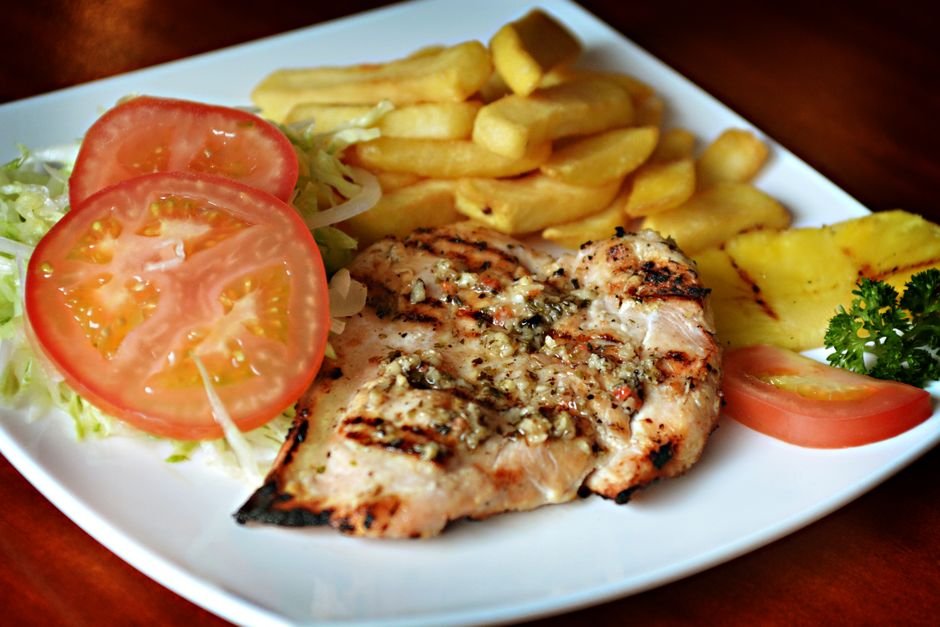
Calories in Chicken Breast Fried by Serving Size
Calories in chicken breast fried for each common serving, with protein, carbs and fat:
| Serving | Calories | Protein | Carbs | Fat |
|---|---|---|---|---|
| 1 unit (yield from 1 lb ready-to-cook chicken) (52 g) | 97 | 17 g | 0.3 g | 2.4 g |
| 0.5 breast, bone and skin removed (86 g) | 161 | 29 g | 0.4 g | 4.1 g |
| 100 g | 187 | 33 g | 0.5 g | 4.7 g |
| 1 oz | 53 | 9.5 g | 0.1 g | 1.3 g |
Chicken Breast Fried Nutrition Facts
Calories in chicken breast fried and the full nutrition facts per 1 unit (yield from 1 lb ready-to-cook chicken) (52 g):
| Nutrient | Amount | % Daily Value* |
|---|---|---|
| Calories | 97 kcal | |
| Protein | 17 g | 35% |
| Total Fat | 2.4 g | 3% |
| Saturated Fat | 0.7 g | 3% |
| Cholesterol | 47 mg | 16% |
| Sodium | 41 mg | 2% |
| Total Carbohydrate | 0.3 g | 0% |
| Dietary Fiber | 0 g | 0% |
| Total Sugars | 0 g | |
| Vitamin D | 0.1 mcg | 0% |
| Calcium | 8.3 mg | 1% |
| Iron | 0.6 mg | 3% |
| Potassium | 144 mg | 3% |
| Magnesium | 16 mg | 4% |
| Zinc | 0.6 mg | 5% |
| Phosphorus | 128 mg | 10% |
| Selenium | 14 mcg | 25% |
| Vitamin A (RAE) | 3.6 mcg | 0% |
| Vitamin E | 0.2 mg | 1% |
| Vitamin K | 1.2 mcg | 1% |
| Thiamin (B1) | 0 mg | 3% |
| Riboflavin (B2) | 0.1 mg | 5% |
| Niacin (B3) | 7.7 mg | 48% |
| Vitamin B6 | 0.3 mg | 20% |
| Folate (DFE) | 2.1 mcg | 1% |
| Vitamin B12 | 0.2 mcg | 8% |
Where the calories come from: 75% protein · 24% fat · 1% carbs
*Percent Daily Values are based on a 2,000-calorie diet (FDA reference values). Source: USDA FoodData Central — Chicken, broilers or fryers, breast, meat only, cooked, fried (FDC ID 171078, SR Legacy, published 4/1/2019). Values for other servings are calculated from the per-100 g data.
Why Fried Chicken Breast Has So Little Fat in the Data
This record is for fried chicken breast meat with the bone and skin removed, so the numbers reflect the meat itself. Per 100 g, the USDA lists 4.7 g of total fat, of which 1.3 g is saturated fat. The 0.5 breast serving (86 g) with bone and skin removed comes to 161 calories and 4.1 g of fat.
Skin is the main variable in fat content. The record does not describe skin-on pieces, so do not assume these numbers apply to a piece with skin still on. If you are comparing a skin-on piece from a restaurant or store, check that product’s own label.

Serving Sizes: Which One to Use for Chicken Breast Fried Calories
The USDA record gives four servings, and they differ a lot in weight. The lead serving, 1 unit at 52 g, is the yield from 1 lb of ready-to-cook chicken. The 1 oz serving (28 g) has 53 calories, and the 0.5 breast serving (86 g) has 161.
- 1 unit (52 g): 97 calories, 17 g protein, 0.3 g carbs, 2.4 g fat
- 0.5 breast, bone and skin removed (86 g): 161 calories, 29 g protein, 0.4 g carbs, 4.1 g fat
- 1 oz (28 g): 53 calories, 9.5 g protein, 0.1 g carbs, 1.3 g fat
Weigh your portion when you can. A 100 g portion is 187 calories, so a serving that looks like one breast half may land anywhere in that range depending on the cut and how much was trimmed.
What Chicken Breast Fried Provides in Minerals and Vitamins
Niacin stands out. The lead serving has 7.7 mg, which the record lists as 48% of the Daily Value. Protein is 17 g, or 35% DV, in the same serving. Selenium is 14 mcg (25% DV), and vitamin B6 is 0.3 mg (20% DV).
Sodium is 41 mg per lead serving (2% DV), which is low for a meat dish. The record does not list added salt, batter, or breading, so restaurant or packaged versions can have very different sodium levels.
Breaded, Restaurant, or Homemade: What the Numbers Do Not Cover
This USDA record describes the chicken meat after frying, not the coating or the oil absorbed by batter. Breading adds carbohydrate and calories that are not in these figures. A breaded piece can carry far more carbohydrate than the 0.3 g in the lead serving, and the amount depends on how thick the coating is.
If you want an accurate count for a breaded or restaurant piece, use the label or the restaurant’s published nutrition information for that exact item. The numbers here are a reference for the cooked meat only.
How Chicken Breast Fried Compares
Per 100 g, next to similar foods in our database:
| Food (100 g) | Calories | Protein | Carbs | Fat |
|---|---|---|---|---|
| Chicken Breast Fried | 187 | 33 g | 0.5 g | 4.7 g |
| Goose Egg | 185 | 14 g | 1.4 g | 13 g |
| Turkey Liver | 189 | 27 g | 0 g | 8.2 g |
| Chicken Heart | 185 | 26 g | 0.1 g | 7.9 g |
| Ground Chicken | 189 | 23 g | 0 g | 11 g |
| Chicken Leg | 184 | 24 g | 0 g | 9 g |
Chicken Breast Fried FAQ
How much protein is in fried chicken breast?
The lead serving of 1 unit (52 g) has 17 g of protein, which the USDA lists as 35% of the Daily Value. Per 100 g, the record shows 33 g of protein.
Does chicken breast fried have any carbs or sugar?
Very little. The lead serving has 0.3 g of total carbohydrate and 0 g of sugar, and the record lists 0 g of dietary fiber. Breading or sauces would add carbohydrate that this record does not include.
Is the sodium in fried chicken breast high?
In this record it is low: the lead serving has 41 mg of sodium, which is 2% DV. Seasoned, brined, or breaded versions can contain much more, so check the label for the product you are eating.
How much vitamin B12 is in chicken breast fried?
The lead serving has 0.2 mcg of vitamin B12, which the record lists as 8% DV. Per 100 g the record shows 0.4 mcg.
The Bottom Line
Per the USDA record, one 52 g unit of fried chicken breast meat has 97 calories and 17 g of protein, with very little fat or carbohydrate. For breaded or restaurant chicken, the coating and sauce are not in these numbers, so check that product's label.