
Hummus is a creamy Middle Eastern dip made from chickpeas, tahini, lemon juice, and garlic. It’s eaten across the Mediterranean, Middle East, and increasingly worldwide as a popular plant-based protein snack and appetizer. People choose hummus for muscle building, weight management, and vegetarian or vegan diets because it offers quality protein, fiber, and healthy fats in a single serving.
But if you’re tracking calories or watching your intake, you might wonder: how many calories are in hummus? The answer depends on serving size, the ratio of tahini used, and any added ingredients. This guide covers the exact calorie count, complete nutrition facts, portion strategies, and practical tips for eating hummus without overdoing it.
Calories in Hummus (Quick Answer)
A standard 2-tablespoon serving (about 32g) of plain hummus contains approximately 99 calories.
- 2 tablespoons (32g) plain hummus: 99 calories
- ¼ cup (64g) plain hummus: 198 calories
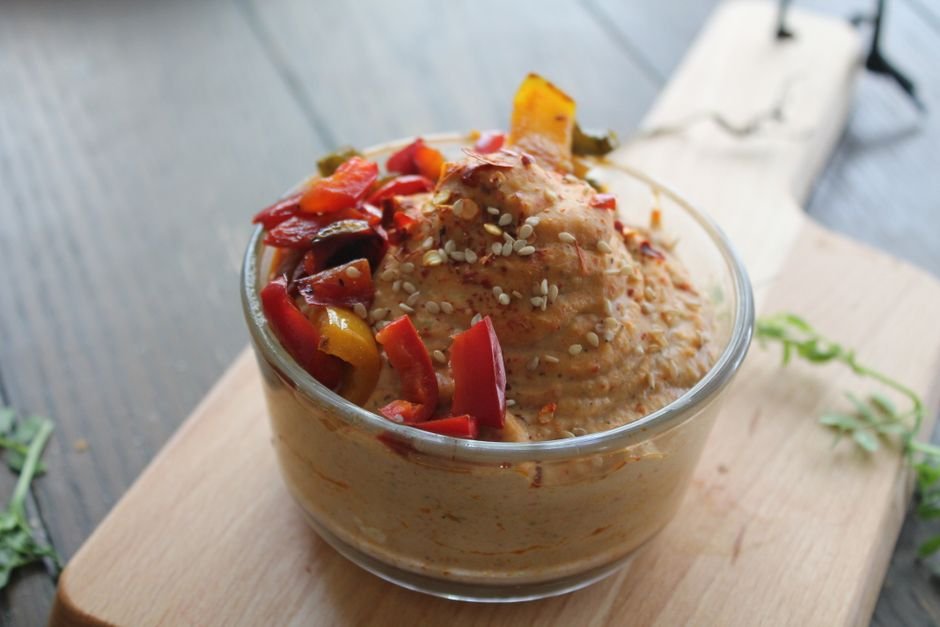
- 2 tablespoons roasted red pepper hummus: 90–95 calories
Calorie counts vary by brand, tahini content, and added oils—commercial brands may range from 80 to 120 calories per 2-tablespoon serving.
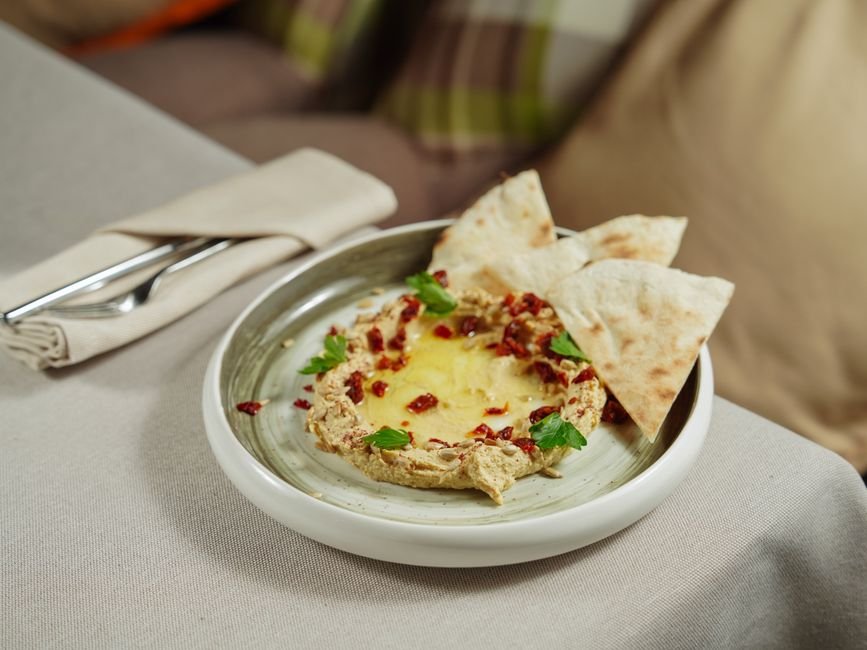
Full Nutrition Facts for 2 Tablespoons (32g) of Plain Hummus
Below is the complete nutritional breakdown for a standard 2-tablespoon serving of plain hummus, based on USDA FoodData Central data for typical store-bought hummus.
| Nutrient | Amount | % Daily Value |
|---|---|---|
| Calories | 99 | — |
| Total Fat | 6.0g | 9% |
| Saturated Fat | 0.9g | 5% |
| Cholesterol | 0mg | 0% |
| Sodium | 194mg | 8% |
| Total Carbohydrate | 8.0g | 3% |
| Dietary Fiber | 1.5g | 6% |
| Total Sugars | 0.3g | — |
| Protein | 3.3g | 7% |
| Iron | 0.7mg | 4% |
| Magnesium | 15mg | 4% |
| Potassium | 98mg | 2% |
*Percent Daily Values are based on a 2,000-calorie diet. Source: USDA FoodData Central.
Key insight: Hummus provides a nutrient-dense combination of plant-based protein and fiber in a modest calorie package. The fat comes primarily from tahini’s unsaturated fats and olive oil, making it a healthier choice than many creamy dips. One 2-tablespoon serving delivers about 1.5g of fiber and 3.3g of protein, helping with satiety and digestion while keeping calories under 100.
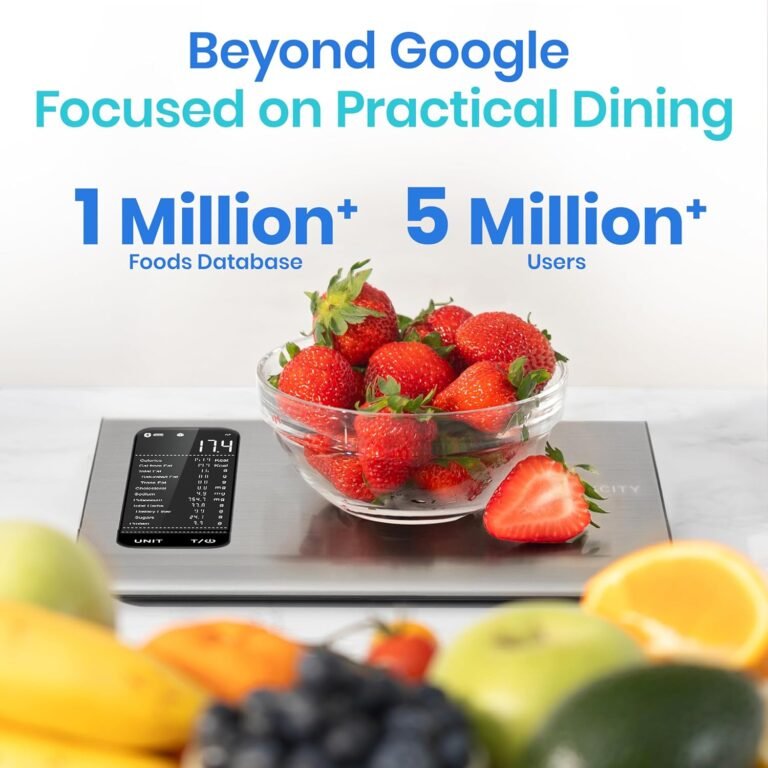
Etekcity Food Scale
0.1g accuracy — the perfect companion for exact portions.
Plain Hummus vs. Flavored Hummus: Calorie & Nutrition Comparison
Plain Hummus
- 2 tablespoons contain 99 calories with minimal added sugars (0.3g)
- Neutral flavor pairs with any vegetable or crackers
- Highest in tahini’s natural nutrients without extra additives
Roasted Red Pepper Hummus
- 2 tablespoons contain 90–95 calories, slightly lower due to dilution from vegetables
- Added natural sugars from peppers and sometimes honey or sweetener
- Vibrant color and sweeter taste appeal to broader palates
Practical takeaway: Plain hummus edges out flavored varieties by a small margin and keeps sugar minimal. If you enjoy flavored hummus, the calorie difference is negligible—choose based on taste preference, but always check the label for added sugar or oil content, as some brands load flavored versions with extra ingredients.
Is Hummus Good for Weight Loss?
Yes, hummus can support weight loss when eaten in controlled portions. The combination of protein and fiber promotes satiety, helping you feel fuller longer and reducing overall calorie intake. The fat content (mostly from tahini and olive oil) is heart-healthy and slows digestion, preventing blood sugar spikes and cravings. However, hummus is calorie-dense relative to its weight—about 100 calories per 2 tablespoons—so mindless eating directly from the container can quickly add up.
Tips to Eat Hummus Without Gaining Weight:
- Measure into a small bowl or use a 2-tablespoon serving spoon rather than eating straight from the container
- Pair with high-volume, low-calorie vegetables like bell peppers, cucumbers, carrots, or celery rather than crackers or pita
- Track your intake—pre-portion single 2-tablespoon servings into containers if you snack frequently
- Make a roasted chickpea snack instead for crunch: bake chickpeas from hummus’s base ingredient with spices for fewer calories and more protein per volume
Used this way, hummus becomes a filling, nutrient-rich addition to a weight-loss diet rather than a calorie trap.
How Portion Size Affects Calories
Hummus’s calorie density means small differences in portion size create noticeable calorie swings. A 2-tablespoon dip seems small but delivers 99 calories—roughly 5% of a 2,000-calorie diet. Double that amount and you’ve consumed nearly 200 calories in a single serving. For context, that’s equivalent to a medium apple or a slice of bread. Understanding portion size is critical if hummus is a frequent part of your eating pattern.
Example:
- Small portion (2 tablespoons, 32g): 99 calories, 3.3g protein, 1.5g fiber
- Large portion (½ cup, 120g): 370 calories, 12.5g protein, 5.6g fiber
The large portion triples your calorie intake but provides proportional protein and fiber, which is why weighing or measuring matters far more than eyeballing.
Best Way to Measure Hummus Accurately
Hummus’s creamy texture makes it difficult to estimate by eye. A handful or heaping spoonful can easily be 3–4 tablespoons without looking it. Using a scale or measuring tool removes guesswork and ensures consistent portions, especially if you’re tracking calories or managing diabetes. Even a small variation of ½ tablespoon adds 25 calories—meaningful over time.
Options:
- Food scale (most accurate): Place a bowl on a digital scale, tare to zero, and add hummus until the display shows 32g for a standard serving
- Measuring spoon: Use a 2-tablespoon measuring spoon, leveling off with a knife for consistency; works well for daily snacking
- Pre-portioned containers: Divide a batch into single-serving containers beforehand to eliminate on-the-spot guessing
Calculate Your Exact Calorie Intake
If hummus is a daily part of your diet, calculating your precise calorie intake becomes important. Eating 2 tablespoons daily adds up to nearly 700 calories per week—enough to prevent weight loss if other meals aren’t adjusted. A personalized approach accounts for your specific hummus brand, portion size, and paired foods.
Our free AI nutrients calculator makes this simple. Just enter your hummus serving size and any vegetables or crackers you pair it with, and you’ll get an instant calorie and macro breakdown.
- See real-time calorie totals for your specific portion and brand
- Compare hummus to other dips and snacks side-by-side
- Track your weekly intake to stay on top of calorie targets
Use the calculator now to personalize your hummus snacking strategy.
Common Mistakes When Eating Hummus
Even healthy eaters make missteps with hummus. These four mistakes can quietly derail weight loss or nutrition goals.
❌ Eating directly from the container without measuring. A quick dip of your cracker or spoon can deliver 3–4 tablespoons (300 calories) in seconds, far more than intended.
❌ Pairing hummus exclusively with high-calorie vehicles like pita bread, tortilla chips, or crackers. Adding a small pita (around 150 calories) to a 2-tablespoon serving nearly doubles your snack’s calorie load.
❌ Assuming flavored hummus is lighter. Red pepper, garlic, or herb varieties are often similar in calories to plain, or higher if sweetened—check labels before assuming.
❌ Buying ultra-premium or artisanal brands with inflated oil content without checking nutrition labels. Some small-batch hummus can exceed 120 calories per 2 tablespoons due to extra tahini or olive oil.
Awareness of these pitfalls makes hummus a truly weight-friendly addition to your diet.
FAQ
How many calories are in 100g of hummus?
One hundred grams of plain hummus contains approximately 308 calories. Since a 2-tablespoon serving (32g) has 99 calories, multiplying by 3.1 gives you the 100g equivalent.
Is hummus fattening?
Hummus is not inherently fattening due to portion control and its nutrient profile. The fat is mostly unsaturated and heart-healthy, and the fiber plus protein promote fullness. However, eating large portions (½ cup or more) without adjusting other meals can add excess calories. Measured portions of 2 tablespoons fit easily into a weight-loss diet.
Does hummus contain sugar?
Plain hummus contains minimal sugar (about 0.3g per 2 tablespoons), making it suitable for low-sugar diets. Flavored varieties may contain more depending on added sweeteners, honey, or fruit; always check the ingredients list.
What’s the best vegetable to pair with hummus for weight loss?
Celery, bell peppers, cucumbers, and carrots are ideal—they’re high in fiber and water, low in calories (about 5–25 per serving), and add volume without spiking your snack’s calorie total. Avoid pairing with crackers or pita if weight loss is your goal.
Conclusion
Hummus is a nutrient-dense, plant-based dip that delivers quality protein, fiber, and healthy fats in a reasonable calorie package. At 99 calories per 2-tablespoon serving, it fits well into weight-loss and muscle-building diets when portioned carefully. Its creamy texture and versatile flavor make it a practical choice for vegetarians, vegans, and anyone seeking a satisfying dip or spread.
The key to maximizing hummus’s benefits is portion awareness and smart pairing. Measure your servings, pair with vegetables rather than high-calorie crackers, and use a reliable tool to track your intake. Whether you’re managing weight, building muscle, or simply eating healthier, **a precise nutrients calculator** removes the guesswork and helps you make informed choices about hummus and other foods in your diet.
