
Plums are a stone fruit enjoyed fresh, dried, or in jams across cultures worldwide. From backyard gardens in temperate climates to commercial orchards, plums have been cultivated for thousands of years and remain a staple in Mediterranean, Asian, and American diets. Whether you’re tracking calories for weight loss, managing blood sugar, or simply curious about the nutritional value of your fruit intake, understanding plum nutrition is essential.
The question “How many calories are in a plum?” seems simple, but the answer depends on the plum’s size, ripeness, and variety. This article breaks down complete nutrition facts for a standard medium plum, compares different ripeness stages, and provides practical guidance for including plums in a balanced diet.
Calories in Plum (Quick Answer)
A medium plum (66g) contains approximately 30 calories and is rich in fiber and vitamin C.
- Medium plum (66g, raw): 30 calories
- Large plum (92g, raw): 42 calories
- Dried plum/prune (28g): 67 calories
Calorie content varies by ripeness, variety, and water content—larger fruits and fully ripe plums weigh slightly more, increasing calorie density.
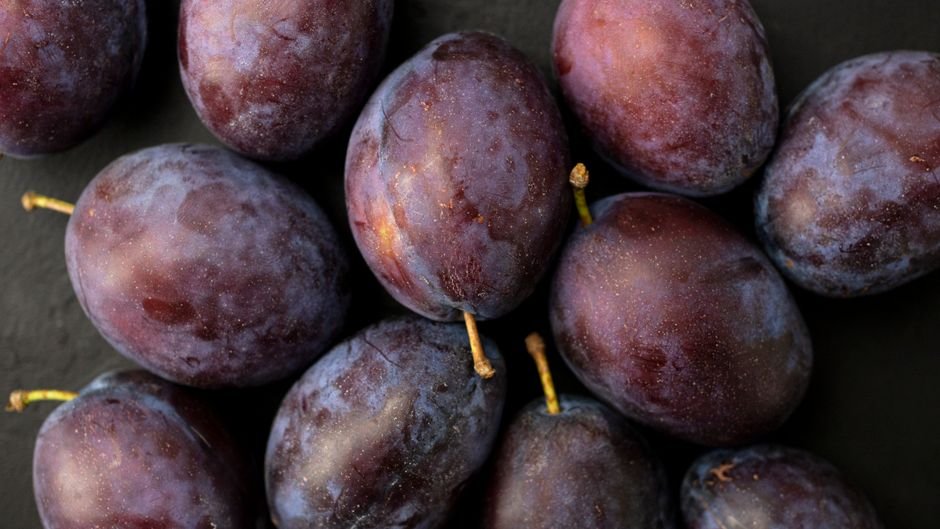
Full Nutrition Facts for a Medium Plum (66g)
Here is the complete nutritional breakdown for one medium raw plum, based on USDA FoodData Central data:
| Nutrient | Amount | % Daily Value |
|---|---|---|
| Calories | 30 | 2% |
| Total Fat | 0.2g | <1% |
| Saturated Fat | 0g | 0% |
| Cholesterol | 0mg | 0% |
| Sodium | 1mg | <1% |
| Total Carbohydrate | 7g | 3% |
| Dietary Fiber | 1.4g | 5% |
| Total Sugars | 5.2g | — |
| Protein | 0.4g | <1% |
| Vitamin C | 6.3mg | 11% |
| Vitamin K | 5.8mcg | 7% |
| Potassium | 157mg | 3% |
*Percent Daily Values are based on a 2,000-calorie diet. Source: USDA FoodData Central.
Key insight: Despite being sweet, a medium plum is remarkably low in calories and delivers nearly 5% of daily fiber in a single serving. The fiber content aids digestive health, while the natural sugars (around 5g) are balanced by the fruit’s low glycemic impact—making plums a suitable choice for most people managing blood sugar levels.
Etekcity Food Scale
0.1g accuracy — the perfect companion for exact portions.
Ripe vs. Unripe Plums — Which Has More Calories?
Unripe Green Plum
- Slightly firmer texture with higher water content, yielding 27–29 calories per medium fruit
- Lower sugar concentration and more astringent flavor due to higher tannins
- Higher acid content, which can irritate sensitive stomachs if eaten in large quantities
Ripe Purple/Red Plum
- Softer, sweeter flesh with developed sugars, typically 30–35 calories per medium fruit
- Peak flavor and antioxidant levels, including anthocyanins (responsible for purple color)
- More easily digestible and more pleasant to eat raw; smoother transition through the digestive system
Practical takeaway: Ripe plums contain marginally more calories due to higher sugar content, but the difference is negligible (3–6 calories). Both ripeness stages offer similar nutritional benefits; choose based on taste preference and digestive tolerance. Ripe plums are easier to enjoy fresh, while underripe plums work well in cooked dishes like compotes or pies.
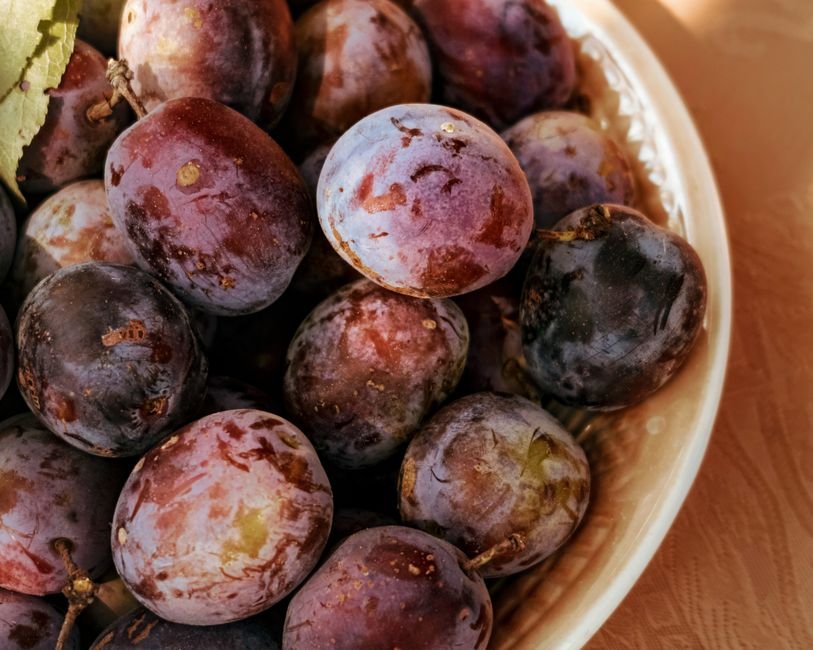
Is Plum Good for Weight Loss?
Yes, plums are an excellent choice for weight loss. At only 30 calories per medium fruit, they deliver satiety through fiber and water while being naturally sweet—satisfying cravings without excess calories. The fiber content (1.4g) promotes fullness, and their low glycemic index means stable blood sugar and reduced hunger spikes. Plums also contain sorbitol, a natural compound that aids digestive regularity, supporting healthy metabolism.
Tips to Eat Plum Without Gaining Weight:
- Pair with protein or healthy fat: Enjoy a plum with a handful of almonds or a tablespoon of almond butter to slow sugar absorption and extend satiety.
- Avoid dried plums as your main snack: Prunes are calorie-dense at 67 calories per 28g serving. If eating dried plums, measure carefully and limit to 2–3 pieces (roughly 40 calories).
- Eat the whole fruit raw: Whole plums retain more fiber than juice or blended forms. Avoid plum juice, which concentrates sugar and removes satiating fiber.
- Include plums as part of meals, not just snacks: Add sliced plums to salads, Greek yogurt, or oatmeal to increase nutrient density without adding significant calories.
Plums are naturally low-calorie, making them compatible with most weight-loss diets. Their fiber and water content support satiety, and their natural sweetness provides psychological satisfaction—reducing cravings for processed sweets. Enjoy 1–2 plums daily as part of a balanced approach.
How Portion Size Affects Calories
Plum calories scale linearly with size. A small plum (about 50g) contains roughly 24 calories, while a large plum (92g) reaches 42 calories. Since plums are visually obvious in portion size, they’re easy to monitor—one fruit is one portion, eliminating the guesswork common with more amorphous foods like granola or nuts.
Example:
- Small plum (50g): 24 calories—ideal as a light snack or dessert
- Large plum (92g): 42 calories—paired with other snacks or desserts as a substantial addition
For precise tracking, a food scale is the most accurate method, but eyeballing plum size is reasonably reliable since the calorie difference between small and large is modest.
Best Way to Measure Plum Accurately
Plums vary in size even within the same variety, so consistent measurement ensures accurate calorie tracking. The most reliable methods depend on your precision needs and available tools.
Options:
- Food scale (most accurate): Weigh whole plums in grams. A medium plum should register 60–70g. This method is best for detailed nutrition logging.
- Visual estimation (quick): A medium plum is roughly the size of a golf ball or ping-pong ball. This is sufficiently accurate for casual tracking, with an error margin of ±5 calories.
- USDA serving size reference: One medium plum equals one serving (66g). Use this as your baseline and adjust for noticeably larger or smaller fruits (add or subtract ~5 calories per size difference).
Calculate Your Exact Calorie Intake
If you eat plums regularly or are combining them with other foods, calculating your total daily calorie intake becomes important for meaningful nutrition tracking. While the math is simple for plums alone, integrating them into broader meal planning is easier with a structured tool.
Our site offers a free AI nutrients calculator that instantly breaks down total calories, macronutrients, and micronutrients for any food or meal. Simply enter “plum” along with your other foods, and get a complete nutritional snapshot—no manual math required. Try the calculator here.
- Instant macro and micronutrient breakdown for plums and any food combination
- Daily intake tracking to see how plums fit into your calorie and nutrition goals
- Portion flexibility—adjust serving sizes and see real-time calorie updates
Common Mistakes When Eating Plum
Even though plums are nutritious, how you eat them matters. Here are four common pitfalls to avoid:
❌ Eating unripe plums and experiencing digestive upset: Unripe plums contain more tannins and are harder to digest, potentially causing stomach discomfort or constipation in sensitive individuals. Wait for plums to fully ripen (slight give when gently squeezed) before consuming raw.
❌ Overcounting dried plums as negligible calories: A handful of prunes (about 5 prunes, 40g) contains roughly 90 calories—three times that of a fresh plum. It’s easy to snack mindlessly on dried plums, quickly exceeding your intended intake. Measure dried plums carefully if weight loss is a goal.
❌ Ignoring the pit when calculating nutrition: Nutrition labels assume you’ve removed the pit. Whole plum with pit weighs more (roughly 75g), but the pit is inedible, so don’t count those grams toward your serving size.
❌ Assuming plum juice is equivalent to whole plums: Plum juice concentrates sugars (a cup contains roughly 180 calories) while removing fiber. Juice spikes blood sugar faster, offers less satiety, and is calorie-dense compared to eating whole plums.
Avoid these mistakes by choosing ripe whole plums, measuring dried plums consciously, and preferring whole fruit to processed forms.
FAQ
How many calories are in 100g of plum?
A 100g serving of raw plum contains approximately 46 calories. This is a useful reference if you’re using a food scale and want to scale nutrition data beyond the standard medium plum serving.
Is plum fattening?
No, plums are not fattening. At 30 calories per medium fruit with 1.4g of fiber and minimal fat (0.2g), they support weight management. The real concern is portion control with dried plums (prunes), which are calorie-dense, not fresh plums.
Can plums help with digestion and constipation?
Yes. Plums contain sorbitol, a natural laxative, along with dietary fiber. Eating 1–2 fresh plums or 3–5 prunes daily is a traditional remedy for mild constipation. This works synergistically with adequate water intake.
What is the best time of day to eat a plum?
Plums are beneficial any time of day. For weight loss, eating them mid-morning or as an afternoon snack (paired with protein) extends satiety before meals. Before bed, they can support digestion overnight thanks to sorbitol, though eating close to sleep may disturb some individuals.
Conclusion
A medium plum is a nutrient-dense, low-calorie food delivering 30 calories, 1.4g of fiber, and 11% of daily vitamin C in a single serving. The fruit is naturally sweet, making it an excellent replacement for processed sweets, and its high water and fiber content support fullness on minimal calories. Whether fresh and ripe or dried as prunes, plums fit seamlessly into weight-loss diets, diabetes management, and general wellness routines.
Include 1–2 fresh plums daily as part of a balanced diet, pair them with protein for stable energy, and avoid confusing whole plums with dried versions. For detailed calorie tracking across meals, **use a reliable nutrients calculator** to ensure you’re meeting your specific health goals accurately.
