
Salmon is one of the most nutrient-dense foods available, eaten across cultures from Scandinavia to Japan. It’s a go-to protein source for people building muscle, managing weight, or improving heart health, thanks to its high omega-3 content and lean protein profile.
But if you’re tracking calories or macronutrients, you need the exact numbers. How many calories are in salmon? This guide covers everything: calorie counts by preparation method, complete nutrition facts, portion guidance, and practical tips for including salmon in a calorie-conscious diet.
Calories in Salmon (Quick Answer)
A 3-ounce (85g) serving of cooked salmon provides approximately 175 calories, though this varies by preparation and fat content.
- 3 oz (85g) cooked Atlantic salmon: 175 calories
- 3 oz (85g) cooked wild salmon: 155 calories
- 3 oz (85g) raw salmon: 280 calories per 100g (about 238 calories for 85g raw)
Calorie counts shift based on the salmon variety (Atlantic vs. wild), whether it’s farmed or wild-caught, and cooking method (grilled, baked, poached, or pan-fried with added fat).
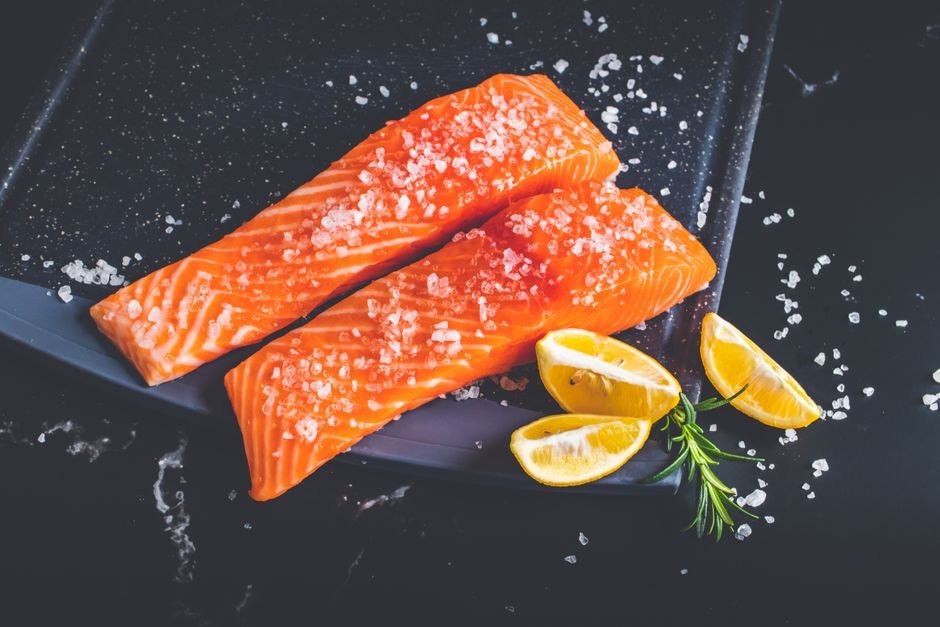
Full Nutrition Facts for 3 oz (85g) of Cooked Atlantic Salmon
Here’s the complete breakdown of what you’re getting in a standard serving of cooked salmon:
| Nutrient | Amount | % Daily Value |
|---|---|---|
| Calories | 175 | 9% |
| Total Fat | 11g | 14% |
| Saturated Fat | 2.4g | 12% |
| Cholesterol | 55mg | 18% |
| Sodium | 52mg | 2% |
| Total Carbohydrate | 0g | 0% |
| Dietary Fiber | 0g | 0% |
| Total Sugars | 0g | 0% |
| Protein | 19g | 38% |
| Omega-3 Fatty Acids (EPA + DHA) | 1.5g | — |
| Vitamin D | 570 IU | 143% |
| Selenium | 36 mcg | 65% |
*Percent Daily Values are based on a 2,000-calorie diet. Source: USDA FoodData Central.
Key insight: Salmon is exceptional because 11 grams of its fat comes almost entirely from unsaturated fat, including the heart-protective omega-3 fatty acids EPA and DHA—nutrients most of us don’t get enough of. At 19 grams of protein per 3-ounce serving, it’s also a dense protein source that supports muscle recovery and satiety on fewer calories than many other animal proteins.
Etekcity Food Scale
0.1g accuracy — the perfect companion for exact portions.
Raw Salmon vs. Cooked Salmon: How Preparation Changes Calories
Raw Salmon (100g)
- 238 calories per 3 oz (85g) serving
- Higher water content, slightly denser calorie load before cooking loss
- All fat and protein intact; omega-3s unchanged by heat
Cooked Salmon (100g, dry heat)
- 175 calories per 3 oz (85g) serving
- Water loss concentrates protein per serving, but raw weight is larger to hit same calorie target
- Cooking method matters: grilling or baking (no added fat) stays lean; pan-frying in butter or oil adds 50–100 calories
The practical takeaway: If you’re counting calories, cooked salmon is what you’ll actually eat, so use 175 per 3-ounce serving as your tracking number. But remember: cooking method is crucial. A grilled or baked salmon fillet has far fewer calories than one sautéed in oil. When comparing raw weight on nutrition labels, remember that raw salmon is denser in water, so a 3.5-ounce raw fillet becomes about 2.6 ounces after cooking.

Is Salmon Good for Weight Loss?
Yes. Salmon supports weight loss in multiple ways: it’s high in protein (which increases satiety and thermic effect), contains zero carbohydrates, and provides beneficial fats that promote hormonal balance and reduce cravings. Studies show that people who eat fish regularly have an easier time maintaining a calorie deficit because the protein and omega-3s help regulate appetite hormones. The key is controlling portion size and cooking method—grilled or baked salmon without added oils is ideal.
Tips to Eat Salmon Without Gaining Weight:
- Stick to 3-4 ounces per serving: One standard fillet is typically 5–6 ounces, so you can split it or pair it with high-volume foods like leafy greens or roasted vegetables to feel fuller longer.
- Bake or grill instead of pan-fry: Poaching, baking at 400°F, or grilling eliminates the need for added oil, cutting calorie intake by up to 100 per serving compared to butter or oil sautéing.
- Watch for hidden calories in preparations: Teriyaki glaze, cream-based sauces, and honey-butter toppings can add 80–200 calories. Stick to lemon, herbs, or spices instead.
- Eat the whole fillet for satiety: Don’t drastically reduce portion size in hopes of saving calories—adequate protein at each meal prevents mid-afternoon hunger spikes that lead to overeating later.
When eaten mindfully, salmon fits easily into any calorie-controlled diet and actually makes weight loss more sustainable because it keeps you satisfied longer.
How Portion Size Affects Calories
Salmon’s calorie density means portion size matters significantly. A 2-ounce snack is about 116 calories, while a 6-ounce restaurant fillet is roughly 350. Most people underestimate salmon portions because it’s visually chunky; a standard cooked fillet can look small despite containing 150–200 calories. Using a food scale for the first few weeks helps you develop an accurate eye for what 3–4 ounces actually looks like.
Example:
- Small portion (2 oz / 56g): 116 calories—good for a side or snack
- Standard serving (3.5 oz / 100g): 206 calories—typical restaurant or home-cooked fillet
Knowing your target portion lets you plan meals accurately and avoid the creep of untracked extra bites.
Best Way to Measure Salmon Accurately
Raw weight and cooked weight differ significantly for salmon. If you’re tracking precisely, weigh your salmon before cooking, or use USDA nutrition data for cooked weight and weigh after cooking—just be consistent. Most nutrition databases default to cooked weights, so when you enter “85g salmon” into a tracker, you’re already looking at cooked numbers. Raw salmon is approximately 30% heavier before cooking water loss.
Options:
- Digital food scale: Weigh raw fillet before cooking, then multiply the USDA raw-weight calories by (cooked weight ÷ raw weight). Most reliable for tracking.
- Nutrition label or app (cooked weight): Most apps like MyFitnessPal or Cronometer default to cooked salmon, so weigh your finished fillet and log that weight directly.
- Visual guide: A 3-ounce cooked fillet is roughly the size of a deck of cards. A 6-ounce fillet is roughly the size of a smartphone. Use this for restaurant meals where you can’t weigh.
Calculate Your Exact Calorie Intake
If you’re eating salmon multiple times a week or combining it with other sources of omega-3s (like supplements), you might wonder whether you’re hitting your macro targets for protein and fat without overshooting calories. Individual needs vary by activity level, age, and goals.
That’s where a comprehensive nutrient calculator saves time. Our site’s free AI-powered nutrients calculator lets you enter your exact salmon portion (raw or cooked), see instant calorie and macro breakdowns, and track across your whole day to ensure you’re hitting your protein, fat, and calorie targets—without guessing.
- Log salmon by exact weight and see macros instantly
- Compare raw vs. cooked data without confusion
- Track daily totals across meals to stay on target
Common Mistakes When Eating Salmon
Even when salmon is a great choice, a few traps can derail your nutrition goals. Here are the most common oversights:
❌ Assuming all salmon has the same calories: Farmed Atlantic salmon (175 cal/3 oz) has 20+ more calories than wild-caught varieties due to higher fat content and feed composition. If you’re tracking tightly, verify which type you’re eating.
❌ Not accounting for cooking fats: A tablespoon of olive oil or butter adds 120 calories—doubling or more the “base” salmon calories. Many people log the salmon but forget the cooking medium entirely.
❌ Eyeballing portions instead of weighing: A “fillet” can range from 4 to 8 ounces. Without a scale, you might think you’re eating 175 calories when you’ve consumed 350.
❌ Buying pre-cooked salmon without checking added sodium or oils: Some grocery-store smoked or canned salmon varieties include significant added sodium (400+ mg per serving) or are packed in oil that adds calories. Always read the label.
Awareness of these pitfalls ensures your salmon intake stays accurate and supports your actual goals.
FAQ
How many calories are in 100g of salmon?
A 100-gram (3.5-ounce) serving of cooked salmon contains approximately 206 calories. This varies slightly by variety: wild salmon is around 182 calories per 100g, while farmed Atlantic is closer to 208 calories per 100g.
Is salmon fattening?
No. While salmon does contain fat (11g per 3-ounce serving), it’s mostly unsaturated fat and omega-3s that support heart health and fat loss when eaten in reasonable portions. The high protein content makes it excellent for satiety without excess calories. People who eat salmon regularly actually tend to have lower body weights and better metabolic health.
Does cooking method change salmon’s calories significantly?
Cooking method itself doesn’t change salmon’s intrinsic calories much—water loss during cooking slightly concentrates them. What matters is added fat: grilled or baked salmon stays at 175 calories per 3 oz, but pan-frying in oil or butter can add 50–150 calories depending on how much fat you use.
How much salmon should I eat per week?
The American Heart Association recommends 2–3 servings of fatty fish like salmon per week (each serving is 3.5 ounces cooked). This delivers about 250–750 calories from salmon weekly and ensures adequate omega-3 intake without excess mercury or calories. More than that is fine if it fits your calorie goals, but less than 2 servings weekly may mean you’re missing key nutrients.
Conclusion
Salmon is a nutrient-dense, protein-rich food that fits well into almost any calorie-controlled diet. At 175 calories per 3-ounce serving of cooked Atlantic salmon, it provides substantial protein (19g), beneficial omega-3 fatty acids, and micronutrients like vitamin D and selenium—all while keeping you satisfied. Whether you’re building muscle, losing weight, or simply eating for long-term health, salmon delivers real nutritional value per calorie.
The key to getting the most from salmon is precision: weigh your portions, choose your cooking method wisely (bake or grill over frying), and use a reliable nutrients calculator to track your intake across the whole day. When you’re armed with accurate data and realistic portion sizes, salmon becomes an easy way to hit your protein targets and maintain the calorie deficit or surplus you’re aiming for. Start logging your meals with a trusted nutrients tracker to see exactly how salmon fits into your personal nutrition plan.
