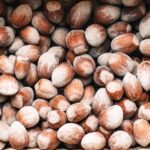
Calories in pili nuts: 193 calories per 1 serving (30 g)
- 4.7 g protein
- 5.6 g carbs
- 18 g fat
- 1.2 g fiber
Source: USDA FoodData Central · 643 kcal per 100 g
A 1-serving portion of pili nuts (30 g) has 193 calories in pili nuts, with 18 g of fat, 4.7 g of protein and 5.6 g of carbohydrate. The USDA record used here is for raw pine nuts, so these numbers describe the nut as sold, dry and uncooked.
What stands out is the fat. Fat supplies about 80% of the calories in these nuts, while protein and carbohydrate make up roughly 9% and 11%. A small handful delivers a dense amount of energy for a modest weight, so portion size matters more here than with most nuts you might compare it to.

Calories in Pili Nuts by Serving Size
Calories in pili nuts for each common serving, with protein, carbs and fat:
| Serving | Calories | Protein | Carbs | Fat |
|---|---|---|---|---|
| 1 serving (30 g) | 193 | 4.7 g | 5.6 g | 18 g |
| 100 g | 643 | 16 g | 19 g | 61 g |
Pili Nuts Nutrition Facts
Calories in pili nuts and the full nutrition facts per 1 serving (30 g):
| Nutrient | Amount | % Daily Value* |
|---|---|---|
| Calories | 193 kcal | |
| Protein | 4.7 g | 9% |
| Total Fat | 18 g | 24% |
| Sodium | 0 mg | 0% |
| Total Carbohydrate | 5.6 g | 2% |
| Dietary Fiber | 1.2 g | 4% |
| Calcium | 2.6 mg | 0% |
| Iron | 1.6 mg | 9% |
| Potassium | 196 mg | 4% |
| Magnesium | 62 mg | 15% |
| Zinc | 1.7 mg | 16% |
| Phosphorus | 162 mg | 13% |
| Vitamin K | 1 mcg | 1% |
| Thiamin (B1) | 0.2 mg | 16% |
| Niacin (B3) | 1.3 mg | 8% |
| Vitamin B6 | 0.1 mg | 4% |
Where the calories come from: 80% fat · 11% carbs · 9% protein
*Percent Daily Values are based on a 2,000-calorie diet (FDA reference values). Source: USDA FoodData Central — Nuts, pine nuts, raw (FDC ID 2346392, Foundation, published 10/28/2022). Values for other servings are calculated from the per-100 g data.
How Many Calories Are in 100 Grams of Pili Nuts?
Per 100 g, pili nuts have 643 kcal, 61 g of fat, 16 g of protein and 19 g of carbohydrate. The 30 g serving is simply about 30% of that weight, which is why the numbers in the lead serving look smaller. If you weigh your nuts rather than counting them, the 100 g figures are the easiest base to work from.
The 100 g row is also where the fiber shows up clearly: 3.9 g per 100 g, or 1.2 g in a 30 g serving. Water is only 1.9 g per 100 g, so these are very dry nuts with little moisture to add weight.

What Minerals Stand Out in Pili Nuts?
The strongest mineral signal in a 30 g serving is zinc at 1.7 mg, which is 16% of the Daily Value. Magnesium comes in at 62 mg (15% DV), and phosphorus at 162 mg (13% DV). Iron is 1.6 mg (9% DV) and potassium is 196 mg (4% DV).
Sodium is 0 mg per serving, which is a useful detail if you are tracking salt. Keep in mind that most packaged versions are sold plain, but roasted or salted products are a different item and will not match these numbers.
Does Eating Pili Nuts Add Many Carbs or Sugar?
Not much. A 30 g serving has 5.6 g of total carbohydrate, of which 1.2 g is dietary fiber. The DATA sheet does not list sugar for this record, so this page does not state a sugar figure.
Because fat is the main energy source, the nuts fit most low-carb eating patterns on a carbohydrate basis. The fat content is the part to plan around, not the carbs.
Portion Tips for Pili Nuts
Because one 30 g serving carries 18 g of fat and 193 kcal, the easiest mistake is eating straight from a large bag. Measuring a single serving before you start is the simplest way to keep intake predictable.
- Weigh out 30 g once to learn roughly how much that looks like in your own bowl or hand.
- Pair the nuts with a lower-calorie food, such as fruit, so the snack feels larger without adding much energy.
- Store the nuts in a sealed container, since high-fat nuts can turn rancid if left open for long periods.
How Pili Nuts Compares
Per 100 g, next to similar foods in our database:
| Food (100 g) | Calories | Protein | Carbs | Fat |
|---|---|---|---|---|
| Pili Nuts | 643 | 16 g | 19 g | 61 g |
| Brazil Nut Butter | 659 | 14 g | 12 g | 67 g |
| Mixed Nuts | 616 | 17 g | 23 g | 55 g |
| Cashew Nuts Roasted | 574 | 15 g | 33 g | 46 g |
| Macadamia Butter | 718 | 7.9 g | 14 g | 76 g |
| Sesame Seeds Roasted | 565 | 17 g | 26 g | 48 g |
Pili Nuts FAQ
Are pili nuts high in protein?
A 30 g serving has 4.7 g of protein, which is 9% of the Daily Value. Protein is a small share of their calories, at about 9%, so they are better thought of as a fat-rich food than a protein source.
How much fiber is in pili nuts?
A 30 g serving has 1.2 g of dietary fiber, or 4% of the Daily Value. Per 100 g the figure is 3.9 g.
Do pili nuts contain sodium?
The USDA record shows 0 mg of sodium per 30 g serving and per 100 g. This applies to the raw, unsalted nut; salted versions will contain added sodium.
The Bottom Line
A 30 g serving of pili nuts has 193 calories, 18 g of fat and no sodium, so measuring a single portion is the simplest way to keep them in line with your goals. Their zinc, magnesium and phosphorus contributions are the most notable nutrients per serving.