Calories in pork belly roasted: 184 calories per 3 oz (85 g)
- 22 g protein
- 0 g carbs
- 10 g fat
Source: USDA FoodData Central · 217 kcal per 100 g
A 3 oz (85 g) serving of roasted pork belly has 184 calories in the USDA data, with 22 g of protein and 10 g of fat. Pork belly roasted calories are almost entirely from protein and fat, since the record lists zero carbohydrate.
What stands out is the split: about half of the calories come from protein and half from fat, and the cut is a good source of protein for its calorie count. The same 3 oz also supplies 44% of the Daily Value for protein and 26% for zinc. The USDA record for this item is actually a lean-only cut of pork loin blade, cooked and roasted, so the numbers here reflect the meat without the surrounding fat cap.
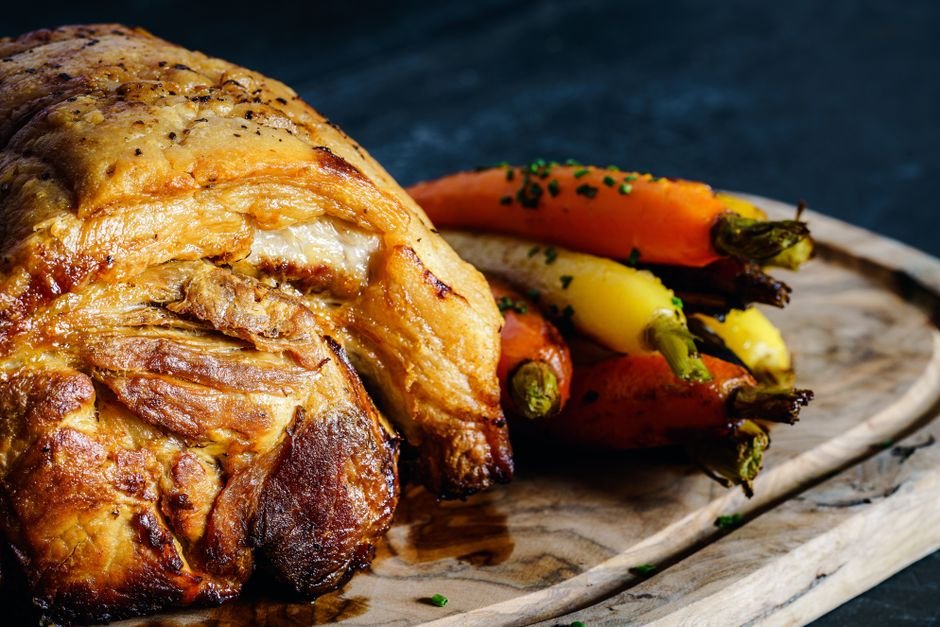
Calories in Pork Belly Roasted by Serving Size
Calories in pork belly roasted for each common serving, with protein, carbs and fat:
| Serving | Calories | Protein | Carbs | Fat |
|---|---|---|---|---|
| 3 oz | 184 | 22 g | 0 g | 10 g |
| 1 roast (830 g) | 1801 | 213 g | 0 g | 99 g |
| 100 g | 217 | 26 g | 0 g | 12 g |
| 1 oz | 62 | 7.3 g | 0 g | 3.4 g |
Pork Belly Roasted Nutrition Facts
Calories in pork belly roasted and the full nutrition facts per 3 oz (85 g):
| Nutrient | Amount | % Daily Value* |
|---|---|---|
| Calories | 184 kcal | |
| Protein | 22 g | 44% |
| Total Fat | 10 g | 13% |
| Saturated Fat | 3.3 g | 17% |
| Trans Fat | 0.1 g | |
| Cholesterol | 71 mg | 24% |
| Sodium | 66 mg | 3% |
| Total Carbohydrate | 0 g | 0% |
| Dietary Fiber | 0 g | 0% |
| Total Sugars | 0 g | |
| Vitamin D | 0.7 mcg | 3% |
| Calcium | 23 mg | 2% |
| Iron | 0.7 mg | 4% |
| Potassium | 286 mg | 6% |
| Magnesium | 16 mg | 4% |
| Zinc | 2.9 mg | 26% |
| Phosphorus | 173 mg | 14% |
| Selenium | 35 mcg | 64% |
| Vitamin A (RAE) | 0.9 mcg | 0% |
| Vitamin E | 0.2 mg | 1% |
| Thiamin (B1) | 0.4 mg | 36% |
| Riboflavin (B2) | 0.3 mg | 26% |
| Niacin (B3) | 5.8 mg | 37% |
| Vitamin B6 | 0.4 mg | 23% |
| Vitamin B12 | 0.7 mcg | 28% |
Where the calories come from: 51% fat · 49% protein · 0% carbs
*Percent Daily Values are based on a 2,000-calorie diet (FDA reference values). Source: USDA FoodData Central — Pork, fresh, loin, blade (roasts), bone-in, separable lean only, cooked, roasted (FDC ID 168237, SR Legacy, published 4/1/2019). Values for other servings are calculated from the per-100 g data.
Why Pork Belly Has Fewer Calories per Ounce Than You Might Expect
Pork belly is usually thought of as one of the fattiest cuts, so the 184 calories in 3 oz can look low. That number reflects the USDA record used here, which is the lean-only portion of a cooked, roasted pork roast. The record does not describe the rendered fat layer of a typical restaurant or home-cooked belly, and that difference matters a lot.
For this reason, treat the figures as a reference for the lean meat rather than for a fat-laden slab. If you eat the skin and fat that render out of a belly, your intake will be higher than what this data shows.
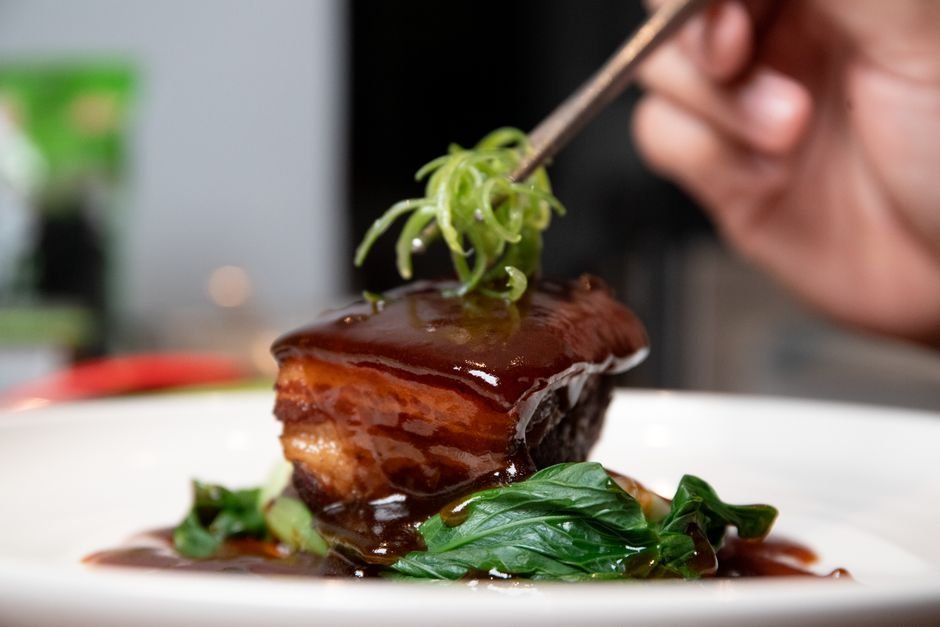
Protein, Fat, and Saturated Fat in a 3 Oz Serving
In the 3 oz serving, the data shows 22 g of protein and 10 g of total fat. Trans fat is 0.1 g.
The Dietary Guidelines for Americans advise limiting saturated fat, and this serving provides a meaningful share of the daily limit on its own.
Micronutrients That Stand Out
Roasted pork here is notable for several B vitamins and minerals in the lean-only record. A 3 oz serving provides 37% DV for niacin (5.8 mg), 36% DV for thiamin (0.4 mg), 28% DV for vitamin B12 (0.7 mcg), and 26% DV for riboflavin (0.3 mg). Selenium is 64% DV (35 mcg) and zinc is 26% DV (2.9 mg).
- Selenium: 35 mcg, 64% DV
- Zinc: 2.9 mg, 26% DV
- Vitamin B12: 0.7 mcg, 28% DV
- Sodium: 66 mg, 3% DV
Sodium is low in this record, which is useful if you are watching salt. Keep in mind that cured or brined pork products are a different category and can contain far more sodium.
Carbs and Sugar: Nothing to Count
The USDA record lists 0 g of total carbohydrate, 0 g of fiber, and 0 g of sugars for this roasted pork. Pork has no carbohydrate on its own, so the carb count here is zero. Any carbs on a plate usually come from sauces, glazes, or sides, and those need their own entries.
Because the calories come only from protein and fat, the macro split is about 49% protein and 51% fat. That makes this a useful reference point when you compare it with a glazed or sweetened preparation.
How Pork Belly Roasted Compares
Per 100 g, next to similar foods in our database:
| Food (100 g) | Calories | Protein | Carbs | Fat |
|---|---|---|---|---|
| Pork Belly Roasted | 217 | 26 g | 0 g | 12 g |
| Beef Bone Marrow | 219 | 27 g | 0 g | 11 g |
| Ground Beef 90% Lean | 214 | 27 g | 0 g | 11 g |
| Pork Chop Bone-In | 222 | 28 g | 0 g | 11 g |
| Lamb Shank | 209 | 33 g | 0 g | 8.4 g |
| Veal Loin | 226 | 34 g | 0 g | 9.2 g |
Pork Belly Roasted FAQ
How many calories are in 100 g of roasted pork belly?
The USDA record lists 217 calories per 100 g, with 26 g of protein and 12 g of total fat. That is the same meat as the 3 oz serving, just scaled to 100 g.
How many calories are in one roast?
One roast of 830 g is listed at 1,801 calories, with 213 g of protein and 99 g of fat. Use that figure only if you are tracking an entire roast from this record.
Does roasted pork have any carbs?
No. The record shows 0 g of total carbohydrate, 0 g of fiber, and 0 g of sugars per serving.
The Bottom Line
A 3 oz serving of this roasted pork has 184 calories, 22 g of protein, and no carbohydrate. Note that the USDA record reflects lean-only cooked meat, so a fattier belly with skin will run higher.