
Pork chops are a staple protein in kitchens across North America, Europe, and Asia, prized for their flavor, versatility, and relatively affordable price. Whether grilled, pan-fried, or baked, they appeal to people aiming to build muscle, manage weight, or simply enjoy a satisfying main dish. Understanding their calorie and nutritional content is essential for anyone tracking intake or making informed dietary choices.
The question “How many calories are in a pork chop?” doesn’t have a one-size-fits-all answer—it depends on cut, thickness, cooking method, and whether the bone is included. This guide breaks down the exact calories, macronutrients, and micronutrients in common pork chop servings, plus practical strategies for fitting them into your diet.
Calories in Pork Chop (Quick Answer)
A medium-sized pork chop cooked varies significantly depending on the cut and cooking method:
- Bone-in pork chop (3.5 oz / 100g cooked): 165–180 calories
- Boneless pork chop (3 oz / 85g cooked): 140–160 calories
- Thick-cut pork chop (5 oz / 140g cooked, pan-fried): 220–250 calories
Calorie counts vary based on fat marbling, cooking method (grilling vs. pan-frying in oil), and whether skin or excess fat is trimmed before cooking.
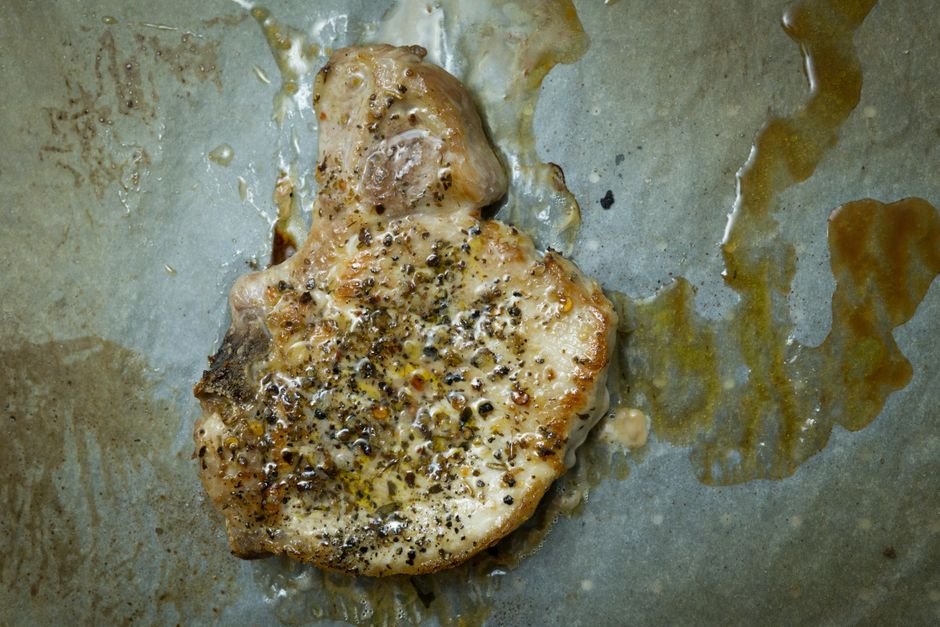
Full Nutrition Facts for a 3 oz Boneless Pork Chop (Cooked, Lean)
Here’s the complete nutritional breakdown for a 3 oz (85g) boneless pork chop cooked by pan-frying with minimal added fat:
| Nutrient | Amount | % Daily Value |
|---|---|---|
| Calories | 150 | — |
| Total Fat | 7g | 9% |
| Saturated Fat | 2.5g | 13% |
| Cholesterol | 65mg | 22% |
| Sodium | 55mg | 2% |
| Total Carbohydrate | 0g | 0% |
| Dietary Fiber | 0g | 0% |
| Total Sugars | 0g | 0% |
| Protein | 26g | 52% |
| Selenium | 36mcg | 65% |
| Phosphorus | 210mg | 17% |
| Vitamin B12 | 0.6mcg | 10% |
*Percent Daily Values are based on a 2,000-calorie diet. Source: USDA FoodData Central.
Key insight: Pork chops deliver impressive protein per calorie—26g of protein in just 150 calories makes them excellent for muscle recovery and satiety. The selenium content is particularly valuable: this mineral supports thyroid function and acts as an antioxidant, and a single chop provides two-thirds of your daily need. Unlike red meat, pork has lower cholesterol per serving, making it a heart-friendly protein option when the lean cut is chosen and prepared without excess oil.

Etekcity Food Scale
0.1g accuracy — the perfect companion for exact portions.
Bone-In vs. Boneless Pork Chops: Calories and Nutrition
Bone-In Pork Chop
- Calories: 170–190 per 3.5 oz (100g) cooked serving
- Protein: Higher apparent per-serving, but slightly lower per gram of meat because bone adds weight without calories
- Flavor & Texture: Bones conduct heat evenly during cooking and add savory depth; meat stays juicier near the bone
Boneless Pork Chop
- Calories: 140–160 per 3 oz (85g) cooked serving; lower overall because serving is smaller (bone-removed)
- Protein: Denser per ounce; easier to calculate macros for meal tracking
- Convenience: Faster cooking time, no waste, easier to portion for meal prep
Practical takeaway: For calorie counting, boneless chops are simpler to track because the serving size is pure meat. Bone-in chops are fattier near the bone but offer superior juiciness and flavor—and they actually contain fewer total calories when the bone weight is excluded. Choose based on your cooking method: bone-in for slow cooking or grilling (the bone prevents overcooking), boneless for quick pan-frying or meal prep.
Is Pork Chop Good for Weight Loss?
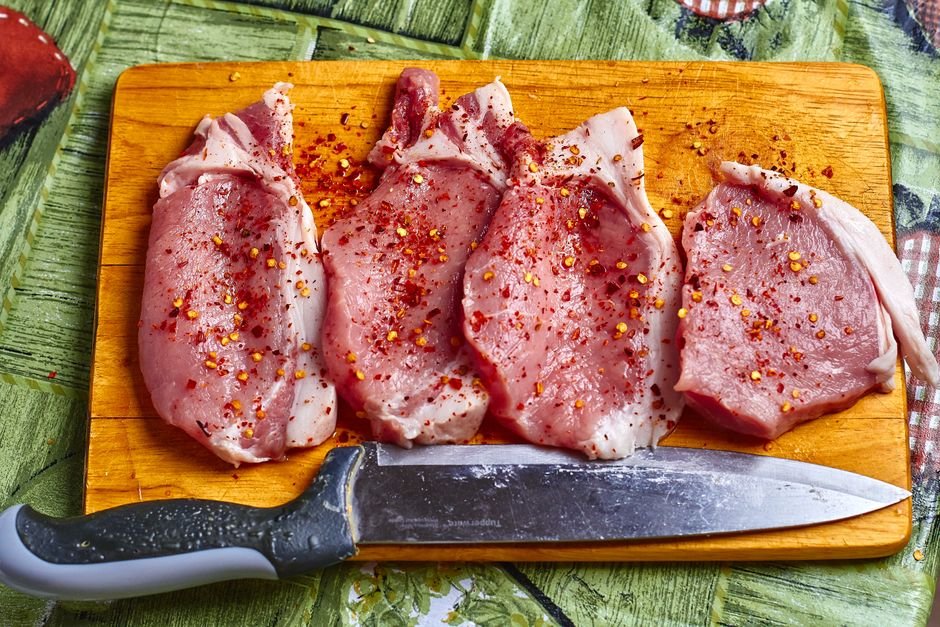
Yes, pork chops can support weight loss when the right cut is chosen and preparation is controlled. A lean boneless chop contains 150 calories and 26g protein—enough to trigger satiety and reduce overall calorie intake at a meal. The zero carbs make them compatible with low-carb or keto approaches. The key is avoiding high-fat cuts (rib chops) and limiting added cooking oils. Marinating in acid (lemon juice, vinegar) or grilling rather than pan-frying in butter keeps calories in check without sacrificing flavor.
Tips to Eat Pork Chop Without Gaining Weight
- Choose center-cut loin chops over rib chops. Loin chops have 30–40% less fat and about 30 fewer calories per serving.
- Trim visible fat before cooking. This simple step removes 20–40 calories and 2–5g fat per chop.
- Grill, bake, or broil instead of pan-frying. These dry-heat methods need minimal or no added oil; pan-frying in butter or oil adds 60–100 calories per chop.
- Watch marinades and sauces. Honey-based or creamy sauces can add 50–150 calories; opt for vinegar, mustard, or soy-based marinades instead.
Pairing a lean pork chop with non-starchy vegetables (broccoli, zucchini, green beans) and skipping refined carbs creates a low-calorie, high-protein meal that supports weight loss goals.
How Portion Size Affects Calories
Pork chop calories scale linearly with thickness and weight. A restaurant-style thick-cut chop (6 oz / 170g) can reach 280–320 calories, while a thin-cut chop (2 oz / 57g) may be only 100 calories. Most home-cooked chops fall in the 3–4 oz range (140–180 calories). The difference between a modest and generous portion is often 80–100 calories—significant over time.
Example
- Small chop (2.5 oz / 70g): ~110 calories, 20g protein
- Large chop (5 oz / 140g): ~240 calories, 40g protein
For meal planning, aim for 3–4 oz per serving (150–180 calories) to balance protein intake with overall calorie goals.
Best Way to Measure Pork Chop Calories Accurately
The most accurate method is to weigh the cooked meat on a kitchen scale (excluding bone). Raw-weight estimates are less reliable because cooking removes water and fat, reducing final weight. If you buy chops at the butcher counter, ask them to mark the raw weight on the package; cook them, then weigh the cooked meat to calculate exact calories.
Options
- Digital kitchen scale (best): Weigh cooked chop in grams and use USDA FoodData Central to look up calories for that exact weight.
- Visual estimation: A 3–4 oz chop is roughly the size of your palm (excluding fingers); use this as a quick reference when a scale isn’t available.
- Calorie counting app: Apps like MyFitnessPal or Cronometer have barcode lookup and allow logging by weight—helpful for consistency.
Calculate Your Exact Calorie Intake
A single pork chop is rarely eaten in isolation. If you’re combining chops with sides, sauces, and other proteins in a meal, tracking gets complex—and small estimation errors compound. Knowing your total intake requires accounting for every component.
Our free AI nutrients calculator simplifies this: enter pork chop weight and cut, add your sides, and get instant macros and micronutrients. No more guessing or manual math—see exactly what you’re eating in seconds. Try the calculator here.
- Instantly calculate calories, protein, fat, carbs, and 20+ micronutrients for your pork chop meal
- Log multiple foods and see combined nutrition facts in real time
- Track trends over days or weeks to stay aligned with your health goals
Common Mistakes When Eating Pork Chop
Even a nutritious lean pork chop can derail health goals if prepared or portioned carelessly. Here are the four most common pitfalls:
❌ Cooking in excessive oil or butter: Pan-frying a chop in 1–2 tablespoons of butter adds 100–200 hidden calories. Baking or grilling cuts this to zero if you use a non-stick pan or cooking spray.
❌ Choosing high-fat cuts (rib or blade chops) without realizing it: Rib chops contain 12–15g fat versus 7g in loin chops—a 40-calorie-per-chop difference. Ask the butcher or check the label.
❌ Not trimming visible fat before cooking: Even lean cuts have a fat cap. Removing it saves 30–50 calories and shifts saturation to healthier ratios.
❌ Underestimating serving size: A home-cooked chop often looks smaller than it weighs. Restaurants routinely serve 6–8 oz chops (300+ calories); at home, verify with a scale to avoid consuming 50% more than you think.
Awareness of these mistakes ensures that a pork chop meal stays lean and nutritious.
FAQ
How many calories are in 100g of pork chop?
A 100g (3.5 oz) serving of cooked lean boneless pork chop contains approximately 165–180 calories, depending on fat content and cooking method. Bone-in chops may show slightly higher raw weight but lower meat-only calories.
Is pork chop fattening?
Lean pork chops (center-cut loin) are not inherently fattening—150 calories and 26g protein per 3 oz supports weight loss when portion-controlled. Higher-fat cuts (rib, blade) or cooking in excess oil can add 50–100+ extra calories, making them more likely to contribute to weight gain if eaten frequently without adjustment.
What’s the difference in calories between raw and cooked pork chop?
Raw pork chops contain more water and typically weigh 20–25% more than their cooked weight. A 4 oz raw chop becomes roughly 3 oz cooked. Always use cooked weight for accurate calorie counts, as cooking removes water and some fat.
Can I eat pork chops every day on a diet?
Yes, if you choose lean cuts (3–4 oz per serving, 150–180 calories) and balance with vegetables and whole grains. Daily pork chop meals keep protein intake high, support muscle retention during weight loss, and don’t raise cholesterol when the cut is lean and preparation method is low-fat.
Conclusion
Pork chops are a nutrient-dense, protein-rich food that fits well into most diets when the right cut is selected and preparation is controlled. A lean 3 oz boneless chop delivers 150 calories and 26g protein—ideal for muscle building, satiety, and weight management. The selenium content and low cholesterol (compared to beef) make pork chops a heart-smart choice. Whether grilled, baked, or pan-fried with minimal fat, they’re a practical, flavorful protein that works at breakfast, lunch, or dinner.
Success with pork chops depends on consistency: choose center-cut loin, trim visible fat, cook with minimal oil, and weigh portions to verify intake. When in doubt, use a reliable nutrients calculator to confirm the exact macros and calories of your prepared meal. This removes guesswork and keeps you accountable to your goals.
