
Lettuce is the foundation of salads, wraps, and light meals across the globe. Whether you’re aiming for weight loss, managing blood sugar levels, or simply trying to eat more vegetables, lettuce appears on nearly every nutrition-focused meal plan. It’s low in calories, versatile, and available year-round at any grocery store, making it one of the easiest vegetables to incorporate into daily eating.
But how many calories are actually in lettuce, and what nutritional value does it provide? This guide breaks down the complete nutrition profile of lettuce, compares varieties, and shows you exactly how to measure and prepare it for your goals.
Calories in Lettuce (Quick Answer)
Raw lettuce is one of the lowest-calorie vegetables available, with minimal variation across common varieties.
- 1 cup raw iceberg lettuce (72g): 10 calories
- 1 cup raw romaine lettuce (94g): 16 calories
- 1 cup raw butterhead lettuce (55g): 7 calories
These values remain consistent whether lettuce is chopped, shredded, or left whole. Calorie counts vary slightly by variety and leaf density, but rarely exceed 15 calories per cup for raw lettuce.
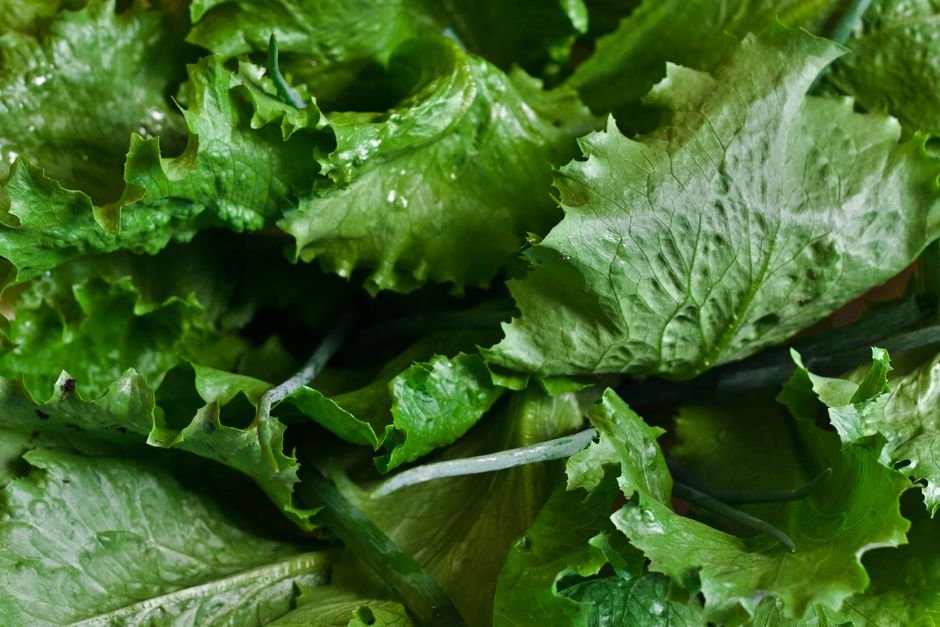
Full Nutrition Facts for 1 Cup (72g) of Raw Iceberg Lettuce
Iceberg lettuce is the most commonly consumed variety in North America. Here’s the complete nutritional breakdown for a standard one-cup serving of raw, shredded iceberg lettuce:
| Nutrient | Amount | % Daily Value |
|---|---|---|
| Calories | 10 | — |
| Total Fat | 0.1g | <1% |
| Saturated Fat | 0g | 0% |
| Cholesterol | 0mg | 0% |
| Sodium | 5mg | <1% |
| Total Carbohydrate | 1.9g | 1% |
| Dietary Fiber | 0.7g | 3% |
| Total Sugars | 0.6g | — |
| Protein | 0.6g | |
| Vitamin A | 361 IU | 7% |
| Vitamin K | 24.6 mcg | 31% |
| Folate | 15 mcg | 4% |
*Percent Daily Values are based on a 2,000-calorie diet. Source: USDA FoodData Central.
Key insight: Iceberg lettuce is 95% water, which is why it’s so low in calories yet still provides volume and satiety. Its real nutritional value lies in micronutrients—especially vitamin K, which supports bone health and blood clotting. Despite its reputation for being “watery,” one cup delivers nearly one-third of your daily vitamin K needs, making it genuinely nutrient-dense for weight-loss diets.
Etekcity Food Scale
0.1g accuracy — the perfect companion for exact portions.
Iceberg vs. Romaine Lettuce: Which Is More Nutritious?
Iceberg Lettuce
- 10 calories per cup; higher water content; milder, crisp flavor
- Lower fiber and micronutrient density compared to romaine
- Best for: bulk eating, salads where texture matters, low-calorie volume
Romaine Lettuce
- 16 calories per cup; denser leaves; slightly more bitter, robust flavor
- Higher in fiber, vitamin K, folate, and vitamin A than iceberg
- Best for: Caesar salads, wraps, maximum nutritional benefit per serving
The practical takeaway: Romaine lettuce is the more nutrient-dense choice and worth choosing when you want maximum vitamins and fiber. Iceberg is perfectly fine for weight loss and provides excellent volume with negligible calories—choose based on your meal preference, not calories. Both are nutritionally sound choices; the difference is modest.
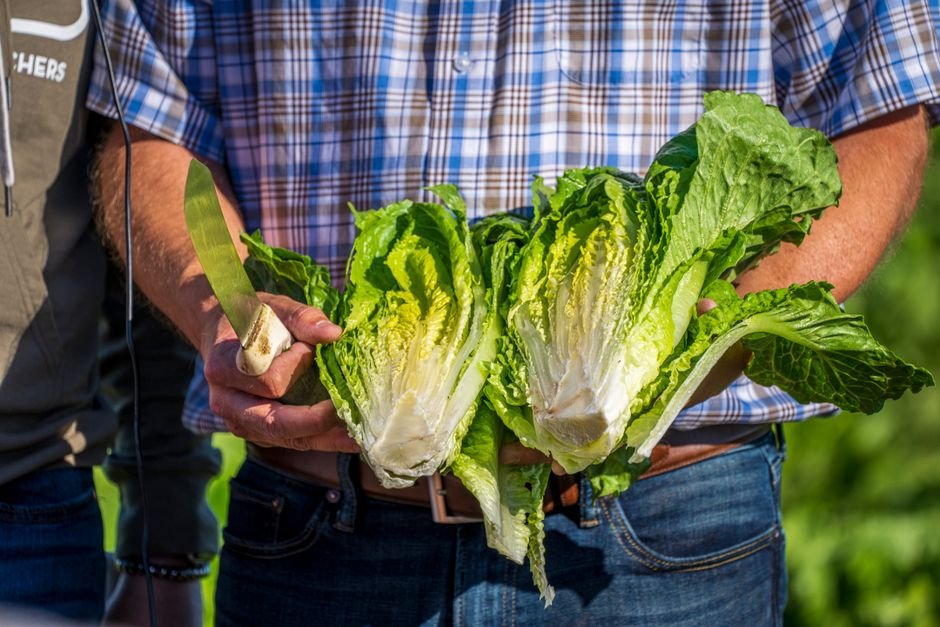
Is Lettuce Good for Weight Loss?
Lettuce is an exceptional food for weight loss. With fewer than 15 calories per cup and high water content, you can eat large volumes without sabotaging a calorie deficit. It provides satiety through bulk rather than calories, making it ideal for filling up before higher-calorie foods. The fiber content, while modest, supports digestive health. Most importantly, lettuce is filling yet so low-calorie that portion control is nearly impossible—you’d need to eat enormous amounts to meaningfully impact your daily calorie total.
Tips to Eat Lettuce Without Gaining Weight:
- Watch dressing: Skip heavy creamy dressings—they add 100–300 calories per serving. Use vinaigrettes or lemon juice instead.
- Build balanced salads: Pair lettuce with protein (grilled chicken, eggs, beans) and healthy fats (olive oil, avocado) to create a complete meal without calorie overload.
- Use lettuce as a base, not the whole meal: Lettuce alone lacks protein and fat to keep you satisfied long-term. Add these macronutrients to prevent hunger later.
- Measure other ingredients: The lettuce is free; track cheese, nuts, croutons, and dressing closely, as these calories add up fast.
Lettuce is a weight-loss champion precisely because it’s so low-calorie you can rarely “overeat” it alone. The risk isn’t lettuce—it’s what you put on it.
How Portion Size Affects Calories
Because lettuce is so low in calories, portion size has minimal practical impact. However, it’s still worth understanding how quantities scale, especially when you’re tracking macros or eating for satiety. A single leaf contains roughly 1–2 calories, so even generous portions barely register on your daily total.
Example:
- Small side salad (2 cups iceberg): 20 calories—negligible impact on your diet
- Large dinner salad (5 cups romaine): 80 calories—still minor, and you’re getting substantial fiber and micronutrients
The takeaway: you don’t need to stress portion control with lettuce. Eat until satisfied; it won’t derail your calorie goals.
Best Way to Measure Lettuce Accurately
While lettuce’s calorie count is so low that precision barely matters, measuring correctly helps with macro-tracking or recipe consistency. The challenge with lettuce is that density varies—a loosely packed cup of iceberg is very different from a tightly packed cup of spinach. Here are the most reliable methods:
Options:
- By weight (most accurate): Use a digital kitchen scale. Measure raw lettuce in grams. Iceberg averages 72g per cup; romaine averages 94g per cup. This eliminates guesswork.
- By volume (practical home method): Use a measuring cup. Loosely fill it once; don’t pack it down. This gives repeatable results for meal planning.
- By visual estimate (quick and simple): One cup of loosely packed lettuce is roughly the size of your closed fist. For salads, this is “good enough” for calorie tracking since lettuce contributes so little.
Calculate Your Exact Calorie Intake
If you’re tracking lettuce as part of a larger meal—especially a salad with dressing, protein, and other toppings—knowing the exact calorie total matters for your overall diet goals. A salad that seems “healthy” can easily exceed 500 calories when you factor in nuts, cheese, and dressing.
Our free AI nutrition calculator breaks down the complete macro and micronutrient content of your entire meal, not just the lettuce. Input your salad ingredients, portion sizes, and dressing, and get instant totals for calories, protein, carbs, fat, fiber, and key vitamins and minerals. Use the calculator here to remove the guesswork from meal planning.
- Calculate exact calories for your complete salad—lettuce, toppings, and dressing combined
- Track macros (protein, carbs, fat) to align with your fitness or health goals
- Identify hidden calories in salad dressing and cheese
Common Mistakes When Eating Lettuce
Lettuce itself is nearly impossible to “mess up” nutritionally, but there are common patterns that turn healthy salads into calorie traps. Here are the biggest mistakes people make:
❌ Drowning salad in dressing: Most restaurant and store-bought dressings contain 150–300 calories per 2-tablespoon serving. A light salad can double or triple in calories before you even eat it. Use dressing sparingly or switch to vinegar-based versions.
❌ Choosing iceberg lettuce exclusively: While iceberg is fine, consistently choosing it over darker greens like romaine, spinach, or arugula means missing out on significantly more fiber, vitamins, and minerals.
❌ Treating salad as a side dish instead of a meal: A lettuce-only salad lacks protein and fat, leaving you hungry within an hour. Add grilled chicken, beans, eggs, or nuts to create satiety.
❌ Forgetting to account for “salad toppers”: Croutons, cheese, nuts, seeds, and bacon bits are calorie-dense and easy to overeat by the handful. Measure them or skip them if you’re in a strict deficit.
The common thread: lettuce itself is the healthiest part of your salad. The sabotage happens with everything else.
FAQ
How many calories are in 100g of lettuce?
Raw iceberg lettuce contains approximately 14 calories per 100g. Romaine lettuce is slightly higher at 17 calories per 100g. These amounts vary negligibly by variety and don’t meaningfully impact calorie tracking.
Is lettuce fattening?
No. Lettuce is one of the least fattening vegetables available—fewer than 15 calories per cup with virtually no fat. It’s an excellent base for weight-loss salads. The risk of weight gain comes from dressing, cheese, and other toppings, not the lettuce itself.
Which lettuce variety has the most nutrients?
Dark leafy varieties like romaine, butterhead, and leaf lettuce contain more vitamins, minerals, and fiber than iceberg. If maximum nutrition is your goal, choose romaine or leaf lettuce. Iceberg is still nutritious but more watery and less nutrient-dense.
Can you eat unlimited lettuce?
Yes, practically speaking. Lettuce is so low in calories you’d need to eat several pounds at once to meaningfully impact your diet. However, eating only lettuce creates nutritional imbalances (lack of protein, fat, and calories). Always pair it with protein and fat-containing foods for balanced nutrition.
Conclusion
Lettuce is a nutritional bargain—exceptionally low in calories while delivering water, fiber, and important micronutrients like vitamin K and folate. Whether you choose iceberg for its crispness or romaine for its nutritional density, lettuce is a genuinely diet-friendly vegetable that should form the base of regular salads. It’s virtually impossible to overeat lettuce alone, and its low calorie density makes it perfect for volume eaters managing a calorie deficit.
The real nutritional challenge with lettuce isn’t the lettuce itself—it’s what you add to it. Build your salads with protein, healthy fats, and measured portions of higher-calorie toppings to create meals that are both nutritious and satisfying. For complete transparency on your salad’s full calorie and nutrient content, use a reliable macro calculator to track everything beyond the lettuce leaves.
