
Tempeh is a whole-soybean fermented product originating from Indonesia, popular among vegetarians, vegans, and flexitarians worldwide. It’s prized for its firm texture, nutty flavor, and exceptional protein density—making it a staple in plant-based cooking and increasingly common in mainstream Western diets. Whether you’re building muscle on a plant-based diet, managing weight, or simply exploring protein alternatives, tempeh deserves a close nutritional look.
The core question many ask: How many calories are in tempeh? The answer depends on serving size, whether it’s raw or cooked, and how it’s prepared. This guide covers exact calorie counts, complete nutrition facts, weight-loss strategies, and practical measurement tips to help you make informed choices.
Calories in Tempeh (Quick Answer)
A 100g serving of raw tempeh (about one thick slice) contains roughly 195 calories. Cooked preparation methods adjust this value:
- Raw tempeh, 100g: 195 calories
- Steamed tempeh, 100g: 195 calories (no oil added)
- Fried tempeh, 100g: 280–320 calories (depending on oil absorption)
Exact calorie counts vary slightly by brand, fermentation time, and moisture content; always check packaging for brand-specific data.
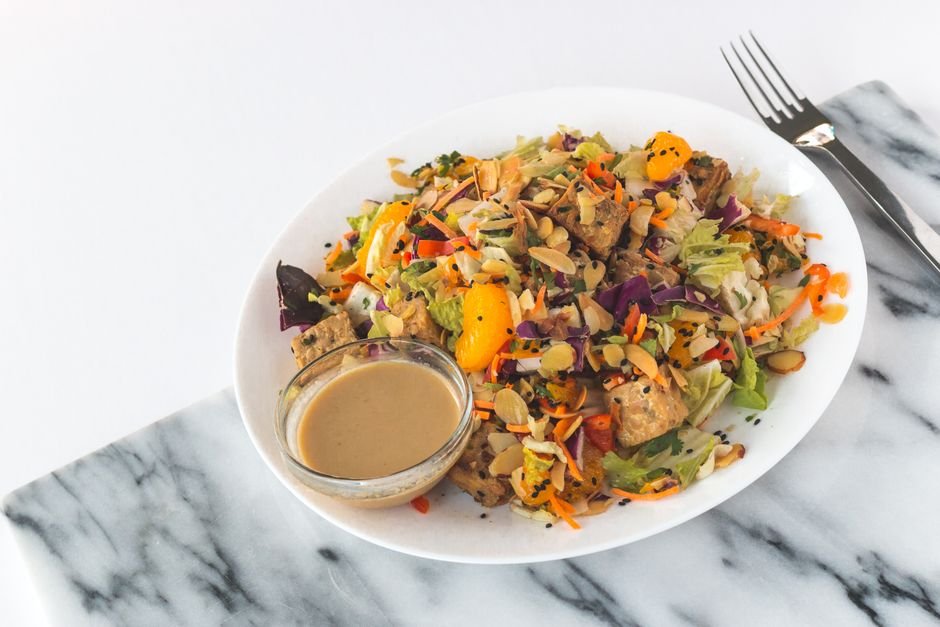
Full Nutrition Facts for 100g of Tempeh (Raw)
Here’s the complete nutritional breakdown for a standard 100g serving of raw tempeh, based on USDA data:
| Nutrient | Amount | % Daily Value |
|---|---|---|
| Calories | 195 kcal | — |
| Total Fat | 11g | 14% |
| Saturated Fat | 2.1g | 11% |
| Cholesterol | 0mg | 0% |
| Sodium | 9mg | <1% |
| Total Carbohydrate | 7.7g | 3% |
| Dietary Fiber | 4.3g | 15% |
| Total Sugars | 0g | 0% |
| Protein | 19.3g | 39% |
| Iron | 2.7mg | 15% |
| Magnesium | 79mg | 19% |
| Phosphorus | 266mg | 21% |
*Percent Daily Values are based on a 2,000-calorie diet. Source: USDA FoodData Central.
Key insight: Tempeh delivers nearly 20g of complete plant protein per 100g—a rate comparable to ground turkey or chicken breast—while keeping calories moderate and cholesterol at zero. The fermentation process makes tempeh uniquely digestible; it’s one of the few plant proteins containing all nine essential amino acids in significant amounts. Its 4.3g of dietary fiber per 100g also supports satiety and digestive health, making it a nutritionally dense choice for muscle building and weight maintenance.

Etekcity Food Scale
0.1g accuracy — the perfect companion for exact portions.
Raw Tempeh vs. Fried Tempeh: Calorie Impact
How you prepare tempeh dramatically shifts its calorie profile. Raw or steamed tempeh preserves the original nutrient density, while frying adds substantial oil-based calories. Understanding this difference helps you hit your targets.
Raw Tempeh (100g)
- 195 calories with zero added fat
- 19.3g protein, 11g natural fat
- Firm texture; requires cooking for most palates
Fried Tempeh (100g)
- 280–320 calories depending on oil absorption and cooking method
- Still delivers ~19g protein but absorbs 15–20g additional oil
- Crispy, golden exterior; appealing flavor but higher fat intake
Practical takeaway: If you’re calorie-counting, steam, bake, or pan-fry with minimal oil (1–2 teaspoons per serving) to keep tempeh under 220 calories per 100g. Deep-frying or generous oil use easily pushes a single portion over 300 calories. Marinades and spices add flavor with negligible calorie impact—a smart way to make steamed tempeh more satisfying without blowing your budget.
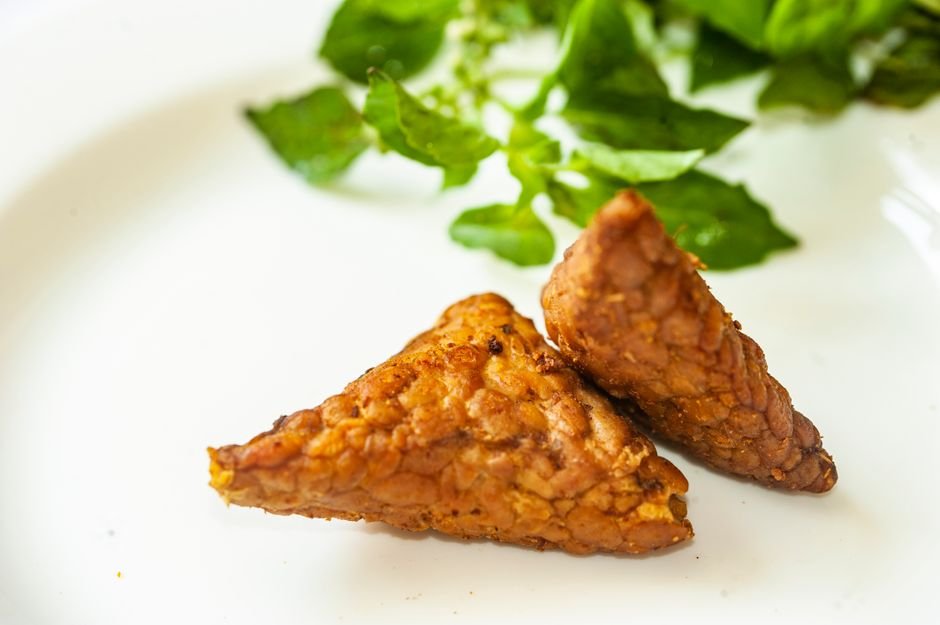
Is Tempeh Good for Weight Loss?
Yes, tempeh is an excellent weight-loss food when prepared mindfully. With 19.3g protein per 100g, it builds and maintains lean muscle mass while suppressing appetite—critical for sustainable weight loss. The low sodium (9mg per 100g), zero cholesterol, and moderate calorie density make it ideal for calorie-deficit diets. Pair it with whole grains and vegetables, avoid oil-heavy cooking, and tempeh becomes a go-to protein that supports both satiety and metabolic health.
Tips to Eat Tempeh Without Gaining Weight:
- Measure your oil: Use just 1–2 teaspoons per serving (5–10g oil = 45–90 calories) instead of free-pouring. A spray bottle or non-stick pan reduces this further.
- Choose high-volume cooking methods: Steam, bake at 400°F for 20 minutes, or pan-sear in a dry or lightly oiled skillet. Skip deep-frying entirely.
- Marinate for flavor without calories: Soy sauce, vinegar, ginger, garlic, and hot sauce add punch with near-zero calories. Marinate for 30 minutes before cooking to deepen taste.
- Pair with high-fiber sides: Combine tempeh with leafy greens, brown rice, or roasted broccoli to maximize fullness and nutrient density per meal.
When you treat tempeh as part of a balanced plate—roughly 1/4 protein, 1/4 whole grain, 1/2 vegetables—portion control becomes nearly automatic, and weight loss follows naturally.
How Portion Size Affects Calories
Tempeh’s calorie density is roughly 195 calories per 100g in its raw form. Doubling your serving size doubles calories; cooking method multiplies the effect. A single portion of tempeh is often 100–150g (one thick slice to a slice-and-a-half), while a full meal might include 150–200g. Understanding your typical serving ensures you log accurately and stay on target.
Example:
- Small portion (75g raw tempeh): ~146 calories, 14g protein
- Large portion (200g raw tempeh, pan-fried with 1.5 tsp oil): ~450 calories, 39g protein
A 200g serving is filling and satisfying; it’s roughly equivalent to 6–7 ounces of grilled chicken. Adjust your portion based on your daily calorie goal and whether tempeh is the sole protein or paired with other sources.
Best Way to Measure Tempeh Accurately
Tempeh blocks vary slightly in density and moisture depending on brand and fermentation, making weight the most reliable measurement. A kitchen scale eliminates guesswork; once you know your serving size in grams, logging becomes consistent and accurate. Eyeballing or using “slices” leads to underestimation of calories and protein, especially when cooking reduces visible volume.
Options:
- Digital kitchen scale (gold standard): Weigh the block before and after cooking to account for any moisture loss. Record the raw weight for accurate USDA-based logging.
- Package nutrition label: Most tempeh packages list calories and macros per 100g or per 3-ounce (85g) serving. Use this as your baseline, then multiply for your actual serving.
- Visual benchmark: One thick slice (about 1 inch) of a standard 8-ounce block ≈ 100g. Once you’ve weighed one slice on a scale, you can visually estimate future portions—but verify with the scale monthly.
Calculate Your Exact Calorie Intake
Tempeh’s calorie count shifts based on oil type, cooking time, and brand—but the variation is manageable once you lock in your serving size and method. For personalized guidance, consider how much tempeh fits your daily calorie allowance, along with the rest of your meals.
Our free AI nutrients calculator lets you log tempeh and hundreds of other foods in seconds, automatically syncing with your daily targets. No manual math, no guessing—just fast, accurate tracking.
- Log tempeh prep methods and portions in real time
- Get instant macronutrient breakdowns (protein, carbs, fat)
- Compare different cooking methods side-by-side to find your lowest-calorie favorite
Try the calculator free today to dial in your tempeh portions and never overcalculate calories again.
Common Mistakes When Eating Tempeh
Even health-conscious eaters make predictable errors with tempeh. Here are the four most common pitfalls to avoid:
❌ Underestimating oil calories: A tablespoon of cooking oil (about 15ml) adds 120 calories—almost 60% of raw tempeh’s calorie count. Many people eyeball oil and double their actual intake without realizing it.
❌ Overcooking and losing track of weight: Tempeh loses roughly 5–10% moisture when cooked, but its calories don’t change. If you start with 150g raw and end with 140g cooked, you still consumed ~290 calories from tempeh—not 190. Always log the raw weight.
❌ Skipping fermented varieties: Non-fermented soy products (tofu, TVP) digest differently and lack tempeh’s intact whole soybean fiber and digestibility boost. Tempeh’s fermentation is nutritionally unique; substituting it changes protein bioavailability and satiety.
❌ Eating it plain without flavor: When tempeh tastes bland, people add calorie-dense sauces or eat less of it overall, missing out on its protein. Investing 30 seconds in marination or spice blends makes the difference between an enjoyable meal and something you avoid.
Avoid these four mistakes, and tempeh becomes one of your most reliable, efficient protein sources.
FAQ
How many calories are in 100g of tempeh?
Raw tempeh contains 195 calories per 100g. If cooked in oil, expect 250–320 calories per 100g depending on how much oil is absorbed during cooking.
Is tempeh fattening?
No. Tempeh is not inherently fattening—it’s 195 calories and 11g fat per 100g, with no cholesterol. It becomes calorie-dense only when deep-fried or cooked with excessive oil. Prepared with minimal fat and paired with vegetables, it supports weight loss and muscle gain equally well.
Does tempeh have complete protein?
Yes, tempeh is one of the few plant proteins containing all nine essential amino acids in meaningful amounts. Its fermentation process makes these amino acids more bioavailable than in non-fermented soy. One 100g serving delivers roughly 19g protein comparable in quality to poultry.
How does tempeh compare to tofu for weight loss?
Tempeh has more calories (195 vs. 76 per 100g raw) but also significantly more protein (19g vs. 8g) and fiber (4.3g vs. 1.2g). For weight loss, tempeh’s higher satiety due to fiber and protein makes it the smarter choice despite the extra calories—you’ll feel fuller longer and eat less overall.
Conclusion
Tempeh delivers exceptional nutritional value: 195 calories, 19.3g complete protein, 4.3g fiber, and zero cholesterol per 100g. It’s a whole-food plant protein that supports muscle building, weight loss, and metabolic health. The fermentation process sets it apart from tofu and other soy products, improving digestibility and nutrient absorption. When cooked with minimal oil, tempeh remains one of the most efficient protein sources available—whether you’re vegan, vegetarian, or simply seeking alternatives to animal products.
To make tempeh work best for your goals, measure portions by weight, choose minimal-oil cooking methods (steaming, baking, or light pan-frying), and flavor generously with spices and marinades. Track your intake consistently—use a reliable nutrients calculator to log servings and stay accountable. With accurate tracking and smart preparation, tempeh becomes a cornerstone of sustainable, protein-rich eating.
