
Raspberries are a nutrient-dense berry that has gained popularity among people pursuing weight loss, diabetes management, and overall wellness. They’re enjoyed fresh in summer, frozen year-round, and incorporated into smoothies, desserts, and breakfast bowls across North America and Europe. Whether you’re tracking calories for a diet plan or simply curious about their nutritional value, understanding what raspberries offer is key.
So, how many calories are in raspberries? The answer depends on portion size and whether they’re fresh or frozen—but the good news is that raspberries are remarkably low in calories while being high in fiber. This article covers everything you need to know: exact calorie counts, complete nutrition facts, how preparation affects calories, and practical tips for including raspberries in a weight loss plan.
Calories in Raspberries (Quick Answer)
A standard serving of raspberries is just 64 calories for a full cup, making them one of the lowest-calorie fruits available.
- 1 cup fresh raspberries (123g): 64 calories
- 1 cup frozen raspberries (150g): 77 calories
- 10 raspberries (12g): 6 calories
Calorie values vary slightly depending on ripeness, growing conditions, and whether berries are measured fresh or frozen. Frozen raspberries may have marginally higher water displacement, so they often weigh slightly more per cup.
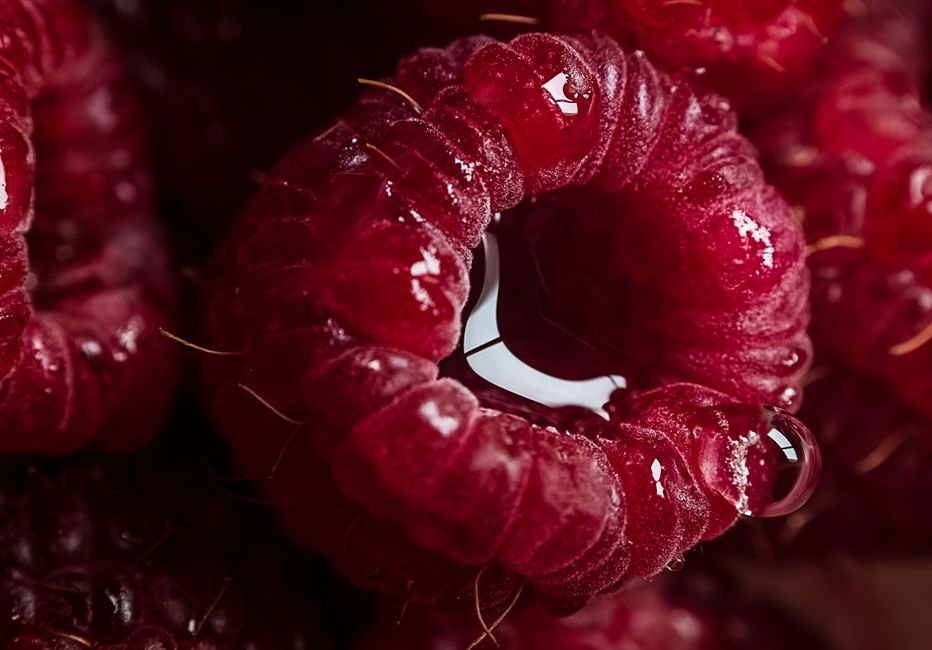
Full Nutrition Facts for 1 Cup (123g) of Fresh Raspberries
One cup of fresh raspberries provides a complete micronutrient profile alongside its impressive fiber content. Here’s the full breakdown:
| Nutrient | Amount | % Daily Value |
|---|---|---|
| Calories | 64 | — |
| Total Fat | 0.8g | 1% |
| Saturated Fat | 0.0g | 0% |
| Cholesterol | 0mg | 0% |
| Sodium | 1mg | <1% |
| Total Carbohydrate | 15g | 5% |
| Dietary Fiber | 8g | 32% |
| Total Sugars | 5.4g | — |
| Protein | 1.5g | 3% |
| Vitamin C | 16.5mg | 27% |
| Manganese | 0.8mg | 35% |
| Copper | 0.1mg | 11% |
*Percent Daily Values are based on a 2,000-calorie diet. Source: USDA FoodData Central.
Key insight: Raspberries are exceptional for their fiber-to-calorie ratio. With 8g of dietary fiber in just 64 calories, they deliver 32% of your daily fiber requirement while keeping you satisfied and supporting digestive health. The natural sugars (5.4g) are modest and balanced by the fiber content, making them an excellent choice for stable blood sugar management.
Etekcity Food Scale
0.1g accuracy — the perfect companion for exact portions.
Fresh Raspberries vs. Frozen Raspberries
Fresh Raspberries
- Peak flavor and texture during June–August harvest season
- Slightly lower calorie density: 64 calories per cup with more delicate structure
- Best consumed within 1–2 days of purchase; more perishable but higher in volatile antioxidants at harvest
Frozen Raspberries
- Frozen immediately after harvest, locking in nutrients and extending availability year-round
- Marginally higher calorie count (77 per cup) due to more compact packing in a standard cup measurement
- Ideal for smoothies, baking, and meal prep; nutritionally equivalent or superior to fresh for many vitamins and minerals
The practical takeaway: Both fresh and frozen raspberries offer nearly identical nutrition. Choose fresh when in season for immediate enjoyment, and stock frozen for winter smoothies, oatmeal, and baking. Freezing doesn’t degrade fiber or mineral content—it actually preserves antioxidants that fresh berries lose over time in storage. Neither is “better”; they’re suited to different use cases.
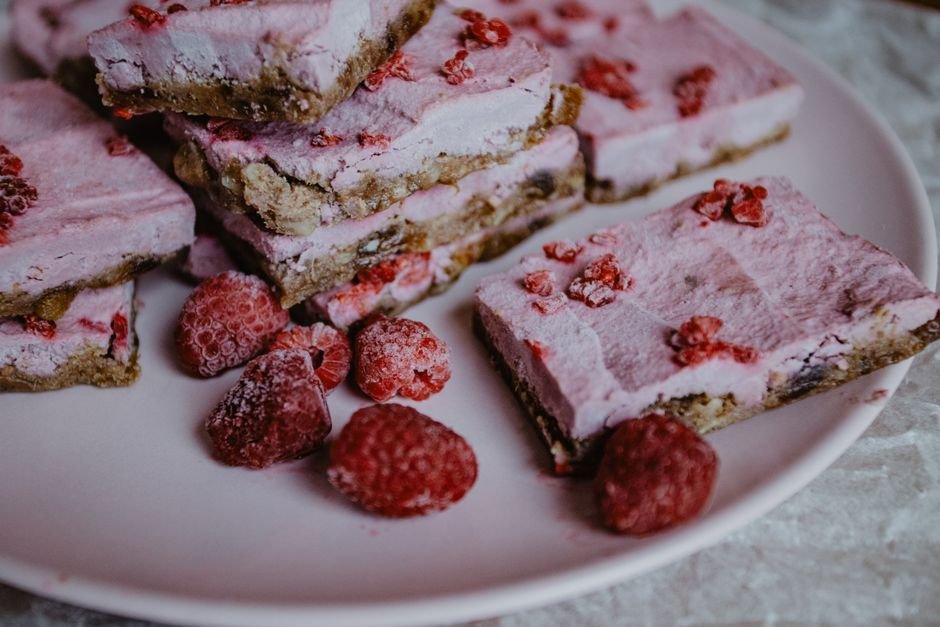
Is Raspberry Good for Weight Loss?
Yes, raspberries are an excellent food for weight loss. At just 64 calories per cup with 8g of fiber, they promote satiety without significant calorie cost. The high fiber content slows digestion and stabilizes blood sugar, reducing cravings and preventing the energy crashes that lead to overeating. Raspberries are also naturally low in fat and sodium, and they contain no cholesterol, making them ideal for calorie-restricted diets.
Tips to Eat Raspberries Without Gaining Weight
- Eat them plain or with plain yogurt: Skip sugary toppings and sweetened whipped cream. If you want creaminess, pair with Greek yogurt or cottage cheese to boost protein and satiety.
- Use them in smoothies strategically: Add raspberries to protein smoothies with unsweetened almond milk and protein powder instead of high-calorie bases like ice cream or sweetened juice.
- Avoid raspberry preserves and syrups: These are calorie-dense (often 50+ calories per tablespoon) and lack the fiber of whole berries. Whole raspberries provide vastly more satiety per calorie.
- Measure if eating with chocolate or added fats: Raspberries are often served with dark chocolate chips or drizzled with honey. These quick calories add up fast; stick to one portion.
The key to weight loss with raspberries is keeping them simple. Their natural sweetness satisfies cravings without processing or additives. A cup of fresh raspberries is a guilt-free snack that fits into any calorie goal.
How Portion Size Affects Calories
Raspberries’ low calorie density makes them forgiving for portion size, but precision matters if you’re tracking strictly. A handful of raspberries versus a full cup is a significant difference—roughly 10-20 calories versus 64. Using a measuring cup or a food scale ensures you know exactly what you’re eating, especially when building daily calorie budgets.
Example:
- Small handful (½ cup, 62g): 32 calories
- Full cup (123g): 64 calories
For most people, 1–2 cups of raspberries fits comfortably into any meal without derailing calorie goals. If you’re unsure of your portion, weigh them on a digital food scale for the most accurate tracking.
Best Way to Measure Raspberries Accurately
Raspberries are delicate and vary in size, so visual estimation isn’t reliable. The most accurate method depends on your tracking preference and whether you have kitchen tools available. A food scale provides the gold standard for precision, while volume measurement works reasonably well if you use a standardized measuring cup.
Options:
- Digital food scale (most accurate): Place a bowl on the scale, tare it to zero, and add raspberries until you reach your target weight (typically 123g for one cup). This method eliminates variation from berry size and packing density.
- Measuring cup (practical and quick): Use a standard 1-cup measure and level the top gently without pressing down. This method assumes loose packing and works well for everyday tracking.
- Visual benchmarks: For quick reference, a closed fist of raspberries approximates ½ cup (32 calories). Two fists ≈ 1 cup (64 calories). This is less precise but useful when scales aren’t available.
Calculate Your Exact Calorie Intake
If you’re eating raspberries as part of a calorie-tracked meal plan, knowing their exact contribution matters—especially when you’re combining them with granola, yogurt, nuts, or other toppings that multiply calories quickly. A single bowl can range from 100 calories (plain raspberries) to 300+ calories (with additions).
Use our free AI nutrients calculator to build out your exact daily intake with raspberries and all your other foods. It accounts for portion size, preparation method, and brand differences in a single place, removing the guesswork from tracking.
- Log raspberries and all meals in one tool—no switching between apps
- Track fiber, sugars, vitamins, and minerals alongside calories
- Adjust portions in real-time and see instant nutritional updates
Try the free nutrients calculator now.
Common Mistakes When Eating Raspberries
Even though raspberries are nutritious, common habits can inadvertently sabotage your goals. Here are the most frequent pitfalls:
❌ Assuming fresh raspberries are automatically lower in sugar than other fruits: While raspberries do have less sugar per cup than many berries (5.4g vs. 13–15g in blueberries), they’re not “sugar-free.” They still contain natural fruit sugars and should be counted in total carbohydrate intake if you’re managing blood glucose.
❌ Not accounting for added toppings: A cup of raspberries is 64 calories, but adding granola (200 cal), honey (60 cal per tbsp), and chocolate chips (50 cal) turns a light snack into 374 calories. Log the toppings, not just the berries.
❌ Overestimating portion size in smoothies: It’s easy to dump a large handful into a blender without measuring. A typical “light” smoothie with 2 cups of raspberries actually contains 128 calories just from the berries, plus protein powder, milk, and other additions.
❌ Throwing away the seeds and fiber-rich cores: Some people leave raspberry seeds on their plate or discard the cores, losing the very fiber that makes raspberries special for satiety and digestion.
The remedy is simple: measure once, log accurately, and enjoy raspberries for their whole-food value without elaborate additions.
FAQ
How many calories are in 100g of raspberries?
100g of raspberries contains approximately 52 calories. A standard cup (123g) has 64 calories, so 100g is slightly less. This serving size is common in international nutrition labeling and useful for meal prep calculations.
Is raspberry fattening?
No, raspberries are not fattening. At 64 calories per cup with 8g of fiber, they’re among the lowest-calorie fruits and actually support weight loss by promoting fullness and stabilizing blood sugar. They become calorie-dense only when combined with high-fat or sugary toppings.
Can I eat raspberries every day?
Yes, eating raspberries daily is safe and beneficial for most people. They’re low in calories, high in fiber, and rich in antioxidants. Aim for 1–2 cups per day as part of a balanced diet. If you have irritable bowel syndrome or are sensitive to FODMAP foods, check with your doctor first, as raspberries contain some fermentable carbohydrates.
Do raspberries have more fiber than other berries?
Yes, raspberries have the highest fiber content of common berries—8g per cup, compared to 3.6g in blueberries and 4g in strawberries. This makes them exceptional for digestive health and satiety, and it’s a major reason they’re preferred for weight loss diets.
Conclusion
Raspberries are a nutritional powerhouse that delivers impressive fiber, vitamin C, and manganese while remaining extremely low in calories—just 64 per cup. Their high fiber-to-calorie ratio makes them ideal for weight loss, stable blood sugar, and digestive health. Whether fresh or frozen, they’re available year-round and easy to incorporate into meals, snacks, and smoothies. The natural sweetness satisfies cravings without processing, and the delicate flavor makes them enjoyable on their own.
To get the most out of raspberries and your broader nutrition plan, measure portions accurately and pair them thoughtfully with other foods. For comprehensive tracking of your entire day’s nutrition, use a reliable nutrients calculator that accounts for portion sizes and toppings, so you’re never guessing about your calorie and nutrient intake.
