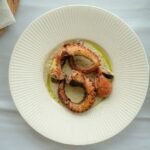
Calories in sea cucumber: 56 calories per 100 g (100 g)
- 13 g protein
- 0 g carbs
- 0.4 g fat
Source: USDA FoodData Central · 56 kcal per 100 g
A 100 g serving of sea cucumber has 56 calories in the USDA record for yane, the Alaska Native preparation. That is a low-calorie food, and about 94% of those calories come from protein.
The record shows 13 g of protein per 100 g, with 0.4 g of fat and no carbohydrate. Riboflavin (B2) stands out at 0.9 mg per 100 g, which is 72% of the Daily Value.

Calories in Sea Cucumber by Serving Size
Calories in sea cucumber for each common serving, with protein, carbs and fat:
| Serving | Calories | Protein | Carbs | Fat |
|---|---|---|---|---|
| 100 g | 56 | 13 g | 0 g | 0.4 g |
| 1 oz | 16 | 3.7 g | 0 g | 0.1 g |
Sea Cucumber Nutrition Facts
Calories in sea cucumber and the full nutrition facts per 100 g (100 g):
| Nutrient | Amount | % Daily Value* |
|---|---|---|
| Calories | 56 kcal | |
| Protein | 13 g | 26% |
| Total Fat | 0.4 g | 1% |
| Total Carbohydrate | 0 g | 0% |
| Calcium | 30 mg | 2% |
| Iron | 0.6 mg | 3% |
| Thiamin (B1) | 0.1 mg | 4% |
| Riboflavin (B2) | 0.9 mg | 72% |
| Niacin (B3) | 3.2 mg | 20% |
Where the calories come from: 94% protein · 6% fat · 0% carbs
*Percent Daily Values are based on a 2,000-calorie diet (FDA reference values). Source: USDA FoodData Central — Sea cucumber, yane (Alaska Native) (FDC ID 167618, SR Legacy, published 4/1/2019). Values for other servings are calculated from the per-100 g data.
Why Is Sea Cucumber So High in Protein for Its Calories?
Protein makes up most of the calories in this food. In the USDA record, 100 g provides 13 g of protein and 56 kcal, and the macro split is 94% protein, 0% carbohydrate and 6% fat.
Because fat and carbohydrate are so low, the calories come almost entirely from protein. A 1 oz (28 g) serving gives 16 kcal and 3.7 g of protein, so the same proportions hold at a smaller portion.
What Vitamins and Minerals Does Sea Cucumber Provide?
The standout micronutrient is riboflavin. The record lists 0.9 mg per 100 g, which is 72% of the Daily Value. Niacin follows at 3.2 mg per 100 g (20% DV).
- Riboflavin (B2): 0.9 mg per 100 g (72% DV)
- Niacin (B3): 3.2 mg per 100 g (20% DV)
- Thiamin (B1): 0.1 mg per 100 g (4% DV)
- Iron: 0.6 mg per 100 g (3% DV)
- Calcium: 30 mg per 100 g (2% DV)
Water makes up 81 g of each 100 g serving, which is part of why the calorie count is so modest.
Does Sea Cucumber Have Carbs or Sugar?
No. The USDA record lists 0 g of total carbohydrate per 100 g, so this food adds no carbs to a meal. The only other macronutrients listed are 0.4 g of fat per 100 g and 13 g of protein.
Those numbers describe the yane preparation in the record. Other sea cucumber products, such as dried or seasoned versions, may have different values, so check the label on the package you buy.
How Sea Cucumber Compares
Per 100 g, next to similar foods in our database:
| Food (100 g) | Calories | Protein | Carbs | Fat |
|---|---|---|---|---|
| Sea Cucumber | 56 | 13 g | 0 g | 0.4 g |
| Pollock Fillet | 56 | 12 g | 0 g | 0.4 g |
| Oysters Eastern | 51 | 5.7 g | 2.7 g | 1.7 g |
| Clam Juice | 48 | 0.6 g | 11 g | 0.2 g |
| Mussels Steamed | 65 | 7.2 g | 3.4 g | 2.2 g |
| Red Snapper | 44 | 0.9 g | 9.9 g | 0.1 g |
Sea Cucumber FAQ
How many calories are in 1 oz of sea cucumber?
A 1 oz (28 g) serving has 16 kcal, with 3.7 g of protein, 0 g of carbohydrate and 0.1 g of fat, according to the USDA record for yane.
How much protein is in sea cucumber?
The USDA record lists 13 g of protein per 100 g serving, which is 26% of the Daily Value. A 1 oz (28 g) serving has 3.7 g.
Is sea cucumber high in fat?
No. The record lists 0.4 g of total fat per 100 g, which is 1% of the Daily Value.
The Bottom Line
Per 100 g, this sea cucumber record gives 56 calories, 13 g of protein, no carbohydrate and 0.4 g of fat, with riboflavin as the standout nutrient at 72% DV. Check the label on any processed product, since the numbers here describe the USDA yane record only.