Calories in sorghum syrup: 957 calories per 1 cup (330 g)
- 0 g protein
- 247 g carbs
- 0 g fat
Source: USDA FoodData Central · 290 kcal per 100 g
One cup (330 g) of sorghum syrup has 957 calories in the USDA record, and nearly all of them come from carbohydrate. The cup holds 247 g of carbohydrate, all of it sugars, so the calories in sorghum syrup are almost entirely sugar calories.
Per 100 g, the record lists 290 calories, 75 g of total sugars and no fat or protein. What stands out more than the sugar is the mineral content: the same 100 g contains 1000 mg of potassium and 150 mg of calcium, while the sodium is only 8 mg.
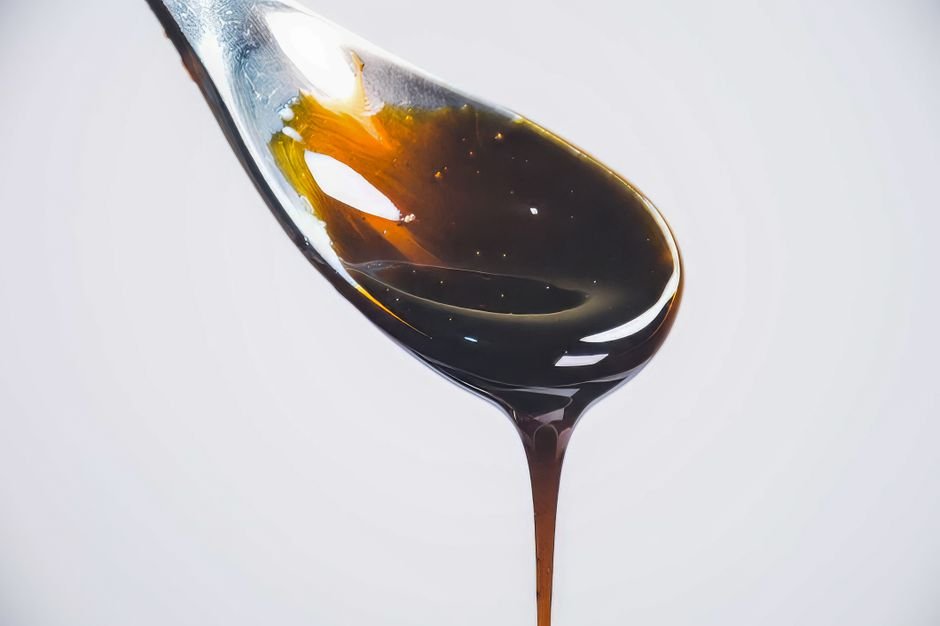
Calories in Sorghum Syrup by Serving Size
Calories in sorghum syrup for each common serving, with protein, carbs and fat:
| Serving | Calories | Protein | Carbs | Fat |
|---|---|---|---|---|
| 1 cup (330 g) | 957 | 0 g | 247 g | 0 g |
| 1 tbsp (21 g) | 61 | 0 g | 16 g | 0 g |
| 100 g | 290 | 0 g | 75 g | 0 g |
| 1 oz | 82 | 0 g | 21 g | 0 g |
Sorghum Syrup Nutrition Facts
Calories in sorghum syrup and the full nutrition facts per 1 cup (330 g):
| Nutrient | Amount | % Daily Value* |
|---|---|---|
| Calories | 957 kcal | |
| Protein | 0 g | 0% |
| Total Fat | 0 g | 0% |
| Saturated Fat | 0 g | 0% |
| Cholesterol | 0 mg | 0% |
| Sodium | 26 mg | 1% |
| Total Carbohydrate | 247 g | 90% |
| Dietary Fiber | 0 g | 0% |
| Total Sugars | 247 g | |
| Calcium | 495 mg | 38% |
| Iron | 13 mg | 70% |
| Potassium | 3300 mg | 70% |
| Magnesium | 330 mg | 79% |
| Zinc | 1.4 mg | 12% |
| Phosphorus | 185 mg | 15% |
| Selenium | 5.6 mcg | 10% |
| Thiamin (B1) | 0.3 mg | 28% |
| Riboflavin (B2) | 0.5 mg | 39% |
| Niacin (B3) | 0.3 mg | 2% |
| Vitamin B6 | 2.2 mg | 130% |
Where the calories come from: 100% carbs · 0% protein · 0% fat
*Percent Daily Values are based on a 2,000-calorie diet (FDA reference values). Source: USDA FoodData Central — Syrups, sorghum (FDC ID 169662, SR Legacy, published 4/1/2019). Values for other servings are calculated from the per-100 g data.
How Sorghum Syrup Compares per Tablespoon and Ounce
Sorghum syrup is dense, so the serving size matters more than with most foods. One tablespoon (21 g) comes to 61 calories and 16 g of carbohydrate. One ounce (28 g) comes to 82 calories and 21 g of carbohydrate.
Because a cup is 330 g, it adds up quickly if you pour by feel. The record’s full cup values are 957 calories and 247 g of carbohydrate, which is more than three times the calories of a 100 g portion.

Does Sorghum Syrup Have Vitamins and Minerals?
Sorghum syrup contains a useful amount of a few minerals, mainly potassium, calcium, magnesium and iron. In one cup (330 g), the record lists 3300 mg of potassium, 495 mg of calcium, 330 mg of magnesium and 13 mg of iron.
It also has some B vitamins. The cup contains 2.2 mg of vitamin B6 and 0.5 mg of riboflavin, along with smaller amounts of thiamin and niacin. Vitamins A, C, D, E, K, B12 and folate are listed as zero.
These amounts come with a lot of sugar. A tablespoon has 16 g of carbohydrate, so the minerals arrive attached to a sweetener, not a fiber-rich food.
Sorghum Syrup vs Other Sweeteners: What the Label Shows
Sorghum syrup is mostly sugar and water. The USDA record lists 23 g of water per 100 g, 75 g of total sugars and 0 g of dietary fiber. The record does not list any protein or fat.
The main difference from many other sweeteners is the mineral content. Sorghum syrup is a source of potassium and calcium in the USDA data, which is not true of refined white sugar. Still, the calories per gram are similar to other sugars, so it should be counted as a sweetener.
- Carbohydrate is 100% of calories in the record.
- Sodium is 8 mg per 100 g, so it is not a salt source.
Who Should Watch Sorghum Syrup Intake
People tracking carbohydrate or sugar should pay the most attention. A single cup contains 247 g of carbohydrate and 247 g of total sugars, so a small pour can add up fast. A tablespoon alone has 16 g of carbohydrate.
Anyone counting potassium may find the numbers helpful, since 100 g provides 1000 mg. People who need to limit potassium for medical reasons should check with their own clinician before using large amounts.
How Sorghum Syrup Compares
Per 100 g, next to similar foods in our database:
| Food (100 g) | Calories | Protein | Carbs | Fat |
|---|---|---|---|---|
| Sorghum Syrup | 290 | 0 g | 75 g | 0 g |
| Blueberry Muffin | 293 | 3.5 g | 61 g | 3.3 g |
| Sourdough Starter | 272 | 11 g | 52 g | 2.4 g |
| Pancakes | 265 | 0 g | 70 g | 0.1 g |
| Rice Bran | 316 | 13 g | 50 g | 21 g |
| Raisin Bran | 324 | 7.6 g | 79 g | 1.6 g |
Sorghum Syrup FAQ
Is sorghum syrup healthier than sugar?
The USDA record shows sorghum syrup as almost entirely sugar, with 75 g of total sugars per 100 g and 0 g of fiber. It contains more potassium, calcium and magnesium than refined sugar, but it is still a sweetener and should be counted as one.
How many calories are in a tablespoon of sorghum syrup?
One tablespoon (21 g) has 61 calories and 16 g of carbohydrate, according to the USDA record. It has no protein, fat or fiber.
Does sorghum syrup have any fat or protein?
No.
The Bottom Line
Sorghum syrup is about 290 calories per 100 g and almost all carbohydrate and sugar, so measure it by the tablespoon. Its potassium and calcium are a small bonus, not a reason to use more.