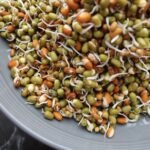
Calories in soybean sprouts: 43 calories per 0.5 cup (35 g)
- 4.6 g protein
- 3.3 g carbs
- 2.3 g fat
Source: USDA FoodData Central · 122 kcal per 100 g
Half a cup (35 g) of raw soybean sprouts has 43 calories in soybean sprouts per serving, with 4.6 g of protein, 3.3 g of carbohydrate and 2.3 g of fat. Per 100 g, the figure is 122 calories, so the calorie count in this food scales quickly with weight.
What stands out is the protein-to-calorie ratio for a vegetable. Per 100 g, protein makes up about 35% of the calories, carbohydrate about 25% and fat about 40%. Soybean sprouts also carry 172 mcg of folate per 100 g, and 60 mcg in the lead serving, which is 15% of the Daily Value.

Calories in Soybean Sprouts by Serving Size
Calories in soybean sprouts for each common serving, with protein, carbs and fat:
| Serving | Calories | Protein | Carbs | Fat |
|---|---|---|---|---|
| 0.5 cup (35 g) | 43 | 4.6 g | 3.3 g | 2.3 g |
| 10 sprouts (10 g) | 12 | 1.3 g | 1 g | 0.7 g |
| 100 g | 122 | 13 g | 9.6 g | 6.7 g |
| 1 oz | 35 | 3.7 g | 2.7 g | 1.9 g |
Soybean Sprouts Nutrition Facts
Calories in soybean sprouts and the full nutrition facts per 0.5 cup (35 g):
| Nutrient | Amount | % Daily Value* |
|---|---|---|
| Calories | 43 kcal | |
| Protein | 4.6 g | 9% |
| Total Fat | 2.3 g | 3% |
| Saturated Fat | 0.3 g | 2% |
| Cholesterol | 0 mg | 0% |
| Sodium | 4.9 mg | 0% |
| Total Carbohydrate | 3.3 g | 1% |
| Dietary Fiber | 0.4 g | 1% |
| Calcium | 23 mg | 2% |
| Iron | 0.7 mg | 4% |
| Potassium | 169 mg | 4% |
| Magnesium | 25 mg | 6% |
| Zinc | 0.4 mg | 4% |
| Phosphorus | 57 mg | 5% |
| Selenium | 0.2 mcg | 0% |
| Vitamin A (RAE) | 0.4 mcg | 0% |
| Vitamin C | 5.4 mg | 6% |
| Thiamin (B1) | 0.1 mg | 10% |
| Riboflavin (B2) | 0 mg | 3% |
| Niacin (B3) | 0.4 mg | 3% |
| Vitamin B6 | 0.1 mg | 4% |
| Folate (DFE) | 60 mcg | 15% |
Where the calories come from: 40% fat · 35% protein · 25% carbs
*Percent Daily Values are based on a 2,000-calorie diet (FDA reference values). Source: USDA FoodData Central — Soybeans, mature seeds, sprouted, raw (FDC ID 169284, SR Legacy, published 4/1/2019). Values for other servings are calculated from the per-100 g data.
Raw vs Cooked Soybean Sprouts: What the Numbers Cover
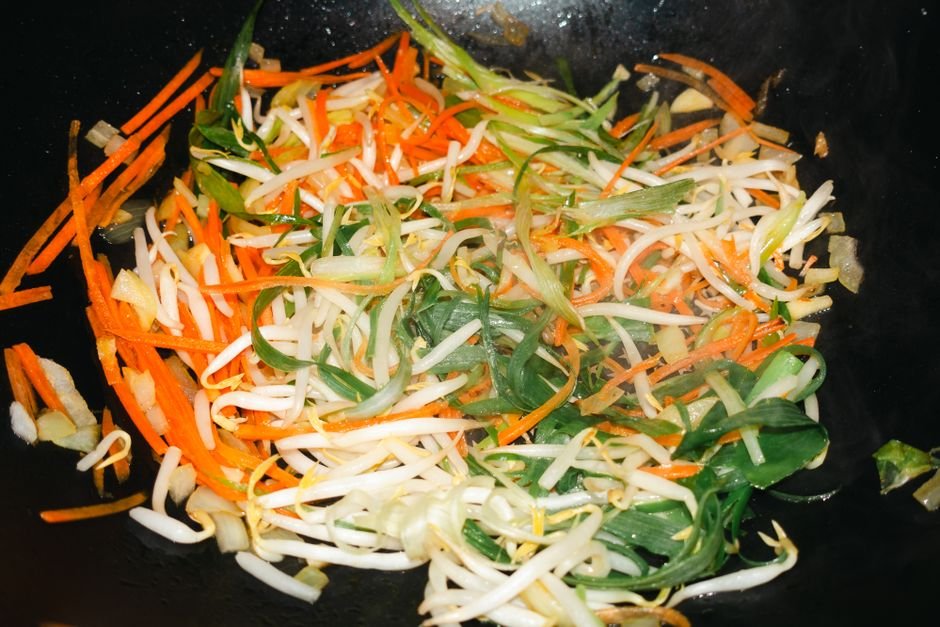
The numbers on this page are for raw soybean sprouts as sold, before any cooking. Stir-frying, boiling or adding them to soup changes the weight and water content, so the same bowl of cooked sprouts will not match these figures by weight. If you cook them, weigh the sprouts after cooking and treat the calorie count as an estimate. The raw values are the most reliable baseline for tracking.
Water makes up most of the weight. Per 100 g there are 69 g of water, which is why the calorie count per gram is modest even though protein is relatively high. Cooking drives off some water, so a cooked portion weighs less for the same amount of raw sprouts, and the calories per gram rise even though the total calories in the batch stay about the same.
Soybean Sprouts Protein, Fat and Carbs Compared
Per 100 g, soybean sprouts provide 13 g of protein, 9.6 g of carbohydrate, 6.7 g of total fat and 1.1 g of dietary fiber. The fat content is higher than most leafy or crunchy sprouts, which is part of why the calorie share from fat is around 40%.
The carbohydrate is low in absolute terms, but it is not zero, so a small serving still adds a few grams to a daily total. Soybean sprouts are not a fiber-heavy food at 1.1 g per 100 g, so they do not replace high-fiber vegetables for that purpose.
What Soybean Sprouts Offer in Minerals and Vitamins
Folate is the standout nutrient here. Per 100 g there are 172 mcg, and the lead serving provides 60 mcg, or 15% of the Daily Value. Potassium is also substantial, with 484 mg per 100 g and 169 mg in half a cup, which is 4% of the Daily Value.
Vitamin C is present at 15 mg per 100 g, and the lead serving gives 5.4 mg (6% DV). Magnesium, phosphorus and zinc appear in meaningful amounts for a vegetable. Vitamin B12 and vitamin D are zero, so this food is not a source of either. Sodium is low, at 4.9 mg in the lead serving.
Who Should Pay Attention to Soybean Sprouts
Soybean sprouts are a low-sodium food on their own, so they fit well into a lower-sodium pattern, but the sodium comes from the sauces and seasonings used to cook them. A stir-fry with soy sauce, oyster sauce or bouillon can add far more sodium than the sprouts do. Check labels on sauces and seasonings if sodium is a concern.
Because the sprouts are a source of protein and fat as well as carbohydrate, they can be counted into a meal plan like any other mixed food. For people tracking calories, the 35 g serving is a useful unit because the calorie count is small and easy to log.
How Soybean Sprouts Compares
Per 100 g, next to similar foods in our database:
| Food (100 g) | Calories | Protein | Carbs | Fat |
|---|---|---|---|---|
| Soybean Sprouts | 122 | 13 g | 9.6 g | 6.7 g |
| Black-Eyed Pea Sprouts | 124 | 8.8 g | 27 g | 0.7 g |
| Lupin Beans | 119 | 16 g | 9.9 g | 2.9 g |
| Great Northern Beans | 118 | 8.3 g | 21 g | 0.5 g |
| Red Kidney Beans | 127 | 8.7 g | 23 g | 0.5 g |
| Lentils Cooked | 116 | 9 g | 20 g | 0.4 g |
Soybean Sprouts FAQ
How many calories are in 10 soybean sprouts?
Ten sprouts weighing 10 g contain 12 calories, with 1.3 g of protein, 1 g of carbohydrate and 0.7 g of fat, according to the USDA raw values.
How much protein is in soybean sprouts?
Per 100 g, raw soybean sprouts provide 13 g of protein. The 0.5 cup (35 g) serving provides 4.6 g.
Are soybean sprouts high in fiber?
Not especially. Per 100 g there is 1.1 g of dietary fiber, and the 0.5 cup serving has 0.4 g.
The Bottom Line
Half a cup of raw soybean sprouts is 43 calories with 4.6 g of protein and a strong folate contribution at 15% of the Daily Value. Weigh them raw for the most accurate tracking, since cooking changes the weight.