Calories in watermelon juice: 9 calories per 1 fl oz (30 g)
- 0.2 g protein
- 2.3 g carbs
- 0 g fat
Source: USDA FoodData Central · 30 kcal per 100 g
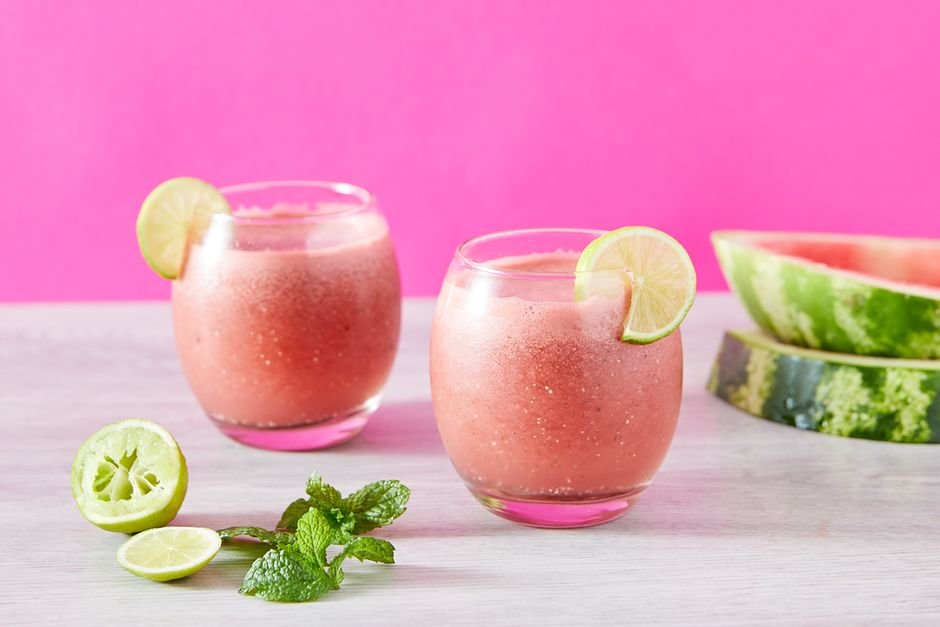
Watermelon juice has about 30 calories per 100 g, and the lead serving of 1 fl oz (30 g, no ice) has 9 calories in watermelon juice. Calories in watermelon juice come almost entirely from carbohydrate, with 2.3 g of carbs per fl oz and only traces of protein and fat.
What stands out is how much water it contains: about 91 g of every 100 g. That is why the calorie count stays low, and it also means the juice is mostly sugar and water with very little fiber left behind.
Calories in Watermelon Juice by Serving Size
Calories in watermelon juice for each common serving, with protein, carbs and fat:
| Serving | Calories | Protein | Carbs | Fat |
|---|---|---|---|---|
| 1 fl oz (no ice) (30 g) | 9 | 0.2 g | 2.3 g | 0 g |
| 1 fl oz (with ice) (23 g) | 7 | 0.1 g | 1.7 g | 0 g |
| 1 fl oz (30 g) | 9 | 0.2 g | 2.3 g | 0 g |
| 100 g | 30 | 0.6 g | 7.6 g | 0.2 g |
Watermelon Juice Nutrition Facts
Calories in watermelon juice and the full nutrition facts per 1 fl oz (no ice) (30 g):
| Nutrient | Amount | % Daily Value* |
|---|---|---|
| Calories | 9 kcal | |
| Protein | 0.2 g | 0% |
| Total Fat | 0 g | 0% |
| Saturated Fat | 0 g | 0% |
| Cholesterol | 0 mg | 0% |
| Sodium | 0.3 mg | 0% |
| Total Carbohydrate | 2.3 g | 1% |
| Dietary Fiber | 0.1 g | 0% |
| Total Sugars | 1.9 g | |
| Calcium | 2.1 mg | 0% |
| Iron | 0.1 mg | 0% |
| Potassium | 34 mg | 1% |
| Magnesium | 3 mg | 1% |
| Zinc | 0 mg | 0% |
| Phosphorus | 3.3 mg | 0% |
| Selenium | 0.1 mcg | 0% |
| Vitamin A (RAE) | 8.4 mcg | 1% |
| Vitamin C | 2.4 mg | 3% |
| Vitamin E | 0 mg | 0% |
| Vitamin K | 0 mcg | 0% |
| Thiamin (B1) | 0 mg | 1% |
| Riboflavin (B2) | 0 mg | 0% |
| Niacin (B3) | 0.1 mg | 0% |
| Vitamin B6 | 0 mg | 1% |
| Folate (DFE) | 0.9 mcg | 0% |
Where the calories come from: 89% carbs · 7% protein · 4% fat
*Percent Daily Values are based on a 2,000-calorie diet (FDA reference values). Source: USDA FoodData Central — Watermelon juice, 100% (FDC ID 2709333, Survey (FNDDS), published 10/31/2024). Values for other servings are calculated from the per-100 g data.
How Many Calories Are in a Glass of Watermelon Juice?
The USDA record for 100% watermelon juice gives 30 calories per 100 g. The lead serving is 1 fl oz (30 g) with no ice, which comes to 9 calories. A 1 fl oz serving with ice weighs 23 g and has 7 calories, so the ice lowers the number only because it displaces juice in the cup.
Because the serving sizes are small, the per-ounce numbers look tiny. Anyone measuring a full glass should use the 100 g figure as the baseline and scale from there, rather than assuming a standard cup size.
Does Watermelon Juice Have a Lot of Sugar?
Yes, relative to its weight. The record lists 6.2 g of total sugars per 100 g, and carbohydrates make up about 89% of the calories. Protein is 7% and fat is 4%, so almost everything in the drink is from carbohydrate.
The fiber is low at 0.4 g per 100 g. Whole watermelon flesh and juice are not the same food, and this page only describes the juice record, so the sugar and fiber here reflect what is left after juicing.
What Vitamins and Minerals Does It Provide?
The record shows vitamin C at 8.1 mg per 100 g, and vitamin A (RAE) at 28 mcg. The lead serving provides 2.4 mg of vitamin C (3% DV) and 8.4 mcg of vitamin A (RAE) (1% DV).
Potassium is the most notable mineral at 112 mg per 100 g, or 34 mg in the 1 fl oz serving (1% DV). Sodium is very low at 1 mg per 100 g.
How Watermelon Juice Compares
Per 100 g, next to similar foods in our database:
| Food (100 g) | Calories | Protein | Carbs | Fat |
|---|---|---|---|---|
| Watermelon Juice | 30 | 0.6 g | 7.6 g | 0.2 g |
| Grapefruit Pink Raw | 30 | 0.6 g | 7.5 g | 0.1 g |
| Persian Lime | 30 | 0.7 g | 11 g | 0.2 g |
| Tomatillo | 32 | 1 g | 5.8 g | 1 g |
| Collard Greens | 32 | 3 g | 5.4 g | 0.6 g |
| Guava Juice | 33 | 0 g | 7.8 g | 0 g |
Watermelon Juice FAQ
Is watermelon juice high in sodium?
No. It contains 1 mg of sodium per 100 g, and 0.3 mg in the 1 fl oz serving, which is 0% DV.
How much does 100 g of watermelon juice weigh in terms of fluid?
The record gives 100 g as the reference, and it contains 91 g of water. Per the lead serving, the 1 fl oz portion weighs 30 g and has 27 g of water.
The Bottom Line
Watermelon juice is low in calories, with 9 calories per 1 fl oz (30 g) serving, but nearly all of those calories come from sugar. Judge portions by the 100 g figure of 30 calories and 6.2 g of total sugars.