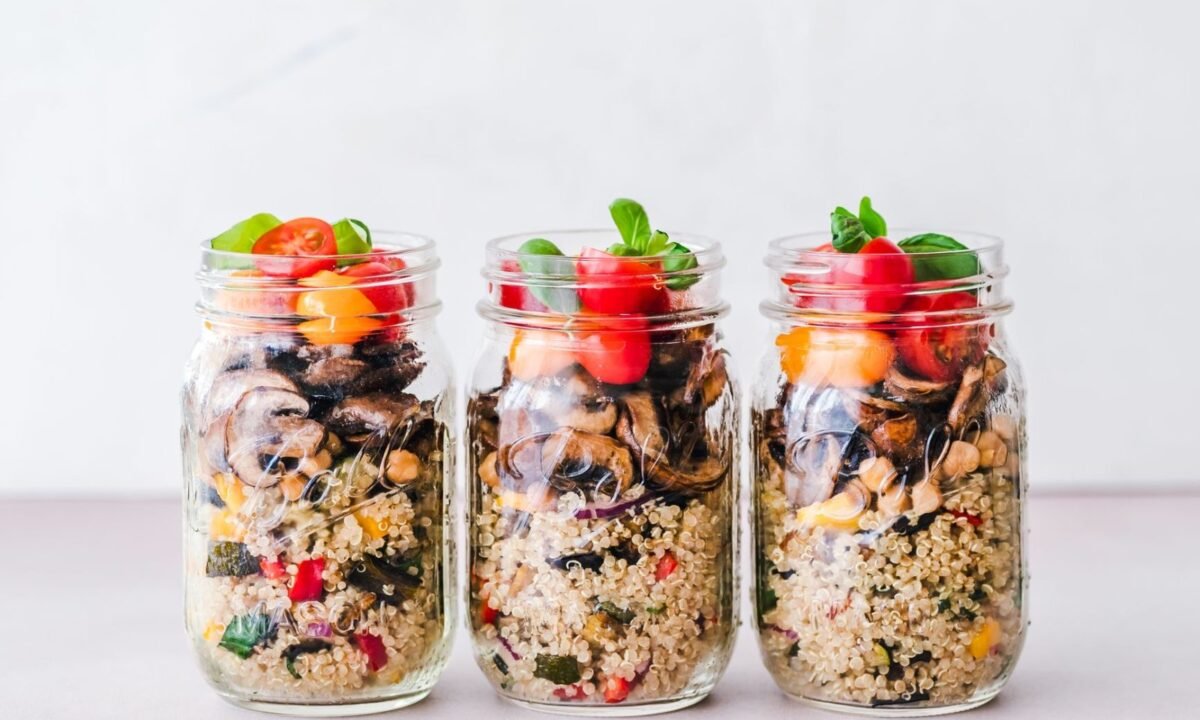
Mason jar salads are one of the easiest ways to pack a week of lunches that still look and taste fresh on day four. The jar does the work: dressing sits at the bottom, sturdy ingredients go in the middle, and delicate greens stay sealed at the top until you shake and eat. Done right, you spend about 45 minutes on a Sunday and have five ready-to-go lunches.
This version uses a lemon-Dijon vinaigrette, a base of cooked quinoa and chickpeas, and grilled chicken for protein, with crunchy vegetables and fresh spinach on top. Each jar lands around 40 grams of protein and a generous serving of vegetables. The method below explains why each layer is where it is, so you can adapt the recipe without ending up with soggy lettuce.
Mason jar salads also keep portions honest. A quart jar holds about four cups, which is a full, satisfying lunch for most adults, and the clear glass makes it easy to see what you are eating at a glance.
Full recipe below
Mason Jar Salads for the Week with Chicken and Chickpeas
Why this mason jar salad method works
The layering order is the whole trick. Liquids go on the bottom, followed by ingredients that resist moisture, then the bulkier and softer items, and leafy greens at the very top. Because the greens never touch the dressing until you shake the jar, they stay crisp for several days. Dense foods like quinoa and chickpeas also act as a barrier between the dressing and the lettuce, which keeps the whole jar from turning limp.
The base of these jars is built for staying power. Cooked quinoa holds its texture in the refrigerator far better than most leafy salads, and chickpeas add fiber and plant protein at a low cost. Chicken breast adds lean protein without much fat, which is why each jar reaches about 40 grams of protein. You can check the numbers for your own ingredients using the USDA FoodData Central database, which lists nutrient values for raw and cooked foods.
Finally, the dressing is made in bulk and portioned out in advance. A single vinaigrette recipe covers all five jars, so you are not juggling five small containers. Shaking the jar before eating coats everything evenly, and the acid in the lemon helps keep the vegetables bright. For more of the same make-ahead approach, see our shredded chicken meal prep guide, which uses similar cook-once logic.
Ingredients you need for mason jar salads
- Quinoa, 1 cup dry (about 6 oz). Rinse it well before cooking to remove the bitter coating. White or tri-color quinoa both work; tri-color looks more colorful in the jar.
- Chicken breast, 1 lb boneless and skinless. Choose even-sized breasts or pound the thick end so they cook evenly. Thighs also work if you prefer a juicier result.
- Canned chickpeas, one 15-oz can, drained and rinsed. Rinsing removes the starchy canning liquid and helps them stay firm.
- English cucumber, 1 medium, diced. Seedless English cucumbers hold their crunch better than standard cucumbers, which release more water.
- Cherry tomatoes, 1 cup halved. Choose firm, bright tomatoes; very soft ones will weep into the dressing.
- Red bell pepper, 1 medium, diced. Bell pepper keeps its crunch for days, making it a reliable layer.
- Shredded carrots, 1 cup. Pre-shredded carrots from the store work well and save time.
- Baby spinach or chopped romaine, 5 cups loosely packed. Spinach stays tender-crisp; romaine is sturdier and gives a satisfying crunch.
- Feta cheese, 1/2 cup crumbled. Buy a block and crumble it yourself; it has more flavor than pre-crumbled versions.
- Lemon-Dijon vinaigrette: 1/3 cup extra-virgin olive oil, 3 tbsp fresh lemon juice, 1 tbsp Dijon mustard, 1 tsp honey, 1 garlic clove minced, salt and black pepper to taste.
- Quart-size wide-mouth mason jars, 5 total. Wide mouths make it easier to layer and to eat from the jar.
How to make mason jar salads step by step
- Cook the quinoa. Combine 1 cup rinsed quinoa with 2 cups water and 1/2 tsp salt in a saucepan. Bring to a boil, reduce to low, cover and simmer for 15 minutes. Remove from heat, keep covered for 5 minutes, then fluff with a fork and spread on a sheet pan to cool completely.
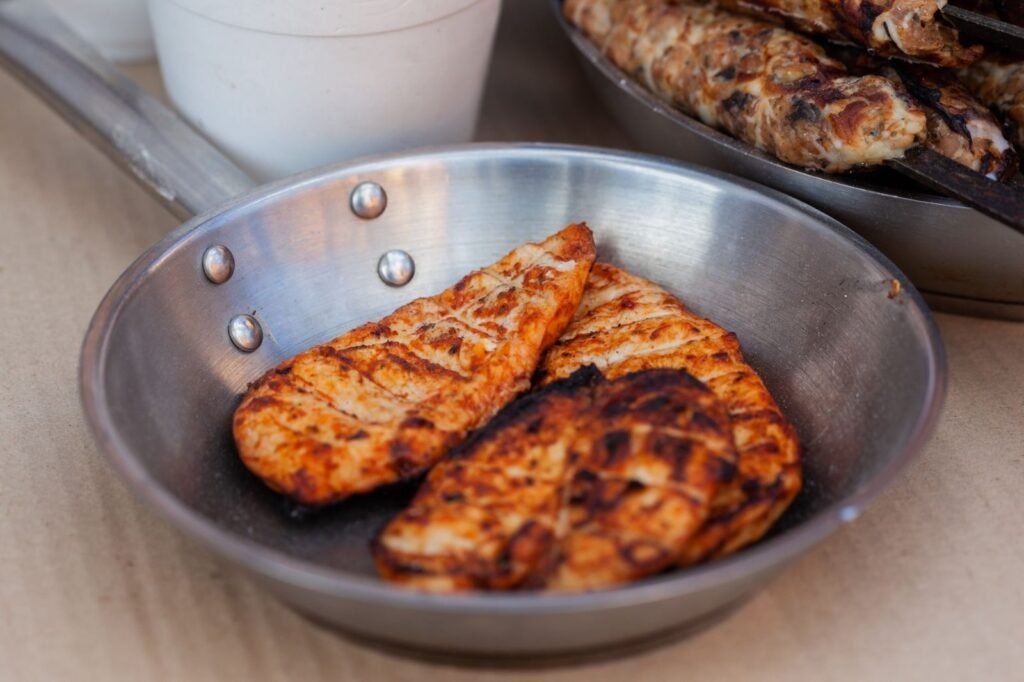
- Cook the chicken. Season the chicken breasts with salt, pepper and 1/2 tsp garlic powder. Cook in a skillet over medium-high heat with 1 tsp olive oil for 5 to 7 minutes per side, until the thickest part reaches 165 °F on an instant-read thermometer. Rest for 5 minutes, then dice into 1/2-inch cubes. The USDA safe minimum internal temperature for poultry is 165 °F.
- Make the vinaigrette. Whisk the olive oil, lemon juice, Dijon, honey, garlic, salt and pepper in a bowl until emulsified. Taste and adjust. Pour 3 tbsp into each of five small containers or divide evenly among the jars.
- Prep the vegetables. Dice the cucumber and bell pepper, halve the tomatoes, and shred the carrots. Chop or tear the greens and dry them thoroughly in a salad spinner. Wet greens will break down faster in the jar.
- Layer the first jar. Start with 1 tbsp dressing at the bottom, then add 1/4 cup chickpeas, 1/4 cup diced chicken, and 1/3 cup cooled quinoa. Pack gently so the layers stay distinct.
- Add the vegetables. Layer cucumber, bell pepper and carrots next, then cherry tomatoes. Sprinkle a tablespoon of feta over the top of the vegetables so it stays dry.
- Finish with greens. Pack spinach or romaine loosely into the top of the jar. Do not press it down; loose packing keeps the leaves crisp and makes shaking easier. Seal with the lid.
- Repeat for the remaining four jars and refrigerate upright. Store them with the lids on and the greens at the top.
Storage and reheating for mason jar salads
Mason jar salads are served cold, so there is no reheating involved. Keep the jars refrigerated at 40 °F or below and eat them within five days. Cooked chicken should be refrigerated within two hours of cooking and used within three to four days, according to the FoodSafety.gov cold food storage chart. Because the chicken is the most perishable ingredient, cook it on Sunday and portion the jars the same day rather than waiting until midweek.
If you want to prep even further ahead, store the cooked quinoa, diced chicken, chickpeas and chopped vegetables in separate airtight containers and assemble jars each morning. This takes about five minutes per jar and keeps the greens at their freshest. Do not freeze assembled jars; the cucumbers and greens will turn watery and limp once thawed.
When you are ready to eat, take the jar out of the fridge, shake it firmly for about 10 seconds to coat everything in dressing, or pour the contents into a bowl. Eat it cold or let it sit at room temperature for about 15 minutes if you prefer a less chilled salad. Mason jar salads can also be eaten straight from the jar with a fork, so there is no need to transfer them.
Common mistakes to avoid with mason jar salads
- Putting greens at the bottom. Dressing on the bottom and leaves on top is the rule. Greens at the bottom will be soggy by lunch.
- Packing the greens tightly. Compressed leaves trap moisture and bruise easily. Pack them loosely at the top.
- Skipping the drying step. Even a little water on the lettuce will dilute the dressing and speed wilting. Spin the greens dry before packing.
- Using soft vegetables in the middle. Ripe avocado, tomato slices or cooked zucchini can break down. Stick to firm vegetables or add soft ingredients at serving time.
- Undercooking the chicken. Chicken should reach 165 °F internally before it is diced and packed. Do not rely on color alone.
- Forgetting to shake before eating. Dressing stays at the bottom until mixed. Give the jar a firm shake and you will get dressing in every bite.
- Using a jar that is too small. A quart jar gives room for the layers and makes shaking practical. Pint jars can be cramped and messy.
Swaps, variations and a lighter mason jar salad option
- Lighter option: replace the chicken with 1 cup of shelled edamame and cut the feta to 1/4 cup. You will still get around 25 grams of protein per jar, with less total fat. Use 2 tbsp of dressing instead of 3 to reduce calories further.
- Greek version: swap the vinaigrette for a mix of plain Greek yogurt, lemon juice and dried oregano, and use cucumber, red onion and Kalamata olives.
- Southwest version: use black beans in place of chickpeas, add corn and diced avocado at serving time, and use a lime-cumin dressing.
- Protein swap: canned tuna or salmon works well. Drain it thoroughly and flake it into the jar after the chickpeas to keep it from making the quinoa wet.
- Grain swap: brown rice or farro can replace quinoa. Farro has a chewier texture and holds up especially well in the fridge.
- Lower-carb option: skip the quinoa and double the chickpeas and chicken, then add extra spinach and shredded cabbage for volume.
What to serve with mason jar salads
Mason jar salads are a complete meal on their own, but a few simple sides round them out. A piece of whole-grain bread or a small pita adds fiber and makes the lunch more filling for big appetites. A piece of fruit such as an apple or orange adds sweetness and helps you meet your daily fruit target, as recommended by USDA MyPlate.
For a weekend lunch or a dinner for two, serve the salad in a bowl and offer a side of roasted chickpeas, a bowl of soup or a light hummus with raw vegetables. Sparkling water with lemon keeps the meal refreshing without added sugar.
You can also pair the jars with other meal prep. Our salmon and quinoa bowls share the same grain base, so you can rotate between them for variety without buying new ingredients.
Frequently asked questions
How long do mason jar salads last in the fridge?
Mason jar salads stay fresh for up to five days when stored upright in the refrigerator at 40 °F or below. Cooked chicken should be used within three to four days, so cook it on the day you prepare the jars.
Why do my mason jar salads get soggy?
Sogginess usually comes from wet greens, dressing on top of the leaves, or greens packed too tightly. Dry the greens thoroughly, keep the dressing at the bottom and pack the leaves loosely at the top.
Can I freeze mason jar salads?
Freezing is not recommended for assembled mason jar salads. Cucumbers, tomatoes and greens lose their texture when thawed. Freeze only the cooked chicken or quinoa separately, then assemble fresh jars.
What is the best jar size for mason jar salads?
A 32-ounce wide-mouth quart jar is best. It holds about four cups of layered ingredients, leaves room for shaking and makes it easy to pack and eat.
Are mason jar salads good for weight loss?
They can be part of a balanced eating pattern because they combine vegetables, protein and fiber. Portion size and the amount of dressing and cheese matter most, so measure the dressing and use the lighter swaps if you are managing calories.
Is it safe to eat mason jar salads cold after cooking the chicken?
Yes, as long as the chicken was cooked to 165 °F, cooled and refrigerated promptly. Keep the jars cold until eating and discard any jar that has been left out for more than two hours.
Mason Jar Salads for the Week with Chicken and Chickpeas
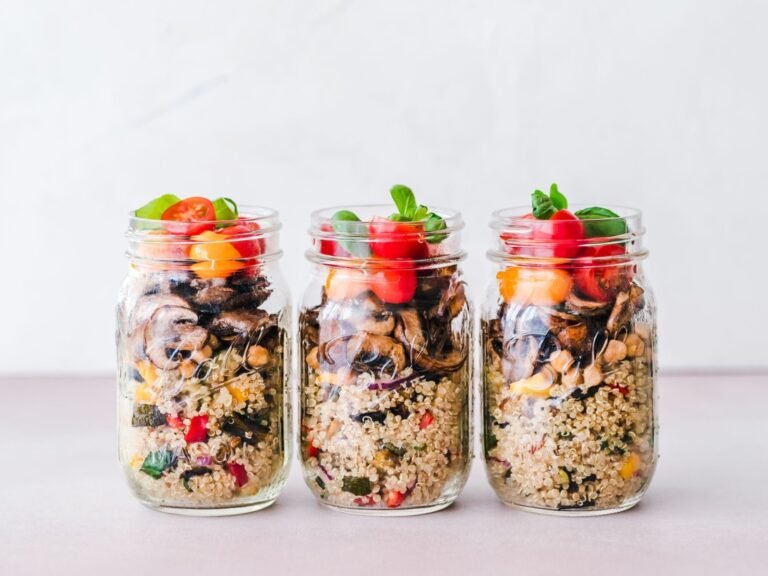
Five layered mason jar salads with lemon-Dijon vinaigrette, quinoa, chickpeas, grilled chicken and crisp vegetables, built to stay fresh all week.
Ingredients
Instructions
- Rinse the quinoa, combine with 2 cups water and 1/2 tsp salt, bring to a boil, then simmer covered on low for 15 minutes. Rest covered 5 minutes, fluff and spread on a sheet pan to cool.
- Season the chicken with salt, pepper and garlic powder. Cook in 1 tsp olive oil over medium-high heat for 5 to 7 minutes per side until it reaches 165 °F internally. Rest 5 minutes, then dice.
- Whisk the olive oil, lemon juice, Dijon, honey, garlic, salt and pepper until emulsified. Divide 3 tbsp into each of five jars.
- Dice the cucumber and bell pepper, halve the tomatoes and shred the carrots. Dry the spinach thoroughly.
- In each jar, layer 1/4 cup chickpeas, 1/4 cup diced chicken and 1/3 cup quinoa over the dressing.
- Add cucumber, bell pepper, carrots and tomatoes, then sprinkle 1 tbsp feta on top of the vegetables.
- Pack spinach loosely at the top of each jar, seal and refrigerate upright for up to five days.
Notes
- Cook the chicken fresh on the day you assemble the jars, and eat within four days.
- For a lighter version, swap the chicken for 1 cup shelled edamame and use 2 tbsp dressing per jar.
- Nutrition values depend on the exact brands and portion sizes used.
Nutrition per serving
- Calories
- 578
- Protein
- 35.5g
- Carbs
- 52.7g
- Fat
- 26.2g
- Saturated fat
- 5g
- Fiber
- 5.4g
- Sugar
- 8.2g
- Sodium
- 711mg
- Cholesterol
- 79mg