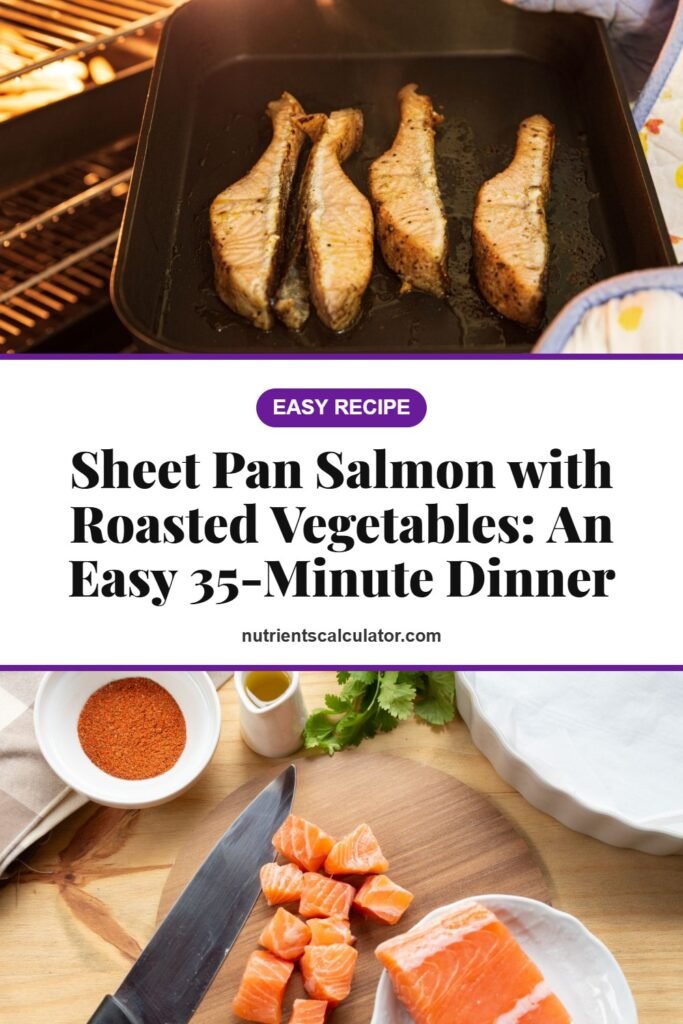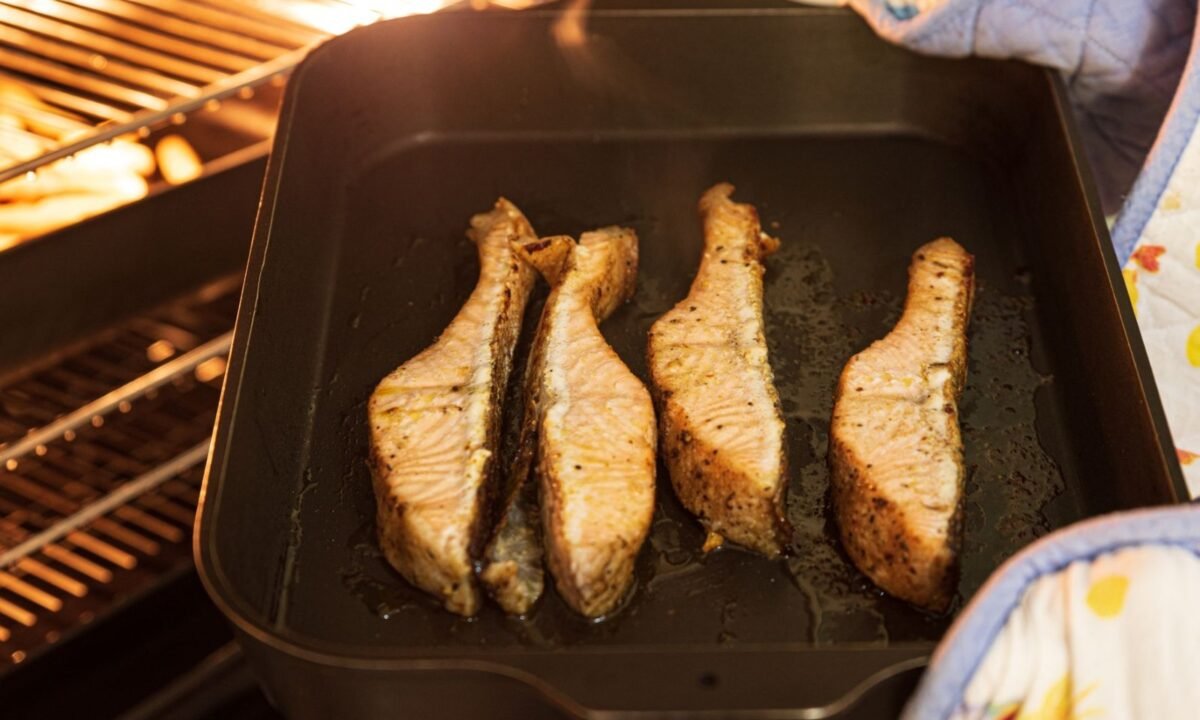
Sheet pan salmon is one of the most practical dinners you can make on a weeknight. Everything cooks on one pan in a single oven session, so there is little to stand over and very little to wash afterward. The salmon and vegetables share the same heat, and the fish finishes just as the vegetables turn golden at the edges.
This version pairs a simple lemon, garlic, and olive oil seasoning with broccoli, bell pepper, red onion, and baby potatoes. The potatoes go in first because they need the most time, and the salmon joins them for the final stretch. You get a balanced plate of protein, fiber, and complex carbohydrates from one pan.
The method below gives you a reliable result with standard kitchen equipment. It serves four, takes about 35 minutes start to finish, and can be adjusted for a lighter plate or a different vegetable mix.
Full recipe below
Sheet Pan Salmon with Roasted Vegetables
Why this recipe works for a sheet pan salmon dinner
Salmon is naturally tender and cooks quickly at high heat, which makes it a good match for a sheet pan. A 425°F oven gives the vegetables enough heat to caramelize while the fillets finish in about 12 to 15 minutes. Starting the potatoes first solves the timing problem that trips up many one-pan meals: dense vegetables need a head start, and delicate fish does not.
The seasoning is intentionally simple. Olive oil helps the vegetables brown and carries the garlic and lemon zest into every bite. Salmon also contributes omega-3 fats, and the USDA FoodData Central database lists farmed Atlantic and wild sockeye salmon as concentrated sources of these fats, so this dinner is a practical way to add them to your week. The salmon poke bowl is another good way to enjoy the fish if you prefer it raw-style and chilled.
Because everything goes on one pan, portions are easy to control. You can see exactly how much oil and salt goes on, and you can divide the pan into four equal sections when serving.
Ingredients you need and how to choose them
- Salmon: four 5 oz skin-on fillets, about 1 inch thick. Look for firm flesh with a bright, moist surface. Wild sockeye is leaner and more intensely flavored; farmed Atlantic is richer and more forgiving if you are new to cooking fish.
- Baby potatoes: 1 lb, halved. Yukon Gold or baby red potatoes hold their shape and crisp well. Cut them to about the same size so they cook evenly.
- Broccoli florets: 4 cups, about 10 oz. Choose tight, dark green heads. Cut florets into similar sizes so they finish together.
- Bell pepper: 1 large red, cut into 1-inch pieces. Red peppers are sweeter and roast to a soft, jammy texture.
- Red onion: 1 small, cut into wedges so the layers hold together.
- Olive oil: 3 tbsp extra-virgin for roasting and brushing the fish.
- Lemon: 1 whole, for zest and 2 tbsp juice. Fresh juice tastes far brighter than bottled.
- Garlic: 3 cloves, minced. Fresh garlic gives the most aroma and is less likely to burn than pre-minced jars.
- Dried oregano or Italian seasoning: 1 tsp. Salt: 1 tsp kosher salt, plus more to taste. Black pepper: 1/2 tsp freshly ground.
- Fresh dill or parsley: 2 tbsp chopped, for finishing.
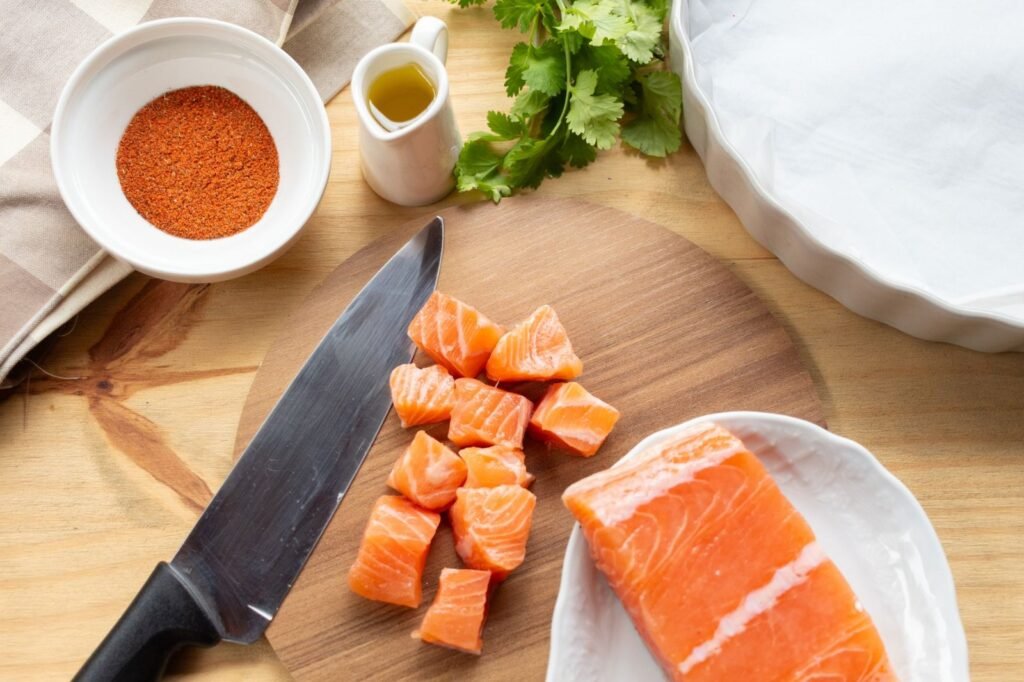
How to make sheet pan salmon step by step
- Heat the oven to 425°F and place a rimmed half-sheet pan (about 18 by 13 inches) inside while it preheats. A hot pan helps the potatoes start browning right away.
- Toss the halved potatoes with 1 1/2 tbsp of the olive oil, 1/2 tsp of the salt, and 1/4 tsp of the pepper. Spread them cut side down on the hot pan and roast for 15 minutes.
- While the potatoes roast, mix the remaining olive oil with the lemon zest, minced garlic, oregano, and 1 tbsp of the lemon juice in a small bowl.
- Remove the pan from the oven. Push the potatoes to the edges and add the broccoli, bell pepper, and red onion. Toss the vegetables in any oil left on the pan, then roast for 10 more minutes until the broccoli is starting to char at the edges.
- Pat the salmon dry with paper towels. Season the flesh with the remaining salt and pepper, then brush with about half of the garlic-lemon oil.
- Move the vegetables to make room, or push them into a single layer around the edges. Place the salmon skin side down on the pan. Spoon the remaining garlic-lemon oil over the fish and vegetables.
- Roast for 12 to 15 minutes, until the thickest part of the salmon flakes easily and reads 145°F on an instant-read thermometer. The FoodSafety.gov safe minimum internal temperature chart lists 145°F for fish and seafood, measured at the thickest part.
- Squeeze the remaining lemon juice over everything, scatter with fresh herbs, and serve straight from the pan or transfer to plates.
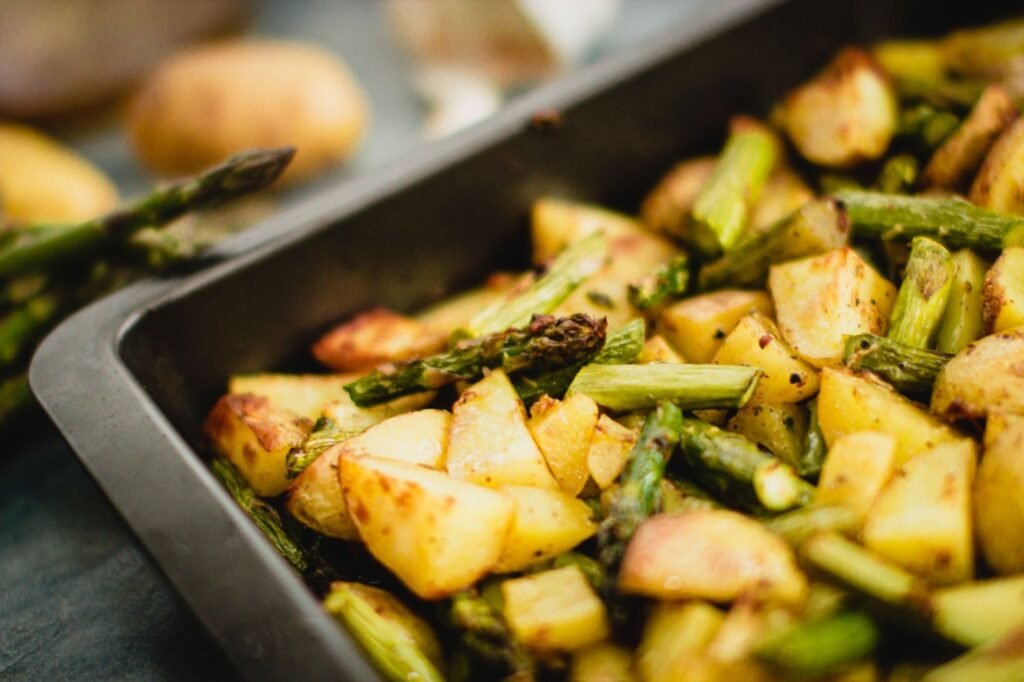
Storage and reheating leftovers safely
Cool leftovers within two hours and refrigerate them in a sealed container. The FoodSafety.gov cold food storage chart advises eating cooked fish and vegetables within three to four days. Keep the salmon and vegetables in separate containers if you can, since the fish softens faster when stored with the potatoes.
To reheat, warm the salmon gently in a 300°F oven for about 10 minutes, or in a covered skillet over low heat, until it reaches 165°F. Microwaving works in a pinch, but use 50 percent power and short bursts so the fish does not dry out. Leftover vegetables can be reheated on a sheet pan at 400°F for 5 to 8 minutes to bring back some crispness.
Salmon does not freeze as well once cooked, and the potatoes become grainy. If you want to prepare ahead, chop the vegetables and mix the garlic-lemon oil up to one day in advance, then cook fresh on the day you plan to eat.
Common mistakes to avoid with sheet pan salmon
- Skipping the head start for potatoes. Adding everything at once leaves the potatoes firm and the broccoli burned. Give the starch 15 minutes before adding the fish and softer vegetables.
- Crowding the pan. Vegetables piled on top of each other steam instead of roasting. Use a large enough pan, or split the recipe across two pans if needed.
- Wet fish. Surface moisture prevents the salmon from developing any color and makes the seasoning slide off. Pat the fillets dry before oiling.
- Overcooking the salmon. Fish keeps cooking after it leaves the oven. Pull it when the center is just opaque, around 145°F, and let it rest for a minute before serving.
- Using a dull or wet pan. A warm, dry pan browns better. Preheat the pan and avoid rinsing vegetables right before roasting unless you dry them thoroughly.
- Forgetting the acid. A squeeze of fresh lemon at the end brightens both the fish and the vegetables and balances the oil.
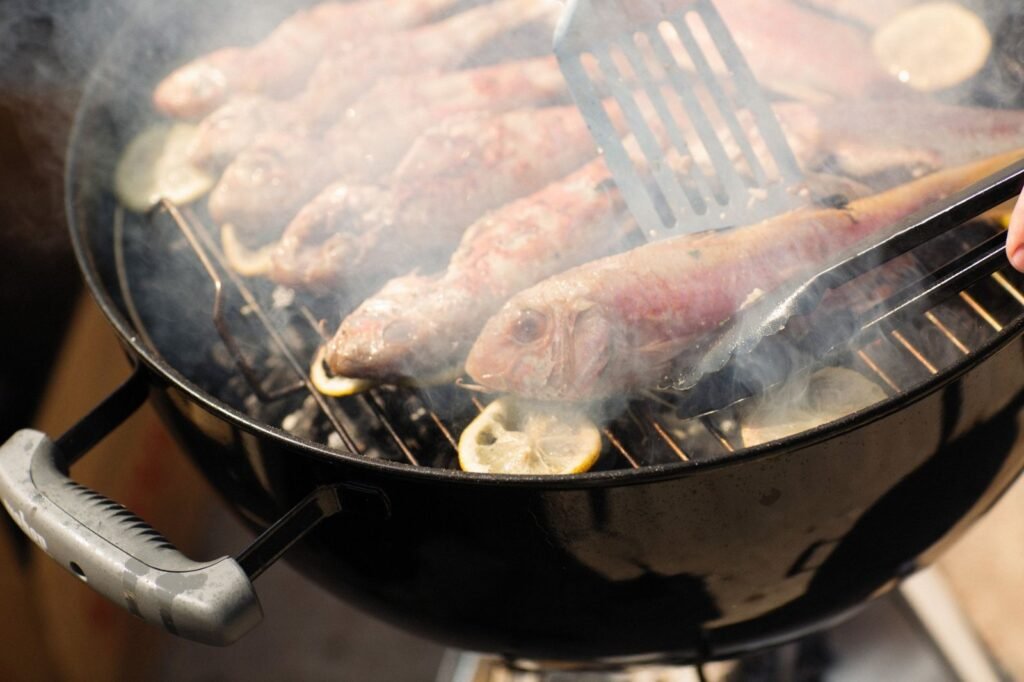
Swaps and variations, including a lighter version
- Lighter option: use 1 1/2 tbsp olive oil total, replace the potatoes with 1 lb of zucchini and cherry tomatoes, and serve with extra greens. This cuts roughly half the fat and carbohydrate from the pan while keeping the same protein.
- Swap the salmon for cod, halibut, or trout. Thinner white fish will cook in 8 to 10 minutes, so start checking early.
- Use sweet potato wedges or carrots in place of baby potatoes. Plan on 20 minutes of roasting before adding the fish.
- Try a different seasoning: smoked paprika with a little cumin, or a spoonful of pesto stirred into the oil in place of the garlic and oregano.
- Add asparagus or green beans in the last 10 minutes of roasting for a spring version.
- For a grain-based side dish instead of potatoes, see the lentil bowl with roasted vegetables for another hearty, one-pot approach.
What to serve with sheet pan salmon
This dinner is complete on its own, but a simple side can stretch it further. A bowl of quinoa, brown rice, or a small green salad with vinegar dressing pairs well with the lemon and herbs. If you want a grain option that is quick to prepare, a Mediterranean quinoa salad adds bright flavor and extra texture.
For a sauce, plain Greek yogurt mixed with lemon zest, dill, and a pinch of salt makes a cool contrast to the warm fish. The Dietary Guidelines for Americans recommend eating seafood at least twice a week, and pairing it with vegetables and whole grains fits that pattern well.
Frequently asked questions
What internal temperature should sheet pan salmon reach?
Cook salmon until the thickest part reaches 145°F on an instant-read thermometer. The flesh should flake easily and look opaque throughout. Remove it from the oven at that point, since it will keep cooking slightly as it rests.
Can I make sheet pan salmon with frozen fillets?
Yes, but thaw them first for the most even cooking. Place the fillets in the refrigerator overnight, or submerge them sealed in cold water for about 30 minutes. Pat them very dry before seasoning. Frozen fillets roasted without thawing tend to cook unevenly and release extra liquid.
How do I keep the salmon from sticking to the pan?
Use a rimmed sheet pan lined with parchment or foil, or brush the pan with oil before adding the fish. Placing the salmon skin side down on an oiled surface also helps, because the skin releases more easily once it crisps.
Is sheet pan salmon a healthy dinner?
It can be a balanced meal. Salmon provides high-quality protein and omega-3 fats, and the vegetables add fiber and vitamins. To check specific numbers, look up each ingredient in the FDA guide to the Nutrition Facts label for packaged foods, or use USDA data for fresh produce and fish.
Can I prepare sheet pan salmon ahead of time?
You can chop the vegetables and mix the seasoning up to a day ahead and store them refrigerated. Cook the salmon fresh for the best texture. Leftover cooked salmon keeps for three to four days in the refrigerator.
Sheet Pan Salmon with Roasted Vegetables
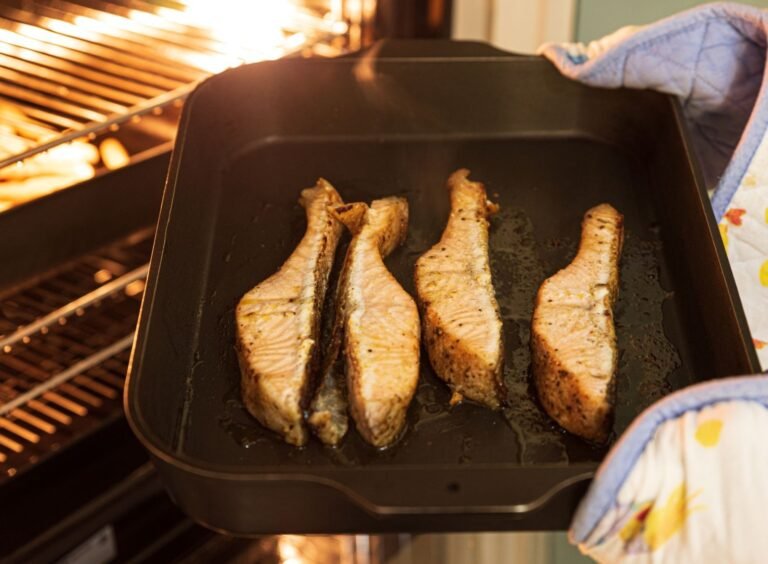
Salmon fillets and baby potatoes, broccoli, bell pepper, and red onion roast together on one pan with garlic and lemon.
Ingredients
Instructions
- Heat the oven to 425°F and place a rimmed half-sheet pan inside while it preheats.
- Toss the halved potatoes with 1 1/2 tbsp olive oil, 1/2 tsp salt, and 1/4 tsp pepper. Spread them cut side down on the hot pan and roast for 15 minutes.
- Mix the remaining olive oil with lemon zest, garlic, oregano, and 1 tbsp lemon juice.
- Push the potatoes aside, add the broccoli, bell pepper, and red onion, toss in the pan oil, and roast 10 more minutes.
- Pat the salmon dry, season with the remaining salt and pepper, and brush with half the garlic-lemon oil.
- Arrange the salmon skin side down among the vegetables and spoon the remaining oil over everything.
- Roast 12 to 15 minutes until the thickest part reaches 145°F and flakes easily.
- Squeeze the remaining lemon juice over the dish, scatter with herbs, and serve.
Notes
- Thaw frozen salmon fully before seasoning for even cooking.
- For a lighter version, use 1 1/2 tbsp oil and swap potatoes for zucchini and cherry tomatoes.
Nutrition per serving
- Calories
- 495
- Protein
- 36.9g
- Carbs
- 25.2g
- Fat
- 28.1g
- Saturated fat
- 4.9g
- Fiber
- 6g
- Sugar
- 2.3g
- Sodium
- 608mg
- Cholesterol
- 89mg