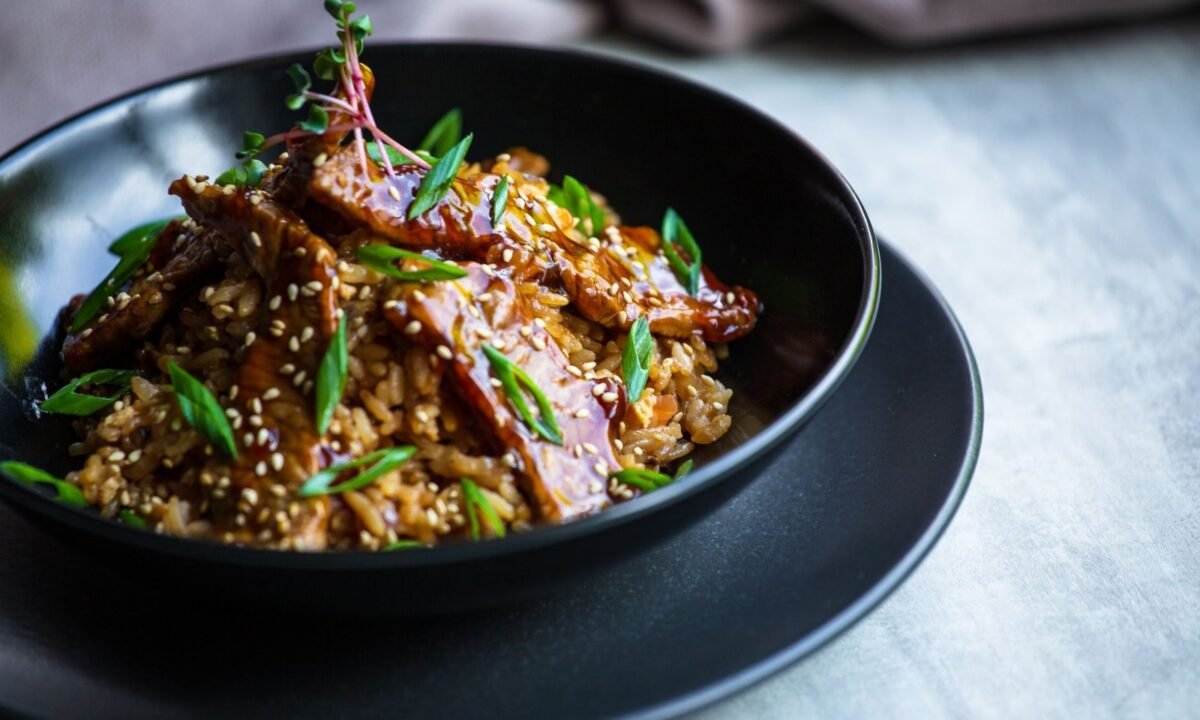
Teriyaki salmon is one of the most reliable weeknight dinners you can make from scratch. The sweet-salty glaze caramelizes on the fish while the centre stays tender, and it pairs naturally with rice and vegetables in a single bowl. This version uses a simple sauce you can mix in a small saucepan in about five minutes, so there is no bottled teriyaki required.
This bowl is built for a home kitchen. You will cook the rice and vegetables while the salmon sears, and the whole dinner comes together in about 30 minutes. Each serving provides roughly 35 grams of protein, which makes it a satisfying meal without much extra effort.
The recipe below serves four and uses salmon fillets, short-grain white rice, cucumber, edamame, and a quick pickled carrot topping. You can adjust the sweetness and heat to suit your taste, and a lighter version is included in the variations section.
Full recipe below
Teriyaki Salmon Rice Bowl
Why this teriyaki salmon bowl works
Salmon is a natural match for teriyaki. Its rich, oily flesh holds up to a glaze without drying out, and the sugars in the sauce caramelize quickly in a hot pan. Because the fillets cook in about 8 to 10 minutes, the sauce has time to thicken and coat the fish rather than burn.
The bowl format keeps the meal balanced. A serving of rice gives you carbohydrates for energy, the fish provides high-quality protein and omega-3 fats, and the vegetables add fiber and crunch. The USDA MyPlate guidance encourages filling half your plate with vegetables and fruit, and this bowl makes that easy by adding cucumber, edamame, and carrot alongside the rice.
The sauce is made from ingredients most home cooks already have. Low-sodium soy sauce, mirin, honey, garlic, and fresh ginger produce a glaze with real depth. Cornstarch thickens it into a glossy coating that clings to the salmon and the rice.
Ingredients for teriyaki salmon, and how to choose them
- Salmon fillets, 4 (about 5 oz each): Choose skin-on fillets about 1 inch thick. Farmed Atlantic salmon is widely available and has a mild flavor and high fat content, which keeps it moist. Wild sockeye is leaner and firmer, so watch it closely. Look for flesh that is moist, bright, and free of gaps.
- Short-grain white rice, 1 1/2 cups dry: Sushi or Calrose rice becomes sticky and holds together in a bowl. Rinse it well until the water runs mostly clear before cooking.
- Low-sodium soy sauce, 1/3 cup: Regular soy sauce works, but it will make the glaze much saltier. Low-sodium versions let you control the seasoning.
- Mirin, 3 tbsp: This sweet rice wine gives teriyaki its characteristic gloss. If you cannot find it, use an extra tablespoon of honey plus a splash of rice vinegar.
- Honey, 2 tbsp: Brown sugar also works. Honey adds a rounder sweetness and helps the glaze caramelize.
- Fresh ginger and garlic: A teaspoon of grated ginger and two cloves of minced garlic are the flavor base. Fresh is noticeably better than powdered here.
- Cucumber, 1 medium: English cucumbers have thin skins and few seeds, so they need no peeling.
- Shelled edamame, 1 cup thawed: Frozen edamame is convenient and keeps its bright color.
- Carrot, 1 medium: Shred or cut into thin matchsticks for crunch.
- Sesame seeds and sliced green onions: These finish the bowl and add texture.
- Neutral oil, 1 tbsp: Avocado or canola oil works well for searing the fish.
- Cornstarch, 1 tsp mixed with 1 tbsp cold water: This thickens the sauce quickly.
How to make teriyaki salmon step by step
- Rinse the rice in a fine-mesh strainer until the water runs mostly clear. Combine it with 2 cups of water in a saucepan, bring to a boil, cover, reduce to low, and cook for 15 minutes. Remove from the heat and let it rest, covered, for 10 minutes before fluffing.
- While the rice cooks, whisk together the soy sauce, mirin, honey, grated ginger, and minced garlic in a small saucepan. Bring it to a gentle simmer over medium heat for 2 minutes, then stir in the cornstarch slurry and cook 1 minute more until the sauce is glossy and lightly thickened. Set aside about 3 tablespoons for brushing and keep the rest warm.
- Pat the salmon fillets dry with paper towels and season the flesh with a pinch of salt and pepper. Dry skin and flesh sear better and stick less.
- Heat the oil in a large nonstick or stainless skillet over medium-high heat until it shimmers. Place the fillets skin-side down and press gently with a spatula for 10 seconds so the skin stays flat. Cook for 4 to 5 minutes until the skin is crisp and the fish releases easily.
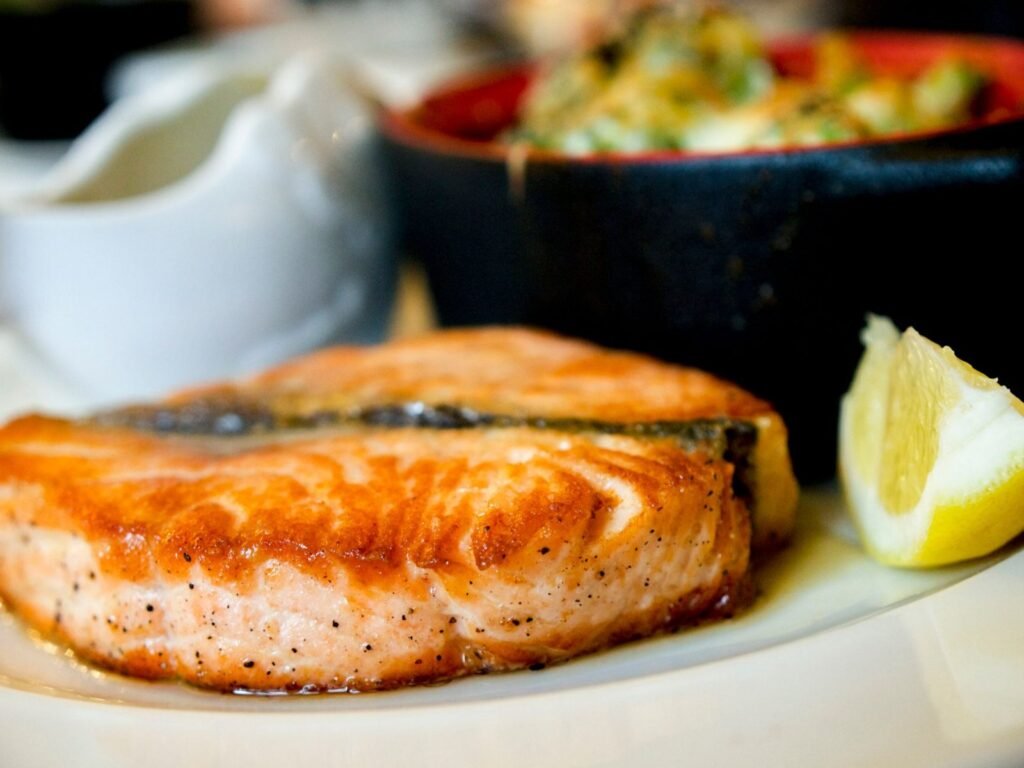
- Flip the fillets, reduce the heat to medium, and brush the flesh with a thin layer of the sauce. Cook for 3 to 4 minutes more, brushing once more, until the thickest part reads 145 F on an instant-read thermometer. FoodSafety.gov lists 145 F as the safe minimum internal temperature for fish and other seafood. The salmon should flake easily but still look slightly translucent at the very center if you prefer it moist.
- While the salmon finishes, slice the cucumber into thin half-moons and shred the carrot. Toss them with a pinch of salt and a teaspoon of rice vinegar if you have it.
- Build the bowls with a scoop of rice in the bottom, then the cucumber, carrot, and edamame. Lay a salmon fillet on top, spoon over the remaining sauce, and finish with sesame seeds and green onions.
Storage and reheating leftover teriyaki salmon
Store leftovers in airtight containers in the refrigerator. Keep the salmon, rice, and vegetables separate if possible so the rice does not become soggy. FoodSafety.gov advises refrigerating cooked food within two hours and eating leftover cooked fish within three to four days.
To reheat the salmon, warm it gently in a skillet over low heat with a spoonful of water, covered, for two to three minutes until just warmed through. Microwaving works but can make the fish rubbery, so use short bursts at medium power. Reheat rice until it is steaming hot throughout.
Cold leftovers also work well. The salmon is good flaked over a salad the next day, and the sauce can be stored separately for up to five days in the refrigerator.
Common mistakes to avoid with teriyaki salmon
- Adding the sauce too early: Honey and mirin burn quickly over high heat. Brush the glaze on during the final few minutes of cooking, not at the start.
- Crowding the pan: Too many fillets lower the temperature and steam the fish instead of searing it. Cook in two batches if your skillet is small.
- Skipping the dry step: Wet salmon steams in the pan and sticks. Pat it dry before seasoning.
- Overcooking: Salmon continues cooking after it leaves the heat. Pull it when the center is just opaque, and do not rely on color alone.
- Using unrinsed rice: Excess surface starch makes the rice gummy and clumpy. A quick rinse makes a big difference.
- Making the sauce too thick: Add the cornstarch slurry gradually. The sauce thickens further as it cools, so it should look slightly looser than you want it to be in the pan.
Swaps and variations for a lighter teriyaki salmon bowl
- Lighter option: Swap the white rice for half a cup of dry brown rice or cauliflower rice, and reduce the honey to 1 tbsp. Use USDA FoodData Central to compare the calorie and sugar counts of your specific ingredients.
- Lower sodium: Use reduced-sodium soy sauce and skip any added salt on the fish. Check the label on your sauce and the FDA guide to the Nutrition Facts label can help you compare sodium per serving.
- Different fish: Use skinless trout, arctic char, or sea bass fillets. Cooking times will be similar, but thinner fish will need a shorter sear.
- Plant-based version: Press and cube extra-firm tofu, pat it dry, and pan-fry until golden before glazing it with the same sauce.
- More vegetables: Add steamed broccoli, sliced bell pepper, or quick-pickled red onion for extra color and fiber.
What to serve with teriyaki salmon bowls
A teriyaki salmon bowl is complete on its own, but a few simple sides can round it out. Miso soup or a small bowl of clear broth makes a light start. Quick cucumber salad dressed with rice vinegar and sesame oil adds a cool contrast to the warm glaze.
For a fuller spread, serve the bowls with a platter of steamed edamame or lightly blanched green beans. Extra sliced green onions, pickled ginger, and a drizzle of chili oil let each person adjust the flavor.
Drinks that pair well include unsweetened iced green tea or sparkling water with a squeeze of lime. You can also browse other balanced dinners on the site, such as Sheet Pan Salmon with Roasted Vegetables for another easy salmon option.
Frequently asked questions
Can I make teriyaki salmon without mirin?
Yes. Replace each tablespoon of mirin with one teaspoon of honey plus one teaspoon of rice vinegar. The flavor will be slightly sharper, but the glaze will still work well.
What is the safe internal temperature for cooked salmon?
Salmon is safe at 145 F as measured with an instant-read thermometer in the thickest part. Many cooks prefer to pull it slightly earlier for a moister center, but use the 145 F guideline when serving anyone who is pregnant, elderly, or immunocompromised.
Can I use frozen salmon for teriyaki salmon?
Yes. Thaw frozen fillets overnight in the refrigerator or under cold running water in a sealed bag. Pat them very dry before cooking, since extra moisture from thawing can prevent a good sear.
How long does teriyaki salmon last in the fridge?
Cooked salmon stored in an airtight container keeps for three to four days in the refrigerator. Keep the rice and sauce separate when possible for the best texture.
Is teriyaki salmon a healthy dinner?
It can be. Salmon provides protein and omega-3 fats, and the vegetables add fiber. The sauce contains sugar and sodium, so use low-sodium soy sauce and less honey if you want a lighter version.
Can I make the teriyaki sauce ahead of time?
Yes. The sauce keeps in a sealed jar in the refrigerator for up to five days. Reheat it gently before brushing it on the salmon, and whisk it well if the cornstarch has settled.
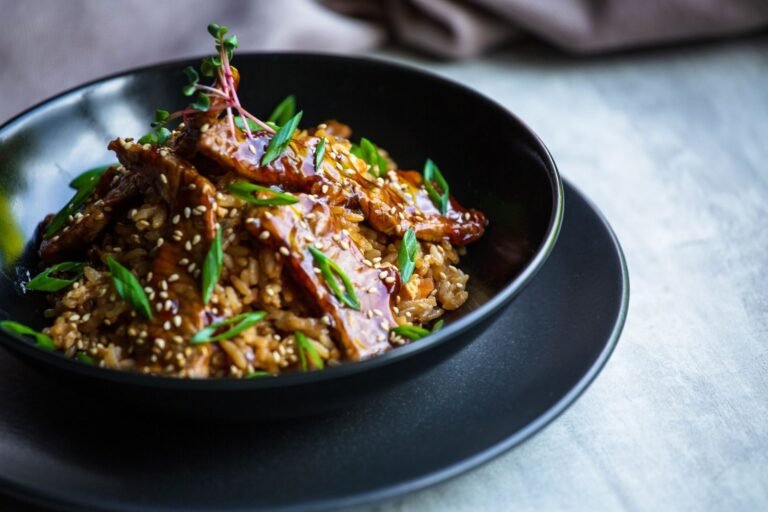
Teriyaki Salmon Rice Bowl
A quick teriyaki salmon rice bowl with a glossy homemade sauce, steamed rice, edamame, cucumber, and carrot.
Ingredients
For the rice
For the salmon
For the teriyaki sauce
For the bowls
Instructions
- Rinse the rice until the water runs mostly clear. Simmer with 2 cups water, covered, on low for 15 minutes, then rest 10 minutes off the heat.
- Whisk soy sauce, mirin, honey, ginger, and garlic in a small saucepan. Simmer 2 minutes, stir in the cornstarch slurry, and cook 1 minute until glossy. Set aside 3 tbsp for brushing.
- Pat the salmon dry and season the flesh with salt and pepper.
- Heat oil in a skillet over medium-high heat. Sear the salmon skin-side down for 4 to 5 minutes until crisp.
- Flip, reduce heat to medium, brush with sauce, and cook 3 to 4 minutes more until the thickest part reaches 145 F.
- Slice the cucumber and shred the carrot while the salmon cooks.
- Assemble bowls with rice, cucumber, carrot, and edamame. Top with salmon, spoon over sauce, and finish with sesame seeds and green onions.
Notes
- Store salmon, rice, and vegetables separately for best texture.
- Use brown rice or cauliflower rice and 1 tbsp honey for a lighter bowl.
Nutrition per serving
- Calories
- 737
- Protein
- 41.7g
- Carbs
- 79.5g
- Fat
- 26.2g
- Saturated fat
- 5.2g
- Fiber
- 3.7g
- Sugar
- 12.4g
- Sodium
- 899mg
- Cholesterol
- 78mg