
Apple juice is one of the most consumed beverages worldwide, especially popular among children and people managing their weight. Whether you’re starting your day with a glass, making smoothies, or adding it to recipes, understanding its nutritional content matters if you’re tracking calories or monitoring sugar intake.
But how many calories are in apple juice? This guide breaks down the exact nutrition facts for different serving sizes and types, plus practical strategies for including apple juice in a balanced diet.
Calories in Apple Juice (Quick Answer)
A standard 8 fl oz (240 ml) glass of unsweetened apple juice contains around 114 calories, mostly from natural sugars.
- 8 fl oz (240 ml) unsweetened apple juice: 114 calories
- 12 fl oz (355 ml) unsweetened apple juice: 171 calories
- 1 cup (240 ml) apple juice concentrate: 458 calories (contains added water when diluted)
Calorie counts vary slightly depending on whether the juice is freshly pressed, bottled, concentrate-based, or contains added sugar. Brands and production methods can also affect the final calorie content.
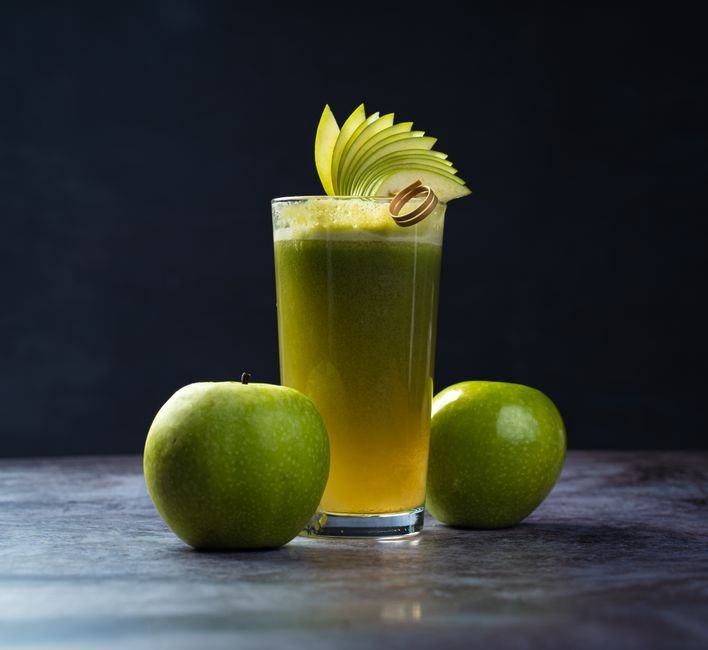
Full Nutrition Facts for 8 fl oz of Unsweetened Apple Juice
Below is a complete breakdown of the nutrients in a standard 8 fl oz (240 ml) serving of unsweetened apple juice, based on USDA data:
| Nutrient | Amount | % Daily Value |
|---|---|---|
| Calories | 114 | — |
| Total Fat | 0.3 g | <1% |
| Saturated Fat | 0 g | 0% |
| Cholesterol | 0 mg | 0% |
| Sodium | 7 mg | <1% |
| Total Carbohydrate | 28 g | 9% |
| Dietary Fiber | 0.2 g | 1% |
| Total Sugars | 24 g | — |
| Protein | 0.1 g | <1% |
| Vitamin C | 2.9 mg | 5% |
| Potassium | 195 mg | 4% |
| Iron | 0.4 mg | 2% |
*Percent Daily Values are based on a 2,000-calorie diet. Source: USDA FoodData Central.
Key insight: Apple juice is almost entirely carbohydrate and sugar — it contains virtually no fat, fiber, or protein. The 24g of natural sugar per 8 fl oz serving is comparable to a soda, making it important to consume apple juice in moderation, especially if you’re managing blood sugar or weight. The minimal dietary fiber (0.2g) is a stark difference from whole apples, which retain their peel and deliver around 3.7g of fiber per medium apple.
Etekcity Food Scale
0.1g accuracy — the perfect companion for exact portions.
Fresh-Pressed vs. Bottled Apple Juice
Fresh-Pressed Apple Juice
- No added preservatives or pasteurization — contains natural enzymes and compounds that may degrade over time
- Slightly higher vitamin C content immediately after pressing, but degrades within days if not refrigerated
- Same calorie content (around 114 calories per 8 fl oz) but varies based on apple variety and ripeness
Bottled Apple Juice
- Pasteurized to extend shelf life; heat processing reduces some heat-sensitive nutrients like vitamin C
- Often contains added sugar unless labeled “unsweetened” — check labels carefully, as added varieties can reach 140+ calories per 8 fl oz
- Consistent calorie and nutrition profile across batches due to standardized processing and blending
Practical takeaway: Both fresh and bottled unsweetened apple juice have nearly identical calorie counts. Fresh-pressed juice is better immediately after pressing if nutrient density matters to you, but bottled juice is more convenient and stable. The real difference emerges when sugar is added — always check the ingredient list to avoid added-sugar versions that push calories higher.
Is Apple Juice Good for Weight Loss?
Apple juice is not ideal for weight loss. While it’s low in fat and has no cholesterol, a glass delivers 114 calories and 24g of sugar with virtually no fiber to slow sugar absorption. This means you’ll experience a rapid blood sugar spike followed by a crash, which can trigger hunger and overeating. If you’re in a calorie deficit, those 114 calories are better invested in foods that keep you full — like whole apples, yogurt, or nuts.
Tips to Eat Apple Juice Without Gaining Weight:
- Dilute it: Mix apple juice 50/50 with water to cut calories and sugar in half while maintaining flavor.
- Pair it with protein: Drink apple juice with a meal containing protein or fat (eggs, cheese, nuts) to slow sugar absorption and improve satiety.
- Choose whole apples instead: One medium apple (182g) has 95 calories, 25g carbs, and 4.4g fiber — the fiber makes a huge difference for hunger control.
- Limit serving size: If you enjoy apple juice, keep portions to 4 fl oz (60 calories) rather than a full 8 fl oz glass.
Bottom line: Apple juice works in a weight loss plan only if you account for its calories and sugar, and ideally pair it with protein or fat to minimize blood sugar swings.
How Portion Size Affects Calories
Apple juice calories scale linearly with volume. A small 4 fl oz serving contains half the calories of an 8 fl oz glass, and large 16 fl oz bottles contain nearly double. Juice is easy to overconsume because liquid calories don’t trigger fullness signals the way solid food does — your brain doesn’t “count” a 12 fl oz serving of juice the same way it counts a bowl of cereal, even though the calorie totals may be similar.
Example:
- Small (4 fl oz): 57 calories, 12g sugar
- Large (16 fl oz bottle): 228 calories, 48g sugar
That difference — 171 calories and 36g of added sugar — is equivalent to two chocolate chip cookies, yet the juice feels lighter and easier to drink in one sitting.
Best Way to Measure Apple Juice Accurately
Apple juice is liquid, so measuring by volume (fl oz or ml) is the only accurate method. A kitchen scale won’t help here — you need a measuring cup or a marked glass. Eyeballing a “glass” of juice can easily lead to pouring 10–12 fl oz instead of the standard 8 fl oz, adding 28–57 calories without you realizing it.
Options:
- Measuring cup: Use a standard 1-cup (8 fl oz) measuring cup from your kitchen; place the juice in a glass first, then measure.
- Marked serving glasses: Buy a juice glass with ounce markings printed on the side.
- Nutrition app with barcode scanner: Scan the juice bottle; the app will calculate calories for your exact pour based on the bottle’s nutrition label.
Calculate Your Exact Calorie Intake
If apple juice is part of your regular diet, tracking its contribution to your daily calorie goal becomes crucial — especially since it’s easy to underestimate liquid calories. Wondering how apple juice fits into your total daily intake alongside meals and other beverages?
Our free AI nutrients calculator lets you input your serving size and instantly see how apple juice stacks up against your calorie and macro targets. No logging hassle, no guesswork.
- Instant calorie and nutrient calculations for any serving size
- Compare apple juice side-by-side with other beverages to find better alternatives
- Track how juice affects your daily carb and sugar totals
Use the free calculator now to see exactly how apple juice fits your nutrition plan.
Common Mistakes When Eating Apple Juice
Here are the most frequent errors people make when drinking apple juice, especially those trying to manage weight or blood sugar:
❌ Assuming “natural sugars” are harmless: All sugars — whether from apples or added table sugar — spike blood glucose the same way. Marketing language like “natural” and “no added sugar” doesn’t change the metabolic impact of 24g of sugar per serving.
❌ Choosing juice over whole apples to save time: Whole apples deliver the same vitamins plus 4g of fiber, which creates fullness and slows sugar absorption. Juice strips the fiber away, leaving only the fast-absorbing carbs.
❌ Drinking large bottles without accounting for calories: A 16 fl oz bottle is often treated as “one serving,” but it contains 228 calories — nearly 10% of a 2,000-calorie diet — yet creates no satiety.
❌ Combining apple juice with other sugary foods: Pairing a glass of juice with toast, cereal, or pastries creates a blood sugar shock. If you drink juice, pair it with protein or fat instead.
FAQ
How many calories are in 100g of apple juice?
Apple juice weighs nearly the same as water (about 1 g/ml), so 100ml (100g) of unsweetened apple juice contains approximately 48 calories and 10.4g of sugar.
Is apple juice fattening?
Apple juice itself doesn’t contain fat, but its high sugar content can contribute to weight gain if consumed regularly without accounting for calories. The sugar is rapidly absorbed, triggering insulin spikes that promote fat storage in the context of overall calorie excess.
Does apple juice contain vitamin C?
Unsweetened apple juice contains minimal vitamin C — about 2.9mg per 8 fl oz (5% DV). Fresh-pressed juice has slightly more immediately after pressing, but vitamin C degrades quickly with exposure to air and light, so bottled juice loses most of its vitamin C value even within weeks of purchase.
Can I drink apple juice on a keto diet?
No. A single 8 fl oz glass contains 28g of carbohydrates, which exceeds the entire daily carb allowance on most keto protocols (20–50g). Apple juice is incompatible with ketogenic diets.
Conclusion
Apple juice is a convenient beverage that delivers quick energy from natural sugars, but it lacks the fiber and satiety of whole apples. At 114 calories and 24g of sugar per 8 fl oz, it’s best consumed in small portions and paired with protein or fat to minimize blood sugar swings. For weight loss, whole apples or diluted juice are smarter choices. For general health, occasional consumption is fine — but daily large glasses can easily add 200–300+ surplus calories per week.
If apple juice is a regular part of your diet, accurate measurement and tracking are essential. Use a reliable nutrients calculator to understand exactly how it impacts your daily totals, and consider whether the calories and sugar align with your health goals. Knowledge of your intake is the first step toward making intentional choices about what you drink.
