
Biscuits are a staple breakfast food in American cuisine, beloved across diners, restaurants, and home kitchens. Whether served plain, with butter, or topped with sausage or gravy, biscuits appeal to a wide audience seeking comfort food and quick meals. Understanding their calorie content and nutritional makeup matters for anyone tracking their diet, managing blood sugar, or making informed food choices.
But how many calories are actually in a biscuit? The answer depends on the type, size, and preparation method. This guide breaks down the exact calorie counts, full nutrition facts, and practical tips for enjoying biscuits as part of a balanced diet.
Calories in Biscuit (Quick Answer)
A standard biscuit typically falls into one of these common categories:
- Plain buttermilk biscuit (2.4 oz / 67g): 180–200 calories
- Cheese biscuit (2.5 oz / 71g): 220–240 calories
- Buttered biscuit (2.6 oz / 74g): 240–280 calories
Calorie counts vary based on the recipe, butter content, brand, and whether the biscuit is homemade or commercially produced. Larger or thicker biscuits can exceed 300 calories.
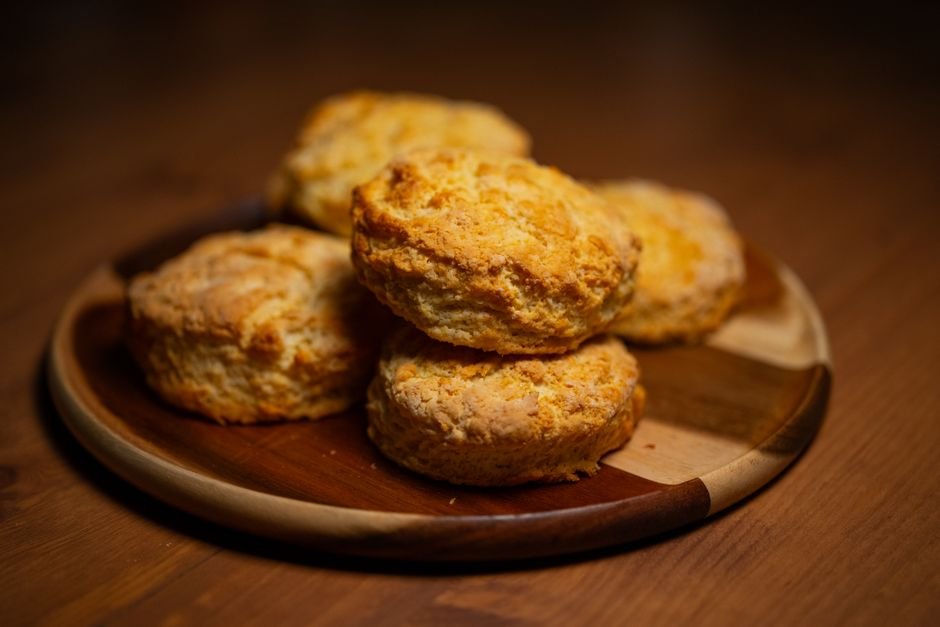
Full Nutrition Facts for One Plain Buttermilk Biscuit (67g)
Below are the complete nutrition facts for a standard, plain buttermilk biscuit, based on USDA data and common commercial preparation:
| Nutrient | Amount | % Daily Value |
|---|---|---|
| Calories | 180 | 9% |
| Total Fat | 8g | 10% |
| Saturated Fat | 2.5g | 13% |
| Cholesterol | 2mg | 1% |
| Sodium | 390mg | 17% |
| Total Carbohydrate | 28g | 10% |
| Dietary Fiber | 1.2g | 5% |
| Total Sugars | 2g | — |
| Protein | 4.5g | 9% |
| Iron | 1.4mg | 8% |
| Calcium | 180mg | 14% |
| Potassium | 95mg | 2% |
*Percent Daily Values are based on a 2,000-calorie diet. Source: USDA FoodData Central.
Key insight: A plain biscuit delivers moderate carbohydrates (28g) and modest protein (4.5g), making it primarily a carb-based food. The sodium content (390mg) represents about 17% of the daily limit, which is notable for a single biscuit—important to track if you consume multiple biscuits or eat them with salty toppings like bacon or sausage.
Etekcity Food Scale
0.1g accuracy — the perfect companion for exact portions.
Plain Buttermilk Biscuit vs. Cheese Biscuit: What’s the Difference?
Plain Buttermilk Biscuit (67g)
- 180 calories, 8g fat, 28g carbs
- Mild flavor, lighter texture, lower sodium
- Pairs well with any topping or eaten plain
Cheese Biscuit (71g)
- 220–240 calories, 11–13g fat, 27g carbs
- Rich, savory flavor from cheddar or other cheese
- Higher saturated fat and sodium; less versatile for pairing
Practical takeaway: If you’re watching calories or sodium, a plain biscuit is the leaner choice. Cheese biscuits add roughly 40–60 extra calories and noticeably more saturated fat, but deliver bolder flavor if you’re not topping your biscuit with other ingredients. Consider the toppings you plan to add before choosing: a plain biscuit with butter and jam is still lighter than a cheese biscuit eaten alone.
Is Biscuit Good for Weight Loss?
Biscuits are not inherently weight-loss-friendly due to their calorie density, refined carbs, and moderate fat content. A single biscuit can easily become 250+ calories when topped with butter, gravy, or spreads, and they lack significant fiber or protein to promote satiety. However, occasional biscuits can fit into a calorie-controlled diet if portions are measured and toppings are minimal.
Tips to Eat Biscuit Without Gaining Weight:
- Measure toppings: Spread 1 tablespoon of butter or jelly instead of coating generously; this saves 50–80 calories.
- Pair with protein: Add an egg or slice of lean ham to increase satiety and balance the carbohydrate load.
- Skip the gravy: Biscuits and gravy can exceed 500 calories in one serving. Choose lighter toppings or eat a smaller biscuit.
- Choose whole-grain or lower-calorie brands: Some commercial biscuits offer 120–140 calorie options using whole wheat or fiber-added recipes.
Weight loss is most successful when you enjoy the foods you eat in controlled portions. Biscuits can be part of a balanced breakfast if paired with vegetables, lean protein, and modest spreads, rather than avoided altogether.
How Portion Size Affects Calories
Biscuit size varies significantly by brand, restaurant, and homemade recipe. A small, standard biscuit weighs about 50g (140 calories), while a large, buttery biscuit can reach 80g (280+ calories). Restaurant and fast-food biscuits tend to be larger and richer than grocery store varieties, pushing calorie counts higher.
Example:
- Small biscuit (50g): 140 calories, 6g fat, 22g carbs
- Large biscuit (85g): 280 calories, 14g fat, 38g carbs
Doubling the biscuit size roughly doubles the calories, so pay attention to serving weight if you’re tracking intake closely.
Best Way to Measure Biscuit Accurately
For the most accurate calorie and nutrition tracking, weigh your biscuit using a digital kitchen scale rather than guessing by appearance. Weight is the most reliable measurement because biscuit density varies—two biscuits of the same visible size may weigh 5–10g differently. If a scale isn’t available, compare your biscuit to common references or use the nutrition label from the package.
Options:
- Digital kitchen scale: Place the biscuit on the scale and record the weight in grams. Cross-reference with nutrition labels or the USDA database.
- Package nutrition label: If you’re eating a commercial biscuit, the label lists calories per serving and the serving size in grams. Count how many servings your biscuit represents.
- Visual comparison: A standard biscuit is roughly the size of a small fist or a tennis ball. If it looks noticeably larger or denser, assume it’s 250+ calories.
Calculate Your Exact Calorie Intake
Biscuits are often just one component of a meal. Adding butter, jam, eggs, meat, or gravy changes the total calorie count substantially—making it easy to underestimate your actual intake. Want a precise breakdown of your entire biscuit breakfast?
Use a free AI nutrients calculator to log your meal ingredients and toppings. Our calculator generates instant nutrition breakdowns, showing you exactly how many calories, carbs, protein, and micronutrients you’re consuming. No guessing required.
- Log your biscuit, butter, eggs, and sides in seconds
- See complete macro and micronutrient breakdowns instantly
- Track patterns over time to optimize your nutrition
Try our free nutrients calculator now to analyze your favorite biscuit meals and stay on track with your health goals.
Common Mistakes When Eating Biscuit
Most people underestimate how quickly biscuits add calories to a meal. Here are the most common pitfalls:
❌ Ignoring the toppings—A plain biscuit is 180 calories, but adding 2 tablespoons of butter (200 calories) and gravy (100+ calories) transforms it into a 480+ calorie item, often without realizing the jump.
❌ Eating multiple biscuits without counting—Two biscuits at breakfast is 360–400 calories before toppings, equivalent to a substantial meal for many diets.
❌ Assuming all biscuits are the same size—Restaurant and homemade biscuits can be 50–100% larger than standard grocery store versions, doubling the actual calorie content.
❌ Forgetting hidden fats in commercial varieties—Some brands use shortening or lard, adding saturated fat and calories. Always check the ingredient list and nutrition label.
Being aware of these mistakes helps you make intentional choices rather than consuming excess calories by default.
FAQ
How many calories are in 100g of biscuit?
A 100g biscuit contains approximately 268 calories. Most standard biscuits weigh 60–75g, so a typical serving is 150–200 calories.
Is biscuit fattening?
Biscuits themselves are not inherently fattening, but their calorie density and frequent pairing with butter, gravy, and cheese can easily lead to weight gain if consumed regularly without portion control. Eating one biscuit occasionally is unlikely to cause weight gain; eating multiple biscuits with rich toppings daily will.
What is the best time to eat a biscuit?
Biscuits are best eaten at breakfast or early lunch paired with protein (eggs, lean meat) and fiber-rich sides (fruit, vegetables) to balance blood sugar and satiety. Eating biscuits as a standalone snack or late at night is less ideal, as the simple carbs can spike blood sugar without sustained energy.
Are biscuits gluten-free?
Traditional biscuits contain wheat flour and are not gluten-free. However, gluten-free biscuit alternatives are widely available using rice flour, almond flour, or other gluten-free blends. Check the package label to confirm, as cross-contamination can occur during manufacturing.
Conclusion
A typical biscuit contains 180–240 calories depending on size, type, and preparation, plus 28g of carbohydrates and 8–13g of fat. While biscuits lack significant fiber and protein, they can be part of a balanced diet when portion sizes are controlled and toppings are measured. The key is awareness: understand your biscuit’s actual weight, count added butter and spreads, and pair biscuits with protein-rich sides to maximize satisfaction.
For anyone serious about nutrition tracking, measuring your biscuits and calculating complete meal calories is essential—especially when eating at restaurants where portion sizes are larger. Use a reliable nutrients calculator to log your biscuit breakfasts and monitor your macros over time. Small choices add up, and knowing exactly what you’re eating puts you in control of your health.
