
Blueberries are one of the most nutrient-dense fruits available, beloved by health-conscious eaters, fitness enthusiasts, and anyone seeking a naturally sweet snack that won’t derail their nutrition goals. They’re packed with antioxidants, fiber, and vitamins, making them a staple in smoothie bowls, salads, and breakfast routines across the world. Whether you’re managing weight, building muscle, or simply trying to eat healthier, blueberries consistently appear on recommended fruit lists.
But if you’re tracking calories or macronutrients, the question becomes specific: how many calories are actually in blueberries? And what’s the full nutritional picture beyond just the calorie count? This article covers everything you need to know about blueberry calories, nutrition facts, serving sizes, and practical tips for incorporating them into your diet without overshooting your targets.
Calories in Blueberries (Quick Answer)
A standard serving of blueberries is small enough to fit in your palm, but calorie-dense in nutrients.
- 1 cup (148g) fresh blueberries: 84 calories
- ½ cup (74g) fresh blueberries: 42 calories
- 1 cup (155g) frozen blueberries: 87 calories
- 1 tablespoon (9g) dried blueberries: 25 calories
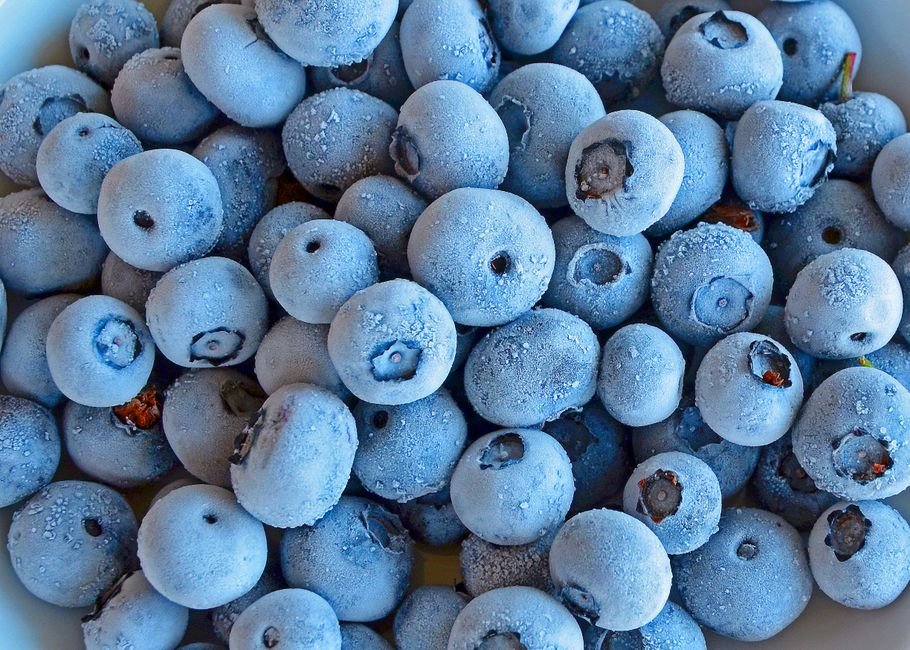
Calorie counts vary slightly by ripeness, variety (highbush, lowbush, or rabbit-eye), and whether berries are fresh, frozen, or dried. Frozen blueberries have virtually identical calories to fresh since freezing preserves the fruit without adding oil or sugar.
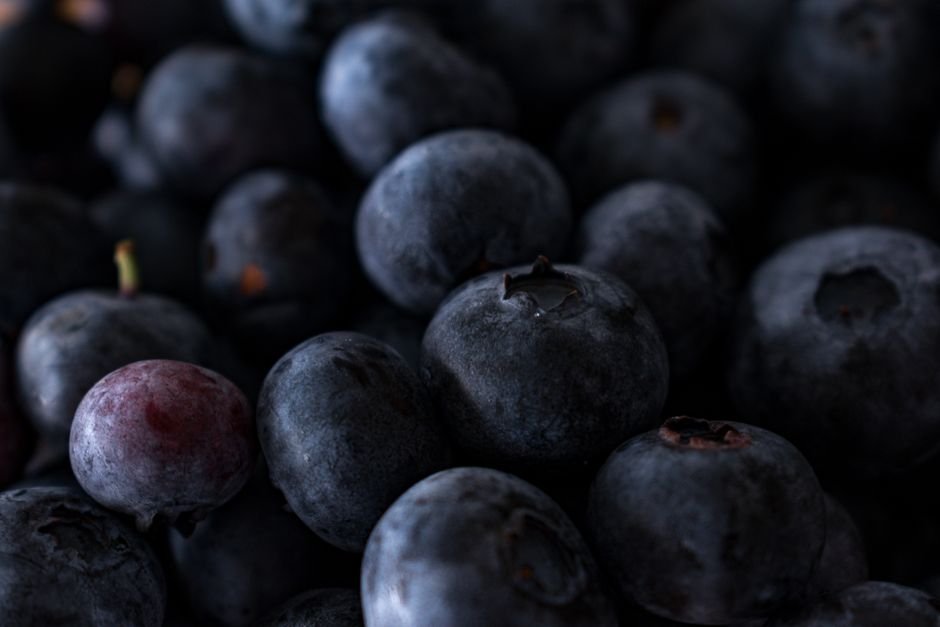
Full Nutrition Facts for 1 Cup (148g) of Fresh Blueberries
Here’s the complete breakdown of what you get in a single cup of fresh blueberries, including vitamins and minerals that make them nutritionally exceptional.
| Nutrient | Amount | % Daily Value |
|---|---|---|
| Calories | 84 | 4% |
| Total Fat | 0.3g | <1% |
| Saturated Fat | 0g | 0% |
| Cholesterol | 0mg | 0% |
| Sodium | 1.5mg | <1% |
| Total Carbohydrate | 21g | 7% |
| Dietary Fiber | 3.6g | 14% |
| Total Sugars | 15g | — |
| Protein | 1.1g | 2% |
| Vitamin C | 14.4mg | 24% |
| Vitamin K | 29μg | 24% |
| Manganese | 0.3mg | 15% |
*Percent Daily Values are based on a 2,000-calorie diet. Source: USDA FoodData Central.
Key insight: Blueberries are a textbook low-fat, low-sodium fruit dominated by carbohydrates, but nearly one-fifth of that carb content comes from fiber — which slows digestion and helps stabilize blood sugar. This 3.6g of fiber per cup (14% daily value) is exceptional for the calorie load, making blueberries one of the most satiating berries available.
Etekcity Food Scale
0.1g accuracy — the perfect companion for exact portions.
Fresh Blueberries vs. Frozen Blueberries
Fresh Blueberries
- Slightly lower water content at harvest leads to a more concentrated sweet flavor
- Peak antioxidant levels (anthocyanins) when fully ripe and deep blue
- Best consumed within 1–2 weeks of purchase; shelf life shorter than frozen
Frozen Blueberries
- Flash-frozen immediately after harvest, locking in nutrients and antioxidant activity at peak levels
- Nearly identical calorie and carb content to fresh; thawing doesn’t degrade macros significantly
- More convenient, longer shelf life (up to one year), and often less expensive than fresh
Practical takeaway: There’s no nutritional disadvantage to frozen blueberries. Both fresh and frozen deliver the same calorie count and fiber profile, so choose whichever is fresher, more affordable, and fits your storage situation. Frozen blueberries are ideal for smoothies, yogurt, and baking; fresh blueberries work better in salads and as standalone snacks.
Are Blueberries Good for Weight Loss?
Yes, blueberries are excellent for weight loss. At 84 calories per cup with 3.6g of fiber, they’re low in calories relative to their volume and nutrient density. The high fiber content promotes fullness and slows gastric emptying, meaning you’ll feel satisfied longer than you would from the same number of calories in refined carbs or sweets. The natural sugars (15g per cup) come packaged with fiber and water, which moderates insulin response and prevents the energy crash you’d get from eating processed sugar.
Tips to Eat Blueberries Without Gaining Weight:
- Measure by cup, not handful: A cup (148g) is 84 calories and provides clear tracking. Handfuls can vary from 50–120 calories, making portion control harder.
- Pair with protein: Combine blueberries with Greek yogurt, cottage cheese, or nuts to increase satiety and prevent blood sugar spikes from the natural sugars.
- Skip the added sugar in preparations: Avoid blueberry muffins, sweetened jams, or blueberry pie where added sugar can double or triple the calorie load. Stick to plain fresh or frozen blueberries.
- Use as a topping, not the main dish: Sprinkle ½ cup (42 calories) over oatmeal, salads, or breakfast bowls rather than eating a full cup of blueberries alone, which can be easy to overeat due to their size and sweetness.
When eaten in reasonable portions and not combined with added sugars, blueberries actually support weight loss goals by delivering antioxidants and fiber that most people underconsume.
How Portion Size Affects Calories
Blueberries are small, so portion sizes can creep up easily without intentional measurement. A casual handful might be half a cup (42 calories), but if you’re eating straight from a container, you could easily consume 1.5–2 cups (126–168 calories) in one sitting without realizing it. This is where tracking becomes important, especially if weight loss is your goal.
Example:
- Small portion (½ cup / 74g): 42 calories, 2g net carbs (after fiber), fits easily in a snack or topping
- Large portion (2 cups / 296g): 168 calories, 32g net carbs, equivalent to a light meal or substantial snack
The difference between a small and large portion is roughly 126 calories—more than enough to affect your daily intake if you’re not tracking deliberately.
Best Way to Measure Blueberries Accurately
Because blueberries vary in size and density, visual estimation is unreliable. A cup measure is the standard, but if you want to be precise for calorie tracking, a kitchen scale is the gold standard. Blueberries have a density of about 1g per milliliter, so 148g of blueberries equals approximately 1 cup.
Options:
- Measuring cup (dry goods): Fill a standard 1-cup measure level with blueberries; this gives you 148g and 84 calories. Fastest method and accurate enough for most people.
- Kitchen scale: Weigh blueberries to the gram (target 148g for 1 cup, 74g for ½ cup). Most accurate for calorie tracking; takes 30 seconds once you have the scale out.
- Marble or small object method: If you lack both tools, compare a handful to the size of a golf ball (roughly ¼ cup, 21 calories). Less precise but works in a pinch.
Calculate Your Exact Calorie Intake
If blueberries are a regular part of your diet, knowing their exact calorie contribution matters. But blueberries don’t exist in isolation—they’re part of a larger meal, snack, or daily total. To truly understand how blueberries fit into your nutrition goals, you need to account for everything you eat: the Greek yogurt you pair them with, the granola on top, the other fruits, oils, and proteins throughout the day.
That’s where a comprehensive nutrition calculator becomes invaluable. Our site offers a free AI nutrients calculator that lets you log blueberries and hundreds of other foods, instantly tracking your calories, macros, fiber, and micronutrients. No guesswork, no mental math.
- Input any portion size (½ cup, 100g, or a handful) and get instant calorie and macro breakdowns
- Track multiple foods throughout the day to see how blueberries fit into your total intake
- Identify patterns in your eating (how much fiber are you actually getting?) and adjust portions based on real data
Common Mistakes When Eating Blueberries
Even though blueberries are nutritious, a few habits can undermine your health or weight goals.
❌ Assuming all blueberry products are healthy: Blueberry muffins, scones, and commercial “blueberry yogurt” often contain 20–40g of added sugar while providing minimal actual blueberries. Check labels—look for products where blueberries appear near the top of the ingredient list, not later, and where added sugars stay below 10g per serving.
❌ Not accounting for dried blueberries: When blueberries are dried, the water content is removed but calories and sugars are concentrated. One tablespoon (9g) of dried blueberries contains 25 calories, but because they’re smaller and chewier, it’s easy to consume 3–4 tablespoons (75–100 calories) thinking it’s a small snack.
❌ Eating unlimited portions because they’re “healthy”: Yes, blueberries are nutrient-dense and low in calories per cup, but 3–4 cups (252–336 calories) can add up quickly, especially if eaten as a snack between meals rather than replacing something else.
❌ Forgetting to count the additions: A cup of blueberries is 84 calories, but mix them into sweetened yogurt (100–150 calories), add granola (100–150 calories), and drizzle honey (60 calories), and you’re at 350+ calories—more than ten times the berries alone.
The key is intentionality: measure your blueberries, note what you’re pairing them with, and stay aware of added sugars in “blueberry” products.
FAQ
How many calories are in 100g of blueberries?
100g of fresh blueberries contains approximately 57 calories. This is useful if you’re using a kitchen scale or eating blueberries from a pre-portioned container labeled by weight.
Are blueberries fattening?
No, blueberries are not fattening. They’re low in calories (84 per cup), virtually fat-free, and high in fiber, making them one of the least fattening fruits available. Problems arise only when blueberries are combined with added sugars (muffins, sweetened yogurt) or eaten in extremely large quantities without accounting for calories.
Do blueberries have more carbs than other berries?
Blueberries contain about 21g of carbs per cup, which is moderate compared to strawberries (11g per cup) but similar to raspberries (12g per cup). However, blueberries offer more fiber (3.6g) than strawberries (3g), which offsets the slightly higher sugar content.
Can I eat blueberries if I’m diabetic?
Yes, in measured portions. Blueberries have a relatively low glycemic index due to their fiber content, and 1 cup fits within most carb targets for diabetics. Pair them with protein or fat (nuts, Greek yogurt) to further slow carb absorption and stabilize blood sugar.
Conclusion
Blueberries are a nutrient-dense, low-calorie fruit that delivers impressive amounts of fiber, vitamin C, vitamin K, and antioxidants in just 84 calories per cup. With virtually no fat or sodium, and a fiber-to-sugar ratio that naturally stabilizes blood sugar, they’re an ideal choice for anyone pursuing weight loss, improved health, or simply wanting to eat better without restriction. Whether fresh or frozen, blueberries offer identical nutritional value and fit seamlessly into almost any diet.
The key to maximizing blueberries’ benefits is measurement and context. A cup of blueberries on its own is a perfect snack; layered into sweetened yogurt with granola and honey, they become part of a much higher-calorie meal. Track your portions, pair them with protein when possible, and use a reliable nutrients calculator to see exactly how they fit into your daily intake. When used intentionally, blueberries are one of the best fruit choices for long-term health and sustainable weight management.
