
Brown rice is a whole-grain staple eaten across Asia, Latin America, and increasingly in Western health-conscious diets. Whether you’re managing weight, controlling blood sugar, or building muscle, understanding brown rice’s calorie and nutrient content is essential for accurate meal planning. It’s rich in fiber and B vitamins compared to its refined white counterpart, making it a popular choice for people pursuing balanced nutrition.
If you’re tracking calories or macronutrients, the first question is usually: how many calories are in brown rice? The answer depends on serving size and preparation method. This guide covers complete nutrition facts, portion control, common pitfalls, and practical strategies for eating brown rice as part of a healthy diet.
Calories in Brown Rice (Quick Answer)
One cup of cooked brown rice contains approximately 215 calories. Here are the most common servings:
- 1 cup cooked (195g): 215 calories
- ½ cup cooked (98g): 108 calories
- 100g cooked: 111 calories
Calorie counts vary slightly based on how much water is absorbed during cooking and the specific variety of brown rice used.
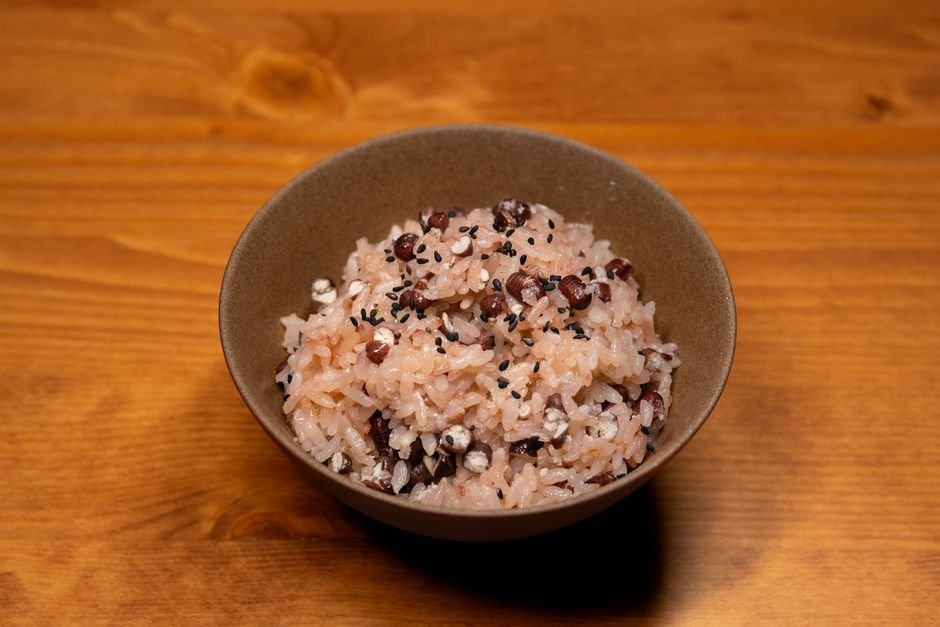
Full Nutrition Facts for 1 Cup (195g) of Cooked Brown Rice
One cup of cooked brown rice provides a solid dose of complex carbohydrates, fiber, and plant-based protein. Here’s the complete nutritional breakdown based on USDA data:
| Nutrient | Amount | % Daily Value |
|---|---|---|
| Calories | 215 | — |
| Total Fat | 1.8g | 2% |
| Saturated Fat | 0.4g | 2% |
| Cholesterol | 0mg | 0% |
| Sodium | 10mg | <1% |
| Total Carbohydrate | 45g | 15% |
| Dietary Fiber | 3.5g | 14% |
| Total Sugars | 0.7g | — |
| Protein | 5g | 10% |
| Magnesium | 84mg | 20% |
| Manganese | 1.8mg | 78% |
| Thiamine (Vitamin B1) | 0.19mg | 16% |
*Percent Daily Values are based on a 2,000-calorie diet. Source: USDA FoodData Central.
Key insight: Brown rice retains its outer bran layer, which delivers nearly 3.5g of dietary fiber per cooked cup—14% of daily needs. This fiber slows digestion, promotes stable blood sugar, and supports digestive health. The exceptional manganese content (78% DV) supports bone health and metabolic function, distinguishing brown rice from refined white rice, which loses this nutrient during processing.

Etekcity Food Scale
0.1g accuracy — the perfect companion for exact portions.
Brown Rice vs. White Rice: Which Is Better?
Brown Rice
- Contains 3.5g fiber per cooked cup; supports gut health and sustained energy
- Retains B vitamins and manganese; higher overall micronutrient density
- Slightly higher in calories (215 per cup) due to bran retention; requires longer cooking (45–60 minutes)
White Rice
- Contains minimal fiber (0.6g per cooked cup); faster absorption of carbohydrates
- Lower in micronutrients after milling; often enriched with synthetic vitamins
- Slightly fewer calories (206 per cooked cup); cooks faster (15–20 minutes) but spikes blood sugar more quickly
Practical takeaway: If you’re managing blood sugar, seeking steady energy, or wanting maximum fiber and minerals, brown rice wins. If you need quick meals or have digestive sensitivities to whole grains, white rice is acceptable but should be paired with protein and healthy fats to slow digestion. The calorie difference is negligible; the nutrient density gap is substantial.
Is Brown Rice Good for Weight Loss?
Yes, brown rice can support weight loss when portion sizes are controlled and it’s balanced with protein and vegetables. Its 3.5g of fiber per cooked cup promotes satiety, slowing stomach emptying and reducing overall hunger. The combination of complex carbohydrates and plant-based protein stabilizes blood sugar, preventing the energy crashes that trigger overeating. However, brown rice is calorie-dense at 215 calories per cup cooked; eating three cups daily without accounting for the intake will impede weight loss goals.
Tips to Eat Brown Rice Without Gaining Weight:
- Measure portions: Use ½ to ¾ cup cooked brown rice per meal (108–162 calories) rather than free-pouring, which often leads to 1.5–2 cups (322–430 calories).
- Pair with protein: Combine brown rice with lean meat, fish, legumes, or tofu to increase satiety and build muscle; protein slows carbohydrate digestion.
- Fill half your plate with vegetables: Broccoli, peppers, spinach, and carrots add volume and nutrients without excess calories, naturally reducing rice portion sizes.
- Cook with minimal oil: Brown rice cooked with water or low-sodium broth stays around 215 calories per cup; cooking with butter or oil adds 50–100+ calories per serving.
Brown rice fits comfortably into a weight loss diet when treated as a measured carbohydrate portion rather than a free-form filling.
How Portion Size Affects Calories
Brown rice’s calories scale directly with portion size. A typical restaurant serving (1.5 cups cooked) contains 322 calories, while many people unknowingly eat 2 cups (430 calories) without realizing the impact. Using a measuring cup or kitchen scale transforms guesswork into precision, especially when tracking macronutrients for fitness or medical goals.
Example:
- Small portion (½ cup cooked): 108 calories, 23g carbs, 2.5g fiber
- Large portion (2 cups cooked): 430 calories, 90g carbs, 14g fiber
The difference between ½ cup and 2 cups is 322 calories—equivalent to a full meal for some people. Portion awareness is non-negotiable for accurate calorie tracking.
Best Way to Measure Brown Rice Accurately
Measuring cooked brown rice by volume (cups) is the easiest method for most home cooks, though weight (grams) is more precise for strict calorie tracking. Cooked rice can vary in density depending on water content, so the same cup measurement may weigh 165–210g depending on how moist the rice is. For the most reliable calorie data, measure using a kitchen scale whenever possible, especially if you’re tracking for diabetes management or athletic performance.
Options:
- Digital kitchen scale (most accurate): Weigh cooked brown rice in grams. One cup typically weighs 195g and contains 215 calories; scale directly before serving.
- Measuring cup (convenient): Use a standard 1-cup measure, pressing gently to level the top. Account for a ±10% calorie variance due to moisture differences.
- Your hand (rough estimation): A closed fist of cooked brown rice approximates ½ cup (108 calories). This works for quick, untracked meals but is not suitable for precise calorie counting.
Calculate Your Exact Calorie Intake
If you eat brown rice multiple times per week as part of varied meals, knowing only the per-cup calorie count isn’t enough. You need to account for cooking oil, accompaniments (sauces, proteins, vegetables), and how your individual portions vary from standard measurements. What looks like a ½ cup might actually be ¾ cup—a difference of 54 calories that compounds over days and weeks.
Our free AI nutrients calculator helps you log brown rice, calculate exact macronutrients, and track daily totals in seconds. Simply enter your portion size in grams or cups, and the tool accounts for preparation method, showing you calories, fiber, carbs, and protein at a glance. This removes estimation error from your tracking.
- Instant macro calculation: Know exactly how much protein, fiber, and carbs are in your serving—critical for diabetes management, muscle building, or weight loss.
- Meal planning accuracy: Log brown rice with your complete meal to see total calories and nutrients, preventing unintentional overages.
- Personalized tracking: Compare brown rice intake against your daily goals and adjust portions in real time. Try the free calculator here.
Common Mistakes When Eating Brown Rice
Even health-conscious eaters make errors with brown rice that inflate calorie intake or reduce nutrient absorption. Here are the most frequent mistakes:
❌ Cooking brown rice in broth or with oil without accounting for added calories. A cup of chicken broth adds 15 calories, but one tablespoon of oil adds 120—people often lose track.
❌ Eating directly from the pot or a large bowl without measuring, leading to 1.5–2 cups consumed instead of the planned ½–¾ cup.
❌ Assuming all brown rice varieties are identical. Short-grain brown rice can be slightly denser than long-grain; weighing rather than measuring corrects this.
❌ Storing cooked brown rice without labeling or dating it. Leftover rice kept longer than 4–5 days in the fridge can spoil, leading to waste or foodborne illness if consumed.
Simple strategies—pre-portioning into containers, using a scale, and always measuring—eliminate these errors.
FAQ
How many calories are in 100g of brown rice?
Cooked brown rice contains approximately 111 calories per 100g. This equals roughly half a cooked cup (195g contains 215 calories).
Is brown rice fattening?
Brown rice itself is not inherently fattening—it contains only 1.8g of fat per cooked cup. Weight gain occurs when portions are excessive or brown rice is cooked in oil and paired with high-calorie sauces. Eating 215 calories from brown rice at lunch supports weight loss if dinner and snacks are moderate; eating 900 calories of brown rice daily will cause weight gain.
Does brown rice raise blood sugar?
Brown rice raises blood sugar more slowly than white rice due to its fiber content, but it is still a carbohydrate-rich food. People with type 2 diabetes should pair brown rice with protein and healthy fats, keep portions to ½–¾ cup, and monitor their individual response with blood glucose testing.
Can you eat brown rice every day?
Yes, brown rice can be part of a daily diet as a measured carbohydrate source. Aim for ½–1 cup per day (108–215 calories) as part of balanced meals that also include protein, healthy fats, and vegetables. Eating only brown rice without other food groups creates nutritional imbalances and is not recommended.
Conclusion
Brown rice is a nutrient-dense whole grain containing 215 calories per cooked cup, with excellent fiber (3.5g), manganese (78% DV), and B vitamins. Its lower glycemic impact compared to white rice and high satiety make it a smart choice for weight management and stable energy. The difference between a weight-loss-friendly ½ cup (108 calories) and a calorie-surplus 2 cups (430 calories) comes down to measurement discipline and portion control.
Accurate tracking transforms brown rice from a vague dietary component into a precise nutritional tool. Use a kitchen scale when possible, pair brown rice with protein and vegetables, and log portions in a reliable nutrients calculator to ensure you’re hitting your goals. Whether your focus is weight loss, muscle building, or diabetes management, **consistent measurement and mindful portioning** are the keys to making brown rice work for your health.
