
Both honey and maple syrup are natural sweeteners that people often reach for when they want something that feels healthier than table sugar. The choice usually comes down to taste preference—but if you’re tracking calories or trying to manage blood sugar, the specific numbers matter more than the marketing story. These two sweeteners have different calorie densities, nutrient profiles, and the way they behave in your body depends a lot on how much you actually use.
The verdict is clear: honey and maple syrup have nearly identical calories per tablespoon, but the real decision should depend on your actual use case, the portion size, and what other nutrients matter to you. We’ll break down the exact numbers, show you where they differ most, and explain why the “health food” label on either one shouldn’t be your main guide.
Quick Answer
Honey and maple syrup are roughly equal in calories—both contain about 64 calories per tablespoon—so neither has a meaningful calorie advantage. The key difference is their micronutrient content (honey has trace amino acids and enzymes; maple syrup has manganese and antioxidants) and their glycemic impact. If you’re counting calories alone, it doesn’t matter which you pick; pick based on taste and which one you’ll actually use in smaller quantities.

Honey vs Maple Syrup: Calories and Nutrition Breakdown
Honey
- 64 calories per tablespoon (21 g serving)
- 17 grams of carbohydrates per tablespoon
- Contains trace amounts of B vitamins and amino acids
- Fructose-dominant (about 40% fructose, 30% glucose, 30% water)
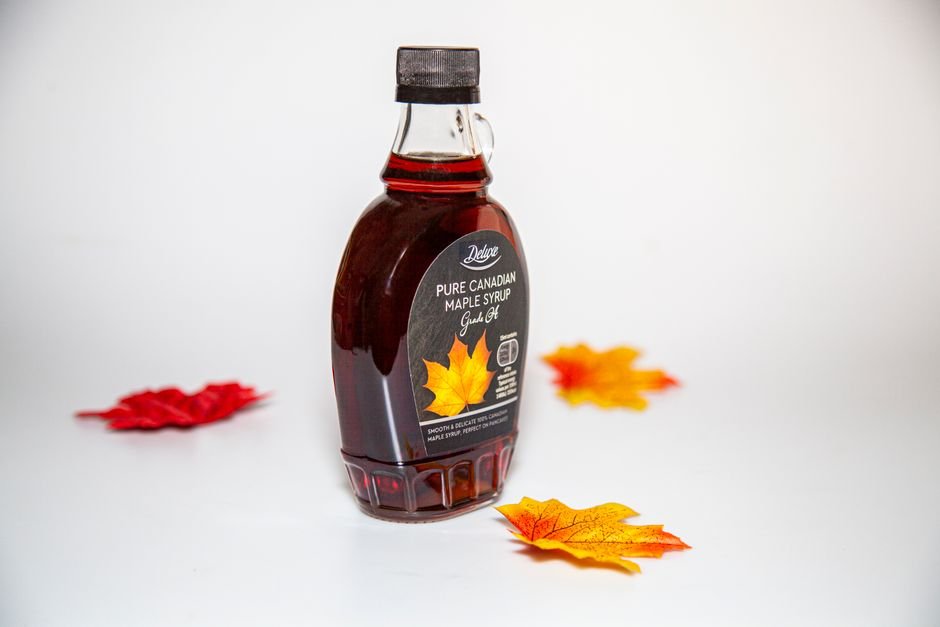
Maple Syrup
- 52 calories per tablespoon (20 g serving)
- 13 grams of carbohydrates per tablespoon
- Higher in manganese, zinc, and polyphenol antioxidants
- Sucrose-dominant (about 65% sucrose, 2–3% glucose, 35% water)
| Metric | Honey | Maple Syrup |
|---|---|---|
| Calories (per tbsp) | 64 | 52 |
| Total Carbs (g/tbsp) | 17 | 13 |
| Sugars (g/tbsp) | 16 | 12 |
| Fiber (g/tbsp) | 0 | 0 |
| Primary Sugar Type | Fructose + Glucose | Sucrose |
| Key Micronutrient | B vitamins, amino acids | Manganese, antioxidants |
Etekcity Food Scale
0.1g accuracy — the perfect companion for exact portions.
Which Is Better For Calorie Control?
If your only goal is calorie reduction, maple syrup wins—but only marginally. You’ll save about 12 calories and 4 grams of carbs per tablespoon by choosing maple syrup over honey. Over a year of daily use, that’s roughly 4,380 fewer calories. However, this advantage disappears completely if you use slightly less honey (say, 2 teaspoons instead of 1 tablespoon), which many people naturally do because honey is sweeter and more viscous. The more meaningful difference is satiety: honey’s fructose-rich profile may trigger less of a blood sugar spike compared to maple syrup’s sucrose dominance, which means you might feel satisfied sooner and use less of it overall.
That said, if you’re managing blood sugar or prediabetes, maple syrup’s moderate glycemic index (65) and lower fructose load might be genuinely better for you than honey’s fructose-heavy profile. But if you’re simply trying to reduce total calories, the difference between these two is so small that your actual pouring habit matters far more than which jar you buy.
Why the Numbers Don’t Tell the Whole Story
The nutrition label tells you about a standard serving, but real-world use varies wildly. A tablespoon of honey you drizzle into Greek yogurt is different from the honey you stir into hot tea (some dissolves and spreads further). Maple syrup pours differently—it’s thinner and more runny, so people often use more of it without realizing it. A generous drizzle of maple syrup can easily be 2 tablespoons, while a honey squeeze might genuinely be less than a tablespoon. Brand and moisture content matter too: a premium raw honey might be slightly thicker and less water-dense than a mass-produced brand, changing the calorie and carb density per volume.
Temperature affects how much sweetness you perceive, which changes how much you use. Cold milk with maple syrup might need more sweetener than hot oatmeal with honey. If you’re buying a “maple-flavored syrup” (common in grocery stores), you’re not actually getting pure maple syrup—you’re getting corn syrup with maple flavoring, which has completely different nutrient profiles and potentially higher total calories.
The most accurate way to know exactly what you’re consuming is to weigh your sweetener and input it into a reliable nutrients calculator. Our free AI calculator at https://nutrientscalculator.com/ lets you log the exact brand, amount in grams, and it pulls real USDA data so you’re not guessing. You get:
- Instant calorie totals for your actual serving size
- Complete micronutrient breakdowns so you can see where each sweetener actually differs
- Ability to compare your swapped-out favorite against any alternative on the spot
Common Mistakes
People often misunderstand these sweeteners because they rely on marketing and assumptions rather than actual numbers. Here are the most common missteps:
❌ Thinking honey is automatically healthier because it’s “raw” or “natural”—natural doesn’t mean lower-calorie or lower-sugar. A raw honey jar has the same carbs and nearly the same calories as processed honey.
❌ Assuming maple syrup is only slightly sweetener because it tastes less sweet than honey—you’ll use more of it to reach the same sweetness level, negating any calorie savings.
❌ Buying “maple-flavored syrup” or “pancake syrup” and comparing it to pure honey—most commercial pancake syrups are mostly corn syrup with added color, so you’re not actually comparing apples to apples.
❌ Forgetting that trace nutrients in either one (B vitamins from honey, manganese from maple) are so minimal they won’t meaningfully affect your micronutrient intake unless you’re consuming spoonfuls daily for therapeutic reasons.
FAQ
Does honey have a lower glycemic index than maple syrup?
Honey’s glycemic index is around 58 (low to moderate), while maple syrup is around 65 (moderate). Honey’s fructose-dominant profile means it raises blood glucose more slowly, making it a slightly better choice if you’re managing blood sugar—but neither is truly “low glycemic” compared to whole foods.
Which one tastes sweeter, so I’ll use less?
Honey tastes distinctly sweeter and has a stronger flavor, so most people are satisfied with smaller amounts. Maple syrup is milder, which often leads to using more of it without noticing—a common reason people accidentally consume more calories with maple syrup.
Can I substitute honey for maple syrup 1:1 in recipes?
Not quite. Honey is sweeter and binds differently due to its fructose content, so you’d need about 3/4 cup honey for every 1 cup maple syrup in baking. The calorie math changes because you’re using less volume, even though the calorie difference per tablespoon is small.
Does raw honey have more nutrients than regular honey?
Raw honey contains more enzymes and pollen, but both are present in such small amounts that the practical nutritional difference is negligible. Both have nearly identical calories and carbs, so the choice between raw and processed is about taste and perceived purity, not health metrics.
Conclusion
Honey and maple syrup are essentially calorie twins, with honey at 64 calories per tablespoon and maple syrup at 52 calories per tablespoon. The difference is real but small—only 12 calories—and easily erased by using slightly less of either sweetener or choosing a thinner pour. If you’re optimizing purely for calories, maple syrup edges ahead, but the real advantage goes to whichever one you actually prefer, because you’ll naturally use less of a sweetener you like.
For the most accurate accounting of what you’re actually consuming, measure your sweetener and cross-check it against a reliable nutrients calculator like the one at www.nutrientscalculator.com. That way you’ll know the exact calorie and carb load of your go-to sweetener, brand, and portion—not just the generic label average. Whether you choose honey or maple syrup, consistency and portion control will matter far more than which jar sits on your shelf.
