
Leeks are a mild, slightly sweet onion relative that has been cultivated in the Mediterranean for thousands of years and remains a staple in European kitchens, particularly in France, Wales, and Scandinavia. They’re prized by home cooks and professional chefs alike for their versatility—from soups and stews to side dishes and gratins—and they’re a favorite among people managing their weight because of their low calorie content paired with genuine nutritional substance.
Whether you’re building a weight-loss meal plan, managing blood sugar, or simply curious about what you’re eating, understanding the calorie and nutrient profile of leeks is essential. This guide covers everything from quick calorie counts to detailed nutrition facts, practical portion guidance, and honest answers to common questions.
Calories in Leek (Quick Answer)
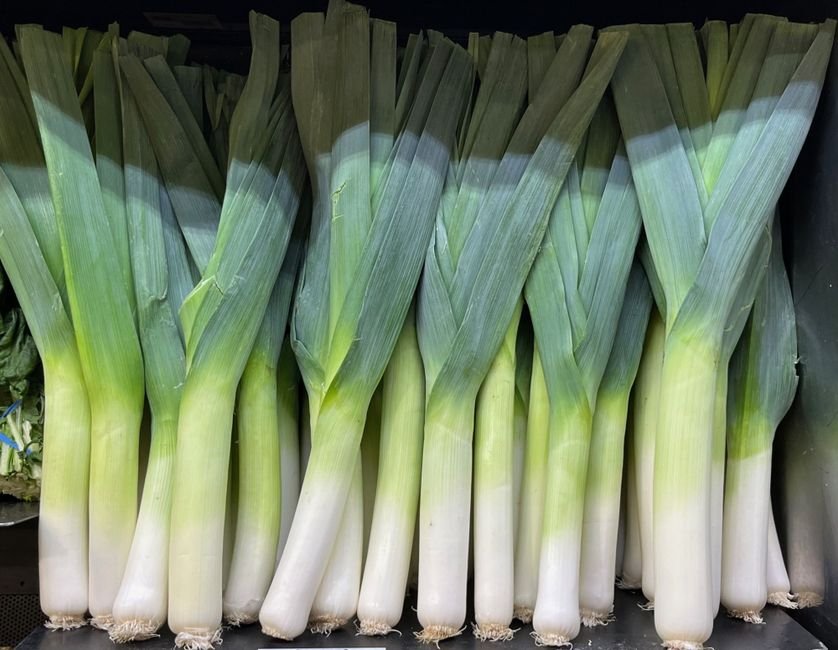
A medium raw leek (about 89g of the white and light-green portion) contains approximately 61 calories, making it an excellent low-calorie vegetable for nearly any diet.
- Raw leek (1 medium, 89g): 61 calories
- Cooked leek (1 cup chopped, 104g): 54 calories
- Raw leek (100g): 68 calories
Calorie values vary slightly depending on the part of the leek used (white and pale-green inner portions are edible; dark-green leaves are typically discarded or used for stock), growing conditions, and cooking method.
Full Nutrition Facts for 1 Medium Raw Leek (89g)
A single medium leek provides a lean, nutrient-dense package with minimal calories but meaningful amounts of fiber, vitamin K, and several important minerals. Below is the complete nutritional breakdown per USDA standards.
| Nutrient | Amount | % Daily Value |
|---|---|---|
| Calories | 61 | — |
| Total Fat | 0.3g | <1% |
| Saturated Fat | 0.1g | <1% |
| Cholesterol | 0mg | 0% |
| Sodium | 25mg | 1% |
| Total Carbohydrate | 14g | 5% |
| Dietary Fiber | 2g | 8% |
| Total Sugars | 2.2g | — |
| Protein | 1.5g | 3% |
| Vitamin K | 82mcg | 68% |
| Vitamin C | 12mg | 20% |
| Folate | 64mcg | 16% |
*Percent Daily Values are based on a 2,000-calorie diet. Source: USDA FoodData Central.
Key insight: Leeks are remarkably low in sodium for a vegetable, contain nearly zero fat, and deliver substantial vitamin K (a nutrient crucial for bone health and blood clotting) in a single serving. The 2g of fiber supports digestive regularity and satiety, making leeks particularly useful for weight management despite their modest carbohydrate content. Their natural sugars are minimal, which also makes them suitable for people monitoring blood sugar.

Etekcity Food Scale
0.1g accuracy — the perfect companion for exact portions.
Raw Leek vs. Cooked Leek
Raw Leek
- Slightly firmer texture with a crisp, pale white base and tender light-green layers
- Sharper, more pronounced onion-like flavor with subtle sweetness
- Retains all water-soluble vitamins (vitamin C, folate) without heat loss
Best for: salads, raw vegetable platters, or lightly sautéed dishes where you want to preserve the firm texture and natural bite.
Cooked Leek
- Soft, almost creamy texture; layers separate easily when braised or steamed
- Milder, sweeter flavor as compounds break down with heat
- Slightly fewer calories and less water weight; more concentrated flavor in soups and stews
Best for: soups (like vichyssoise), braised side dishes, gratins, and slow-cooked stews where softness and mellow flavor are desired.
The practical takeaway: Both raw and cooked leeks are nutritionally excellent. Raw retains more vitamin C; cooking concentrates the natural sweetness and makes leeks more tender, but the calorie difference is negligible (61 vs. 54 calories per serving). Choose based on your recipe and texture preference rather than calorie concerns.
Is Leek Good for Weight Loss?
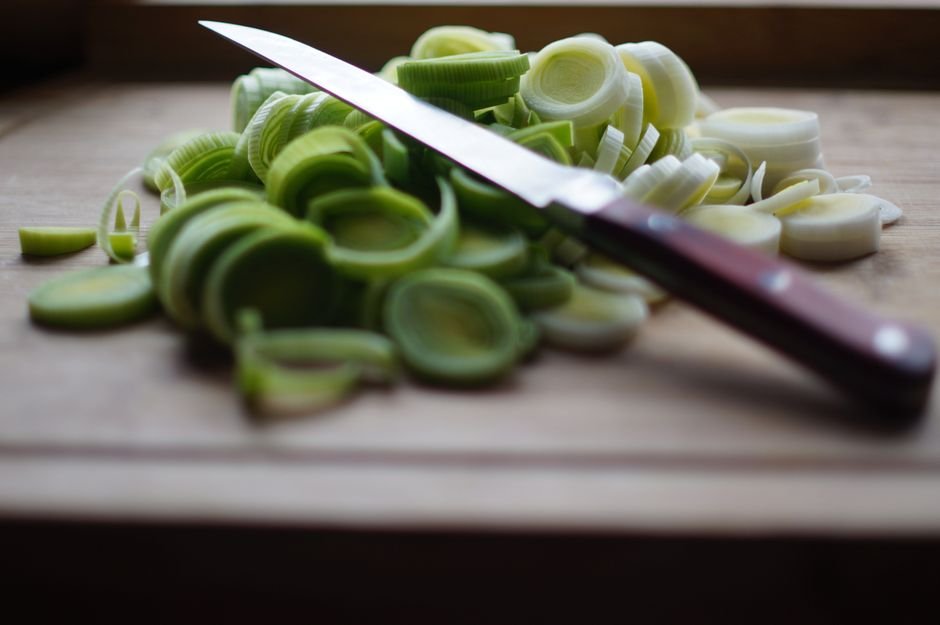
Yes, leeks are an excellent choice for weight loss. At just 61 calories per medium leek, they’re extremely low in calories and fat while delivering 2g of fiber and 1.5g of protein per serving. Their natural mild sweetness satisfies cravings without adding sugar or empty calories, and they absorb flavors well in soups, stews, and sautéed dishes without requiring added fat. Because they’re low in sodium and high in water content, leeks create a sense of fullness without contributing significant calories to your daily intake.
Tips to Eat Leek Without Gaining Weight
- Cook with minimal oil: Use a light spray or 1 teaspoon of olive oil per leek instead of butter or cream-based sauces.
- Pair with lean proteins: Combine leeks with grilled chicken, fish, or legumes for a balanced, satiating meal.
- Build broth-based soups: Use leeks as a base for vegetable or bone broth soups, which are inherently low-calorie and filling.
- Avoid cream and cheese-heavy dishes: Skip gratins and cream sauces; instead braise or steam leeks with vegetable broth or light lemon dressing.
Treated this way, leeks are not only compatible with weight loss but actively supportive of it. Their fiber content aids satiety, and their gentle flavor profile makes them easy to enjoy in larger volumes without feeling restricted.
How Portion Size Affects Calories
Leek calories scale almost linearly with weight. A small leek (about 55g) contains roughly 37 calories, a medium leek (89g) around 61 calories, and a large leek (136g) approximately 92 calories. When cooking, remember that leeks lose water and become denser; a cup of cooked chopped leek (104g) is roughly 1.5 medium raw leeks but contains only 54 calories due to the water loss being offset by the concentration effect.
Example:
- Small portion (1 small leek, 55g): 37 calories—ideal as a soup base or garnish.
- Large portion (2 medium leeks, 178g): 122 calories—still under 150 calories, perfect for a light sautéed side dish with protein.
Because leeks are so low-calorie, you can use them generously without worrying about portion-related overeating.
Best Way to Measure Leek Accurately
The most practical method is to use a kitchen scale if you’re tracking calories precisely, but volume and whole-leek counting work reasonably well for approximations. Most recipes and nutrition databases reference leeks by weight (grams), size descriptor (small/medium/large), or by cup when chopped. The edible portion is primarily the white and light-green sections; the dark-green tops are typically discarded for eating, though they’re excellent for making vegetable stock.
Options:
- By weight (most accurate): Use a kitchen scale. One medium leek (white and light-green portion) weighs about 89g.
- By whole leek: Estimate a “medium” leek as roughly 61 calories; adjust up or down for obviously smaller or larger specimens.
- By cup (chopped): One cup of chopped cooked leek is approximately 104g and 54 calories; raw chopped leek is slightly more calorie-dense per cup due to higher water content variation.
Calculate Your Exact Calorie Intake
If you’re tracking macronutrients or planning a meal around leeks, you need precision. A leek in your lunch, another in your soup, plus oil for cooking—these details add up, and rough estimates can lead to surprises on your daily total.
Our site offers a free AI-powered nutrients calculator that lets you enter any portion of leek (raw or cooked) and instantly see calories, protein, carbs, fat, fiber, and micronutrients. No signup required—just enter the weight or portion, and the calculator does the math for you, accounting for cooking methods and variations.
- Get instant, accurate calorie counts for any portion size you’re eating.
- See complete micronutrient breakdowns (vitamin K, folate, vitamin C) in seconds.
- Compare raw vs. cooked to understand how cooking affects your nutritional intake.
Try the free calculator now to take the guesswork out of leek nutrition.
Common Mistakes When Eating Leek
Leeks are inherently nutritious and low-calorie, but how you prepare and eat them can quickly change that. Here are the four most common ways people accidentally add unnecessary calories to their leek dishes.
❌ Drowning leeks in butter or cream. A single tablespoon of butter adds 100 calories and 12g of fat to an otherwise 61-calorie leek. Use 1 teaspoon of oil or a cooking spray instead, or braise in broth.
❌ Using cream-based sauces or gratins. A typical leek gratin with cheese and béchamel can contain 200-300+ calories per serving, making a nutritious vegetable into a high-calorie indulgence. Choose lighter preparations like steaming or light sautéing.
❌ Not washing leeks thoroughly before cooking. Leeks trap dirt between their layers. If you don’t rinse them properly, you’ll eat grit and may discard more usable portion than necessary, wasting money and nutrients.
❌ Discarding the light-green portion. Many people cut too much away, throwing out edible, nutrient-rich light-green layers. Only the very dark outer leaves are typically inedible; the pale-green inner layers are tender and delicious.
Avoiding these mistakes ensures you enjoy leeks’ full nutritional benefit without hidden calorie traps.
FAQ
How many calories are in 100g of leek?
A 100g serving of raw leek contains approximately 68 calories. Since a medium leek weighs about 89g, 100g is roughly equivalent to one medium leek plus a small extra piece.
Is leek fattening?
No. Leeks are extremely low in fat (0.3g per medium leek) and low in calories overall (61 per medium leek). They’re among the least fattening vegetables available and are actively helpful for weight loss when prepared without added oils, butter, or cream.
Can I eat the dark green part of a leek?
The very dark outer green leaves are tough and stringy when cooked, so they’re not ideal for eating. However, pale-green inner layers are tender and nutritious. Save the dark tops for vegetable stock instead.
Do leeks have any sugar?
Yes, but very little. A medium raw leek contains only 2.2g of natural sugars, making it low-sugar and suitable for people managing blood sugar or following low-carb diets. The sugar content is far lower than root vegetables like carrots or beets.
Conclusion
Leeks are a nutritional powerhouse masquerading as a simple vegetable. At 61 calories per medium leek with zero cholesterol, minimal fat, and substantial vitamin K, fiber, and folate, they offer genuine nutritional substance without calorie density. Their mild, naturally sweet flavor means they satisfy cravings and absorb other flavors well in soups, stews, and braised dishes—making them ideal for anyone trying to eat well without feeling deprived.
Whether you’re building a weight-loss meal plan, managing diabetes, or simply eating more vegetables, leeks belong in your regular rotation. The key is preparation: keep added oils and sauces minimal, pair them with lean proteins, and measure portions if you’re tracking closely. For exact numbers tailored to your specific recipe and serving size, use a reliable nutrients calculator to take the guesswork out of your nutrition tracking.
