
Radishes are a crisp, peppery root vegetable that appears in cuisines across the globe—from Asian stir-fries to European salads and Mexican tacos. They’re popular among people managing weight, controlling blood sugar, and seeking low-calorie vegetables packed with fiber and nutrients. Whether sliced raw into salads, roasted as a side dish, or pickled for flavor, radishes offer serious nutrition without the calorie density of other staples.
But exactly how many calories are in radish? And how does this humble root vegetable fit into a balanced diet? This guide covers everything: full nutrition facts, serving sizes, weight-loss tips, and common eating mistakes to avoid.
Calories in Radish (Quick Answer)
One medium raw radish contains only 3–4 calories, making radishes among the lowest-calorie vegetables you can eat.
- 1 medium raw radish (15g): 4 calories
- 1 cup raw radish slices (116g): 16 calories
- 1 cup roasted radishes (180g): 40 calories
Calorie counts remain consistent across varieties (red, white, watermelon radish), though roasting concentrates calories slightly due to water loss. Values may vary slightly by size and preparation method.
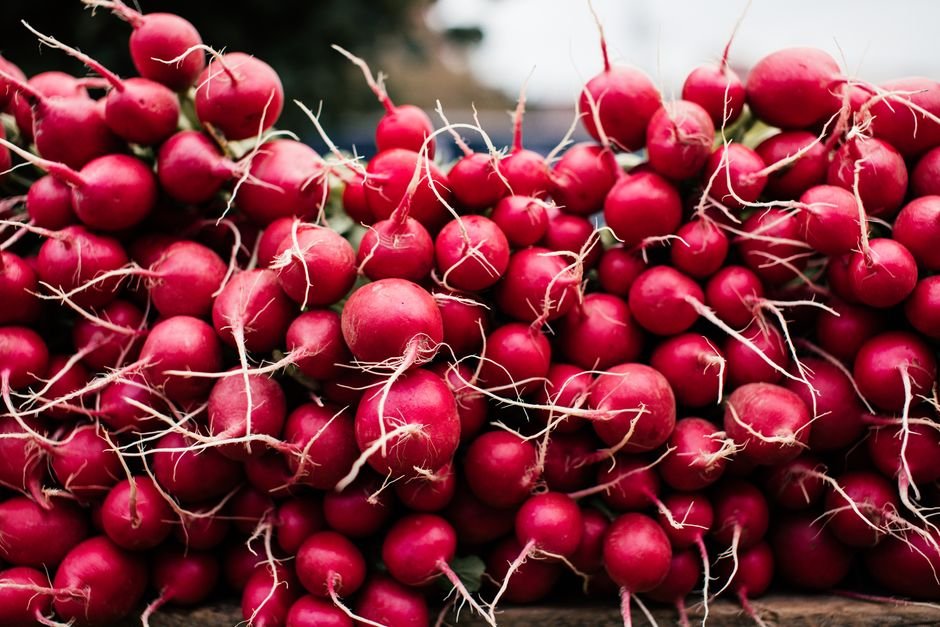
Full Nutrition Facts for 1 Cup Raw Radish Slices (116g)
Raw radishes are nearly 95% water, which explains their ultra-low calorie content and high volume-per-calorie ratio. Here’s the complete nutritional breakdown:
| Nutrient | Amount | % Daily Value |
|---|---|---|
| Calories | 16 | 1% |
| Total Fat | 0.1g | <1% |
| Saturated Fat | 0g | 0% |
| Cholesterol | 0mg | 0% |
| Sodium | 65mg | 3% |
| Total Carbohydrate | 3.7g | 1% |
| Dietary Fiber | 0.7g | 3% |
| Total Sugars | 1.9g | 4% |
| Protein | 0.6g | 1% |
| Vitamin C | 14.8mg | 25% |
| Folate | 23.2mcg | 6% |
| Potassium | 270mg | 8% |
*Percent Daily Values are based on a 2,000-calorie diet. Source: USDA FoodData Central.
Key insight: Radishes pack 25% of your daily vitamin C in just a cup of slices, supporting immune function and collagen production with virtually no caloric cost. The 0.7g of fiber per cup, while modest, is notable for a vegetable this low in calories—making radishes excellent for satiety without blood-sugar spikes.

Etekcity Food Scale
0.1g accuracy — the perfect companion for exact portions.
Raw Radishes vs. Roasted Radishes
Raw Radishes
- Maximum vitamin C retention (about 14.8mg per cup), supporting immune health
- Peppery, crisp texture that aids digestion through mechanical breakdown
- Lowest calorie count (16 calories per cup), ideal for volume eating and weight loss
Roasted Radishes
- Milder, slightly sweet flavor as sulfur compounds break down under heat
- Softer texture that pairs well as a cooked side dish alongside protein
- Minimal calorie increase (40 calories per cup after roasting), though vitamin C drops by 20–30% from heat
Practical takeaway: Eat radishes raw when you want maximum crunch, nutrients, and volume-per-calorie. Roast them when you’re pairing them with a hot meal and prefer a milder flavor—the small calorie difference won’t impact weight loss, but the texture shift can help you enjoy them in new ways.
Is Radish Good for Weight Loss?
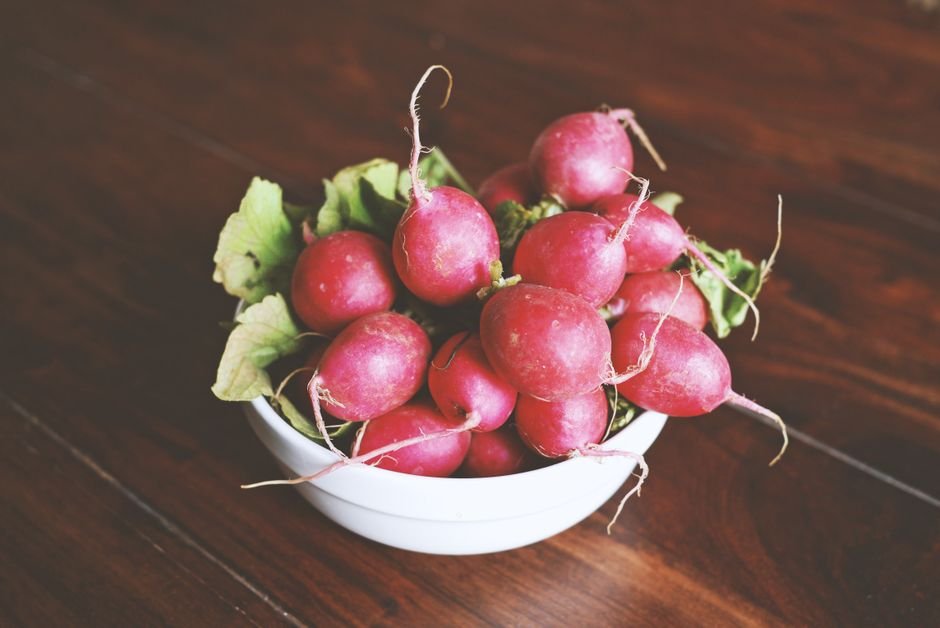
Yes. Radishes are one of the best vegetables for weight loss because they’re extremely low in calories (16 per cup), high in water and fiber, and practically free of sugar. A cup of sliced radishes contains only 1.9g of sugar and 0.7g of fiber, meaning they’ll fill your stomach without triggering blood-sugar crashes or cravings. Their peppery bite also makes them satisfying in small portions, and they add zero-calorie crunch to salads, wraps, and grain bowls.
Tips to Eat Radish Without Gaining Weight:
- Eat them raw: Skip the oil and butter. Raw radishes have the lowest calorie count and highest nutrient density. Pair them with hummus (22 calories per tablespoon) or Greek yogurt dip instead of ranch.
- Fill half your plate: Use radish slices as a filler vegetable to displace higher-calorie foods like grains and oils. Aim for 2 cups of raw radishes as part of a large salad or side.
- Avoid the dressings: Many salads with radishes are sabotaged by creamy dressings. Use vinaigrette (50–100 calories per 2 tablespoons) or lemon juice instead of ranch or Caesar.
- Pickle them unsweetened: Homemade pickled radishes (vinegar, salt, no sugar) stay at 4 calories per radish and add flavor to meals without added sugar or calories.
Combined with protein (eggs, fish, lean meat) and healthy fats (olive oil, avocado), radishes become part of a filling, low-calorie meal that supports steady weight loss without hunger.
How Portion Size Affects Calories
Because radishes are so low in calories, portion size matters far less than with other foods. Even large servings stay under 50 calories, which means you can eat them abundantly without tracking. However, the way you serve them (raw vs. roasted, with dressing or not) changes the overall meal’s calorie total significantly.
Example:
- Small portion (1 cup raw radish slices + 2 tablespoons hummus): 16 + 44 = 60 calories total
- Large portion (2 cups raw radish slices + 1/4 cup ranch dip): 32 + 240 = 272 calories total
The takeaway: radishes themselves won’t make you gain weight, but the condiments and dips you pair with them absolutely will.
Best Way to Measure Radish Accurately
Because radishes are so low-calorie, precise measurement matters less for weight loss than it does for macro tracking in bodybuilding or diabetes management. That said, using consistent portion sizes helps you understand how much you’re eating and prevents mindless overconsumption of accompanying high-calorie foods like dips and dressings.
Options:
- Kitchen scale: Weigh raw radishes to the gram. One medium radish is about 15g; one cup of slices is about 116g. This is the most accurate method if you’re tracking carbs or fiber.
- Cup measure: Use a standard measuring cup. One cup of raw radish slices = about 116g = 16 calories. This works well for everyday meal prep.
- Visual estimate: One medium radish is roughly the size of a grape. A handful of sliced radishes is roughly 1/2 cup. This is acceptable for weight loss since the calorie margin of error is tiny.
Calculate Your Exact Calorie Intake
Radishes themselves are easy to count, but what about the rest of your meal? If you’re building a balanced diet and want to know your total calorie, protein, and macro intake across all your foods, doing the math gets complicated fast.
Our free AI nutrition calculator lets you log your whole meal—radishes, dips, protein, grains, everything—and instantly see your total calories, macros, and micronutrients. Track radish-based meals accurately without guessing:
- Log multiple foods at once and see combined nutrition facts in seconds
- Compare different meal combinations to find the highest-volume, lowest-calorie options
- Identify which condiments and sides are actually driving up your calorie count
Use the free calculator here to stop estimating and start measuring.
Common Mistakes When Eating Radish
Radishes are forgiving, but these habits can turn a healthy vegetable into a calorie trap or missed nutritional opportunity:
❌ Drowning them in creamy dips: Radishes with ranch, blue cheese, or mayo-based dips can jump from 16 calories to 250+ per serving. Hummus, Greek yogurt, or vinaigrette are better choices.
❌ Roasting in excessive oil: A cup of roasted radishes made with 2 tablespoons of oil becomes 320+ calories instead of 40. Use a light spray or 1 teaspoon of oil per cup instead.
❌ Overcooking and losing vitamin C: Boiling radishes can destroy 30–50% of their vitamin C. Raw or lightly roasted (10–15 minutes) retains far more nutrients.
❌ Neglecting the greens: Radish greens are edible, high in calcium and iron, and equally low-calorie. Most people throw them away—sauté them with a pinch of salt for a nutrient boost with zero downsides.
Avoid these pitfalls and radishes remain one of your most nutritious, lowest-calorie vegetable choices.
FAQ
How many calories are in 100g of radish?
Raw radish contains about 16 calories per 100g (slightly less than 100g of the 116g cup). This is consistent across all common varieties. Roasted radish is about 22 calories per 100g after water loss from cooking.
Is radish fattening?
No. Radish is one of the least fattening vegetables available. At 16 calories per cup and nearly zero fat, it’s nearly impossible to gain weight from eating radishes alone. Weight gain only occurs if you pair them with high-calorie dips, dressings, or oils.
Can I eat unlimited radishes?
Yes, for practical purposes. A realistic upper limit might be 5–10 cups per day, at which point you’d consume about 80–160 calories plus beneficial fiber. Beyond that, the volume alone becomes uncomfortable, and you’d be displacing other nutrient-dense foods. For weight loss, 1–3 cups daily is ideal.
Do radishes have any antinutrients or side effects?
Radishes contain small amounts of goitrogens (compounds that can interfere with iodine absorption), but only in trivial amounts when eaten cooked or in normal portions (under 2 cups daily). Raw consumption of more than 5 cups per day might theoretically affect thyroid function in susceptible individuals, but this is rare. For most people, radishes are perfectly safe at any realistic intake level.
Conclusion
Radishes are a nutritional bargain: 16 calories per cup, zero fat, 25% of daily vitamin C, and enough fiber to support satiety and digestion. They’re one of the most weight-loss-friendly vegetables available and work equally well raw, roasted, or pickled. Whether you’re building a low-calorie salad, adding crunch to a wrap, or roasting them as a side dish, radishes deliver volume and nutrients without derailing your goals.
The real nutrition value of radishes comes from eating them frequently and pairing them with whole proteins and healthy fats—not from obsessing over their individual calorie count. To take the guesswork out of your complete meal nutrition, **use a reliable nutrients calculator** to see how radishes fit into your daily macros and micronutrient targets.
